RESEARCH ARTICLE
A Comprehensive Review of the Phytochemistry of Sphagneticola trilobata (L.) Pruski
Academic Editor: Pra Panca Bayu Chandra
Sciences of Phytochemistry|Vol. 5, Issue 1, pp. 183-191 (2026)
CC BY 4.0-2026 Authors
Views
Downloads
Shares

Received
Jul 1, 2025Revised
Jan 9, 2026Accepted
Feb 12, 2026Published
May 20, 2026
Abstract
Sphagneticola trilobata (L.) Pruski (Asteraceae) has attracted increasing scientific interest due to its rich phytochemical diversity and reported biological activities. This review systematically evaluates published literature retrieved from major scientific databases (including PubMed, Scopus, and Web of Science) covering studies, using defined inclusion and exclusion criteria focused on phytochemical identification and bioactivity assessment. Available evidence indicates that S. trilobata contains multiple classes of secondary metabolites, including terpenoids, flavonoids, alkaloids, steroids, and saponins. Among these, terpenoids emerge as the most frequently reported and quantitatively dominant constituents, particularly in aerial parts, and are consistently associated with antimicrobial, anti-inflammatory, and cytotoxic activities. Flavonoids and alkaloids, though less abundant, contribute complementary antioxidant and pharmacological effects. The review synthesizes current findings to prioritize phytochemical groups based on abundance and bioactivity rather than simple classification. While several compounds demonstrate promising bioactivities, most evidence remains limited to in vitro and preclinical studies. Consequently, the potential of S. trilobata–derived metabolites for drug discovery should be interpreted cautiously, highlighting the need for further mechanistic, toxicological, and clinical investigations. Future research should emphasize standardized extraction protocols, advanced analytical techniques such as LC-MS/MS and NMR, and robust bioassay-guided fractionation to accurately link specific compounds with observed biological effects. In addition, structure–activity relationship studies and molecular docking approaches may help elucidate mechanisms of action and identify lead candidates. Importantly, well-designed in vivo experiments and controlled clinical trials are essential to validate safety, efficacy, and pharmacokinetic profiles before therapeutic application can be considered viable across diverse populations and disease models in translational research.
Keywords:
Introduction
Natural products derived from medicinal plants remain a major source of structurally diverse bioactive compounds with applications in pharmaceuticals, nutraceuticals, cosmetics, and sustainable technologies. Within this context, Sphagneticola trilobata (L. ) Pruski (Asteraceae), a widely distributed tropical species, has attracted increasing scientific attention due to its chemically rich secondary metabolite profile and emerging pharmacological relevance. Phytochemical investigations of S. trilobata have reported the presence of terpenoids, flavonoids, alkaloids, saponins, tannins, glycosides, and related derivatives, several of which are associated with antimicrobial, anti-inflammatory, antioxidant, and cytotoxic activities. These findings suggest that the species represents a promising, yet underexplored, source of biologically active natural products (1-6). Phytochemicals serve as a rich reservoir of bioactive scaffolds, offering invaluable leads for drug discovery and development, biopestisides, and biofuel (7–9).
The genus Wedelia (family Asteraceae) comprises more than 60 species distributed predominantly in tropical and subtropical regions and is well recognized for producing structurally diverse secondary metabolites, particularly terpenoids and flavonoids, with reported pharmacological relevance (10, 11). Within recent taxonomic revisions, several species formerly classified under Wedelia have been reassigned to the genus Sphagneticola, among which S. trilobata (L.) Pruski has emerged as a chemically prolific and biologically active species (12-13).
S. trilobata is a perennial, creeping herb widely cultivated as an ornamental groundcover and concurrently employed in traditional medicinal practices across Asia, South America, and Africa. Ethnomedicinal usage primarily for inflammation, wounds, and infections has stimulated phytochemical investigations, revealing a predominance of terpenoid-based metabolites, especially ent-kaurane diterpenoids and eudesmane-type sesquiterpene lactones. These compound classes are characteristic of the Asteraceae and hold chemotaxonomic significance, positioning S. trilobata as a representative model for studying terpenoid biosynthesis within the genus (14-16).
Common Names
Usually, the plants in traditional medicines are well known with their vernacular names. S. trilobata, an ornamental plant widely known by common names such as creeping daisy, creeping oxeye, yellow dots, and Singapore daisy (17, 18). In Sanskrit, and Marathi it is known as Pitabhrnga, Pitabhrngarajah, Pivala-bhangra (pivala means yellow colour) respectively. In Brazil, this species is widely recognized by vernacular names such as “Pseudo-arnica,” “Pingo-de-ouro,” and “Margaridilo" (19). A comprehensive list of taxonomic classification and vernacular names is presented in Tables 1 and 2.
| Rank | Classification |
|---|---|
| Domain | Eukaryota |
| Kingdom | Plantae |
| Subkingdom | Tracheobionta |
| Division | Magnoliophyta |
| Class | Magnoliopsida |
| Subclass | Asteridae |
| Order | Asterales |
| Family | Asteraceae |
| Subfamily | Asteroideae |
| Tribe | Heliantheae |
| Subtribe | Ecliptinae |
| Genus | Sphagneticola |
| Species | Sphagneticola trilobata (L. ) Pruski |
| Language | Name | Language | Name |
|---|---|---|---|
| Sanskrit | Pitabhrnga, pitabhrngarajah | Spanish | Clavelito de muerto |
| Marathi | Pivala-bhangra | French | Patte canard |
| Kannada | Gargari, kalsarji | Saint Lucia | Venvenn kawayib |
| Malayalam | Mannakkannunni | USA | Bay Biscayne creeping oxeye, yellow dots |
| Kokani | Birimgarsi | Tonga | Ate |
| Bengali | Bhimra | Palau | Ngesil ra ngebard |
| Telugu | Guntagalagara | Jamaica | Creeping oxeye |
| Hindi | Pilabhangara, bhangra | South Africa | Singapoer-madeliefie |
| Tamil | Manjalkarilamkanni, patalai kavyantakara | Brazil | Pseudo-arnica |
| Chinese | Nan mei peng qi ju | Germany | Wedelie, goldstern |
Geographical Distribution
S. trilobata occurs extensively in warm tropical and temperate regions and is native to Central America, Mexico, and India, including Honduras, Panama, Costa Rica, Belize, and Nicaragua. [26] In the Dominican Republic, Trinidad, tropic South America, (French Guiana, Surinam, Brazil, Bolivia, Peru, Venezuela) Puerto Rico S. trilobata considered as a weed. Whereas in Virgin Islands, Florida, Puerto Rico, South Africa, Hawaii, and Louisiana it is enfranchised (27). It also found in tropical regions like the Pacific Islands (i. e. Fiji, Guam, Nauru, Palau, and Tonga), Australia (north-ester New South Wales), Indonesian, India, Malaysia, China and Papua New Guinea (28).
Botanical Description
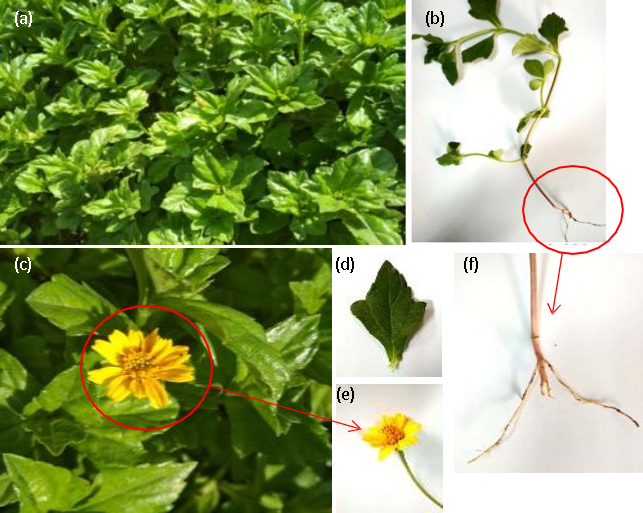
S. trilobata is a creeping evergreen perennial herb with nodal rooting and widely spreading stems, reaching approximately 30 cm in height. Leaves are simple, opposite to sub-opposite, 2–9 cm long and 2–5 cm wide, pubescent, dark green above and paler beneath. (29). It is fleshy ovate with three lobes, usually with irregular margins (14). The flowers grow in the end of terminal and axillary stalks called penduncles. The flowers are solitary, daisy-like and have bright yellow petals with 6-15 mm length. The flowers are available throughout the year as presented in Figure 1. (23, 30). The seeds of S. trilobata are 4-5 mm long and mostly non-fertile hence showed vegetative propagation.
Methodology
This review was conducted using a structured and transparent methodology to ensure reproducibility, minimize selection bias, and critically evaluate the reliability of published phytochemical reports on S. trilobata (L.) Pruski.
Literature Search Strateg
A comprehensive literature search was performed across major scientific databases, including PubMed, Scopus, and Web of Science, to identify peer-reviewed articles reporting the phytochemistry of S. trilobata. Additional references were identified by manual screening of bibliographies from relevant articles.
The search was conducted without restriction on geographical origin and covered publications available up to December 2025. The following combinations of keywords were used “S. trilobata” OR “Wedelia trilobata” OR “Wedelia paludosa” combined with “phytochemistry”, “secondary metabolites”, “terpenoids”, “sesquiterpenes”, “diterpenes”, “flavonoids”, “alkaloids”, “steroids”, “saponins”, and “chemical constituents”. Only articles published in English were considered.
Inclusion and Exclusion Criteria
Studies were included if they met specific criteria, namely reporting original phytochemical investigations of S. trilobata or its accepted synonyms, describing the isolation, characterization, or identification of chemical constituents from any part of the plant, and employing recognized analytical and spectroscopic techniques such as NMR, MS, IR, UV, GC–MS, or LC–MS. Conversely, studies were excluded if they focused solely on biological activity without identifying phytochemical constituents, reported only preliminary qualitative screening without compound-level characterization, or were categorized as reviews, editorials, conference abstracts, or lacked sufficient experimental detail.
Criteria for Classification of Compounds
Identified compounds were categorized into major phytochemical classes, including terpenoids, flavonoids, alkaloids, steroids, saponins, phenolic acids, and others. “Novel compounds” were defined as those explicitly reported by the original authors as new natural products, supported by comprehensive structural elucidation and comparison with existing literature. Meanwhile, “major compounds” were determined based on one or more criteria, such as a high frequency of isolation across independent studies, quantitative dominance in extracts or essential oils, or a recurrent association with reported bioactivities. This classification approach emphasizes compound abundance and research prominence rather than relying solely on chemical taxonomy.
Verification of Structural Data
Structural assignments reported in the included studies were evaluated based on the analytical methods described by the original authors, with particular attention given to the application of one- and two-dimensional NMR techniques (¹H, ¹³C, COSY, HSQC, HMBC), mass spectrometry methods such as ESI-MS, HR-MS, and GC–MS, as well as supporting spectroscopic or chemical evidence. Where possible, the reported structures were cross-verified through comparison with previously identified compounds within the genus Wedelia/Sphagneticola and other related species in the Asteraceae family. Although original spectral data were not reanalyzed, only studies that provided adequate and reliable structural justification were included in the evaluation.
Assessment of Study Quality and Reliability
Each included study was qualitatively assessed for methodological rigor based on the clarity of extraction and isolation procedures, the appropriateness of analytical techniques, the completeness of structural elucidation, and consistency with established phytochemical knowledge. Studies that lacked sufficient experimental detail or relied on tentative identification without spectroscopic confirmation were treated with caution and were not emphasized in the comparative analysis.
Data Extraction and Synthesis
Relevant data were extracted independently from each study, including plant part used, extraction solvent, isolated compounds, phytochemical class, and reported novelty. The findings were synthesized narratively and organized to highlight dominant phytochemical classes and recurring compound types.
Rather than providing an exhaustive list alone, this review prioritizes patterns of chemical abundance and diversity, aiming to contextualize the phytochemistry of S. trilobata within its potential biological and chemotaxonomic significance.
This systematic approach enhances transparency, reduces bias, and supports the reliability of conclusions drawn regarding the phytochemical profile of S. trilobata.
Results and Discussion
Overview of Phytochemical Diversity and Dominant Metabolite Classes
Analysis of the compiled literature reveals that S. trilobata exhibits a remarkably terpenoid-dominated phytochemical profile, with more than two-thirds of reported isolated compounds belonging to mono-, sesqui-, di-, and triterpenoid classes. Among these, ent-kaurane diterpenoids and eudesmane-type sesquiterpene lactones represent the most structurally diverse and frequently isolated groups. In contrast, flavonoids, phenolic acids, steroids, saponins, and alkaloids occur in comparatively lower numbers but contribute important complementary bioactivities.
Rather than a uniform chemical composition, the phytochemical profile of S. trilobata shows clear qualitative and quantitative variation, influenced by plant part, solvent polarity, and extraction strategy. This variability highlights the metabolic plasticity of the species and partially explains discrepancies among reported phytochemical datasets.
Plant Part–Specific Distribution of Phytochemicals
A consistent trend across studies is the preferential accumulation of terpenoids in aerial parts, particularly leaves and flowers. Essential oil analyses of leaves reveal a dominance of volatile monoterpenes and sesquiterpenes such as camphene, sabinene, limonene, and germacrene, supporting a defensive and ecological role for these compounds.
In contrast, flowers and whole-plant extracts are enriched in oxygenated sesquiterpene lactones and ent-kaurane diterpenoids, many of which are structurally complex and highly oxidized. These compounds are rarely reported from roots, which remain poorly investigated. Flavonoids and phenolic acid derivatives are more frequently isolated from polar extracts of aerial tissues, suggesting a role in UV protection, antioxidative defense, and signaling.
This plant part–specific distribution underscores the importance of targeted sampling strategies, as whole-plant extraction may obscure tissue-specific metabolite specialization.
Influence of Extraction Solvent and Methodology
Extraction methodology plays a decisive role in determining the reported phytochemical profile. Non-polar solvents (hexane, dichloromethane) selectively enrich terpenoids and sterols, whereas medium- to high-polarity solvents (ethyl acetate, methanol, ethanol) favor sesquiterpene lactones, phenolic acids, flavonoids, and glycosides.
Notably, several studies reporting “novel compounds” rely on single-solvent extraction, which limits comparability across reports. The absence of standardized extraction protocols introduces bias, particularly when abundance or dominance of compound classes is inferred. Consequently, claims regarding the “major constituents” of S. trilobata should be interpreted cautiously unless supported by quantitative or metabolomic data.
Structural Classes, Biosynthetic Context, and Chemotaxonomic Significance
The predominance of ent-kaurane diterpenoids and eudesmanolide sesquiterpene lactones aligns well with known biosynthetic tendencies of the Asteraceae family. These structural classes arise from mevalonate and methylerythritol phosphate (MEP) pathways, reflecting conserved enzymatic machinery within the genus Wedelia and related taxa.
Several compounds such as wedelolides, wedelidins, wedetrilides, and wedtrilosidesappear to be chemotaxonomically informative markers, as they are either absent or rare in closely related genera. The occurrence of sulfated and glycosylated ent-kaurane diterpenoids is particularly noteworthy and may represent a lineage-specific metabolic adaptation, supporting the taxonomic distinction of Sphagneticola from Wedelia sensu stricto.
Contradictions, Redundancies, and Gaps in the Literature
Several inconsistencies are evident in the existing literature. Compound numbering and nomenclature occasionally overlap or repeat across studies, complicating cross-referencing and structural comparison. Additionally, reports of “novel” compounds sometimes lack comprehensive spectroscopic data or comparison with structurally related analogues, raising questions about structural redundancy.
Geographical variation in phytochemical composition is frequently implied but rarely tested systematically, as few studies compare samples from different regions under identical analytical conditions. Moreover, the absence of metabolomic, quantitative, and seasonal studies represents a significant gap, limiting understanding of biosynthetic regulation and ecological relevance.
Integrated Interpretation
Taken together, the results indicate that S. trilobata is best characterized as a terpenoid-specialized medicinal plant, with chemotaxonomically significant sesquiterpene lactones and ent-kaurane diterpenoids forming its metabolic core. While flavonoids, phenolic acids, and steroids contribute to biological activity, they play a secondary role relative to terpenoids.
Future investigations should prioritize standardized extraction protocols, quantitative metabolomics, structure–activity relationship studies, and in vivo validation, which are essential to translate phytochemical richness into pharmacological relevance.
Phytochemicals from Sphagneticola trilobata
Qualitative phytochemical analysis is a critical step in understanding the chemical composition of medicinal plants and its direct relevance to extraction efficiency, purification strategies, and pharmacological efficacy (31). The choice of extraction method plays a decisive role in preserving labile bioactive constituents and maintaining their biological activity, particularly for secondary metabolites such as terpenoids, flavonoids, alkaloids, steroids, and saponins. Despite the widespread use of phytochemical screening in medicinal plant research, plant-specific variability in metabolite profiles necessitates targeted investigations rather than reliance on generalized assumption (32, 33).
S. trilobata (L. ) Pruski, a member of the Asteraceae family, has attracted increasing scientific attention due to its reported medicinal potential. Preliminary phytochemical investigations have consistently demonstrated that S. trilobata contains a diverse array of secondary metabolites, including terpenoids, flavonoids, alkaloids, steroids, and saponins, which are compounds known to exhibit antimicrobial, anti-inflammatory, antioxidant, and cytoprotective activities. Among these, terpenoids appear to be the dominant phytochemical class, predominantly localized in the aerial parts of the plant, suggesting a strong link between plant morphology, extraction strategy, and metabolite yield.
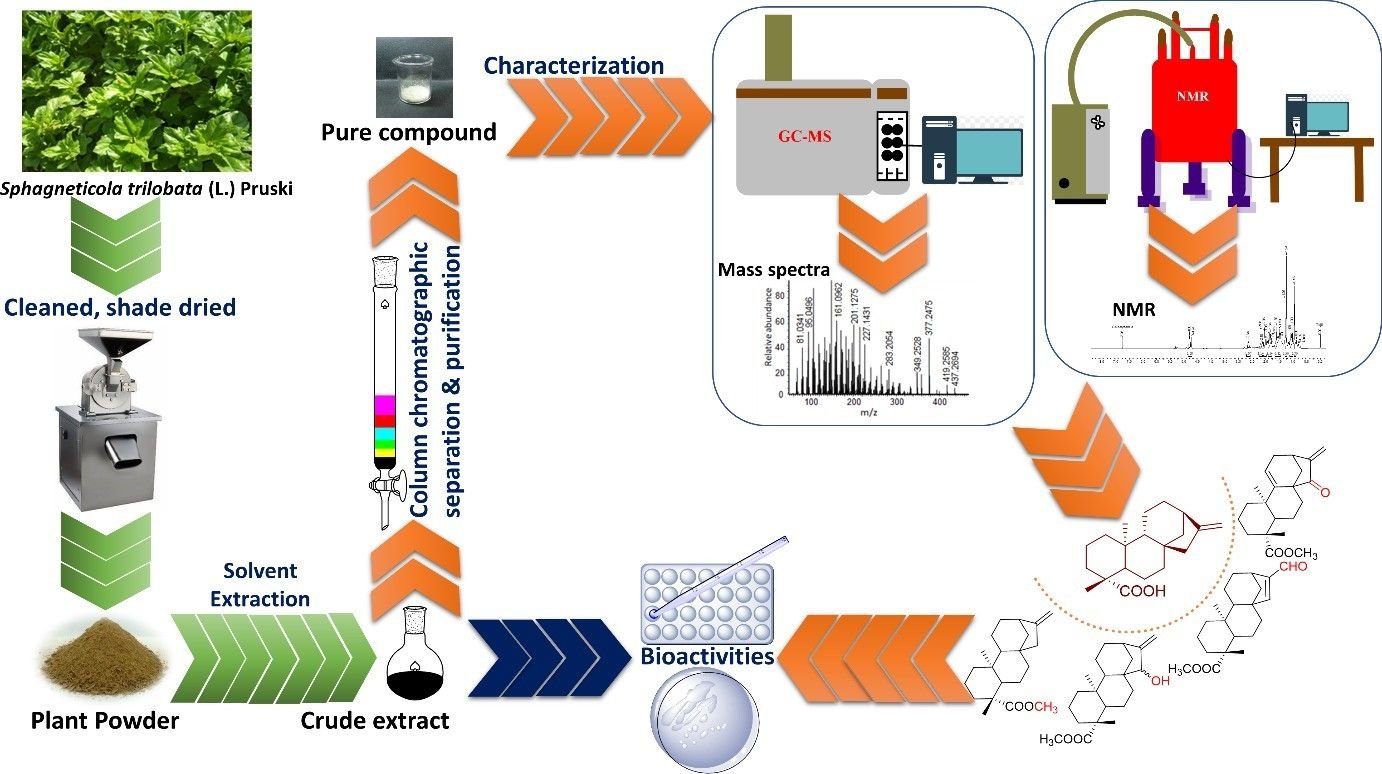
Although several reviews and research articles have discussed phytochemistry and bioactivity within the Wedelia/Sphagneticola genus, most existing literature either provides a broad taxonomic overview or focuses on isolated pharmacological activities without critically examining how extraction methods influence phytochemical profiles and biological outcomes. Moreover, comparative analyses of extraction techniques and their impact on terpenoid-rich fractions of S. trilobata remain limited. This lack of integration between phytochemical composition, extraction methodology, and bioactivity represents a clear research gap as illustrated in Figure 2.
The present review specifically focuses on the qualitative phytochemical profile of S. trilobata, with particular emphasis on extraction approaches, secondary metabolite diversity, and their reported pharmacological relevance. By narrowing the scope to phytochemistry and its methodological determinants, this work aims to provide a focused and updated synthesis that complements previous reviews while addressing unresolved gaps in the understanding of S. trilobata as a potential source of bioactive natural products.
Eudesmane sesquiterpenoids, ent-kaurane diterpenoids are major terpenoids, together with minor mono-, sesqui- and tri-terpenoids were reported from the S. trilobata (16, 34-36). Flavonoids, steroids, saponin, glycosides, and derivatives of cinnamic acid were isolated from the S. trilobata (Supplemental Figure 1) (37, 38, 13).
Phytochemical investigation of S. trilobata flowers ethanolic extract afforded stigmasterol (1), 3β- O-β-D-glycopyranosyl sitosterol (2), 3β-O-β-D-glycopyranosyl stigmasterol (3), grandiflorenic acid or ent-kaur-9 (11), 16-dien-19-oic acid (4), kaurenoic acid or ent-kaur-16-en-19-oic acid (5). In another study, S. trilobata whole plant powder was extracted in ethanol and partitioned in dichloromethane (DCM), ethyl acetate (EA) and butanol (39). DCM extract purification gave the novel eudesmanolide lactone named as paludolactone (6) together with kaurenoic acid (5), eudesmanolide or trilobolides 6-O-isobutyrate (7), oleanic acid (8) and stigmasterol (1) (Supplemental Figure 1) (40). Quang Ton That et al. reported the isolation of novel sesquiterpenoids from S. trilobata ethyl acetate extract, which are named as wedelolides A (9) and wedelolides B (10) along with known phyto-constituents trilobolide-6-O-methacrylate or 1β, 9α-diacetoxy-4α-hydroxy-6β- methacryloxyprostatolide (11) and 1β, 9α-diacetoxy-4α-hydroxy-6β-isobutyroxyprostatolide or trilobolides-6-O-isobutyrate (12). ent-kaurane diterpenoids wedelidins A (13) and wedelidins B (14) from S. trilobata aerial part was first time isolated by Yin Qiang et al (41). Eighteen known compounds were also isolated viz wedeliatrilolactone B (15), ivalin (16), (3α)-3-(cinnamoyloxy)- ent kaur-16-en-19-oic acid (18), (3α)-3-(angeloyloxy)-ent-kaur-16-en-19-oic acid (17), (3α)-3- (tiglinoyloxy)-ent-kaur-16-en-19-oic acid (19), 3-hydroxy-6-methoxychromen-4-one (20), diosmetin (21), apigenin or 5, 7, 4’-trihydroxyflavone (22), luteolin (23), benzene acetic acid-2- phenylethenyl ester (24), isocinnamic acid (25), friedelinol (26), 3-3β-3-hydroxy stigmasta-5, 22- dien-7-one (27), (7α)-7-hydroxytigmasterol (28), friedelin (29).
S. trilobata leaves essential oil majorly constitutes terpenoids with other compounds, which were characterized by co-injection with standards and comparing mass spectra with literature data (16). It contained forty-three compounds, out of which major compounds are camphene (30), sabinene (31), limonene (32), germacrene (33), α-phellandrene (34), β-pinene (35), γ-amorphene (36), α- pinene (37), and 10-nor-calamenen-10-one (38). Toan Phan Duc et al. reported isolation of a novel eudesmanolide lactones wedelolide G (39) and wedelolide H (40) from S. trilobata leaves extract along with 5-hydroxymethylfurfuran (41), trilobolide (42), trilobolide-6- O-methacrylate (11) and trilobolide-6-O-isobutyrate (12) (42) (Supplemental Figure 1).
Seven novel ent-kaurane diterpenoids were found in chemical investigation of whole plant methanolic extract of S. trilobata together with known nineteen phytoconstituents (36). These novel compounds were characterized as 3α-angeloyloxy-16α, 17-dihydroxy-ent-kauran-19-oic acid (43), 3α-tigloyloxy-16α, 17-dihydroxy-ent-kauran-19-oic acid (44), 3α-cinnamoyloxy-9β, 17- dihydroxy-ent-kaur-15-en-19-oic acid (45), 3α-tigloyloxy-16α-hydroxy-ent-kauran-19-oic acid (46), 3α-dihydrocinnamoyloxy-ent-kaur-16-en-19-oic acid (47), 3α-angeloyloxy-16α-hydroxy- ent-kauran-19-oic acid (48), and 3α-cinnamoyloxy-ent-kaura-9 (11), 16-dien-19-oic acid (49). Nineteen other known ent-kaurane diterpenoids are isolated, which were characterized as 16α-17- dihydroxy-ent-kauran-19-oic acid (50), 16α, 18-dihydroxy-ent-kaurane (51) wedeliaseccokaurenolide (52), ent-9α-hydroxy-16-kauren-19-oic acid (53), 3α- tigloyloxypterokaurene L3 (54), 16α-methoxy-17-hydroxy-ent-kauran-19-oic acid (55), 15α, 16α- epoxy-17-hydroxy-ent-kauran-19-oic acid (56), 3α-angeloyloxy-9β-hydroxy-ent-kaur-16-en-19- oic acid (57), 12α-hydroxy-ent-kaur-9 (11) , 16-dien-19-oic acid (58), 3α-cinnamoyloxy-9 β-hydroxy-ent-kaur-16-en-19-oic acid (59), 3α-hydroxy-ent-kaur-16-en-19-oic acid (60), 3α- hydroxy-ent-kaura-9 (11) , 16-dien-19-oic acid (61), (3α)-3-(tiglinoyloxy)-ent-kaur-16-en-19-oic acid (19), 16α-hydroxy-ent-kauran-19-oic acid (62), ent-15-oxokaur-16-en-19-oic acid (63), ent- 17-oxokaur-15-en-19-oic acid (64), 3α-cinnamoyloxy-ent-kaur-16-en-19-oic acid (18). Sesquiterpenoid eudesmanolide lactones, wedetrilides B (65) and wedetrilides C (66) were isolated for the first time by Yang Hui et al. from S. trilobata flowers. [43] Also, other known compounds were isolated and characterized as wedeliatrilolactone B (15), trilobolide-6-Ο- isobutyrate (7), 16α-hydroxy-ent-kauran-19-oic acid (62), 1α-acetoxy-4β, 9β-dihydroxy-6α- isobutyroxyprostatolide (67), (Z)-2, 4-dihydroxycinnamic acid (69), (E)-p-hydroxycinnamic acid (68), ethyl caffeoate or caffeic acid ethyl ester (70), wedelolide A (9), wedelolide B (10), wedelolide F (71), stigmasterol (1). On the other hand, from S. trilobata whole plant methanolic extract the novel eudesmanolide δ- lactones were isolated, characterised and named as wedelolides K (72), wedelolides L (73), and wedelolides M (74). Hui Ren et al. investigated two novel caffeic acid derivatives, methyl 3-(7- methoxy-dihydro-caffeoyl)-5-caffeoyl quinate (75) and p-hydroxyphenyl caffeate (76) from S. trilobata whole plant ethanolic extract together with methyl-3, 5-di-O-caffeoyl quinate (77), methyl-4, 5-di-O-caffeoyl quinate (79), chlorogenic acid methyl ester (78) and neochlorogenic acid methyl ester (80) (44, 45). A study by Puntipa Junhirun and co-worker on the leaf’s ethyl acetate extract of S. trilobata revealed the existence of three alkanes, heptacosane (81), hexsacosane (82), and nonacosane (83) (46).
Nguyen Thi Luyen et al. has isolated and established structure of two novel ent-kaurane type terpenoids, first isolated compund was 16α, 17-dihydroxy-ent-9 (11)-kaurene-19-oic acid-β-D- glucopyranosyl ester, named as wedtrilosides A (84) and the second was 16α, 17-dihydroxy-ent- 9 (11)-kaurene-19-oic acid-β-D-glucopyranosyl-6-sulfate ester, named as wedtrilosides B (85) from S. trilobata leave methanolic extract (47). Other isolated known compounds were paniculoside-IV (86), two flavones apigenin 3-O-[β-D-glucopyranosyl (1-4)-β-D-glucoronopyranosyl] oleanolic acid 28-O-β-D-glucopyranosyl ester (88) and 5, 7, 4’-trihydroxyflavone (22), 3, 4- dihydroxy-cinnamic acid (87). This is the first report on the isolation of wedtrilosides A (84), wedtriloside B (85) and 3-O-[β-D-glucopyranosyl (1-4)-β-D-glucoronopyranosyl] oleanolic acid 28-O-β-D- from the genus Wedelia. In another phytochemical analysis of S. trilobata flowers, eight novel eudesmanolideand twelve other compounds were purified and characterised. Novel compounds were characterized as 1α, 6α, 9β-trihydroxy-4, 10α-dimethyl-5α, 7α, 8α-eudesm-3-en-8, 12-olide (89), 1α, 9β-dihydroxy- 4β-hydroxymethyl-6β-methacryloxy-13β-methyleudesmanolide (90), 1α, 4α, 9β-trihydroxy-6β-isobutyryloxyprostatolide (91), 1β-acetoxy-4α-hydroxy-6β-isobutyryloxy-15α-methyl-9β-tiglinoyloxyprostatolide (92), 1β-acetoxy-4α-hydroxy-6β-isobutyryloxy-9α- tiglinoyloxyprostatolide (93), 1α-acetoxy-4α-hydroxy-6α-isobutyryloxy-15α-methyl-9β-isovaleryloxyprostatolide (94), 1α, 4β, 8β-trihydroxy-6α-isobutyryloxyeudesman-9, 12-olide (95), and 1α, 9β-diacetoxy-4β-hydroxy-6α-methacryloxy-11β-methylprostatolide (96). Together with other compounds were characterized such as Oxidoisotrilobolide-6-O-isobutyrate (97), 1α, 9β- diacetoxy-4β-hydroxy-6α-isobutyroxy-11β-methylprostatolide (96), 1α, 9β-diacetoxy-4β-hydroxy-6α-isobutyroxy-11β-methylprostatolide (98), 1β-acetoxy-4α, 9α-dihydroxy-6β-methacryloxyprostatolide (99), oxidoisotrilobolide-6-O-methacrylate (100), 1β-acetoxy-4α, 9α- dihydroxy-6β-isobutyroxyprostatolide (67). Yang Hui et al. reported the isolation of ent-kaurane type diterpenoid 3α-angeloyloxykaur-16-en- 19-oic acid (17), ent-12-oxo-9 (11), 16-kauradien-19-oic acid (101), 3α-cinnamoyloxykaur-16-en- 19-oic acid (18) and 12α-methoxy-9, 11-dehydro-ent-kaur-16-en-19-oic acid (102) along with earlier reported compounds such as erythrodiol (103), 24-methylenecycloartane-3, 28-diol (104), aurantiamide (105), aurantiamide acetate (106), 3-epioleanolic acid (107), 3α- hydroxykaur-16-en-19-oic acid (108), 1α-acetoxy-4β-hydroxy-6α-isobutyryloxy-9β- isovaleriloxy-prostatolide (109) caffeic acid ethyl ester (70). Many novel compounds important for chemotaxonomic are isolated from S. trilobata are organized and displayed in Supplemental Table 1.
Conclusion
This review critically examines the phytochemical profile of S. trilobata (L. ) Pruski through a structured analysis of published literature retrieved from recognized scientific databases, focusing on studies reporting phytochemical characterization. The collected evidence demonstrates that S. trilobata is a rich source of diverse secondary metabolites, including terpenoids, flavonoids, alkaloids, saponins, glycosides, tannins, and related derivatives. Rather than providing a descriptive inventory alone, this review synthesizes available findings to highlight phytochemical classes of greater abundance. Therefore, while S. trilobata represents a valuable source of bioactive natural products, further systematic studies—including mechanistic, toxicological, and clinical evaluations—are required to substantiate its role in drug discovery and therapeutic development.
Declarations
Acknowledgment
We thank Dr. B. B. Dongare, Principal Moreshwar College, Bhokardan and Principal, BJS’s Arts, Science and Commerce college Wagholi for support and encouragement.
Conflict of Interest
The authors declare no conflicting interest.
Data Availability
The unpublished data is available upon request to the corresponding author.
Ethics Statement
Not applicable.
Funding Information
The authors declare that no financial support was received for the research, authorship, and/or publication of this article.
Supplemental Material
This manuscript is accompanied by <a class="cursor-pointer" href="https://etflin.com/file/document/20260415013615_512049_63b459cc.docx">Supplemental Material</a>, including <strong>Supplemental Figure 1.</strong> Chemical constituents isolated from <em>Sphagneticola trilobata</em>, including terpenoids, flavonoids, alkanes, steroids, alkaloids, and cinnamic, caffeic, and quinic acid derivatives, <b>Supplemental Table 1. </b>Novel Phytochemicals Isolated from <em>Sphagneticola trilobat.</em><br />
References
- Kumar S, S. Patil H, Sharma P, Kumar D, Dasari S, G. Puranik V, et al. Andrographolide Inhibits Osteopontin Expression and Breast Tumor Growth Through Down Regulation of PI3 Kinase/Akt Signaling Pathway. Cmm. 2012;12(8):952-966. doi: https://doi.org/10.2174/156652412802480826
- Rates S. Plants as source of drugs. Toxicon. 2001;39(5):603-613. doi: https://doi.org/10.1016/s0041-0101(00)00154-9
- Kayesth S, Gupta KK, Tyagi K, Mohan RR, Arora J, Nissapatorn V. Natural products and human health— A special focus on Indian Ginseng Withania somnifera (L.) Dunal. Indian J Nat Prod Resour. 2024;15(2):244–259. doi: https://doi.org/10.56042/ijnpr.v15i2.11665
- Ríos J, Recio M. Medicinal plants and antimicrobial activity. Journal of Ethnopharmacology. 2005;100(1-2):80-84. doi: https://doi.org/10.1016/j.jep.2005.04.025
- Che CT, Zhang H. Plant Natural Products for Human Health. Ijms. 2019;20(4):830. doi: https://doi.org/10.3390/ijms20040830
- Singh K, Gupta JK, Chanchal DK, Shinde MG, Kumar S, Jain D, et al. Natural products as drug leads: exploring their potential in drug discovery and development. Naunyn-Schmiedeberg's Arch Pharmacol. 2024;398(5):4673-4687. doi: https://doi.org/10.1007/s00210-024-03622-6
- Kayesth S, Chaudhary A, Shazad M, Saini P, Nisspatorn V, Shah VK, Sharma C, Sagar R, Chaprana P, Arora J, et al. Plant metabolites as potential therapeutics against COVID-19 and other viral diseases. Indian J Nat Prod Resour. 2024;15(2):201–223. doi: https://doi.org/10.56042/ijnpr.v15i2.11498
- Saini P, Gupta KK. Bioefficacy of botanicals with special emphasis on Cassia fistula and nano-formulations on survival, growth, and development of insects: A sustainable approach of integrated pest management. Indian J Nat Prod Resour. 2024;15(2):260–273. doi: https://doi.org/10.56042/ijnpr.v15i2.11503
- Sikarwar RLS, Chopade BA. Cordia macleodii (Griff.) Hook. f. & Thomson (Boraginaceae) – A comprehensive review. Indian J Nat Prod Resour. 2024;15(3):347–356. doi: https://doi.org/10.56042/ijnpr.v15i3.6285
- Gogoi G, Victoria DM, Deori G, Bhagawati P. Morphology, Ethnobotany, Pharmacological Properties of Some Selected Species of the Asteraceae Family: A Comprehensive Review. Vol. 4.
- Jayasundera M, Florentine S, Tennakoon KU, Chauhan BS. Medicinal Value of Three Agricultural Weed Species of the Asteraceae Family: A Review. Pj. 2021;13(1):264-277. doi: https://doi.org/10.5530/pj.2021.13.36
- Sai Prasanna K, Jyothi Reddy G, Kiran M, Thyaga Raju K. Biological Activities and Phytochemical Constituents of Trailing Daisy Trilobata: A Review. J. Drug Delivery Ther. 2019;9(4-s):888-892. doi: https://doi.org/10.22270/jddt.v9i4-s.3578
- Balekar N, Nakpheng T, Srichana T. Wedelia trilobata L.: a phytochemical and pharmacological review. Chiang Mai J Sci. 2014;41(3):590–605.
- Ton That Q, Jossang J, Jossang A, Nguyen Kim PP, Jaureguiberry G. Wedelolides A and B: Novel Sesquiterpene δ-Lactones, (9R)-Eudesman-9,12-olides, from Wedelia trilobata. J. Org. Chem. 2007;72(19):7102-7105. doi: https://doi.org/10.1021/jo070771m
- Mizokami SS, Arakawa NS, Ambrosio SR, Zarpelon AC, Casagrande R, Cunha TM, et al. Kaurenoic Acid fromSphagneticola trilobataInhibits Inflammatory Pain: Effect on Cytokine Production and Activation of the NO–Cyclic GMP–Protein Kinase G–ATP-Sensitive Potassium Channel Signaling Pathway. J. Nat. Prod. 2012;75(5):896-904. doi: https://doi.org/10.1021/np200989t
- Verma RS, Padalia RC, Chauhan A, Sundaresan V. Essential oil composition of Sphagneticola trilobata (L.) Pruski from India. Journal of Essential Oil Research. 2013;26(1):29-33. doi: https://doi.org/10.1080/10412905.2013.822431
- HernáNdez-Aro M, HernáNdez-PéRez R, GuilléN-SáNchez D, Torres-Garcia S. Allelopathic Influence of Residues from Sphagneticola trilobata on Weeds and Crops. Planta daninha. 2016;34(1):81-90. doi: https://doi.org/10.1590/s0100-83582016340100008
- Sutar SS, Parveen MN. Anatomical studies of Sphagneticola trilobata (L.) Pruski. (Asteraceae). Irjms. 2020;1(1):1-3. doi: https://doi.org/10.47857/irjms.2020.v01i01.001
- Bresciani LFV, Cechinel-filho V, Yunes RA. Comparative Study of Different Parts ofWedelia paludosaby Gas Chromatography. Natural Product Letters. 2000;14(4):247-254. doi: https://doi.org/10.1080/10575630008041239
- Peebles J, Gwebu E, Oyedeji O, Nanyonga S, Kunene N, Jackson D, et al. Composition and Biological Potential of Essential Oil from Thelechitonia trilobata Growing in South Africa. Natural Product Communications. 2011;6(12):1945–1948. doi: https://doi.org/10.1177/1934578x1100601238
- Ahmed B, Idris S, Taha R, Mustafa M, Marikar FM. Phytochemical, pharmacological and tissue culture applications of Wedelia spp. – A review. Ast. 2019;11(2):123-132. doi: https://doi.org/10.15547/ast.2019.02.020
- Balekar N, Katkam NG, Nakpheng T, Jehtae K, Srichana T. Evaluation of the wound healing potential of Wedelia trilobata (L.) leaves. Journal of Ethnopharmacology. 2012;141(3):817-824. doi: https://doi.org/10.1016/j.jep.2012.03.019
- Strother JL. Taxonomy of Wedelia and related genera. Syst Bot Monogr. 1991;33:1.
- Filho VC, Block LC, Yunes RA, Delle Monache F. Paludolactone: A new Eudesmanolide Lactone fromWedelia PaludosaDc. (Acmela Brasiliensis). Natural Product Research. 2004;18(5):447-451. doi: https://doi.org/10.1080/14786410310001643894
- Qi SS, Dai ZC, Zhai DL, Chen SC, Si CC, Huang P, et al. Curvilinear Effects of Invasive Plants on Plant Diversity: Plant Community Invaded by Sphagneticola trilobata. PLoS ONE. 2014;9(11):e113964. doi: https://doi.org/10.1371/journal.pone.0113964
- Prasad AV, Hodge S. Factors Influencing the Foraging Activity of the Allodapine Bee Braunsapis Puangensis on Creeping Daisy (Sphagneticola Trilobata) in Fiji. J Hymenopt Res. 2013;35:59–69. https://doi.org/10.3897/JHR.35.6006.
- Sun Z, Chen Y, Schaefer V, Liang H, Li W, Huang S, et al. Responses of the Hybrid between Sphagneticola trilobata and Sphagneticola calendulacea to Low Temperature and Weak Light Characteristic in South China. Sci Rep. 2015;5(1):1-11. doi: https://doi.org/10.1038/srep16906
- Bohlmann F, Zdero C, King RM, Robinson H. Eudesmanolides and kaurene derivatives from Wedelia hookeriana. Phytochemistry. 1982;21(9):2329-2333. doi: https://doi.org/10.1016/0031-9422(82)85199-6
- Batista R, García PA, Castro MÁ, Del Corral JMM, Feliciano AS, Oliveira ABD. iso-Kaurenoic acid from Wedelia paludosa D.C. An. Acad. Bras. Ciênc. 2010;82(4):823-831. doi: https://doi.org/10.1590/s0001-37652010000400004
- Hazra K, Kumar D, Mitra A, Dutta S, Sarkar S, Babu G. Phytopharmacognostic profiling of Prunus cerasoides Buch.-Ham. ex D. Don, heartwood. Indian J Nat Prod Resour. 2024;15(1):146-155. doi: https://doi.org/10.56042/ijnpr.v15i1.4232
- Sharma S, Kaundal R, Kumar D. Polygonatum verticillatum (L.) All.: Systematic information on ethnomedicine, phytochemistry and pharmacological properties. Indian J Nat Prod Resour. 2025;16(1),49–59. doi: https://doi.org/10.56042/ijnpr.v16i1.12159
- Giri S, Saha P. Anti-inflammatory flavonoids found in medicinal plants of acanthaceae family. Indian J Nat Prod Resour. 2025;16(2):209–226. doi: https://doi.org/10.56042/ijnpr.v16i2.15820
- Batista R, Chiari E, de Oliveira A. Trypanosomicidal Kaurane Diterpenes fromWedelia paludosa. Planta Med. 1999;65(03):283-284. doi: https://doi.org/10.1055/s-2006-960781
- Sun L, Wang Z, Wang Y, Xu J, He X. Anti-proliferative and anti-neuroinflammatory eudesmanolides from Wedelia (Sphagneticola trilobata (L.) Pruski). Fitoterapia. 2020;142(4):104452. doi: https://doi.org/10.1016/j.fitote.2019.104452
- Li SF, Ding JY, Li YT, Hao XJ, Li SL. Antimicrobial Diterpenoids of Wedelia trilobata (L.) Hitchc. Molecules. 2016;21(4):457. doi: https://doi.org/10.3390/molecules21040457
- Lang K, Corrêa J, Wolff F, da Silva GF, Malheiros A, Filho VC, et al. Biomonitored UHPLC-ESI-QTOF-MS2 and HPLC-UV thermostability study of the aerial parts of Sphagneticola trilobata (L.) Pruski, Asteraceae. Talanta. 2017;167(5):302-309. doi: https://doi.org/10.1016/j.talanta.2017.02.024
- Leite AGB, Farias ETN, Oliveira APD, Abreu REFD, Costa MMD, Almeida JRGDS, et al. Phytochemical screening and antimicrobial activity testing of crude hydroalcoholic extract from leaves of Sphagneticola trilobata (Asteraceae). Cienc. Rural. 2019;49(4):1-4. doi: https://doi.org/10.1590/0103-8478cr20180639
- Carvalho GJAD, Carvalho MGD, Ferreira DT, Faria TDJ, Braz-Filho R. Diterpenos, triterpenos e esteróides das flores de Wedelia paludosa. Quím. Nova. 2001;24(1):24-26. doi: https://doi.org/10.1590/s0100-40422001000100006
- Qiang Y, Du D, Chen Y, Gao K. ent‐Kaurane Diterpenes and Further Constituents from Wedelia trilobata. Helvetica Chimica Acta. 2011;94(5):817-823. doi: https://doi.org/10.1002/hlca.201000301
- Phan Duc T, Nguyen Thien TV, Jossang A, Nguyen Kim PP, Grellier P, Jaureguiberry G, et al. New wedelolides, (9 R ) - eudesman-9,12-olide δ-lactones, from Wedelia trilobata. Phytochemistry Letters. 2016;17(4):304-309. doi: https://doi.org/10.1016/j.phytol.2016.06.001
- Cavalcanti B, Ferreira J, Moura D, Rosa R, Furtado G, Burbano R, et al. Structure–mutagenicity relationship of kaurenoic acid from Xylopia sericeae (Annonaceae). Mutation Research/Genetic Toxicology and Environmental Mutagenesis. 2010;701(2):153-163. doi: https://doi.org/10.1016/j.mrgentox.2010.06.010
- Li SF, Ding JY, Li SL. Three eudesmanolide δ-lactones of Wedelia trilobata. Phytochemistry Letters. 2018;24(3):102-104. doi: https://doi.org/10.1016/j.phytol.2017.11.022
- Ren H, Xu QL, Zhang M, Dong LM, Zhang Q, Luo B, et al. Bioactive caffeic acid derivatives from Wedelia trilobata. Phytochemistry Letters. 2017;19(1):18-22. doi: https://doi.org/10.1016/j.phytol.2016.11.001
- Junhirun P, Pluempanupat W, Yooboon T, Ruttanaphan T, Koul O, Bullangpoti V. The Study of Isolated Alkane Compounds and Crude Extracts From Sphagneticola trilobata (Asterales: Asteraceae) as a Candidate Botanical Insecticide for Lepidopteran Larvae. Journal of Economic Entomology. 2018;111(6):2699–2705. doi: https://doi.org/10.1093/jee/toy246
- Luyen NT, Binh PT, Tham PT, Hung TM, Dang NH, Dat NT, et al. Wedtrilosides A and B, two new diterpenoid glycosides from the leaves of Wedelia trilobata (L.) Hitchc. with α-amylase and α-glucosidase inhibitory activities. Bioorganic Chemistry. 2019;85(1):319-324. doi: https://doi.org/10.1016/j.bioorg.2019.01.010
- Hui Y, Zhou XQ, Chen GY, Han CR, Song XP, Dai CY, et al. Chemical Constituents of the Flowers of Wedelia trilobata. Chem Nat Compd. 2019;55(1):160-163. doi: https://doi.org/10.1007/s10600-019-02643-5
- Ren KW, Li YH, Wu G, Ren JZ, Lu HB, Li ZM, et al. Quercetin nanoparticles display antitumor activity via proliferation inhibition and apoptosis induction in liver cancer cells. International Journal of Oncology. 2017;50(4):1299-1311. doi: https://doi.org/10.3892/ijo.2017.3886