RESEARCH ARTICLE
Assessment of Water Quality Parameters in Penaeus monodon Culture Ponds: Implications for Sustainable Shrimp Aquaculture
Aquatic Life Sciences|Vol. 2, Issue 2, pp. 64-69 (2025)
CC BY 4.0-2025 Authors
Views
Downloads
Shares

Received
Sep 18, 2025Revised
Nov 10, 2025Accepted
Nov 17, 2025Published
Dec 2, 2025
Abstract
Shrimp aquaculture depends on stable water quality, but fluctuations often reduce growth and survival, making optimal conditions essential for sustainable Penaeus monodon culture. This study aimed to evaluate key water quality parameters in two shrimp ponds and assess their suitability against established aquaculture standards. Field measurements and laboratory analyses were conducted over ten weeks across three sampling stations in each pond. Parameters measured included pH, temperature, salinity, dissolved oxygen (DO), nitrate, nitrite, ammonia, phosphate, and water hardness. Results showed that pH ranged from 7.29–7.80, temperature from 31.40–32.00 °C, salinity from 17.30–17.88 ppt, and DO from 5.29–5.87 mg/L, all within acceptable limits (SNI 8038.1: 2014). Nutrient concentrations varied, with nitrate (0–0.4 mg/L), nitrite (0–0.4 mg/L), ammonia (0.1–0.4 mg/L), and phosphate (0–0.5 mg/L), where ammonia occasionally exceeded the safe threshold of 0.1 mg/L. Water hardness ranged from 0.17–0.43 mg/L CaCO₃, below the reference limit of 100 mg/L CaCO₃. Overall, the ponds provided suitable conditions for shrimp growth, but elevated nutrient levels at certain periods indicate the need for improved feed and waste management. Maintaining balanced water quality is essential to optimizing shrimp health, enhancing productivity, and ensuring the sustainability of aquaculture practices.
Introduction
Aquaculture has become a key part of global food security, but its sustainability often faces environmental and management obstacles. In Indonesia, the black tiger shrimp (Penaeus monodon) is a significant aquaculture product with high economic value and export potential (1). Since the 1990s, its productivity has declined due to poor environmental conditions, low-quality feed, and disease outbreaks, causing major economic losses for coastal communities that depend on shrimp farming (2). Tarakan City in North Kalimantan, with 61.8% of its area consisting of marine waters and extensive brackish ponds, holds strategic potential for revitalizing P. monodon culture (3). Nevertheless, the sector’s performance remains constrained by unstable pond ecosystems and fluctuating water quality.
Water quality is the most critical determinant of shrimp survival, growth, and resistance to pathogens. In the traditional extensive ponds that dominate North Kalimantan, key challenges include low growth rates, high disease susceptibility, and a heavy reliance on natural feed availability (4). The deterioration of water quality, driven by waste accumulation, seasonal fluctuations, and insufficient monitoring, often results in stress conditions that increase vulnerability to pathogens (5). Although guidelines and standards for optimal water parameters are available, practical monitoring in traditional systems is often inconsistent, leading to suboptimal production outcomes (6).
To address these limitations, systematic observation of water quality dynamics throughout the production cycle is essential. This study presents a conceptual model that links physical and chemical water parameters, including temperature, salinity, pH, dissolved oxygen, hardness, ammonia, nitrite, nitrate, and phosphate, to key shrimp performance indicators, such as survival, growth rate, and feed efficiency. However, empirical field-based studies documenting the temporal variation of such parameters in traditional shrimp ponds of Tarakan remain scarce, despite their socio-economic importance (7).
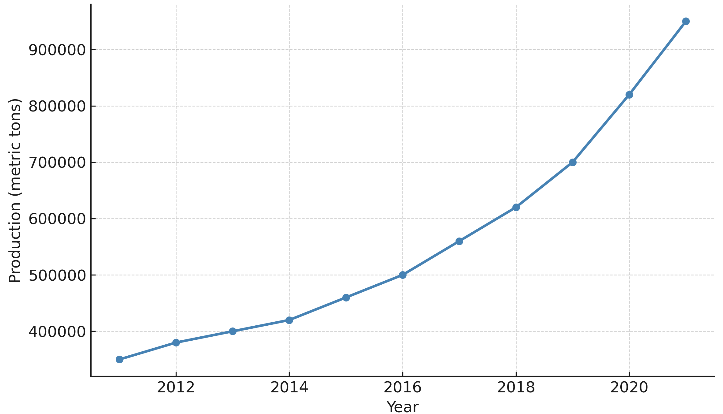
Figure 1 illustrates the national trend of shrimp aquaculture production in Indonesia over the past decade. The steady increase from approximately 350, 000 metric tons in 2011 to nearly 950, 000 metric tons in 2021 reflects the growing economic importance of the shrimp industry. However, while national output continues to rise, many traditional systems, particularly in North Kalimantan and Tarakan, have not fully benefited from this growth due to persistent water quality and management constraints. This gap highlights the need for region-specific studies, such as the present research, to provide empirical data that can guide sustainable revitalization strategies for P. monodon culture.
This study was therefore designed to fill that gap by monitoring physical (temperature, salinity) and chemical (pH, dissolved oxygen, hardness, ammonia, nitrite, nitrate, and phosphate) parameters over a three-month grow-out period in two traditional ponds. By linking observed water conditions with shrimp performance, this research provides new insights into the environmental feasibility of P. monodon culture in Tarakan. The findings are expected to support evidence-based management strategies that enhance pond productivity, reduce disease risks, and ensure the long-term sustainability of traditional shrimp farming systems.
Methodology
Study Design and Rationale
This study employed an observational field-based design to systematically monitor water quality dynamics in traditional black tiger shrimp (Penaeus monodon) ponds. The rationale for this design was to capture the temporal variability of key physicochemical parameters throughout the culture cycle and assess their suitability for sustaining shrimp growth and survival. The study compared two contrasting pond environments, one located near agricultural land and the other near a residential area, while maintaining identical culture and sampling protocols to ensure comparability.
Study Site and Sampling Framework
The research was conducted between April and July 2022 in two traditional shrimp ponds located in Tarakan, North Kalimantan, Indonesia. The ponds were managed extensively, without mechanical aeration, and relied on natural feed availability. Pond 1 (T1) was located near an agricultural area (±0.075 ha), while Pond 2 (T2) was located near a residential location (±0.1219 ha). The corrected stocking density for both ponds was approximately 3 post-larvae per m² at PL20, which reflects the typical range for traditional extensive systems.
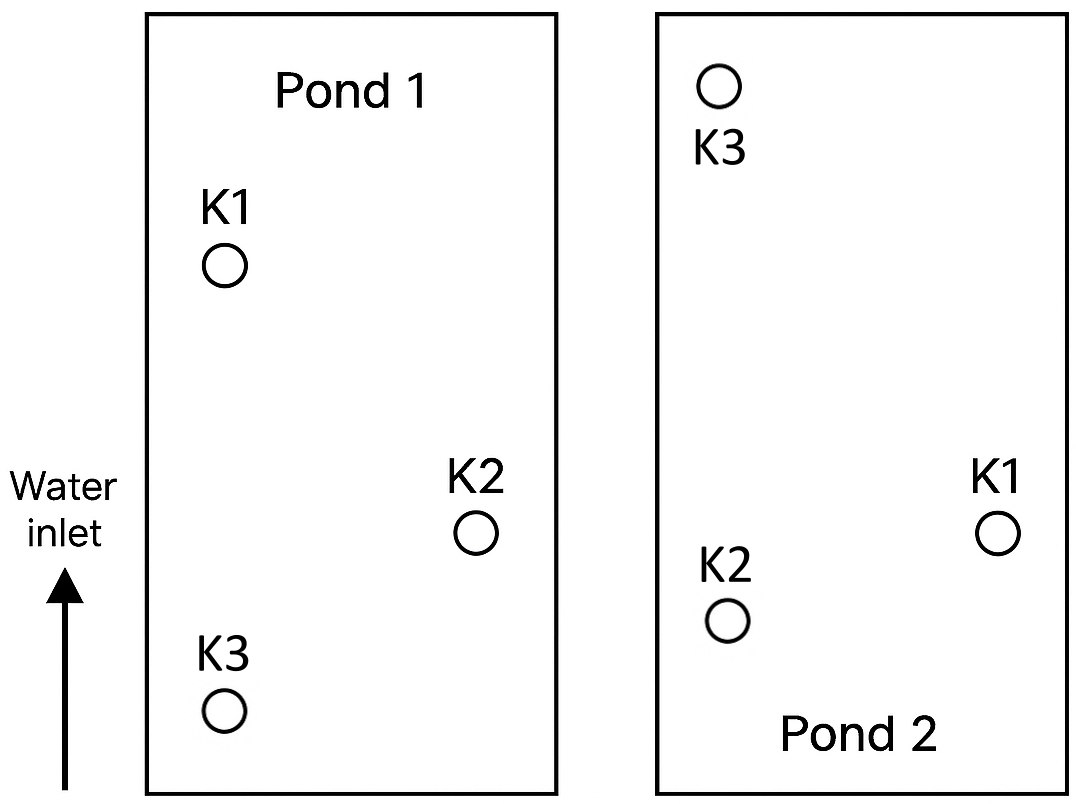
Water samples were collected every two weeks during the three-month culture cycle (90 days). Although sampling frequency was limited by logistical constraints, this schedule was designed to represent early, mid, and late grow-out phases. At each pond, three fixed sampling stations were established: (i) the water inlet, (ii) the left side, and (iii) the right side of the pond. At each station, water was sampled at 20 cm depth using sterilized 140 mL bottles. Samples were preserved in ice boxes and transported immediately to the Aquaculture Nutrition Laboratory, University of Borneo Tarakan, for analysis. A schematic layout of the sampling stations in each pond is shown in Figure 2, illustrating the position of the inlet, left-side station, and right-side station (K1-3 replicates).
Parameters and Measurements
A combination of in situ and laboratory assessments was conducted to characterize water quality. Physical parameters included temperature, measured with a calibrated thermometer, and salinity, determined using a handheld refractometer. Chemical parameters comprised pH, measured with a pH meter; dissolved oxygen (DO), assessed using a DO meter; and nutrient-related indicators, including total ammonia nitrogen (NH₃–N), nitrite (NO₂⁻), nitrate (NO₃⁻), phosphate (PO₄³⁻), and water hardness expressed as CaCO₃ concentration. All instruments were calibrated before each sampling event following the manufacturer’s instructions and verified against certified standards to ensure data accuracy. All field measurements were performed in triplicate for reproducibility and consistency across sampling sites.
Laboratory Analyses
Nutrient analyses were conducted using standard freshwater test kits: ammonia was quantified using a spectrophotometric colorimetric method at 640 nm; nitrite was determined by the diazotization method with sulfanilamide; nitrate was analyzed via cadmium reduction followed by colorimetric detection; phosphate was assessed using the ascorbic acid method with absorbance read at 880 nm; and water hardness was measured through EDTA titration with Eriochrome Black T as indicator.
All analytical procedures followed the Standard Methods for the Examination of Water and Wastewater to ensure methodological accuracy and reproducibility.
Data Analysis
Descriptive statistics (mean ± SD) were computed for all measured parameters. Temporal variations between ponds and among sampling periods were evaluated and compared against the Indonesian National Standard for shrimp farming water quality (SNI 8038.1: 2014) as well as international reference values. Deviations from acceptable ranges were interpreted as potential limiting factors for shrimp culture.
Results and Discussion
Overview of Water Quality Parameters
Mean (± standard error) values of key water quality parameters are presented in Table 1. Most parameters, temperature, pH, salinity, and dissolved oxygen (DO), remained within the optimal ranges for Penaeus monodon culture throughout the observation period. However, ammonia levels intermittently exceeded the recommended limit of 0.1 mg/L⁻¹, particularly during mid- and late-culture phases, suggesting nutrient accumulation likely driven by feed residues and limited water exchange efficiency (8).
| Parameter | Pond 1 (Mean ± SE) | Pond 2 (Mean ± SE) | Recommended Range | Significance (p < 0.05) |
|---|---|---|---|---|
| Temperature (°C) | 31.53 ± 0.12 | 31.78 ± 0.15 | 28–32 | ns |
| pH | 7.51 ± 0.09 | 7.55 ± 0.07 | 6.8–8.7 | ns |
| Salinity (ppt) | 17.77 ± 0.05 | 17.33 ± 0.04 | 10–35 | ns |
| DO (mg L⁻¹) | 5.59 ± 0.09 | 5.70 ± 0.08 | 4–8 | ns |
| Nitrate (mg L⁻¹) | 0.22 ± 0.03 | 0.15 ± 0.02 | ≤0.5 | ns |
| Nitrite (mg L⁻¹) | 0.18 ± 0.04 | 0.14 ± 0.03 | ≤1.0 | ns |
| Ammonia (mg L⁻¹) | 0.27 ± 0.02 | 0.24 ± 0.03 | ≤0.1 | * |
| Phosphate (mg L⁻¹) | 0.12 ± 0.02 | 0.25 ± 0.04 | 1–5 | * |
| Hardness (mg L⁻¹ CaCO₃) | 0.38 ± 0.02 | 0.26 ± 0.03 | ≤100 | * |
| Note: ns = not significant; * = significant difference between ponds. | ||||
Temperature and pH
Both ponds exhibited relatively stable temperatures (31–32 °C), consistent with the optimal range for P. monodon growth (26–32 °C, SNI 8038.1: 2014). The lack of a significant difference (p > 0.05) between ponds indicates that ambient climatic conditions, rather than pond proximity to agriculture or residential areas, were the main drivers of temperature variation (9, 10).
Similarly, pH values ranged between 7.3 and 7.8, slightly lower than the upper optimum (7.8–8.4) but adequate for shrimp health. Slightly acidic tendencies in some weeks may reflect CO₂ accumulation from microbial respiration in pond sediment (9).
Salinity
Salinity across both ponds ranged from 17.3 to 17.9 ppt, remaining within the tolerance range for Penaeus monodon (10–35 ppt; SNI 8038.1: 2014). Statistical analysis showed no significant difference between ponds (p > 0.05), indicating that tidal water sources maintained relatively uniform salinity. Minor fluctuations were observed following rainfall events, particularly in Pond 2, which is located closer to residential areas and thus more susceptible to freshwater inflow from surface runoff (11).
Slightly lower salinity values in Pond 2 (mean 17.33 ± 0.04 ppt) compared to Pond 1 (17.77 ± 0.05 ppt) may influence osmoregulation energy costs, potentially affecting shrimp feed conversion efficiency (12). However, the observed range is still within physiological limits, suggesting that both ponds maintained an adequate ionic environment for shrimp growth. Long-term monitoring of salinity dynamics in relation to rainfall and tidal cycles is recommended to optimize water management and feeding strategies (13).
Dissolved Oxygen (DO)
Dissolved oxygen (DO) is essential for respiration and metabolic processes in shrimp. Adequate oxygen levels are critical for maintaining health, growth, and survival, while low concentrations may induce stress or mortality in Penaeus monodon (14). DO levels (5.3–5.9 mg L⁻¹) were within the recommended range (4–8 mg L⁻¹) and showed no significant difference between ponds (p > 0.05). Minor fluctuations were observed during late culture, likely related to phytoplankton blooms and organic matter oxidation. The diurnal DO pattern typically peaks in the afternoon due to photosynthetic activity and declines at night, a dynamic consistent with semi-extensive pond systems (15).
Nitrogen Dynamics (Ammonia, Nitrite, and Nitrate)
Nitrate is the most stable and predominant form of nitrogen in natural waters, resulting from the complete oxidation of nitrogenous compounds. Although highly soluble, elevated nitrate concentrations in aquaculture ponds may degrade water quality and impair shrimp health, potentially leading to mortality (16). In shrimp ponds, nitrate commonly originates from excess feed, fertilizers, and animal waste. Nitrification, the microbial oxidation of ammonia to nitrite and subsequently to nitrate, represents a critical component of the nitrogen cycle (17). Moreover, other nitrogenous compounds, such as ammonia and nitrite, also exhibited temporal variations indicative of nutrient loading and microbial transformation processes (see Figure 3).
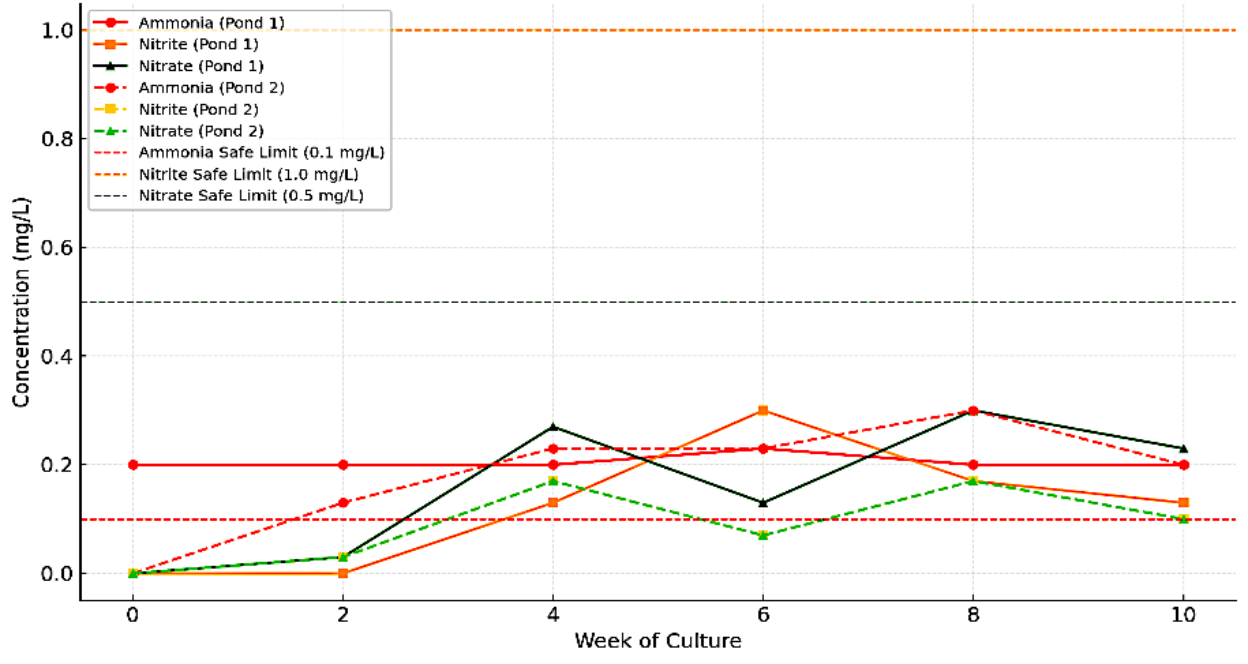
Ammonia (NH₃–N) was the most variable and ecologically critical parameter. Concentrations in Pond 1 (0.25–0.31 mg L⁻¹) and Pond 2 (0–0.4 mg L⁻¹) frequently exceeded the safe limit (≤ 0.1 mg L⁻¹), contradicting the earlier assumption of “stable pond conditions. ” Elevated ammonia likely originated from uneaten feed, fecal matter, and sediment decomposition. Pond 2, located closer to residential areas, exhibited more frequent ammonia spikes, possibly due to domestic runoff input.
In natural waters, nitrite generally occurs at very low concentrations compared to nitrate, as it is unstable in the presence of oxygen. Nitrite is toxic to fish and shrimp because it oxidizes hemoglobin, thereby reducing its oxygen-binding capacity. The toxicity mechanism involves interference with oxygen transport in the blood and tissue damage (18). Nitrite (0–0.4 mg L⁻¹) and nitrate (0–0.4 mg L⁻¹) remained below their respective toxicity thresholds (1.0 mg L⁻¹ and 0.5 mg L⁻¹), suggesting effective nitrification, although occasional peaks followed ammonia surges.
Ammonia (NH₃–N)
Ammonia (NH₃) is one of the most critical parameters influencing shrimp health and pond productivity. It is mainly derived from shrimp excretion, uneaten feed, decomposition of organic matter, and sediment resuspension. In aquaculture systems, ammonia exists as unionized NH₃ (toxic) and ionized NH₄⁺ (less toxic), collectively expressed as Total Ammonia Nitrogen (TAN) (19). High TAN concentrations elevate oxygen demand, suppress growth, and may induce mortality when exceeding 0.6 mg/L, whereas optimal levels should remain ≤0.1 mg/L (20).
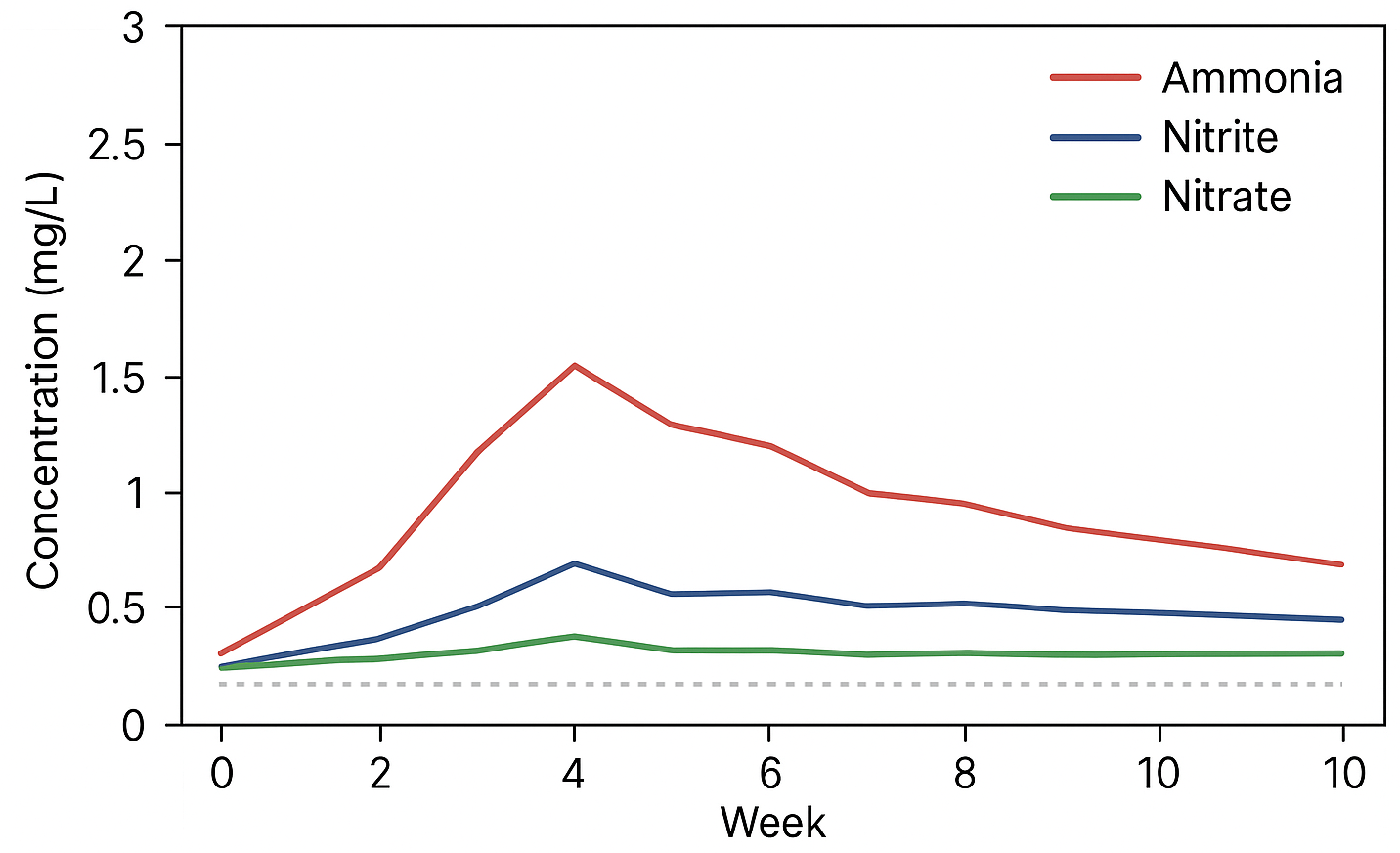
During the 10-week culture period, ammonia levels fluctuated notably between ponds and sampling weeks. In Pond 1 (near agricultural land), concentrations ranged from 0.20–0.31 mg/L, consistently above the recommended safe limit, suggesting the influence of nutrient runoff from surrounding soil and limited water exchange. In Pond 2 (near residential area), ammonia ranged from 0.00–0.40 mg/L, showing more pronounced peaks in mid-cycle (weeks 6–8), likely associated with organic matter buildup and reduced dissolved oxygen during hot, stagnant conditions (21, 22).
As shown in Figure 4, ammonia concentrations fluctuated above the safe limit in several weeks, particularly in Pond 2, suggesting inefficient nitrogen removal and accumulation due to limited water exchange and feed waste. These results reveal that despite other parameters (pH, salinity, and DO) being within acceptable ranges, ammonia frequently exceeded safe thresholds in both ponds, contradicting any claim of stable pond conditions. This underscores that pond stability must be interpreted holistically rather than based solely on temperature or DO stability. The recurring exceedance of ammonia indicates an imbalance between organic matter input and microbial degradation capacity.
From an ecological standpoint, nutrient accumulation in these traditional ponds likely stems from:
- Feed waste and shrimp excretion, both primary ammonia contributors;
- Low water exchange frequency, common in extensive systems, which limits nitrogen dilution; and
- Sediment nutrient release, especially in older ponds with fine organic deposits.
These findings suggest that managing ammonia levels requires improved feed practices (e. g. , enhanced feed conversion efficiency and optimized feeding schedules), periodic sediment removal, and aeration or partial water exchange to promote nitrification.
Overall, both ponds exhibited ammonia concentrations above the safe limit at various points in the culture cycle, suggesting the need for improved feed management and water exchange practices to mitigate ammonia accumulation.
Phosphate (PO₄³⁻)
Phosphate is an essential nutrient that supports shrimp growth and phytoplankton productivity in aquaculture systems (Amri, 2008) (23). However, excessive phosphate enrichment can trigger eutrophication, reduce dissolved oxygen, and deteriorate pond conditions (24).
During the observation period, phosphate concentrations ranged from 0 to 0.3 mg/L in Pond 1 and 0 to 0.5 mg/L in Pond 2, both remaining well below the reference limit of 1–5 mg/L (25). The slightly higher values observed in Pond 2 indicate localized nutrient inputs, possibly derived from residential runoff and feed residues. Although these levels do not pose immediate eutrophication risks, they indicate early signs of nutrient accumulation that could compromise pond stability if left unmanaged.
From an ecological perspective, phosphate variation between ponds likely reflects differences in land use and management intensity. Pond 1, located near agricultural land, may experience nutrient binding in soil sediment, while Pond 2, closer to residential areas, receives more direct input from feed dust and domestic runoff.
Maintaining balanced phosphate levels is therefore essential to prevent oxygen depletion and algal overgrowth. Proper feed management, periodic sediment removal, and controlled water exchange can minimize phosphorus buildup and sustain pond productivity over time.
Water Hardness
Water hardness is a critical parameter in shrimp pond culture, as it influences growth, health, and overall productivity. Calcium and magnesium, the primary constituents of hardness, are essential for exoskeleton formation and successful molting in Penaeus monodon. Molting requires sufficient calcium availability to form new cuticle layers; deficiencies can disrupt the process and negatively impact growth (24).
During the observation period, water hardness ranged between 0.17 and 0.43 mg/L CaCO₃ across all sampling stations. Pond 1 exhibited slightly higher values (0.30–0.43 mg/L CaCO₃) compared to Pond 2 (0.17–0.30 mg/L CaCO₃), suggesting mineral enrichment from agricultural soil runoff in the surrounding area. Despite these variations, all recorded values were far below the reference limit of 100 mg/L CaCO₃, indicating that the ponds maintained soft-water conditions throughout the culture period.
From an ecological perspective, the low hardness levels may reflect limited groundwater inflow or frequent rainfall dilution, typical of traditional earthen ponds. While such softness did not appear to impair shrimp survival, prolonged exposure could reduce shell quality and molting efficiency due to insufficient calcium availability (26).
Although hardness remained relatively stable throughout the 10-week observation, maintaining mineral balance is crucial for sustainable pond management. Periodic supplementation with calcium carbonate (CaCO₃) or controlled water exchange using mineral-rich sources may help stabilize hardness and prevent physiological stress in shrimp.
Overall, both ponds showed consistent but low hardness levels, which are still enough to support basic physiological functions but could benefit from better mineral management to improve molting performance and pond productivity.
Conclusion
This study showed that while most water quality parameters, including pH, temperature, salinity, and dissolved oxygen, were generally within acceptable limits for Penaeus monodon culture, several parameters, particularly ammonia and, at times, nitrite, exceeded safe thresholds during certain weeks. These fluctuations indicate that pond stability was only partial, reflecting imbalances between feed input, organic matter decomposition, and limited water exchange efficiency. Acknowledging the study’s limitations, such as biweekly sampling intervals, a small number of sampling stations, and the absence of biological response data (growth and survival), future work should integrate higher-frequency monitoring and sediment–water nutrient interactions to better quantify cause-and-effect relationships. Overall, this study highlights that traditional shrimp ponds in Tarakan remain environmentally feasible but require improved nutrient management, aeration, and consistent monitoring to maintain stable and productive culture conditions.
Declarations
Conflict of Interest
The authors declare no conflicting interest.
Data Availability
All data generated or analyzed during this study are included in this published article.
Ethics Statement
All animal experiments were approved by the Institutional Animal Care and Use Committee / Animal Research and conducted in accordance with relevant guidelines and regulations.
Funding Information
The author(s) declare that no financial support was received for the research, authorship, and/or publication of this article.
References
- Abdul-Aziz MA, Schöfl G, Mrotzek G, Haryanti H, Sugama K, Saluz HP. Population structure of the Indonesian giant tiger shrimp Penaeus monodon: A window into evolutionary similarities between paralogous mitochondrial DNA sequences and their genomes. Ecol Evol. 2015;5(17):3570–84.
- De Heus Animal Nutrition. Jejak kejayaan udang windu di Indonesia. De Heus Animal Nutrition; 2025.
- Rukisah R, Satriani GI, Awaludin A. Prospects for the development of oyster cultivation in Tarakan, North Kalimantan in the perspective of a comparative study in Sabah, Malaysia. AACL Bioflux [Internet]. 2022;15. Available from: http://www.bioflux.com.ro/aacl
- Bosma R, Sidik AS, van Zwieten P, Aditya A, Visser L. Challenges of a transition to a sustainably managed shrimp culture agro-ecosystem in the Mahakam delta, East Kalimantan, Indonesia. Wetl Ecol Manag. 2012;20(2):89–99.
- Muliyadi M. Pengaruh multibakteri pada media pemeliharaan terhadap kualitas air, pertumbuhan dan sintasan udang windu (Penaeus monodon). J Perikanan Unram. 2022;12(4):615–22.
- Syah R, Makmur M, Fahrur M. Budidaya udang vaname dengan padat penebaran tinggi. Media Akuakultur. 2017;12(1):19–25.
- Amien M, Nirmala K, Pertiwi S, Ambarwulan W. Analysis of water quality in the river estuary as source water for tiger shrimp farming in ponds in Bulungan Regency, Province of North Kalimantan, Indonesia. AACL Bioflux [Internet]. 2020;13. Available from: http://www.bioflux.com.ro/aacl
- Tabrett, S., Ramsay, I., Paterson, B., & Burford, M. A. (2024). A review of the benefits and limitations of waste nutrient treatment in aquaculture pond facilities. Reviews in Aquaculture, 16(4), 1766-1786.
- Asian Development Bank. Infrastructure improvement for shrimp aquaculture project (RRP INO 55020-001): Indonesia. Manila: ADB; 2022.
- Gusman E, Oesama O, Wiharyanto D. Studi hubungan parameter kualitas air dengan kelimpahan bakteri di tambak tradisional udang windu (Penaeus monodon) di Pulau Tibi, Kalimantan Utara. Samakia J Ilmu Perikanan. 2024;15(2):198–206.
- Diwan AD, Harke SN, Panche A. Biological mechanism of osmoregulatory stress in penaeid shrimp, Penaeus indicus. Aquac Rep. 2022;25:101255.
- Rahi, M. L., Azad, K. N., Tabassum, M., Irin, H. H., Hossain, K. S., Aziz, D., et al. (2021). Effects of salinity on physiological, biochemical and gene expression parameters of black tiger shrimp (Penaeus monodon): Potential for farming in low-salinity environments. Biology, 10(12), 1220.
- Ariadi, H., Azril, M., & Mujtahidah, T. (2023). Water Quality Fluctuations in Shrimp Ponds During Dry and Rainy Seasons. Croatian Journal of Fisheries, 81(3).
- Re AD, Díaz F. Effect of different oxygen concentrations on physiological energetics of blue shrimp, Litopenaeus stylirostris. Open Zool J. 2011;4:1–6.
- Espinosa-Díaz, L. F., Zapata-Rey, Y. T., Ibarra-Gutierrez, K., & Bernal, C. A. (2021). Spatial and temporal changes of dissolved oxygen in waters of the Pajarales complex, Ciénaga Grande de Santa Marta: Two decades of monitoring. Science of the Total Environment, 785, 147203.
- Hu, X., Liu, Y., Wang, M., Dong, X., Tian, X., & Li, L. (2025). Dynamics of inorganic nitrogen transformation in small greenhouse shrimp ponds: stage-dependent variations in photoautotrophic, autotrophic and heterotrophic ammonia removal. Aquaculture, 743257
- Boyd CE. Nitrification: An important process in aquaculture. Glob Aquac Alliance [Internet]. 2007. Available from: https://www.aquaculturealliance.org
- Della Rocca Y, Fonticoli L, Rajan TS, Trubiani O, Caputi S, Diomede F, et al. Hypoxia: Molecular pathophysiological mechanisms in human diseases. J Physiol Biochem. 2022;78:739–52.
- Ning S, Hu J, Yu J, Huang L, Lai M, Li X, et al. Hydrogen injection reduces ammonia nitrogen and changes microbial community composition in aquaculture water. Front Mar Sci. 2023;10:112233.
- Park AHJ, Yu YB, Choi JH, Lee JH, Kang JC. Toxic effects of ammonia on the survival, growth, and oxidative and immune responses in the Pacific abalone, Haliotis discus hannai. Fish Aquat Sci. 2021;24(2):89–98.
- Chen JC, Chin TS. Effect of ammonia at different pH levels on Penaeus monodon postlarvae. Asian Fish Sci. 1989;2(2):165–75.
- Chen J, Zhou F, Huang J, Ma Z, Jiang S, Qiu L, et al. Ammonia and salinity tolerance of Penaeus monodon across eight breeding families. Springerplus. 2016;5(1):1–4.
- Aliviyanti D, Retnaningdyah C. Maximum growth rate and carrying capacity of Oscillatoria in intensive shrimp farming pond Situbondo. Life Sci J. 2017;7(1):25–30.
- Utama D, Widigdo B, Kamal MM, Taryono T. Evaluasi kesesuaian tambak budidaya udang vaname dengan tingkat teknologi berbeda di pesisir Kabupaten Lampung Timur, Indonesia. J Ris Akuakultur. 2023;18(4):235–48.
- Iber BT, Kasan NA. Recent advances in shrimp aquaculture wastewater management. Heliyon. 2021;7(12):e08565.
- Graciano Leon, F., Vasquez Mori, J., & REYES-AVALOS, W. (2022). The total water hardness affects molting, calcification, growth and survival of Cryphiops caementarius (Palaemonidae). Acta Biológica Colombiana, 27(1), 88-96.