RESEARCH ARTICLE
Daily Activity Patterns and Behavioral Responses of Captive Javan Gibbons (Hylobates moloch) to Visitor Presence at Bandung Zoo
Tropical Animals|Vol. 1, Issue 1, pp. 26-31 (2025)
Views
Downloads
Shares

Received
Sep 27, 2025Revised
Dec 21, 2025Accepted
Dec 24, 2025Published
Dec 31, 2025
Abstract
Introduction
The Javan gibbon (Hylobates moloch), an arboreal primate endemic to Java, Indonesia, is currently facing severe threats to its survival. Listed as Endangered by the International Union for Conservation of Nature (IUCN), its population is estimated to have declined by more than 50% over the past three generations, with fewer than 4, 000 individuals remaining in the wild (1). The primary drivers of this decline include habitat loss due to deforestation and fragmentation, illegal hunting, and increasing pressure from human activities (2). This rapid population decrease highlights the urgent need for effective conservation measures, both in situ and ex situ, to prevent further decline and to safeguard the species’ ecological role in forest ecosystems (3).
Conservation efforts for the Javan gibbon have traditionally focused on habitat protection, anti-poaching initiatives, and the management of conservation breeding programs (4). In recent decades, ex situ institutions such as zoos have assumed an increasingly important role, not only in captive breeding and public education but also in generating behavioral data that can inform conservation and welfare-oriented management strategies. However, one of the major challenges in ex situ conservation is the impact of human presence. Zoos are public environments that inevitably expose primates to frequent and often unpredictable human interactions, which may alter natural behavior, increase stress levels, and affect overall welfare and reproductive success (5). Previous studies on a range of primate species have demonstrated that visitor presence can reduce affiliative behaviors, increase vigilance or agonistic responses, and disrupt normal activity budgets (6). Nevertheless, most of this evidence is derived from studies on macaques, great apes, or other gibbon species, while research focusing specifically on the Javan gibbon remains scarce. To date, published studies on Hylobates moloch have largely emphasized population status, habitat use, and vocal communication in the wild, with relatively little attention given to behavioral responses to human presence under captive conditions (7,8). This lack of species-specific behavioral data represents a critical knowledge gap, particularly given the increasing reliance on zoos for conservation breeding and public engagement.
This study addresses this gap by systematically analyzing daily activity patterns and behavioral responses of captive Javan gibbons at Bandung Zoo in relation to visitor presence. Using ad libitum and focal animal sampling methods, we quantified activity budgets and categorized behavioral responses under different visitor conditions. By integrating behavioral ecology with zoo-based conservation management, this research provides novel insights into the compatibility of ecotourism, animal welfare, and species conservation. The findings are expected to support evidence-based recommendations for improving captive management practices, enhancing welfare standards, and contributing to broader conservation objectives for the Javan gibbon.
Methodology
Study Design and Rationale
This study used a quantitative descriptive observational design with direct field observations to examine daily activity budgets and behavioral responses of captive Javan gibbons (Hylobates moloch) in relation to visitor presence. The descriptive approach aimed to provide a clear depiction of observed behaviors under routine zoo conditions without experimental manipulation. Data were obtained through direct observations supported by preliminary surveys to identify enclosure conditions and study subjects.
Study Site and Subjects
The study was conducted at Bandung Zoo, West Java, Indonesia (6°53'26.2"S, 107°36'39.8"E), an ex-situ conservation facility and member of the Indonesian Zoological Parks Association. The subjects were two captive Javan gibbons housed together in the same enclosure as a breeding pair: a 16-year-old male (Ukis) and a 15-year-old female (Kiskis). The enclosure measured approximately 5 × 5 × 4.5 m and was equipped with ropes, climbing structures, wooden perches, and feeding platforms. Both individuals had been maintained in the enclosure for several years and were habituated to routine human presence.
Data Collection
Behavioral observations were conducted over 31 consecutive days from March to April 2023, between 08: 00 and 16: 00 WIB. Daily activity data were collected using the ad libitum sampling method, in which all visible behaviors performed by the gibbons were recorded continuously (9). This observation period was selected because Javan gibbons are diurnal primates that are most active during daylight h.
The behavioral parameters recorded included locomotion, feeding, resting, grooming, vocalization, agonistic behavior, urination, and play behavior. Each observed activity was recorded in terms of frequency and duration for each individual.
Measurement of Visitor Presence and Visitor Responses
Observations of Javan gibbon responses to visitor presence were conducted directly when visitors were present around the enclosure. Visitor intensity was categorized into two levels based on the type of day during routine zoo operations. High visitor intensity occurred on holidays and weekends (Saturday and Sunday), while low visitor intensity occurred on weekdays (Monday to Friday). Behavioral responses toward visitors were recorded during both periods and grouped for descriptive comparison.
Environmental Variables
Ambient temperature and relative humidity were recorded using a thermohygrometer at multiple time points throughout the day, specifically at 08: 00, 09: 00, 10: 00, 11: 00, 13: 00, 14: 00, and 15: 00 WIB, to document environmental conditions during behavioral observations.
Data Analysis
Behavioral data were analyzed using descriptive and comparative methods. Activity budgets were expressed as percentages of the total observation time allocated to each behavioral category in order to describe daily activity patterns. The relative frequency of each activity was calculated following previous studies (10) by dividing the number of occurrences of a given activity by the total number of all recorded activities and expressing the result as a percentage, allowing comparison among behavioral categories. In addition, the average duration of each behavioral category was calculated by dividing the total time spent performing a specific behavior by the number of its occurrences during the observation period, providing information on the persistence of behaviors once initiated. Results were presented descriptively using tables and graphs to illustrate activity patterns and behavioral responses to visitor presence.
Result and Discussion
Activity Budget of the Javan Gibbons
Daily activity budgets of the captive Javan gibbons were quantified based on direct observations using the ad libitum sampling method, in which all visible behaviors performed by the gibbons were recorded continuously between 08: 00 and 16: 00 WIB over the 31-day observation period. Activities were categorized into locomotion, resting, feeding, grooming, vocalization, agonistic behavior, and urination. The proportional distribution of these activities for Ukis (male) and Kiskis (female) across the 31-day observation period is presented in Figure 1a and Figure 1b as percentages of total observed behaviors.
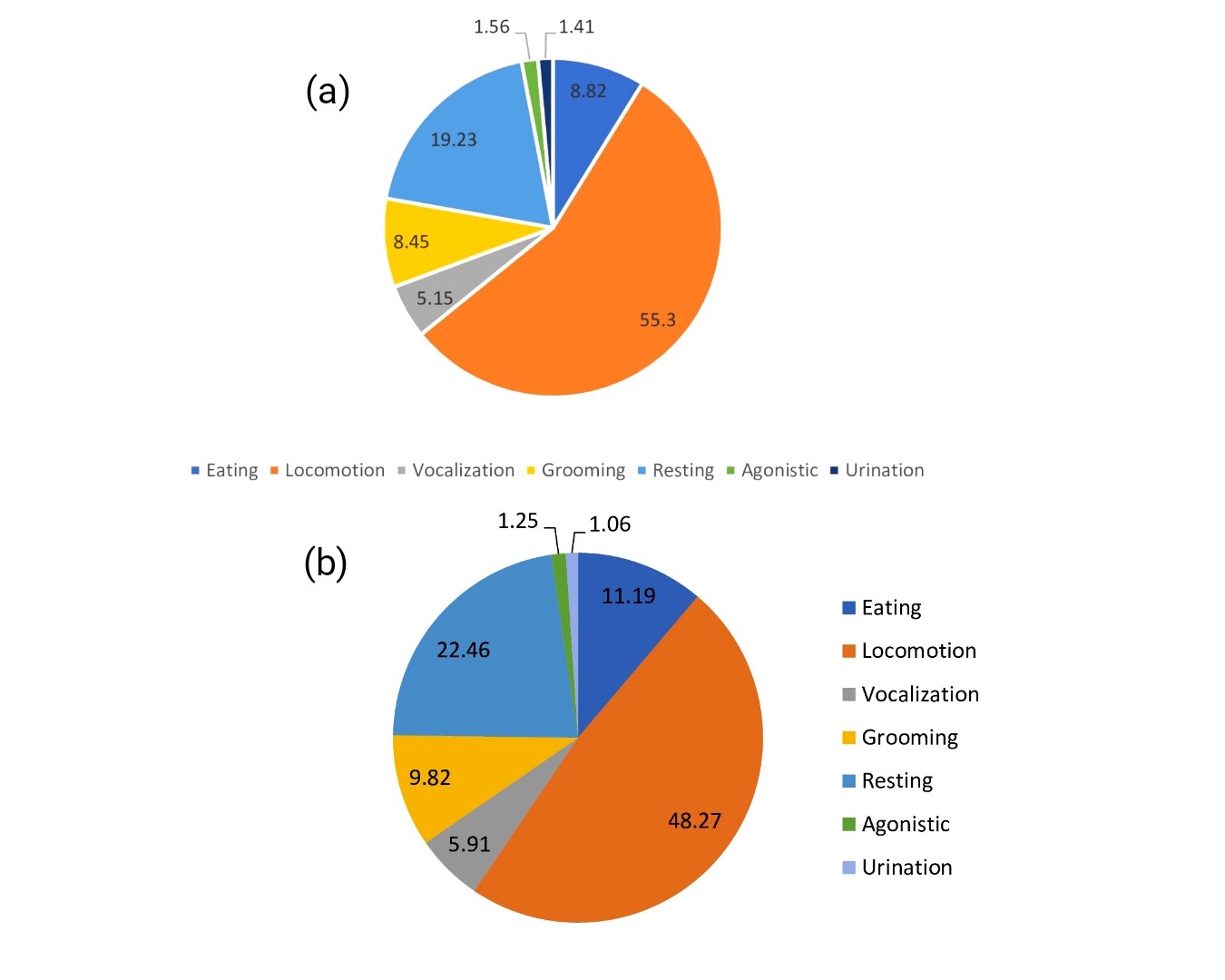
Locomotion constituted the largest proportion of activities in both individuals, with a higher percentage observed in Ukis (male) compared to Kiskis (female). This pattern is consistent with previous studies reporting higher locomotor engagement in adult male gibbons, often associated with space use, vigilance, and higher energetic demands (11). Urination represented the smallest proportion of observed activities for both individuals, likely reflecting indirect water intake through moisture-rich fruits and leaves rather than active drinking behavior (12).
Average Duration of Daily Activities
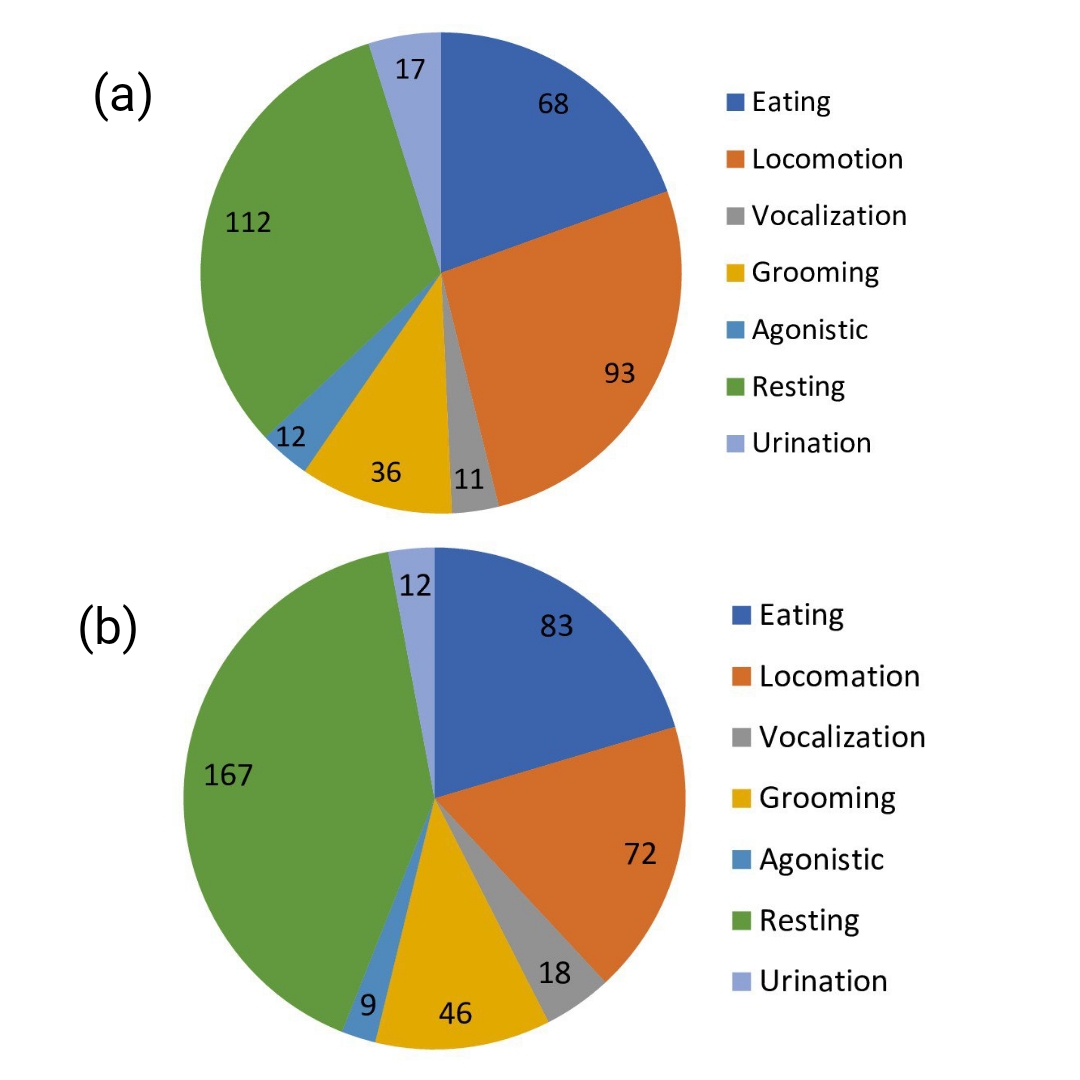
To complement activity frequency, the average duration of each behavioral category was calculated based on the total duration and frequency of observed behaviors. Average duration refers to the mean length of time (in minutes) spent performing a specific behavior per occurrence, calculated by dividing the total duration of that behavior by the number of its occurrences during the observation period. This measure provides insight into how long a behavior persisted once initiated, rather than how often it occurred.
The results shown in Figure 2a and Figure 2b indicate that resting exhibited the longest average duration in both individuals, reflecting periods of inactivity and energy conservation, particularly during warmer midday conditions (13). In contrast, agonistic behaviors exhibited the shortest average duration, indicating that aggressive interactions were brief and infrequent. These findings are consistent with reports that gibbons generally avoid prolonged conflict due to its high energetic cost.
Influence of Environmental Conditions
Ambient temperature and relative humidity were recorded using a thermohygrometer at multiple time points throughout the day, specifically at 08: 00, 09: 00, 10: 00, 11: 00, 13: 00, 14: 00, and 15: 00 WIB, to document environmental conditions during behavioral observations Table 1. Based on repeated measurements taken throughout the observation period, ambient temperature ranged from 25–28 °C and relative humidity ranged from 74–85%. These values fall within the natural climatic range of Javan gibbon habitats (14). Lower morning temperatures combined with high humidity appeared to promote locomotor activity, likely as a thermoregulatory response (2). Conversely, higher midday temperatures coincided with increased resting behavior. Environmental conditions therefore played an important role in shaping daily activity patterns, highlighting the importance of microclimate management in captive enclosures.
| Time (WIB) | Average Temperature (°C) | Average Humidity (%) |
|---|---|---|
| 08: 00 | 25.4 | 74 |
| 09: 00 | 25.5 | 75 |
| 10: 00 | 26.7 | 79 |
| 11: 00 | 27.1 | 78 |
| 13: 00 | 27.9 | 83 |
| 14: 00 | 27.2 | 81 |
| 15: 00 | 25.5 | 80 |
Description of Major Activity Categories
Locomotion Activity
Locomotion included brachiation, climbing, and bipedal walking (2). Ukis showed a longer average duration of locomotor activity than Kiskis. The availability of ropes and wooden structures in the enclosure facilitated species-typical movements, allowing expression of natural locomotor behavior (12).
Resting Activity
Resting accounted for a substantial proportion of daily activities in both individuals, with longer durations observed in Kiskis. Resting typically occurred during midday and late afternoon and involved sitting, hanging, or lying postures. These patterns are consistent with previously reported resting behavior in captive and wild gibbons (15).
Feeding Activity
Feeding was a regularly observed activity during the daily observation period and was closely associated with scheduled food provisioning. Feeding behavior generally began in the morning at around 09: 00 WIB and occurred again in the afternoon at approximately 14: 00 WIB. During morning sessions, the gibbons were primarily observed consuming fruits, whereas in the afternoon they also fed on young leaves (16).
Differences in feeding posture were evident between individuals. Kiskis was frequently observed feeding while sitting on the night enclosure, whereas Ukis more often fed while hanging from enclosure structures. These postural patterns resemble feeding behaviors reported in wild gibbons, which commonly feed while hanging from smaller branches or sitting on larger supports. To minimize competition, food was provided separately for each individual; however, both gibbons were also observed occasionally plucking leaves from vegetation surrounding the enclosure. Overall, feeding behavior appeared to be shaped by food availability and individual characteristics such as body size, which may influence feeding preferences and intake (12).
Grooming Activity
Grooming was observed as a routine behavior and most commonly occurred during periods of rest. This activity appeared spontaneous and was mainly directed toward the head and facial regions, areas where food residues were likely to accumulate. Self-directed grooming was also observed after urination, involving contact with the anal or genital area. These behaviors are consistent with hygiene and body maintenance commonly exhibited by primates.
Vocalization Activity
Vocalization is a characteristic behavior of Javan gibbons and was observed regularly during the study period. Vocal activity was most prominent in the morning h, particularly between 07: 00 and 09: 00 WIB, and was dominated by calls produced by the female. These calls are commonly associated with territorial advertisement and communication. Male vocalizations were observed less often and tended to be brief. In addition to routine calling, alarm vocalizations were occasionally recorded, especially in response to loud noises or visitor disturbances, indicating a defensive or alerting function (17).
Agonistic Behavior
Agonistic behaviors were infrequently observed and generally occurred as brief and isolated events. These interactions included threat-related behaviors such as teeth-baring, rapid movements, and minor physical actions. On some occasions, Kiskis was observed displacing Ukis from feeding areas, suggesting short-term social tension rather than sustained conflict. Such behaviors are typically related to social regulation or territorial defense, but prolonged aggression was not evident during the observation period (18).
Urination Activity
Urination was observed only occasionally and most commonly occurred in the morning after the gibbons had awakened. This behavior was typically performed in a squatting or sitting posture on bamboo perches. The infrequent occurrence of urination may be related to the absence of observed drinking behavior, as hydration needs were likely met through the consumption of fruits and leaves with high moisture content (19).
Behavioral Responses to Visitor Presence
Observations of the Javan gibbons Ukis (16 years old) and Kiskis (15 years old) at Bandung Zoo revealed varied behavioral responses to visitor presence. The responses were categorized as affiliative, submissive, agonistic, or neutral. Visitor activities observed included watching, photographing, offering food or objects, reading information boards, vocalizing, and attempting physical contact. Differences in gibbon responses between weekdays and weekends are illustrated in Figure 3a and Figure 3b.
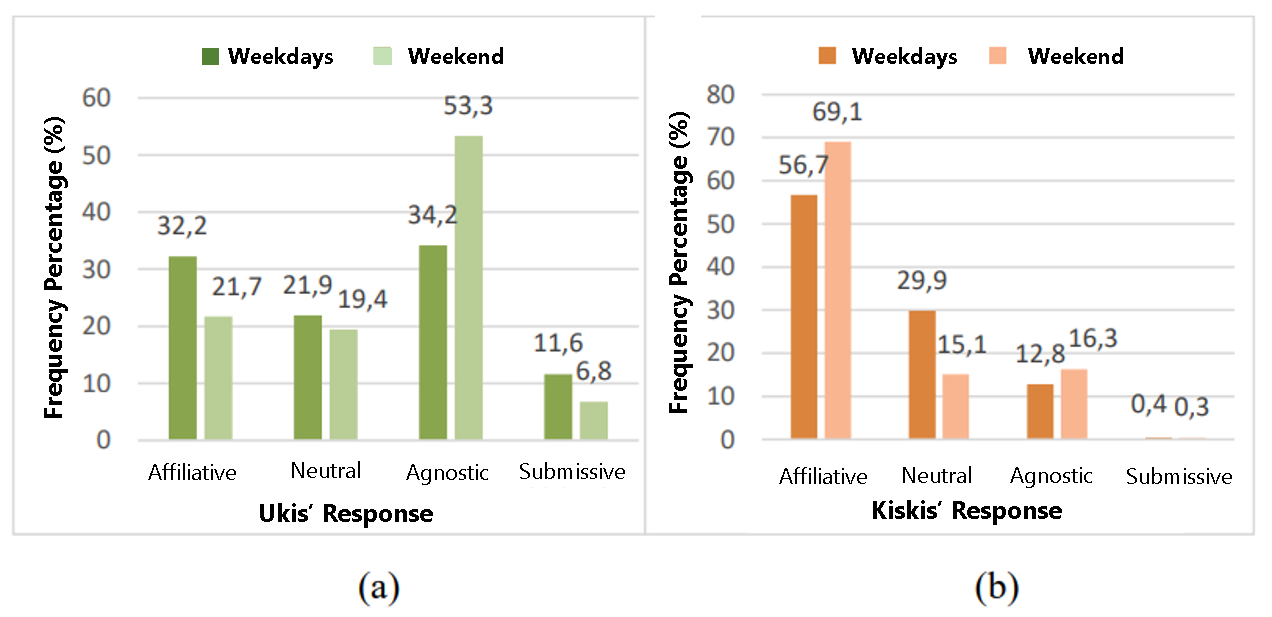
Responses of Ukis (male) and Kiskis (female) toward visitor presence were categorized as affiliative, neutral, agonistic, or submissive based on observations conducted on weekdays (Monday–Friday) and weekends (Saturday–Sunday), in line with the visitor intensity categories applied in this study. Responses to visitor presence were recorded based on direct observations of visitors physically present around the enclosure during the observation periods. Contextual information regarding individual gibbons was obtained through interviews with animal keepers to support behavioral interpretation and provide background on husbandry practices.
Affiliative Response
Affiliative responses represent friendly interactions, typically observed when primates perceive human presence as non-threatening or as a potential food source. Observed behaviors included approaching visitors, extending hands, and following them. The highest affiliative responses by both Ukis and Kiskis involved approaching visitors and extending hands, with Kiskis showing a higher frequency during weekends and Ukis during weekdays. These behaviors were strongly influenced by visitor actions, such as bringing or offering food. Notably, Kiskis frequently approached visitors even without food, indicating possible stress or abnormal adaptation to captivity (7). Excessive food provisioning negatively affects welfare by reducing natural foraging behaviors (20).
Submissive Response
Submissive responses, such as avoidance and teeth-baring, were recorded when gibbons perceived humans as potential threats. Ukis, being more sensitive to visitor presence, displayed higher levels of avoidance, often retreating rapidly in response to sudden or suspicious noises. This aligns with previous findings that primates classify humans, keepers (familiar), observers (less familiar), and zoo visitors (strangers), and respond with heightened caution to unfamiliar individuals (21).
Agonistic Response
Agonistic responses involved aggressive displays such as rapid movement and vocalizations. Ukis showed higher agonistic activity during weekends, whereas Kiskis displayed more during weekdays. These behaviors were often triggered by visitor disturbances, including sudden noises, abrupt movements, and loud vocal imitations. Similar findings have been reported in other Hylobates species, where increased visitor density correlates with heightened aggression (18).
Neutral Response
Neutral responses were characterized by indifference to visitors, with gibbons continuing routine behaviors such as feeding, locomotion, resting, or social interactions. Kiskis exhibited more neutral responses, particularly when visitors were passive or refrained from direct interaction. This is consistent with reports that passive visitor behavior has little effect on captive primates (16).
Overall, differences in visitor presence between weekdays and weekends were accompanied by observable variations in gibbon behavioral responses. Periods with higher visitor presence were more frequently associated with affiliative and agonistic behaviors, particularly when visitors engaged in active interactions such as feeding attempts, loud vocalizations, or abrupt movements. In contrast, dumring periods with fewer visitors or more passive visitor behavior, neutral responses were more commonly observed. Visitor behavior and enclosure conditions therefore appeared to influence how Ukis and Kiskis responded to human presence. On one crowded weekend, Ukis was observed manipulating the enclosure lock and escaped briefly, suggesting that elevated visitor activity may increase behavioral arousal and stress in captive gibbons.
Conclusion
This study documented the daily activity patterns and behavioral responses to visitor presence of two captive Javan gibbons (Hylobates moloch), consisting of one male (Ukis) and one female (Kiskis), housed at Bandung Zoo. The observations showed that locomotion and resting were the most commonly displayed activities during the observation period, whereas urination and agonistic behaviors were rarely observed.
Behavioral responses toward visitors varied between individuals. The male gibbon (Ukis) was more frequently observed displaying avoidance and agonistic-related responses, particularly in situations involving sudden noise or intense visitor activity. In contrast, the female gibbon (Kiskis) more often exhibited affiliative behaviors, such as approaching visitors, suggesting a higher tolerance toward human presence. These differences were observed under routine zoo conditions and reflect individual variation in behavioral adaptation to the captive environment.
Overall, the findings indicate that visitor presence, visitor behavior, and enclosure conditions are closely associated with variations in gibbon behavior. Although no statistical testing was applied, the descriptive observations suggest that human–animal interactions may influence activity patterns and welfare in captive Javan gibbons. Therefore, improved management of visitor behavior, stricter enforcement of feeding prohibitions, and enrichment of enclosure design are recommended to reduce potential stress and encourage the expression of more natural behaviors. Such measures are expected to enhance animal welfare and strengthen the role of ex situ conservation facilities in supporting the conservation of this endangered species.
Declarations
Conflict of Interest
The authors declare no conflicting interest.
Data Availability
All data generated or analyzed during this study are included in this published article.
Ethics Statement
Ethical approval was not required for this study.
Funding Information
The author(s) declare that no financial support was received for the research, authorship, and/or publication of this article.
References
- Widyastuti S, Perwitasari-Farajallah D, Prasetyo LB, Iskandar E. The Javan gibbon (Hylobates moloch) habitat changes and fragmentation in the Dieng Mountains, Indonesia. Jurnal Manajemen Hutan Tropika. 2023;29(2):150–60.
- Yasmin Y, Oksari AA. Prosiding Seminar Nasional Sains dan Teknologi Seri 02 Fakultas Sains dan Teknologi. Vol. 1. Universitas Terbuka; 2024.
- Campbell C, Andayani N, Cheyne S, Pamungkas J, Manullang B, Usman F, et al. Indonesian gibbon conservation and management workshop final report. Apple Valley (MN): IUCN/SSC Conservation Breeding Specialist Group; 2008.
- Atsaury ZIA, Husodo T, Megantara EN, Lastini T, Hernawan E, Wulandari I, et al. Population and habitat analysis of Javan gibbon (Hylobates moloch) in fragmented forests of West Java, Indonesia. Biodiversitas. 2025;26(6):2857–72.
- Widyaningrum DF, Indarjani I, Setia TM. Perilaku owa jawa (Hylobates moloch Audebert, 1798) di Taman Margasatwa Ragunan saat pandemi COVID-19. Bio-Sains: Jurnal Ilmiah Biologi. 2022;2(1):33–39.
- Saputra A. Artikel review: kajian perilaku owa jawa di kebun binatang dengan yang berada di wilayah hutan konservasi. Prosiding Seminar Nasional Biologi. 2023;3(2):1285–1292.
- Hashmi A, Sullivan M. The visitor effect in zoo-housed apes: the variable effect on behaviour of visitor number and noise. Journal of Zoo and Aquarium Research. 2020;8(4).
- Amarasinghe NK, Amarasinghe AT. Social behaviours of captive Hylobates moloch (Primates: Hylobatidae) in the Javan gibbon rescue and rehabilitation center, Gede-Pangrango National Park, Indonesia. Taprobanica: The Journal of Asian Biodiversity. 2011;2(2):97.
- Haristyaningrum D, Masy B, Machmud Thohari DA, et al. Stimulasi perilaku kawin owa jawa (Hylobates moloch Audebert, 1798) jantan menggunakan sanrego (Lunasia amara Blanco) 300 mg. 2014;19.
- Riendriasari SD, Iskandar E, Manansang J, Pamungkas J. Tingkah laku owa jawa (Hylobates moloch) di fasilitas penangkaran Pusat Studi Satwa Primata, Institut Pertanian Bogor. Jurnal Primatologi Indonesia. 2009;6(1):9–13.
- Lee S, Ryu H, Yi Y, Jang SA, Gye H, Choi A, et al. The effects of visitors and social isolation from a peer on the behavior of a mixed-species pair of captive gibbons. Scientific Reports. 2022;12(1):19706.
- Kusumorini A, Wamaliah W, Sukmaningrasa S. The pattern on nutritional behavior of Javan gibbon (Hylobates moloch) in Bandung’s Zoo. In: Proceedings of the 1st International Conference on Islam, Science and Technology (ICONISTECH 2019). EAI; 2020.
- Kartono AP, Prastyono, Maryanto I. Variasi aktivitas harian Hylobates moloch (Audebert, 1798). Berita Biologi. 2002;6.
- Oktaviani R, Borzée A, Cahyana AN, Lappan S, Mardiastuti A, Giri MS. Predicting suitable habitat for the endangered Javan gibbon in a submontane forest in Indonesia. Journal of Threatened Taxa. 2023;15(7):23463–71.
- Ilham M, Farajallah DP, Iskandar E. Activity and behavior of the Javan gibbon pairs (Hylobates moloch) in Javan Gibbon Centre. Jurnal Ilmu Pertanian Indonesia. 2019;24(3):273–9.
- Wells DL, Irwin RM. The effect of feeding enrichment on the Moloch gibbon (Hylobates moloch). Journal of Applied Animal Welfare Science. 2009;12(1):21–9.
- Yi Y, Choi A, Lee S, Ham S, Jang H, Oktaviani R, et al. Transient co-singing of offspring and mothers in non-duetting Javan gibbons (Hylobates moloch). Frontiers in Ecology and Evolution. 2022;10:910260.
- Nijman V. In-situ and ex-situ status of the Javan gibbon and the role of zoos in conservation of the species. Contributions to Zoology. 2006;75(3–4):161–168.
- Caspar KR, Yi Y. Hylobates moloch (Primates: Hylobatidae). Mammalian Species. 2022;54(1021).
- Kreigenhofer BM. The effect of food provisioning on the nutrient intake of wild and captive primates: implications for the conservation management of wild and captive populations [dissertation]. Albany (NZ): Massey University; 2017.
- Melfi V. The appliance of science to zoo-housed primates. Applied Animal Behaviour Science. 2005;90(2):97–106.