RESEARCH ARTICLE
Anuran Amphibians of Pucoek Krueng Alue Seulaseh, Southwest Aceh: Species Characteristics and Development of Research-Based Learning Media
Tropical Animals|Vol. 1, Issue 1, pp. 1-10 (2025)
CC BY 4.0-2025 Authors
Views
Downloads
Shares

Received
Sep 29, 2025Revised
Dec 11, 2025Accepted
Dec 19, 2025Published
Dec 28, 2025
Abstract
Amphibians of the order Anura are highly sensitive to environmental change, making them important indicators for ecological studies and relevant objects for biology education. However, vertebrate zoology practicums in Aceh, Indonesia, still lack contextual, local-based learning resources derived from field biodiversity data. This study had two interconnected aims: (1) to document Anura species and their morphological ecological characteristics in the Pucoek Krueng Alue Seulaseh area, Southwest Aceh, and (2) to transform the resulting field data into research-based learning media for vertebrate zoology practicum. Exploratory field surveys were conducted over three consecutive days using visual encounter methods across terrestrial and aquatic microhabitats during morning, midday, and evening periods. Four Anura species from four families were recorded, namely Phrynoidis aspera (19 individuals), Kaloula pulchra (3 individuals), Fejervarya cancrivora (9 individuals), and Odorrana hosii (26 individuals), yielding a total of 57 individuals. Each species exhibited distinct habitat associations, substrate use, skin texture, coloration, and behavioral activity. Given the short survey duration and limited temporal coverage, the recorded species richness represents a minimum baseline estimate rather than a complete inventory. The biological findings were adapted into educational outputs, including a practicum module, reference book, instructional video, and preserved specimens. Expert validation indicated feasibility scores of 85.7% for the reference book and 75% for the instructional video, while student responses (n = 10) yielded an average score of 90%. These results demonstrate the novelty of integrating local amphibian data into contextual learning media while underscoring the need for further ecological and educational evaluation.
Introduction
Amphibians, particularly those belonging to the order Anura (frogs and toads), constitute a taxonomically diverse and ecologically important group of vertebrates that play a crucial role in freshwater and terrestrial ecosystems (1). Globally, amphibian populations are undergoing rapid declines, with more than 40% of species threatened by habitat degradation, climate change, emerging diseases, and overexploitation (2). Indonesia represents one of the global centers of Anuran diversity, and the island of Sumatra alone hosts at least 110 species across six families, underscoring its importance for amphibian biodiversity research (3). Recent herpetofaunal surveys have further emphasized ongoing taxonomic revisions and newly documented species records in Sumatra, highlighting the dynamic nature of Anuran diversity in the region (4). Despite this high diversity, locality-specific data on species composition, distribution, and morphological characteristics remain limited, particularly in Aceh Province (5). This lack of detailed local documentation constrains both biodiversity assessments and the utilization of regional fauna as contextual learning resources.
Within Aceh, existing Anura records are largely derived from fragmented surveys conducted in selected regions, leaving many freshwater ecosystems insufficiently documented. Systematic documentation in this study refers to standardized field surveys combined with direct morphological characterization and habitat-based observations. Such an approach is essential to address unresolved taxonomic and ecological uncertainties at the local scale, particularly in underexplored habitats such as Pucoek Krueng Alue Seulaseh, Aceh Barat Daya, which possesses environmental conditions favorable for amphibian assemblages but has received limited scientific attention.
These data limitations also have direct implications for higher education, especially in practical zoology courses. Vertebrate zoology at Universitas Islam Negeri Ar-Raniry emphasizes specimen-based and field-oriented learning; however, institutional observations and interviews with laboratory coordinators and students indicate that practical activities related to Amphibia are constrained by the limited availability and variation of preserved Anura specimens. In practice, learning activities are commonly represented by only a few widely distributed species, such as Rana esculenta and Bufo cancrivora, which do not adequately reflect the morphological and ecological diversity of the order. This condition has been shown to reduce students’ ability to distinguish diagnostic characteristics among Anura taxa and to contextualize theoretical concepts within local ecosystems. Previous studies confirm that the integration of taxonomically diverse and locally relevant biological examples into teaching media significantly enhances student motivation, learning outcomes, and conceptual understanding (6, 7).
Importantly, the development of effective contextual learning media requires empirically grounded local data. Existing regional or national datasets are generally designed for biodiversity reporting and lack the detailed morphological descriptions, habitat context, and visual documentation needed for practical zoology instruction. Therefore, field-based data collection is a necessary prerequisite for developing accurate and pedagogically relevant learning resources.
Based on these considerations, this study documents the diversity and morphological characteristics of Anura species inhabiting the Pucoek Krueng Alue Seulaseh freshwater ecosystem in Aceh Barat Daya. From a biological perspective, the study provides baseline data at the site level that complement existing Anura inventories from other parts of Aceh and Sumatra. From an educational perspective, the documented field data are systematically transformed into validated learning resources, including reference books, practicum modules, preserved specimens, and instructional videos, specifically designed to support vertebrate zoology courses. By clearly distinguishing biodiversity documentation objectives from pedagogical development goals, this study establishes a logical and evidence-based link between biological research and the development of contextual, locally grounded learning media.
Methodology
Study Design and Rationale
This study adopted a two-phase design, consisting of 1) an exploratory biological field survey and 2) a Research and Development (R&D) phase for educational media production. The exploratory survey was conducted to document the diversity and morphological characteristics of amphibians belonging to the order Anura in the Pucoek Krueng Alue Seulaseh area, Aceh Barat Daya District, Indonesia. This approach was selected because the study area represents an ecologically suitable freshwater habitat for Anura species but lacks site-specific baseline documentation.
The field survey was intentionally designed as a short-term baseline assessment, aiming to generate initial locality-level data rather than seasonal or long-term ecological generalizations. The resulting biological dataset served as the empirical foundation for the subsequent development of contextual learning media for vertebrate zoology practicum courses.
Study Area
Field surveys were conducted in November 2018 within the Pucoek Krueng Alue Seulaseh watershed (approximately 5 ha or 50, 000 m²), located in Jeumpa Sub-district, Aceh Barat Daya, Sumatra, Indonesia. The area is characterized by a fast-flowing freshwater river system, small tributaries, and riparian vegetation bordered by community-managed agroforestry systems dominated by nutmeg (Myristica fragrans), durian (Durio zibethinus), and rubber (Hevea brasiliensis) plantations.
Environmental conditions during the survey period included air temperatures ranging from 24–28 °C, relative humidity between 70–85%, and water pH values of 6.5–7.2. These abiotic conditions are recognized as favorable for amphibian activity and survival.
Sampling Design, Detection Methods, and Survey Effort
The target population comprised wild Anura species occupying aquatic and terrestrial microhabitats within the study area. Sampling employed a purposive transect-based survey, selected to maximize encounter rates across ecologically representative habitats rather than to estimate absolute population density.
Four linear transects (each 500 m in length) were established along riverbanks, tributaries, and adjacent terrestrial zones. Amphibians were detected using Visual Encounter Surveys (VES) combined with active nocturnal searches, which involved systematic scanning of the ground, leaf litter, rocks, vegetation, and shallow water bodies using headlamps.
Surveys were conducted between 19: 00 and 23: 00 h, corresponding to peak nocturnal activity of Anura species. Each survey night involved three observers, resulting in a total sampling effort of approximately 36 person-h across three consecutive nights. The limited temporal window reflects logistical constraints and the study’s objective to provide baseline documentation rather than seasonal comparisons.
Specimen Handling and Morphological Data Collection
Individuals were captured manually or using hand nets and handled carefully to minimize stress. Morphological observations included qualitative and quantitative assessments of diagnostic traits such as snout–vent length (SVL), skin texture, dorsal and ventral coloration, limb proportions, webbing extent, and toe pad development.
Morphometric measurements were obtained using digital calipers with 0.1 mm accuracy. Morphological variation was analyzed descriptively at the species level, based on pooled individual measurements, as the study was not designed to test statistical differences among species. Representative specimens were preserved in 70% ethanol following standard herpetological procedures to support identification, verification, and educational use.
Environmental Variables
Microhabitat parameters including temperature, humidity, and water pH were recorded in situ using thermohygrometers and portable pH meters. These environmental variables were used to support qualitative habitat association analysis, rather than infer causal ecological relationships, by describing the environmental context in which each species was encountered.
Data Analysis
Species were identified to the lowest possible taxonomic level using standard regional identification keys. Species richness was calculated as the total number of species recorded, while relative abundance was expressed as the proportion of individuals per species relative to the total number of individuals observed (n = 57). Habitat use was categorized descriptively based on observed microhabitat preferences (e.g. , riparian zone, forest floor, arboreal vegetation).
Research and Development (R&D) Design
The educational component of this study employed a Borg & Gall Research and Development model, adapted into four main stages: 1) needs analysis, 2) product development, 3) expert validation, and 4) user response evaluation. Biological field data served as the primary content source for developing educational products, including a reference book, practicum module, preserved specimens, and instructional videos.
Morphological descriptions, photographs, and habitat notes obtained from the field survey were systematically converted into instructional materials aligned with the learning outcomes of the vertebrate zoology course. Content validity was assessed through expert judgment, while practicality and student acceptance were evaluated using structured questionnaires administered to biology education students.
Results
Amphibian Species (Order Anura) in Pucoek Krueng Alue Seulaseh, Aceh Barat Daya
Field surveys conducted in Pucoek Krueng Alue Seulaseh documented four Anura species belonging to four families, comprising a total of 57 individuals, as shown in Table 1. The families represented were Bufonidae, Microhylidae, Dicroglossidae, and Ranidae.
| No | Family | Local Name | Species | Number of Individuals |
|---|---|---|---|---|
| 1 | Bufonidae | River Toad | Phrynoidis aspera | 19 |
| 2 | Microhylidae | Banded Bullfrog | Kaloula pulchra | 3 |
| 3 | Dicroglossidae | Green Paddy Frog | Fejervarya cancrivora | 9 |
| 4 | Ranidae | Poisonous Frog | Odorrana hosii | 26 |
| Total | 57 | |||
Individuals were observed occupying three main microhabitats: terrestrial substrates, riverbed rocks, and the root systems along riverbanks. Species activity was recorded during morning (07: 00–09: 00), midday (12: 00–14: 00), and evening (19: 00–21: 00) periods. Species presence was influenced by local physico-chemical parameters, including air temperature, relative humidity, soil moisture, and soil pH.
The most abundant species was O. hosii (26 individuals, Family Ranidae), while K. pulchra (Family Microhylidae) was the least abundant, with only three individuals.
It is important to emphasize that the recorded species richness (four species; 57 individuals) represents site-level baseline data derived from a short-term exploratory survey. Given the limited temporal coverage, absence of seasonal replication, and the purposive visual encounter approach employed, the observed species richness should be interpreted as a minimum estimate rather than a complete representation of the Anuran community. Consequently, the present results reflect species detectability during the survey period and provide an initial empirical reference for Pucoek Krueng Alue Seulaseh, rather than definitive ecological generalizations.
Morphological and Ecological Characteristics of Amphibians (Order Anura) in Pucoek Krueng Alue Seulaseh
A total of four Anura species from four families were recorded in Pucoek Krueng Alue Seulaseh, comprising 57 individuals. It is important to emphasize that this species record represents site-level baseline data derived from a short-term exploratory survey. Given the limited temporal coverage and purposive detection strategy, the observed species richness should be interpreted as a minimum estimate, reflecting species detectability during the survey period rather than the complete Anuran community composition. Accordingly, the findings provide an initial empirical reference for Pucoek Krueng Alue Seulaseh, rather than definitive ecological generalizations. Species were characterized based on habitat preference, substrate association, limb morphology, skin texture, coloration, behavioral activity, and body form, as shown in Table 2.
| No. | Species | Habitat | Substrate Type | Limb Type | Skin Texture | Coloration | Behavior/Activity | Body Form |
|---|---|---|---|---|---|---|---|---|
| 1 | P. aspera | Moist terrestrial | Compact soil, rocks | Forelimbs clawed; hindlimbs webbed | Rough, warty | Dark brown to grayish | Stationary near tree roots | Elongated, stout |
| 2 | K. pulchra | Terrestrial, puddles | Moist soil, shallow pools | Digits with discs | Smooth | Dark brown with yellow streaks | Resting under shrubs | Short, rounded |
| 3 | F. cancrivora | Agricultural fields | Muddy soil, paddy fields | Clawed digits | Slightly rough dorsally | Brown with dark mottling | Inactive on muddy ground | Elongated, with folds |
| 4 | O. hosii | Flowing rivers | Rocks and riverbanks | Digits with discs | Smooth | Olive-green to deep green | Concealed among rocks/roots | Long, slender |
Morphological variation observed among the recorded species was based on direct field observations and morphometric measurements conducted during the survey. Diagnostic traits such as body form, limb proportions, skin texture, coloration, and substrate-associated adaptations were documented in situ and subsequently compared with established taxonomic descriptions to ensure identification accuracy (8). Skin texture varied from smooth (e.g. , O. hosii) to highly granular (P. aspera). Limb adaptations also differed: clawed digits, adhesive discs, and interdigital webbing were observed, reflecting ecological specialization across terrestrial and aquatic habitats (9). Coloration ranged from cryptic brown and gray patterns to vivid olive-green, serving as camouflage within their respective environments (10).
These diagnostic features, habitat, substrate use, skin morphology, coloration, and body form, are critical for reliable species identification and highlight ecological adaptations of Anura in Aceh Barat Daya.
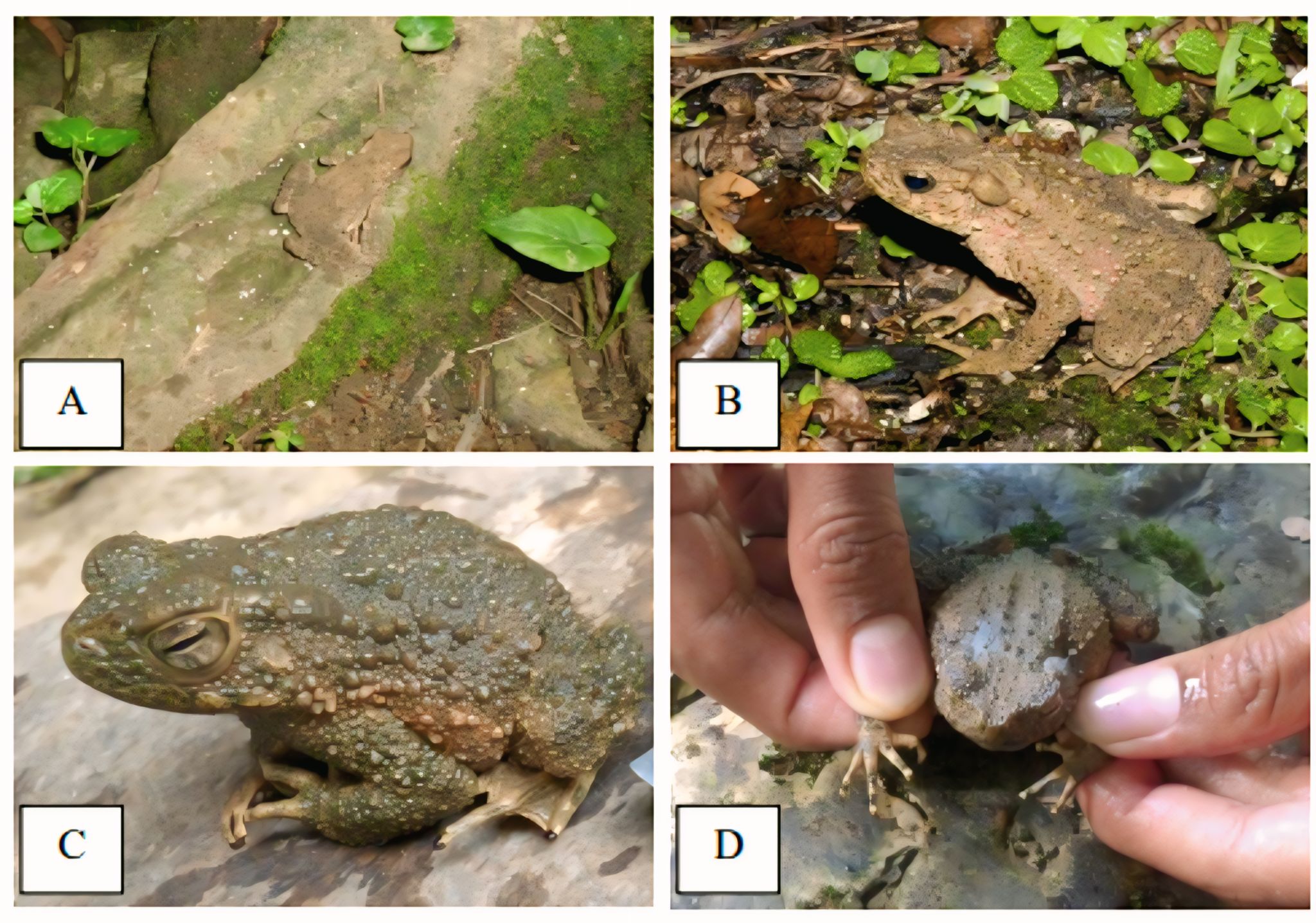
Phrynoidis aspera
P. aspera is readily identifiable by its coarse, tuberculate skin covered with conical warts. Adults are comparatively larger than other species recorded in the study, with males measuring 70–100 mm snout–vent length (SVL) and females 95–120 mm. The body is elongated, moderately stout, and muscular, with well-developed parotoid glands connected to the supraorbital ridge by a supratympanic fold (11).
The species exhibits distinct limb morphology: forelimbs bear robust claw-like digits, while hind limbs are webbed, with each toe terminating in a conspicuous dark disc. Although equipped with clawed forelimbs, the interdigital webbing of the hind limbs facilitates locomotion in moist environments.
Coloration is typically dull dark brown to grayish or nearly black, with ventral surfaces bearing scattered black spots. Males often possess a darkened or reddish gular region. The species is largely terrestrial, favoring moist soils, rocky riverbanks, and shaded areas beneath tree roots. Individuals are mostly sedentary, with sluggish movements that make them easily captured by hand or with nets, in Figure 1.
Kaloula pulchra
K. pulchra is a stout, rounded frog characterized by its globular body, short limbs, and smooth skin. The species possesses adhesive discs on its digits, with slightly expanded triangular tips. The first finger is shorter than the second, and the third toe is distinctly longer than the fourth. The hindlimbs exhibit only basal webbing. The head is broad with a blunt, rounded snout, very small nostrils located near the snout tip, and a short interorbital distance. A distinct fold extends from the eye to the shoulder, and the ventral skin is smooth (12), as shown in Figure 2.
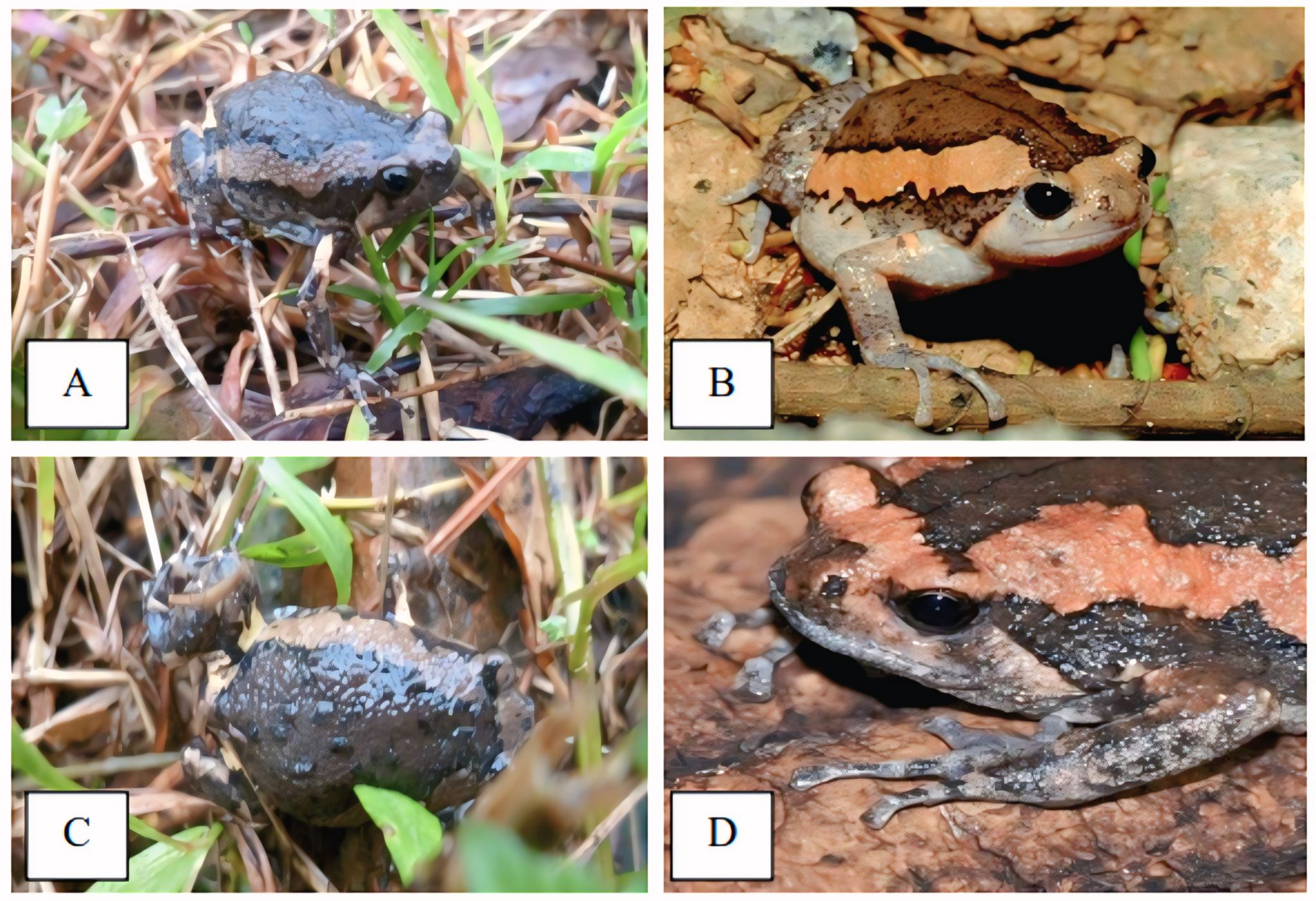
Coloration of the dorsal surface is typically dark brown to black, with contrasting yellow or reddish-pink streaks along the upper limbs, while the underside appears pale and dirty. Males generally exhibit black pigmentation on the chin and throat. The body is large, with males measuring 54–67 mm snout–vent length (SVL) and females 55–76 mm (13).
Ecologically, K. pulchra prefers moist terrestrial habitats, such as damp soil, puddles, and shallow water bodies. However, it is also frequently found in anthropogenic environments, where it utilizes crevices or excavates holes in house walls or fences as refuges (14). During this study, individuals were observed resting on man-made structures, highlighting the species’ adaptability to both natural and modified habitats.
Fejervarya cancrivora
F. cancrivora is a large-bodied frog with an elongated body and snout. The species possesses claw-like digits, with both forelimbs and hindlimbs bearing sharply pointed fingertips that facilitate locomotion on muddy substrates (15). Individuals in this study were observed resting in waterlogged fields with muddy soils, located at some distance from the Pucoek Krueng river, in Figure 3.
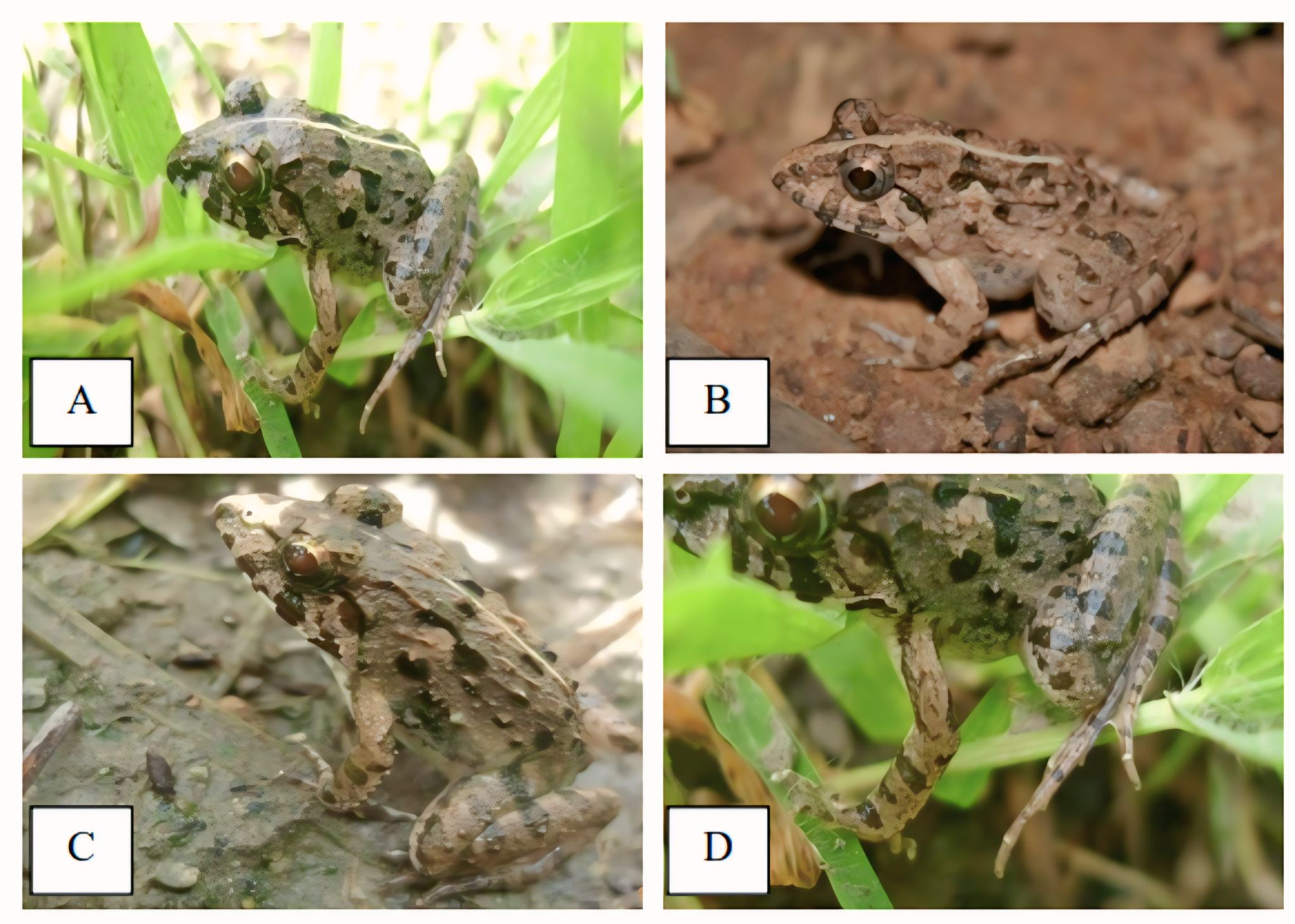
Morphologically, F. cancrivora is distinguished by prominent longitudinal skin folds running parallel to the body axis. The toe webbing extends beyond the last subarticular tubercle of the third and fifth toes. The dorsal surface is covered with coarse skin, marked by irregular longitudinal folds. Coloration is typically mud-brown with irregular dark blotches; in some adults, the dorsum may appear green but retains the same blotched pattern, often accompanied by a broad dorsolateral stripe. The species can reach up to 120 mm in snout–vent length (SVL) (16).
Ecologically, F. cancrivora inhabits rice fields, swamps, and brackish water environments such as shrimp ponds and mangrove forests, and is less commonly encountered directly along rivers. It occurs from sea level up to elevations of approximately 900 m above sea level, often in high densities in wetland habitats (17).
Odorrana hosii
O. hosii is a medium- to large-sized frog with a slender body and long hind limbs (18). The species possesses adhesive discs on both forelimbs and hindlimbs, with broad, flat terminal phalanges and distinct circum-marginal grooves; hind toes are fully webbed to the tips (19). Individuals were most frequently encountered during the survey, commonly observed clinging to rocks and tree roots along the Pucoek Krueng river, and often hiding beneath stones in fast-flowing sections of the stream.
The dorsal skin is smooth, bearing weak but discernible dorsolateral folds. The species also possesses cutaneous glands that produce a strong odor, characteristic of the genus (20). Coloration is highly variable, but typically olive-green to deep green dorsally, with lateral surfaces darker, ranging from brown to nearly black, forming a continuous stripe extending from the snout through the flanks to the groin. The ventral surfaces are pale whitish, occasionally mottled. Males measure 45–68 mm snout–vent length (SVL), while females are substantially larger, ranging from 86–100 mm. O. hosii is closely associated with riparian habitats in both primary and secondary forests, typically found along rocky, fast-flowing streams. It is rarely encountered on the forest floor away from water and has been recorded from lowlands up to elevations of 1, 430 m above sea level (21).
Educational Outputs Derived from Field Data
The educational products reported in this section are presented as derivative outcomes of the biological field survey rather than as ecological results. These outputs were developed by transforming empirically collected species data, morphological documentation, and habitat observations into instructional formats intended to support vertebrate zoology practicum activities.
To enhance transparency regarding the quality of the developed educational products, the specific strengths of each output are clarified. The practicum module emphasizes step-by-step field and laboratory procedures aligned with vertebrate zoology learning outcomes, enabling students to conduct structured morphological observations. The reference book provides species-specific diagnostic features, ecological notes, and original field photographs, facilitating accurate identification and contextual understanding. The instructional video integrates real survey footage, specimen handling demonstrations, and preservation techniques, thereby supporting visual and procedural learning. Preserved specimens serve as tangible teaching aids that allow repeated hands-on observation of key morphological traits during practicum sessions.
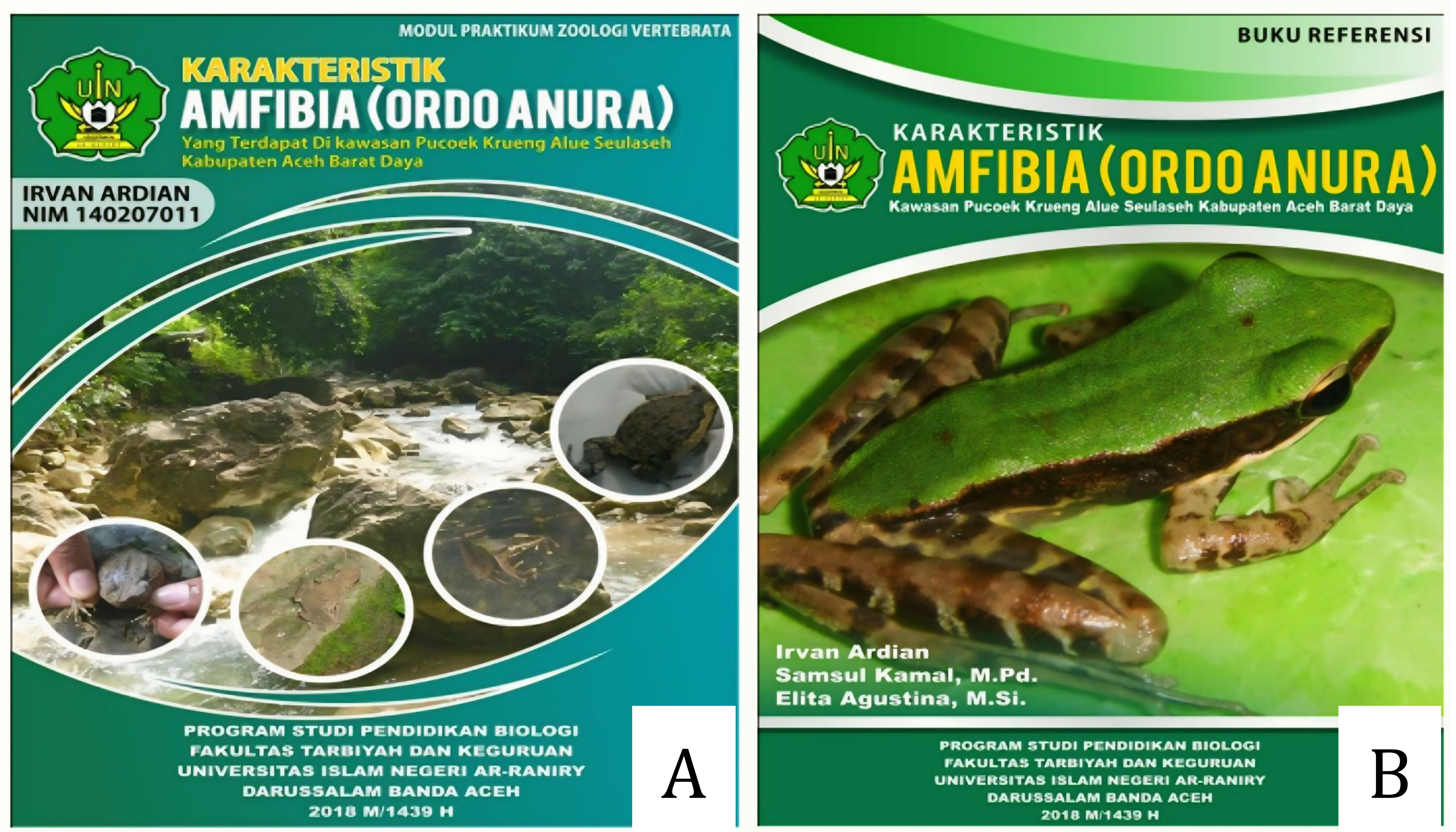
The findings on the characteristics of amphibians (Order Anura) in the Pucoek Krueng Alue Seulaseh area, Southwest Aceh, were developed into several educational resources designed to support vertebrate zoology practicum activities. These outputs include a practicum module, a reference book, an instructional video, and preserved specimens of Anura species. Collectively, they provide students with systematic and practical tools to study amphibian taxonomy, morphology, and ecology.
The practicum module, prepared in A4 format, contains a structured guide comprising an introduction, objectives, materials and methods, data collection procedures, observation tables, discussion, conclusion, and references. It is intended to facilitate organized and effective learning experiences on the morphological characteristics of different Anura families. A complementary reference book (21 × 15 cm), modeled on established field guides, provides taxonomic descriptions, classifications, and ecological notes of the species documented in the study. Both resources are suitable as supplementary materials for vertebrate zoology courses and can serve as permanent references in the Biology Education library at UIN Ar-Raniry.
In addition, an instructional video was developed to illustrate survey preparation, sampling methods, and techniques for capturing and preserving Anura species both during the day and at night. This medium serves as an engaging visual aid to help students understand amphibian characteristics and field methodologies. Furthermore, preserved wet specimens prepared in 70% ethanol, accompanied by images and taxonomic descriptions, offer direct observation of external morphology. These specimens provide hands-on material support for students to strengthen their understanding during practicum sessions.
Overall, the study demonstrates that amphibian species recorded in Pucoek Krueng Alue Seulaseh can be effectively transformed into diverse educational tools that enhance the teaching and learning process in vertebrate zoology, as shown in Figure 4.
Feasibility of the Reference Book and Instructional Video
The feasibility of the reference book and instructional video on amphibians (Order Anura) from the Pucoek Krueng Alue Seulaseh area, Southwest Aceh, was evaluated through expert validation. Validation focused on four components: content quality, presentation, graphics, and developmental aspects. The results are presented in Table 3.
| Component | Subcomponent | Indicators (examples) | Score |
|---|---|---|---|
| Content feasibility | Coverage | Breadth, depth, and clarity of material | 10 |
| Accuracy | Accuracy of facts, concepts, and illustrations | 9 | |
| Currency | Alignment with current scientific knowledge | 4 | |
| Subtotal | 23 | ||
| Presentation quality | Technique | Consistency and logical flow of presentation | 6 |
| Supporting materials | Appropriateness of illustrations and formatting | 6 | |
| Subtotal | 12 | ||
| Graphic quality | Artistic and aesthetic aspects | Composition, proportionality of text/graphics, layout | 9 |
| Supporting aspects | Informativeness, contribution to knowledge, ability to stimulate curiosity | 10 | |
| Subtotal | 19 | ||
| Developmental quality | Technique | Coherence, balance, and systematic organization across chapters | 12 |
| Supporting materials | Appropriateness of illustrations, inclusion of references | 6 | |
| Subtotal | 18 | ||
| Total Score | 72 | ||
The total observed score was 72 out of a maximum of 84, resulting in a feasibility percentage of 85.7%. According to established criteria, this rating indicates that the reference book is highly feasible and strongly recommended as a reliable learning resource for the vertebrate zoology practicum.
Expert Feedback and Validation of Reference Book and Instructional Video
In addition to quantitative validation, experts provided qualitative feedback on the reference book and instructional video. Suggestions and corresponding revisions are summarized in Tables 4 and 6.
| No. | Expert Comment | Follow-up Action |
|---|---|---|
| 1 | Content generally appropriate, but some elements did not fully align with the title | Adjusted content to match the title |
| 2 | Images were clear but required more variety to enhance attractiveness | Additional images inserted in relevant sections |
| 3 | Chapter content organization is not fully aligned with titles | Revised chapters to match their respective titles |
| 4 | Some sections lacked sequential order | Reorganized for logical sequence |
| 5 | Some content showed potential plagiarism | Revised and replaced with original writing |
| 6 | Table fonts were too small; layout rigid | Font size increased, layout improved for readability and aesthetics |
Table 6. Expert feedback on the instructional video and corresponding revisions. No. Expert Comment Follow-up Action 1 Duration too long Edited and shortened video duration 2 Images clear but more visuals needed Additional images included 3 Some slides lacked explanatory text Explanations added to relevant slides 4 Video sequences repeated Redundant footage removed 5 Background music segments too long Music duration reduced
| No. | Expert Comment | Follow-up Action |
|---|---|---|
| 1 | Duration too long | Edited and shortened video duration |
| 2 | Images clear but more visuals needed | Additional images included |
| 3 | Some slides lacked explanatory text | Explanations added to relevant slides |
| 4 | Video sequences repeated | Redundant footage removed |
| 5 | Background music segments too long | Music duration reduced |
Validation of Instructional Video
Expert evaluation of the instructional video focused on format, content, and language, yielding a total score of 39 out of 52 (75%). This indicates that the video is feasible and recommended as a supplementary resource for vertebrate zoology practicums, see Table 5.
| Component | Indicator Examples | Score |
|---|---|---|
| Format | Clarity of instructions, image suitability, music/narration quality, text readability, visual harmony, ease of use | 18 |
| Content | Logical sequence, conceptual clarity, alignment with learning objectives | 9 |
| Language | Accuracy of grammar, sentence effectiveness, clarity and completeness, comprehensibility for students | 12 |
| Total | 39/52 (75%) | |
Overall, all comments and suggestions were addressed, and the revised materials (reference book and instructional video) are deemed appropriate to support vertebrate zoology practicum activities.
Student Responses to Instructional Media
Student responses to the instructional media developed from the study of amphibian (Order Anura) characteristics in Pucoek Krueng Alue Seulaseh, Southwest Aceh, were assessed using questionnaires distributed to 10 students who had completed the vertebrate zoology course. The questionnaire evaluated five aspects of learning effectiveness, with scores ranging from 1 (lowest) to 5 (highest), as shown in Table 7.
| No. | Aspect | Mean (%) | Category |
|---|---|---|---|
| 1 | Understanding of material | 90 | Excellent |
| 2 | Enhancement of knowledge and comprehension | 85 | Good |
| 3 | Curiosity and active participation | 94 | Excellent |
| 4 | Use of instructional media in practicum activities | 92 | Excellent |
| 5 | Potential for further media development | 91 | Excellent |
| Average | 90 | Excellent | |
Student responses (n = 10) indicate positive preliminary perceptions regarding the clarity, relevance, and practical usefulness of the developed instructional media, with an overall mean score of 90%. The highest rating was observed for curiosity and active participation (94%), suggesting strong initial engagement, while enhancement of knowledge and comprehension received the lowest score (85%). However, given the limited number of respondents, these findings should be interpreted as initial indicators of practicality and acceptance rather than as generalized evidence of instructional effectiveness, indicating the need for further evaluation with larger and more diverse student samples.
Discussion
The exploratory survey conducted in Pucoek Krueng Alue Seulaseh, Southwest Aceh, identified four amphibian species of the order Anura, each representing a different family: Bufonidae (P. aspera), Microhylidae (K. pulchra), Dicroglossidae (F. cancrivora), and Ranidae (O hosii), with a total of 57 individuals recorded. Although the number of detected species was limited, clear ecological variation was observed across multiple attributes, including habitat type, substrate preference, locomotory adaptations, skin texture, coloration, behavioral activity, and body morphology. These patterns are consistent with the humid microclimate and relatively stable physicochemical conditions of the freshwater river system bordered by community-managed agroforests.
Among the families recorded, Ranidae was the most dominant, with O. hosii comprising the highest number of individuals. This finding aligns with the known ecological preference of Ranidae for humid riparian habitats with fast-flowing streams (22). Previous studies have reported that Ranidae is among the most widely distributed amphibian families in Indonesia, occupying a broad range of ecosystems from lowland wetlands to montane forests. However, the dominance of O. hosii in this study should be interpreted cautiously, as detectability in lotic environments tends to be higher during short-term visual encounter surveys.
The observed species-specific patterns reflect functional ecological differentiation among Anura assemblages inhabiting Pucoek Krueng Alue Seulaseh. Variations in habitat use among the recorded species indicate niche partitioning associated with substrate type and moisture availability. Species occupying predominantly terrestrial and semi-terrestrial environments exhibited traits facilitating stability on compact or rocky substrates, whereas taxa frequently encountered along riverbanks and flowing streams showed morphological characteristics consistent with lotic habitat use. These findings emphasize the role of habitat heterogeneity in shaping local Anuran assemblage structure, even within a relatively small survey area.
Nevertheless, the detection of only four species is considerably lower than what has been reported for comparable freshwater habitats in Sumatra. This discrepancy is likely influenced by methodological constraints rather than true species absence. Previous studies have demonstrated that short-term visual encounter surveys tend to underestimate Anuran richness, particularly for cryptic, arboreal, or seasonally active taxa, unless combined with extended temporal replication or complementary detection methods (23). Previous studies have demonstrated that extended survey duration, seasonal replication, and the integration of complementary detection methods (e.g. , acoustic surveys or drift fences) substantially increase Anuran species detection. In the present study, the short survey window, limited temporal replication, and reliance on visual encounter surveys likely reduced the probability of detecting cryptic, arboreal, nocturnal, or seasonally active species. Consequently, the recorded assemblage should be regarded as a minimum estimate of local species presence.
From an educational standpoint, the use of locally obtained ecological data does not require exhaustive species richness to be pedagogically meaningful, as visual and narrative-based representations of local biodiversity have been shown to enhance engagement and conceptual understanding in conservation and biology education (7). Instead, the contrasting habitat associations and ecological strategies observed among the recorded species provide a concrete framework for illustrating fundamental concepts in vertebrate zoology, such as habitat specialization, morphological adaptation, and ecological niche differentiation. Importantly, the ecological data were treated as contextual examples rather than as comprehensive biodiversity representations, ensuring alignment between data robustness and educational application.
The transformation of biological field data into learning media was further supported by empirical validation results. Expert evaluation indicated that the reference book achieved a feasibility score of 85.7%, while the instructional video reached 75%, both categorized as feasible learning resources. This finding is consistent with previous studies reporting that contextual teaching and learning–based modules and digital media demonstrate high feasibility and practicality in biology education when grounded in local scientific data (24). Student responses (n = 10) yielded an overall mean score of 90%, indicating strong initial acceptance. These outcomes should be interpreted as preliminary indicators of practicality and instructional relevance rather than generalized measures of educational effectiveness, given the limited sample size and exploratory nature of the evaluation.
Overall, this study highlights both the ecological relevance of Pucoek Krueng Alue Seulaseh as a localized amphibian habitat and the potential of site-specific biodiversity data to support contextual learning in vertebrate zoology. At the same time, the findings acknowledge clear methodological limitations, including short survey duration, limited sample size, sampling bias, and lack of seasonal replication. Addressing these limitations in future studies would strengthen ecological inference and enhance the scientific foundation of locally based learning media development.
Despite the contributions of this study, several limitations should be acknowledged. The field survey was conducted over a short temporal window without seasonal replication, which may have limited the detection of species with seasonal or sporadic activity patterns. In addition, although nocturnal surveys were conducted between 19: 00 and 23: 00 h, data collection did not extend into late-night or pre-dawn h, potentially resulting in the under-detection of strictly nocturnal or crepuscular species. The use of a purposive visual encounter survey approach further prioritized detectability over completeness and may have biased records toward conspicuous or surface-active taxa. Accordingly, the recorded species richness should be interpreted as a minimum estimate rather than a comprehensive inventory of the local Anuran community.
Conclusion
This study documented four Anura species P. aspera, K. pulchra, F. cancrivora, and O. hosii in the Pucoek Krueng Alue Seulaseh area, representing site-level baseline data obtained through a short-term exploratory survey. Although the number of recorded species was limited, the findings revealed clear ecological and morphological variation among species, supporting the relevance of this habitat as a local amphibian environment rather than as a comprehensive representation of regional diversity. These results should therefore be interpreted as a minimum estimate constrained by survey duration, sampling effort, and lack of seasonal replication.
The ecological data obtained from the field survey were subsequently transformed into educational products, including a practicum module, reference book, instructional video, and preserved specimens. Expert validation indicated that the reference book achieved a feasibility score of 85.7%, while the instructional video reached 75%, both categorized as feasible learning resources. Student responses (n = 10) yielded an overall mean score of 90%, indicating positive preliminary acceptance. These outcomes suggest that locally derived biodiversity data can support contextual learning in vertebrate zoology, although the educational impact should be interpreted cautiously given the limited evaluation scope.
Future research should incorporate longer survey durations, seasonal replication, and additional detection methods to improve species coverage and ecological inference. From an educational perspective, further studies are recommended to test the instructional media with larger and more diverse student samples, integrate the materials formally into the vertebrate zoology curriculum, and refine the media based on iterative evaluation to enhance their pedagogical effectiveness.
Declarations
Conflict of Interest
The author declares no conflicting interest.
Data Availability
The unpublished data is available upon request to the corresponding author.
Ethics Statement
Ethical approval was not required for this study.
Funding Information
The author declares that no financial support was received for the research, authorship, and/or publication of this article.
References
- Dewi BS, Zania A, Damayanti E, Kuswandono, Hilmanto R. Diversity, Evenness, and Dominance Index of Amphibians in Lowland Rain Forest: A Case of Anura Ordo in Way Kambas National Park, Indonesia. J Sylva Lestari. 2024;12(2):503–18.
- Luedtke JA, Chanson J, Neam K, Hobin L, Maciel AO, Catenazzi A, et al. Ongoing declines for the world’s amphibians in the face of emerging threats. Nature. 2023;622(7982):308–14.
- Arifin U. Current knowledge of amphibian diversity in Sumatra, and its significance for conservation. Oryx. 2024;58(4):462–7.
- Eprilurahman R, Atmaja VY, Munir M, Ubaidillah R, Arisuryanti T, Smith EN, et al. Phylogeny and taxonomic status evaluation of dark-sided narrow-mouthed frog, Microhyla heymonsi,(Anura: Microhylidae) from Sumatra, Indonesia. Biodiversitas J Biol Divers. 2023;24(2):1092–103.
- Inger RF, Iskandar DT. A collection of amphibians from West Sumatra, with description of a new species of Megophrys (Amphibia: Anura). Raffles Bull Zool. 2005;53(1):133–42.
- Sudirtha IG, Widiana IW, Adijaya MA. The Effectiveness of Using Revised Bloom’s Taxonomy-Oriented Learning Activities to Improve Students’ Metacognitive Abilities. J Educ e-learning Res. 2022;9(2):55–62.
- Ricci K, Lu K, Shidemantle G, Hua J. Engaging youth in biodiversity education through visual narrative. Conserv Biol. 2024;38(6):e14386.
- Tagar I, Shaikh K, Gachal GS, Arain I, Arain M, Sarhindi BA. Assessment of anurans (frogs and toads) inhabiting district Naushahro Feroze, Sindh, Pakistan. J Entomol Zool Stud. 2019;7(1):1419–22.
- Putri NH, Widianti S, Fia A, Aulia AR, Nurrahmawati D, Aliyah SR, et al. identifikasi spesies amfibi di kawasan Taman Nasional Gunung Halimun Salak, Cikaniki, Kecamatan Nanggung, Kabupaten Bogor. J Lingkung Hutan Trop. 2023;2(4):597–609.
- Adhiaramanti T, Sukiya S, Ciptono C. Keanekaragaman Anggota Ordo Anura di Lingkungan Universitas Negeri Yogyakarta. J Biol. 2016;15(6):1–11.
- Qomaruddin Q, Prayogo H, Muflihati M. Identifikasi Jenis Amfibi Ordo Anura Di Kawasan Hutan Kota Gunung Sari Kota Singkawang. J Lingkung Hutan Trop. 2022;1(1):1–8.
- Saputra R, Yanti AH, Setyawati TR. Inventarisasi jenis-jenis amfibi (ordo Anura) di areal lahan basah sekitar Danau Sebedang Kecamatan Sebawi Kabupaten Sambas. Protobiont. 2016;5(3):34–40.
- Major T, Knierim T, Barnes C, Lonsdale G, Waengsothorn S, Strine C. Observations of Arboreality in a Burrowing Frog, the Banded Bullfrog, Kaloula pulchra (Amphibia: Anura: Microhylidae). Curr Herpetol. 2017;36(2):148–52.
- Harmoko H, Samitra D, Sepriyaningsih S, Yustian I, Setiawan A. The diversity of Anura order at lake Gegas of Musi Rawas Regency, South Sumatera Province. J Tadris Biol. 2020;11(1):11–6.
- Saputra D, Setyawati TR, Yanti AH. Karakteristik Populasi Katak Sawah (Fejervarya cancrivora) Di Persawahan Sungai Raya Kalimantan Barat. Protobiont. 2014;3(2):81–86.
- Kurniawan N, Islam MM, Djong TH, Igawa T, Daicus MB, Yong H Sen, et al. Genetic divergence and evolutionary relationship in Fejervarya cancrivora from Indonesia and other Asian countries inferred from allozyme and mtDNA sequence analyses. Zoolog Sci. 2010;27(3):222–33.
- Ginting TJB, Kardhinata EH, Amrul HMZ. Jenis-Jenis Anura di Deleng Ketaruman, Desa Bukum, Kecamatan Sibolangit, Kabupaten Deli Serdang Provinsi Sumatera Utara. J Ilm Biol UMA. 2020;2(1):61–8.
- Li S, Xu N, Lv J, Jiang J, Wei G, Wang B. A new species of the odorous frog genus Odorrana (Amphibia, Anura, Ranidae) from southwestern China. PeerJ. 2018;6:e5695.
- Endlein T, Barnes WJP, Samuel DS, Crawford NA, Biaw AB, Grafe U. Sticking under wet conditions: the remarkable attachment abilities of the torrent frog, Staurois guttatus. PLoS One. 2013;8(9):e73810.
- Rasit AH bin, Tham V, Zainudin R binti, Narihan MZ bin A. The Relationship between Odorrana hosii Skin Histology and Habitat Water Quality in Different Locations of Sarawak. Borneo J Resour Sci Technol. 2023;13(2):42–52.
- Okthari A, Hadzami HH, Yusuf AD, Nurdiansih IW, Putri RA, Susilawati I, et al. Inventarisasi Amfibi Ordo Anura Di Kawasan Curug Cigumawang, Kecamatan Padarincang, Kabupaten Serang-Banten. J Biol dan Pembelajarannya. 2025;12(1):26–36.
- Rifanjani S, Darwati H. Keanekaragaman Jenis Amfibi Ordo Anura di Kawasan Wisata Alam Riam Angan Tembawang Kecamatan Jelimpo Kabupaten Landak. J Hutan Lestari. 2024;12(4):831–841.
- Atmaja VY, Hamidy A, Arisuryanti T, Matsui M, Smith EN. A new species of Microhyla (Anura: Microhylidae) from Sumatra, Indonesia. Treubia. 2018;45:25–46.
- Jannah L, Utami NR. Development of E-Module Based on Contextual Teaching and Learning on Human Mobility Material to Improve Science Literacy Abilities of Class XI Students. J Biol Educ. 2024;13(2):147–54.