RESEARCH ARTICLE
Effect of Takakura Compost Application on the Growth Performance of Eggplant (Solanum melongena L. )
Crop Life|Vol. 1, Issue 1, pp. 26-34 (2025)
CC BY 4.0-2025 Authors
Views
Downloads
Shares

Received
Sep 30, 2025Revised
Nov 25, 2025Accepted
Nov 28, 2025Published
Dec 30, 2025
Abstract
Eggplant production frequently faces constraints due to low soil fertility and improper nutrient management, resulting in suboptimal plant performance. This study investigated the effect of Takakura compost on the growth, flowering, and yield performance of four eggplant varieties (purple, green, white, and finger-shaped). The experiment was conducted using a factorial design with four compost doses (0, 190, 380, and 570 g/polybag) and analyzed through ANOVA followed by HSD at 5%, with three replications to ensure randomization validity. Compost application significantly improved plant height, flowering time, fruit set, and yield attributes; however, certain variables demonstrated non-significant varietal × compost interactions. The highest plant height (48.91 cm) and earliest flowering time (30 days) were recorded at 570 g/polybag in purple, green, and white varieties. Fruit set reached 86.33% in purple and white eggplants, and the highest fruit number was 13 fruits/plant with a corresponding fruit weight of 2065.67 g (82.6 t/ha). In contrast, finger-shaped eggplant produced lower yields across treatments. Overall, Takakura compost at 570 g/polybag enhanced eggplant growth and productivity, particularly in purple, white, and green varieties, while interaction variations among varieties should be taken into account.
Keywords:
Introduction
Eggplant (Solanum melongena L. ) is an important horticultural crop in tropical and subtropical regions, valued for its nutritional content, culinary versatility, and economic significance (1). In Indonesia, eggplant is widely cultivated, with purple varieties being the most common in Riau Province due to strong consumer preference (2). Despite its high potential, eggplant productivity in many regions remains below optimal levels, primarily due to limited soil fertility, inadequate nutrient management, and continued dependence on chemical fertilizers. National agricultural statistics indicate that vegetable production, including eggplant, has fluctuated in recent years in response to environmental stressors and management challenges (3). Declining soil organic matter and reduced nutrient availability further restrict yields, highlighting the urgency for more sustainable and efficient fertilization approaches (4).
To support sustainable agriculture, the use of organic amendments has increasingly become a priority as an alternative to chemical fertilizers (5). Compost not only provides essential macronutrients such as nitrogen (N), phosphorus (P), and potassium (K), but also improves soil structure, enhances microbial activity, and promotes long-term soil fertility (6). Among various household-level composting innovations, the Takakura method represents a simple, low-cost, and environmentally friendly approach that utilizes kitchen and market waste (7). Previous studies indicate that Takakura compost offers balanced nutrients and complies with several national and international standards for organic fertilizers, although its effectiveness may vary depending on crop type and dosage (8). Research on tomatoes, chili peppers, and green beans has shown positive effects of Takakura compost on plant growth and yield; however, comprehensive evaluations of its application in eggplant cultivation, particularly across different varietal types, remain limited.
This study seeks to address this research gap by assessing the response of multiple eggplant varieties to Takakura compost application. The novelty of the present research lies in simultaneously examining varietal performance and compost dosage under controlled experimental conditions to better understand the interaction between genotype and organic nutrient management. We hypothesize that Takakura compost, through improved nutrient availability, will enhance vegetative growth, reproductive traits, and overall yield performance across eggplant varieties. To evaluate this hypothesis, a factorial randomized complete block design was implemented, combining four eggplant varieties (purple, green, white, and finger-shaped) with graded levels of Takakura compost. The findings are expected to provide scientific evidence supporting sustainable eggplant production strategies in Riau and similar agroecological regions, with broader relevance to household-level organic waste recycling and food security initiatives.
Methodology
Study Design and Site
A factorial experiment was conducted using a randomized complete block design (RCBD) to evaluate the effects of Takakura compost on the growth and yield performance of four eggplant (S. melongena L.) varieties. The study was carried out from June to September 2021 at the Experimental Farm of the Faculty of Agriculture, Universitas Islam Riau, Pekanbaru, Riau Province, Indonesia (0°31′ N, 101°27′ E). The site is characterized by a humid tropical climate with an average daily temperature of 26–30 °C, relative humidity of 75–85%, and annual rainfall of approximately 2, 400 mm.
Plant Material and Treatments
Four eggplant varieties representing morphological and genetic diversity were used: purple (Mustang F1), green (Hitavi F1), white (Kania F1), and finger-shaped (Tunjuk Bintang Asia). Takakura compost was prepared from household and market organic waste vegetable residues, fruit peels, rice leftovers, and leaves through aerobic fermentation using rice bran and rice husks as bulking agents. Prior to application, the compost was analyzed to determine its nutrient composition and ensure batch uniformity; pH, C-organic, total N, P₂O₅, and K₂O contents were verified to comply with national organic fertilizer standards. Four compost application levels were evaluated: 0 g/polybag (control), 190 g/polybag (7.6 t/ha equivalent), 380 g/polybag (15.2 t/ha), and 570 g/polybag (22.8 t/ha). The selection of compost doses (190, 380, and 570 g/polybag) was based on the conversion of national standard organic fertilizer recommendations contained in SNI 19-7030-2004 and the average farmer field application range (7–23 t/ha). Therefore, the 190, 380, and 570 g/polybag doses represent low, medium, and high organic fertilizer inputs to determine biological responsiveness across eggplant varieties under varying nutrient intensities. Treatments were arranged in a 4 × 4 factorial with three replications, resulting in 48 experimental units. Each unit consisted of four plants, with two randomly selected as samples, yielding 192 plants.
Experimental Procedures
Seedlings were raised in polybags (10 × 15 cm) filled with a sterilized substrate mixture of topsoil, poultry manure, and rice husks (1: 1: 1, v/v/v). Seeds were pre-soaked in 40 °C water for 40 min to enhance germination and maintained under a transparent polyethylene cover. After four weeks, seedlings with uniform height (7–10 cm) and four true leaves were transplanted into 35 × 40 cm polybags containing 5 kg of topsoil. Compost treatments were incorporated thoroughly into the growth medium at transplanting. Polybags were arranged at 50 × 50 cm spacing within plots separated by 50 cm alleys.
Plants were irrigated twice daily, except during rainfall events, with an approximate application of 600–700 mL of water per plant per irrigation cycle (equivalent to ± 1.2–1.4 L/day). Rainfall during the experimental period averaged 6–9 mm/day, ensuring that plants did not experience drought or waterlogging stress. Hand-weeding was performed manually at 14, 28, and 42 days after transplanting (DAT). The use of Takakura compost also helped stabilize soil moisture through improvements in soil physical, chemical, and biological properties, including enhanced aggregate structure, greater porosity, increased cation exchange capacity, and stimulation of beneficial microbial activity, which collectively contributed to more balanced water retention and nutrient availability. Apical side shoots were pruned at 21, 28, and 35 DAT to improve allocation of assimilates toward fruit formation. To prevent severe pest and disease pressure that could confound treatment effects, chemical pesticides (Curacron 500EC, 1 mL/L; Lannate 40SP, 2 g/L) and fungicide (Dithane M-45, 3 g/L) were applied only when infestation thresholds were reached. The use of pesticides was documented to ensure transparency in evaluating potential bias in treatment effects. No synthetic chemical fertilizers were applied in any treatment throughout the experiment to ensure that plant responses reflected the effects of Takakura compost exclusively.
Measured Variables
Growth variables included plant height (recorded weekly until flowering), days to 50% flowering, and days to 50% maturity. Reproductive parameters included fruit set (%), number of fruits per plant, mean fruit weight, and total yield per plant. Post-harvest residues were assessed as the number of unharvested fruits per plant at the end of the study.
Data Analysis
Data were subjected to analysis of variance (ANOVA) appropriate for the factorial RCBD. When significant differences were detected, mean separation was performed using the Honestly Significant Difference (HSD) test at a 5% probability level. Statistical analyses were conducted using agronomic data analysis software, and assumptions of normality and homogeneity of variance were tested prior to ANOVA.
Results and Discussion
Plant Height (cm)
Analysis of variance indicated that the interaction between eggplant variety and Takakura compost application was not significant for plant height. However, both factors independently exerted significant effects. Mean plant height at 28 days after transplanting (DAT) is presented in Table 1.
| Eggplant Variety (G) | 0 g (A0) | 190 g (A1) | 380 g (A2) | 570 g (A3) | Mean |
|---|---|---|---|---|---|
| Purple (G1) | 33.91 | 39.66 | 43.33 | 46.33 | 40.81b |
| Green (G2) | 33.91 | 39.00 | 44.00 | 48.00 | 41.22b |
| White (G3) | 33.58 | 39.55 | 44.39 | 47.66 | 41.29b |
| Finger-shaped (G4) | 36.98 | 44.33 | 48.70 | 53.66 | 45.92a |
| Mean | 34.60d | 40.63c | 45.10b | 48.91a | |
| Note: Coefficient of variation (CV) = 7.15%. HSD (variety × compost) = 9.20; HSD (main effects) = 3.35. Means followed by the same lowercase letter are not significantly different at p ≤ 0.05 according to the Honestly Significant Difference (HSD) test. | |||||
Finger-shaped eggplant (G4) produced the tallest plants (45.92 cm), significantly exceeding the other varieties. Similarly, compost application at 570 g/polybag (A3) resulted in the highest mean plant height (48.91 cm), significantly greater than all other treatments.
The positive effect of Takakura compost is attributable primarily to its supply of N, P, and K, which support key physiological processes required for vegetative growth. Although initial and final soil conditions were not quantified in this study, the improved plant response may indicate indirect enhancement of soil physical, chemical, and biological properties through compost mineralization, which is consistent with the functional characteristics of organic amendments reported in previous studies. Adequate organic matter incorporation improves nutrient solubility and root development, which increases nutrient uptake efficiency. Nitrogen is critical for vegetative growth, while phosphorus supports cell division and the formation of new tissues (roots, stems, and leaves). Potassium and phosphorus although varietal differences were minor except for finger shaped eggplant, this pattern may reflect genotype nutrient interaction rather than confirmed environmental balance, as soil properties were not directly measured. Nevertheless, the similar growth response in purple, green, and white varieties suggests that Takakura compost at the applied dosages provided sufficient nutrients to support vegetative growth across most genotypes. This is consistent with Santosa and Sumarni (2016), who emphasized that optimal plant growth requires favorable and well-balanced factors such as soil moisture, aeration, and nutrient availability (10). The temporal pattern of eggplant plant height during the vegetative phase under different Takakura compost application rates is presented in Figure 1.
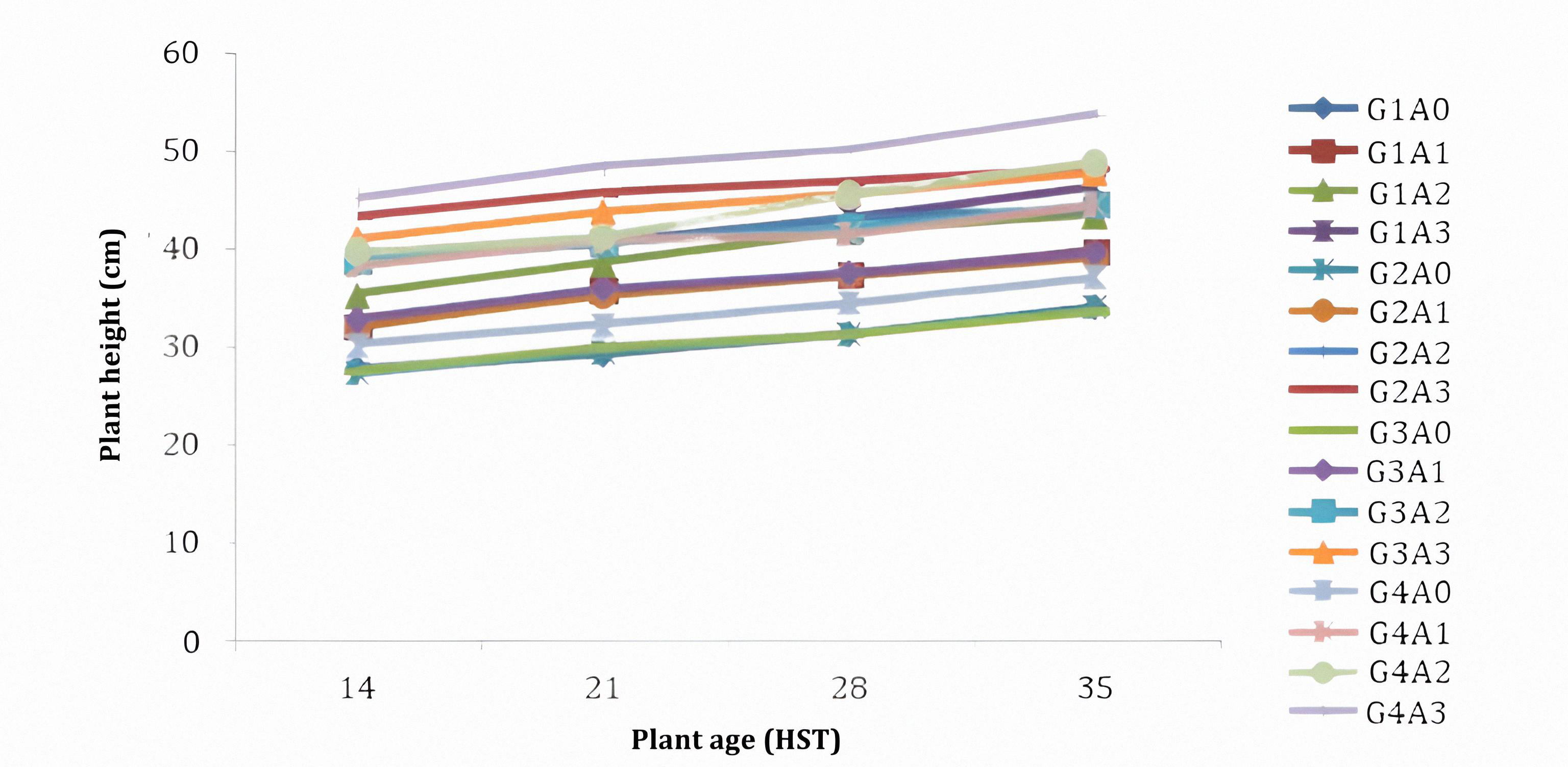
The growth curve a progressive increase in plant height at 7, 14, 21, and 28 days after transplanting across all combinations of eggplant varieties and Takakura compost treatments, reflecting vegetative development only. This pattern represents the vegetative phase rather than the full harvest cycle, as plant height measurements concluded before reproductive maturity. The line styles have been modified using different markers in addition to distinct colors to improve visual distinction among treatments. Nitrogen supports vegetative growth by stimulating cell division and elongation, phosphorus promotes new tissue formation, and potassium enhances overall physiological activity. Together, these nutrients contribute to stem elongation and higher plant stature.
The physiological basis of height increment lies in active cell division and elongation at the apical meristem. Supplementation with organic matter rich in nitrogen increases total soil N, sustains photosynthetic activity, and accelerates vegetative development. The vegetative response aligns with the macronutrient composition of the Takakura compost applied in this experiment (N = 0.59%, P = 0.41%, and K = 0.40%), as previously described in the Methods section. The availability of these nutrients likely supported apical meristem activity and accelerated stem elongation during vegetative growth. These values are consistent with prior reports showing that Takakura compost enriched with rice husk and bran meets the general standards for organic fertilizer quality (SNI 19-7030-2004, international standards, and the Indonesian Ministry of Agriculture), though it remains below the nutrient thresholds of PT PUSRI fertilizer standards (11).
Among varieties, finger-shaped eggplant recorded the greatest mean height (45.92 cm). However, this was lower than the 56.91 cm reported by Ginting (2020) for the same variety fertilized with Biosugih and organic NPK (12). This suggests that the maximum dose of Takakura compost applied in this study (570 g/polybag) may not have been sufficient to fully meet the nutrient requirements of eggplant for optimal height growth.
Days to Flowering
Analysis of variance revealed significant effects of both eggplant variety and Takakura compost application, as well as their interaction, on days to flowering. Mean values are presented in Table 2.
| Eggplant Variety (G) | 0 g (A0) | 190 g (A1) | 380 g (A2) | 570 g (A3) | Mean |
|---|---|---|---|---|---|
| Purple (G1) | 35.00bcd | 32.66a–d | 30.33ab | 30.00a | 32.00a |
| Green (G2) | 34.33bc | 31.66abc | 30.33ab | 30.00a | 31.58a |
| White (G3) | 35.33cd | 32.33a–d | 30.66abc | 30.00a | 32.08a |
| Finger-shaped (G4) | 52.00g | 45.33f | 40.00e | 36.66de | 43.50b |
| Mean | 39.16c | 35.50b | 32.83a | 31.66a | |
| Note: Coefficient of variation (CV) = 4.68%. HSD (variety × compost) = 4.95; HSD (main effects) = 1.80. Means followed by the same lowercase letter are not significantly different at p ≤ 0.05 according to the Honestly Significant Difference (HSD) test. | |||||
The earliest flowering (30 days after transplanting, DAT) was observed in purple, green, and white eggplant when supplied with 570 g/polybag of Takakura compost (G1A3, G2A3, G3A3). These treatments did not differ significantly from several other combinations with compost application but were significantly earlier than most control treatments. The latest flowering was recorded in finger-shaped eggplant without compost (G4A0), which required 52 DAT.
Nutrient availability clearly influenced flowering time, with phosphorus playing a critical role in floral induction and reproductive development. Adequate P enhances root growth, reduces flower and fruit drop, strengthens stems, and accelerates floral initiation and seed formation (13) Balanced nutrient supply through Takakura compost likely optimized photosynthesis and metabolic processes, thereby promoting earlier flowering. Conversely, nutrient deficiencies delayed flowering, as observed in untreated controls. These findings are consistent with previous reports. Marlina et al. (2015) emphasized that both genetic traits and environmental factors, such as temperature, light intensity, and photoperiod, determine the timing of flowering (14). Similarly, nutrient imbalances disrupt plant metabolism, leading to delayed reproductive transitions (15). In this study, the compost-treated purple, green, and white varieties flowered at 30 DAT, aligning with varietal descriptions. By contrast, later flowering (40.22 days) was observed under NPK (16: 16: 16, 30 g/plant), indicating that Takakura compost supplied sufficient nutrients for optimal flowering induction (16).
Percentage of Flowers Developing into Fruits
Analysis of variance indicated that both eggplant variety and Takakura compost application, as well as their interaction, significantly affected the percentage of flowers developing into fruits. Mean values are presented in Table 3.
| Eggplant Variety (G) | 0 g (A0) | 190 g (A1) | 380g (A2) | 570g (A3) | Mean |
|---|---|---|---|---|---|
| Purple (G1) | 48.48f | 63.11de | 69.84bcd | 86.33a | 66.94a |
| Green (G2) | 48.48f | 57.84e | 70.53bcd | 73.85b | 62.67b |
| White (G3) | 48.48f | 65.02cde | 70.53bcd | 86.33a | 67.59a |
| Finger-shaped (G4) | 48.48f | 57.84e | 69.64bcd | 73.41bc | 62.34b |
| Mean | 48.48d | 60.95c | 70.14b | 79.98a | |
| Note: Coefficient of variation (CV) = 4.35%. HSD (variety × compost) = 8.58; HSD (main effects) = 3.13. Means followed by the same lowercase letter are not significantly different at p ≤ 0.05 according to the Honestly Significant Difference (HSD) test. | |||||
The highest fruit set (86.33%) was recorded in purple and white eggplant treated with 570 g/polybag of Takakura compost (G1A3 and G3A3), significantly surpassing all other treatments. In contrast, the lowest fruit set (48.48%) occurred across all varieties without compost application (A0). Fruit set percentage is strongly influenced by nutrient availability and environmental factors. Adequate phosphorus plays a decisive role in generative development, enhancing flower retention, pollination success, and fruit formation. Phosphorus is essential in energy transfer, photosynthesis, and respiration processes (17), and its mineralization from organic matter during compost decomposition makes it readily available for plant uptake (18). Consistent with Sinaga et al. (2017), sufficient P supply promotes higher flowering and fruiting success, accelerating fruit set (19).
The results of this study (86.33%) exceeded those of previous research, which reported 82.74% fruit set in purple eggplant fertilized with 200 g/polybag of poultry manure and pollinated with Heterotrigona. These findings highlight the potential of Takakura compost, at optimal doses, to enhance reproductive efficiency in eggplant cultivation (20).
Days to Harvest
Analysis of variance revealed that eggplant variety, Takakura compost application, and their interaction had a significant effect on the number of days to harvest. The mean values are summarized in Table 4.
| Eggplant Variety (G) | 0 g (A0) | 190 g (A1) | 380 g (A2) | 570 g (A3) | Mean |
|---|---|---|---|---|---|
| Purple (G1) | 54.33fgh | 52.66de | 51.16cd | 49.00ab | 51.79a |
| Green (G2) | 57.66i | 57.16i | 56.00ghi | 53.83ef | 56.16b |
| White (G3) | 54.83fgh | 52.66de | 50.00bc | 47.50a | 51.25a |
| Finger-shaped (G4) | 64.00k | 60.33j | 56.50hi | 55.00fgh | 58.95c |
| Mean | 57.70d | 55.70c | 53.41b | 51.33a | |
| Note: Coefficient of variation (CV) = 1.05%. HSD (variety × compost) = 1.74; HSD (main effects) = 0.63. Means followed by the same lowercase letter are not significantly different at p ≤ 0.05 according to the Honestly Significant Difference (HSD) test. | |||||
The shortest harvest period was recorded in white eggplant treated with 570 g/polybag of Takakura compost (G3A3, 47.50 days), not significantly different from purple eggplant at the same compost level (G1A3, 49.00 days). Conversely, the longest harvest time was observed in finger-shaped eggplant without compost (G4A0, 64.00 days).
Nutrient availability, particularly phosphorus and potassium, played a critical role in accelerating harvest maturity by supporting photosynthesis, carbohydrate translocation, and reproductive development. Adequate organic amendment not only provides macro- and micronutrients but also improves soil physical, chemical, and biological properties, ensuring a balanced nutrient release that avoids toxicity while maintaining sustained growth (21). Vigorous vegetative development also contributed to earlier flowering and subsequently earlier harvest, consistent with the findings of Wahyudi (2011) (22).
The observed harvest times for purple (49.00 days) and white eggplant (47.50 days) were earlier than the varietal descriptions (50 and 49–52 days, respectively). However, they were slightly later than the 45 days reported by Sumitro et al. (2018) for purple eggplant treated with oil palm waste bokashi (3780 g/plot) and organic NPK (60 g/plant) (23). These results underscore the effectiveness of Takakura compost in advancing harvest maturity, particularly at higher application rates.
Number of Fruits per Plant
Analysis of variance showed that both eggplant variety and Takakura compost application, as well as their interaction, significantly influenced the number of fruits per plant. The mean values are presented in Table 5.
| Eggplant Variety (G) | 0 g (A0) | 190 g (A1) | 380 g (A2) | 570 g (A3) | Mean |
|---|---|---|---|---|---|
| Purple (G1) | 5.66h | 8.33ef | 11.66abc | 13.00a | 9.66a |
| Green (G2) | 5.66h | 7.66f | 9.66de | 11.00bcd | 8.50b |
| White (G3) | 5.66h | 8.66ef | 11.66abc | 13.00a | 9.75a |
| Finger-shaped (G4) | 6.00gh | 7.33fg | 10.33cd | 12.00ab | 8.91b |
| Mean | 5.75d | 8.00c | 10.83b | 12.25a | |
| Note: Coefficient of variation (CV) = 5.20%. HSD (variety × compost) = 1.46; HSD (main effects) = 0.53. Means followed by the same lowercase letter are not significantly different at p ≤ 0.05 according to the Honestly Significant Difference (HSD) test. | |||||
The highest fruit number (13.00 fruits/plant) was obtained in purple and white eggplant with 570 g/polybag of Takakura compost (G1A3 and G3A3), not significantly different from finger-shaped eggplant at the same compost level (G4A3). The lowest fruit number (5.66 fruits/plant) was recorded in purple, green, and white eggplants without compost.
Higher fruit production at optimal compost levels is attributable to the availability of essential nutrients, particularly N, P, and K, which support flowering, fruit initiation, and development. Phosphorus and potassium play key roles in carbohydrate translocation, cell division, and fruit set, while nitrogen supports protein synthesis and overall growth (24). Organic fertilization also improves soil structure and microbial activity, enhancing nutrient uptake and photosynthesis (25).
The fruit numbers observed in this study (maximum 13 fruits/plant) were lower than those reported by Astiani (2018), who obtained 29.33 fruits/plant in purple eggplant with NPK Phonska (15 g/plant) (26). However, they were considerably higher than those reported by Ikhsan (2020), where the application of vermicompost (2 kg/polybag) combined with liquid organic fertilizer (600 mL/polybag) resulted in only 3.11 fruits/plant in white eggplant. Differences in productivity across studies likely reflect varietal genetics, nutrient regimes, and crop management, as well as the decline in reproductive potential with plant age.
Fruit Weight per Plant
Analysis of variance showed that both eggplant variety and Takakura compost application, as well as their interaction, had a significant effect on fruit weight per plant. The mean values are presented in Table 6.
| Eggplant Variety (G) | 0 g (A0) | 190 g (A1) | 380 g (A2) | 570 g (A3) | Mean |
|---|---|---|---|---|---|
| Purple (G1) | 516.22fg | 985.67d | 1449.15c | 2005.44a | 1239.12a |
| Green (G2) | 479.94fg | 797.71e | 1108.77d | 1786.57b | 1043.25b |
| White (G3) | 516.13fg | 959.46de | 1487.94c | 2065.67a | 1257.30a |
| Finger-shaped (G4) | 118.36i | 233.26hi | 363.66gh | 559.60f | 318.72 c |
| Mean | 407.66d | 744.02c | 1102.38b | 1604.32a | |
| Note: Coefficient of variation (CV) = 5.59%. HSD (variety × compost) = 164.27; HSD (main effects) = 59.85. Means followed by the same lowercase letter are not significantly different at p ≤ 0.05 according to the Honestly Significant Difference (HSD) test. | |||||
The highest fruit weight (2065.67 g/plant, equivalent to 82.6 t/ha) was obtained in white eggplant with 570 g/polybag of Takakura compost (G3A3), which was not significantly different from purple eggplant at the same level (G1A3, 2005.44 g/plant). The lowest fruit weight was observed in finger-shaped eggplant without compost (G4A0, 118.36 g/plant).
The increase in fruit weight with compost application reflects improved nutrient availability, particularly N, P, and K, which are critical for carbohydrate synthesis, protein formation, and fruit development (20). Nitrogen promotes protein synthesis, phosphorus supports reproductive processes, and potassium enhances carbohydrate translocation and cell expansion. Organic amendments also improve soil structure, water retention, and microbial activity, ensuring sustained nutrient supply and better plant productivity (27).
The results are comparable to or higher than previous studies. White eggplant fruit weight in this study (2.06 kg/plant) was lower than that reported by Halomoan (2020) (28) with NPK Phonska and rice-wash water (2.87 kg/plant) but exceeded the 1.23 kg/plant reported by Indrawati (2020) using vermicompost in purple eggplant (29). These findings confirm the effectiveness of Takakura compost in enhancing yield, particularly at higher application rates.
Fruit Weight per Fruit
Analysis of variance showed that eggplant variety, Takakura compost application, and their interaction significantly influenced fruit weight per fruit. Mean values are presented in Table 7.
| Eggplant Variety (G) | 0 g (A0) | 190 g (A1) | 380 g (A2) | 570 g (A3) | Mean |
|---|---|---|---|---|---|
| Purple (G1) | 91.42e | 118.40cd | 124.09c | 154.26a | 122.04b |
| Green (G2) | 85.36e | 104.29de | 115.20cd | 162.41a | 116.81b |
| White (G3) | 91.00e | 144.06ab | 127.53bc | 160.74a | 130.83a |
| Finger-shaped (G4) | 19.72g | 31.78fg | 34.17fg | 46.62f | 33.07c |
| Mean | 71.87d | 99.63b | 100.25b | 131.00a | |
| Note: Coefficient of variation (CV) = 6.44%. HSD (variety × compost) = 19.73; HSD (main effects) = 7.19. Means followed by the same lowercase letter are not significantly different at p ≤ 0.05 according to the Honestly Significant Difference (HSD) test. | |||||
The heaviest fruits were obtained in green eggplant treated with 570 g/polybag of Takakura compost (G2A3, 162.41 g), which did not differ significantly from purple (G1A3) and white eggplant (G3A3). The smallest fruit weight was observed in finger-shaped eggplant without compost (G4A0, 19.72 g).
Improved fruit weight at higher compost levels can be attributed to the enhanced supply of N, P, and K. Nitrogen supports protein and chlorophyll synthesis, phosphorus is essential for reproductive growth and cell division, and potassium promotes carbohydrate translocation and fruit enlargement. The nutrient composition of Takakura compost (N 0.59%, P 0.41%, K 0.40%) provides balanced nutrition to sustain fruit development. Organic amendments also improve soil structure and microbial activity, increasing nutrient uptake efficiency. Physiological balance between carbohydrate production and fruit load further explains variation in fruit weight. Adequate photosynthesis and assimilate partitioning lead to higher accumulation of starch and sugars in the fruit, thus increasing individual fruit mass. These findings align with Merliana et al. (2015), who emphasized the role of macro- and micronutrients in enhancing meristem activity, photosynthesis, and overall fruit growth (30). The observed fruit weight in green eggplant (162.41 g) slightly exceeded its varietal description (161 g), indicating favorable nutrient availability under Takakura compost. this study achieved markedly higher fruit weight, confirming the effectiveness of Takakura compost in improving fruit quality.
Fruit Remnants per Plant
Analysis of variance indicated that Takakura compost application significantly affected the number of fruit remnants per plant, whereas eggplant variety and its interaction with compost application showed no significant effects. The mean values are presented in Table 8.
| Eggplant Variety (G) | 0 g (A0) | 190 g (A1) | 380 g (A2) | 570 g (A3) | Mean |
|---|---|---|---|---|---|
| Purple (G1) | 1.00 | 1.00 | 1.33 | 2.00 | 1.33a |
| Green (G2) | 1.00 | 1.00 | 1.66 | 2.00 | 1.41a |
| White (G3) | 1.00 | 1.00 | 1.50 | 1.83 | 1.33a |
| Finger-shaped (G4) | 1.00 | 1.16 | 1.83 | 2.00 | 1.50a |
| Mean | 1.00c | 1.04c | 1.58b | 1.96a | |
| Note: Coefficient of variation (CV) = 14.62%. HSD (variety × compost) = 0.62. Means followed by the same letter within a column are not significantly different at p ≤ 0.05 according to the Honestly Significant Difference (HSD) test. | |||||
The lowest fruit remnant was observed in plants without compost application (1.00 fruit), while the highest value was obtained with 570 g/polybag of Takakura compost (1.96 fruits). Although varietal differences were statistically nonsignificant, finger-shaped eggplant (G4) exhibited the highest mean value (1.50 fruits).
Reduced fruit remnants in compost-amended treatments suggest improved nutrient availability and physiological efficiency in fruit set and retention. Takakura compost, containing N, P, and K, enhances soil structure, water retention, and microbial activity, thereby facilitating better nutrient absorption. These improvements reduce fruit abortion and promote more effective resource allocation to developing fruits.
Physiological limitations, such as competition for assimilates, may also explain the occurrence of fruit remnants. Plants often cannot sustain all initiated fruits to maturity if the nutrient and carbohydrate supply is insufficient (31). External factors, such as reduced soil fertility or suboptimal metabolism, can also lower fruit retention (32).
Compared with Halomoan S. (2020), who reported 4.33 fruit remnants per plant under rice-wash water treatment (28), the present study found substantially lower values (maximum 2.00 fruits), indicating that Takakura compost use reduces residual fruits and enhances productive fruit development.
The significant interaction effects observed in several yield and reproductive variables indicate that the performance of compost treatments was not solely determined by compost dosage, but rather depended on varietal response mechanisms. While plant height was predominantly affected by the main effects of variety and compost separately, reproductive parameters such as days to flowering, fruit set percentage, number of fruits, and fruit weight were strongly shaped by interaction components. This pattern suggests that the benefits of nutrient availability from Takakura compost were fully expressed only when matched with genotypes possessing high nutrient-use efficiency, as reflected in the purple, white, and green varieties. Therefore, generalizing treatment effects without distinguishing between main and interaction effects may lead to overinterpretation of compost performance, emphasizing that fertilization strategy and varietal selection act synergistically to achieve optimal yield outcomes.
The consistently lower response of the finger-shaped variety across most variables further supports the presence of genotype nutrient limitations, rather than inefficiency of the Takakura compost itself. Finger shaped eggplant is characterized by inherently smaller fruit size and lower biomass potential, resulting in reduced sink strength and limited assimilate allocation to reproductive organs even under elevated nutrient availability. Previous agronomic descriptions of this variety also report slower generative transitions and lower photosynthate accumulation, which may restrict its ability to convert increased nutrients into greater yield. Consequently, enhancing the productivity of finger shaped eggplant likely requires genotype specific management strategies or supplemental nutrient approaches, rather than merely increasing compost dosage.
Building on these interaction-based and genotype specific interpretations, a broader physiological synthesis across parameters further reinforces the observed response pattern. The variations in plant growth and yield cannot be attributed solely to numerical differences in the data tables, but rather to shifts in soil plant nutrient dynamics following compost application. Through mineralization, Takakura compost progressively increased the availability of N, P, and K, thereby improving root system architecture, carbohydrate partitioning, and sink capacity mechanisms that collectively explain the parallel improvements in plant height, flowering transition, fruit set, and yield traits. Although soil chemical properties before and after treatment were not quantified in this study, the consistency of the physiological responses across growth phases indicates that Takakura compost functioned not only as a nutrient source but also as a soil conditioner capable of enhancing nutrient use efficiency. Future research should integrate soil and compost NPK dynamics to more precisely quantify this mechanistic linkage.
Conclusion
Application of Takakura compost significantly enhanced vegetative growth, flowering, fruit set, and yield components of eggplant, thereby fulfilling the objective of assessing varietal responses to different compost dosages. The optimal agronomic performance was consistently obtained at 570 g/polybag in purple, white, and green varieties, while the finger-shaped variety exhibited lower productivity, indicating genotype–nutrient limitations rather than compost inefficiency. Although the results demonstrate the potential of Takakura compost to improve crop performance, the use of chemical pesticides in this study indicates that compost application alone does not represent a fully organic production system. Furthermore, because the experiment was conducted under controlled polybag conditions, extrapolation to field-scale production and different agroecological environments should be made cautiously and warrants further investigation.
Declarations
Conflict of Interest
The authors declare no conflicting interest.
Data Availability
The unpublished data is available upon request to the corresponding author.
Ethics Statement
Ethical approval was not required for this study.
Funding Information
The author(s) declare that no financial support was received for the research, authorship, and/or publication of this article.
References
- Chioti V, Zeliou K, Bakogianni A, Papaioannou C, Biskinis A, Petropoulos C, et al. Nutritional value of eggplant cultivars and association with sequence variation in genes coding for major phenolics. Plants. 2022;11(17).
- Mulia S, Yurizki Y, Surbakti S. Analisis tingkat konsumsi dan preferensi konsumen terong ungu (Solanum malongena L.) segar di Kota Medan. J Agrilink. 2025;7(1):6–14.
- Yudistira NW, Bayfurqon FM, Muharam M, Rahmi H. Respon pertumbuhan dan hasil tanaman terong ungu (Solanum melongena L.) dengan penggunaan berbagai jenis mulsa dan sistem tumpangsari dengan selada. J Agroplasma. 2025;12(1):36–44.
- Sulaminingsih, Ramayana AS, Saka N. Effects of Bokashi and NPK on the Growth and Yield of Purple Eggplant Plants. Jurnal Penelitian Pendidikan IPA. 2024 Oct 25;10(10):7186–91.
- Suparwata, D. O., & Jamin, F. S. (2024). Analysis of Organic Fertilizer Use in Improving Soil Quality and Agricultural Yields in Indonesia. West Science Agro, 2(01), 17-27.
- Azizah N, Prasetya B, Kurniawan S. Granular enriched-compost from organic waste campus as soil conditioner in intensive rice farming system. Agrivita J Agric Sci. 2013;35(2):184–92.
- Musarofa M, Saputra DA, Putri DD. Penerapan metode Takakura sebagai upaya pengolahan sampah organik skala rumah tangga secara mandiri pada generasi muda. J Community Dev. 2023;4(1):35–41.
- Abd Ghafor AF, Kassim J. Conservation of natural resources through sustainable fertilized soil from alum sludge by Takakura composting. Int J Conserv Sci. 2025;16(1).
- Fang X, Yang Y, Zhao Z, Zhou Y, Liao Y, Guan Z, et al. Optimum nitrogen, phosphorous, and potassium fertilizer application increased chrysanthemum growth and quality by reinforcing the soil microbial community and nutrient cycling function. Plants. 2023;12(23):4062..
- Santosa S, Hassan MS, Kasim AH, Santosa RA. Effect of biopotting quality on growth and morphological quality of jackfruit Artocarpus heterophyllus Lamk. seedlings. JST J Sains Teknol. 2023;12(1):242-9.
- Rezagama A, Samudro G. Studi optimasi takakura dengan penambahan sekam dan bekatul. J Presipitasi. 2015;12(2):66-70.
- Ginting B. Pengaruh pupuk Biosugih dan NPK organik terhadap pertumbuhan dan produksi tanaman terung telunjuk (Solanum melongena L) [disertasi]. Riau: Universitas Islam Riau; 2020.
- Khan, F., Siddique, A. B., Shabala, S., Zhou, M., & Zhao, C. (2023). Phosphorus plays key roles in regulating plants’ physiological responses to abiotic stresses. Plants, 12(15), 2861.
- Cho LH, Yoon J, An G. The control of flowering time by environmental factors. Plant Journal. 2017;90(4):708–19.
- Jun SE, Shim JS, Park HJ. Beyond NPK: mineral nutrient-mediated modulation in orchestrating flowering time. Plants. 2023;12(18):3299
- Shuen KVW, Wasli ME. Growth Performance and Yield of Brassica rapa Var. Chinensis with Takakura and Conventional Compost. Online J Biol Sci. 2024;24(3):358–66.
- Maulidan K, Putra BK. Pentingnya unsur hara fosfor untuk pertumbuhan tanaman padi. Journal of Biopesticides and Agriculture Technology. 2024;1(2):47–54.
- Xie S, Tran HT, Pu M, Zhang T. Transformation characteristics of organic matter and phosphorus in composting processes of agricultural organic waste: Research trends. Mater Sci Energy Technol. 2023;6:331–42.
- Sinaga A. Pengaruh dosis kompos sampah rumah tangga terhadap pertumbuhan dan hasil tiga varietas buncis tipe tegak (Phaseolus vulgaris L.) [disertasi]. Malang: Universitas Brawijaya; 2015.
- El-Hadidi EM, Elshebiny GM, Ghazi DA, El-Bakry FA. Interactive influence of compost, boron and iron on eggplant yield and quality. Plant Arch. 2020;20(1):2783–91.
- Pantelides IS, Stringlis IA, Finkel OM, Mercado-Blanco J. Organic amendments: microbial communities and their role in plant fitness and disease suppression. Front Plant Sci. 2023;14:1213092.
- Wahyuni S, Rokhimah AN, Mawardah A, Maulidya S. Pelatihan pengolahan sampah organik skala rumah tangga dengan metode Takakura di Desa Gebugan. Indones J Community Empower. 2019;1(2).
- Sumitro S, Rosmawaty T, Ernita E. Pengaruh utama aplikasi bokashi limbah padat kelapa sawit dan NPK organik pada tanaman terong. Bul Pembangun Berkelanjutan. 2018;2(1):64–80.
- Luan M, Tang RJ, Tang Y, Tian W, Hou C, Zhao F, et al. Transport and homeostasis of potassium and phosphate: Limiting factors for sustainable crop production. Vol. 68, Journal of Experimental Botany. Oxford University Press; 2017. 3091–105.
- Wang Y, Li Q, Li C. Organic fertilizer has a greater effect on soil microbial community structure and carbon and nitrogen mineralization than planting pattern in rainfed farmland of the Loess Plateau. Front Environ Sci. 2023;11.
- Fitrianti F, Masdar M, Astiani A. Respon pertumbuhan dan produksi tanaman terung (Solanum melongena) pada berbagai jenis tanah dan penambahan pupuk NPK Phonska. Agrovital J Ilmu Pertan. 2018;3(2):60–4.
- Tao WQ, Wu QQ, Zhang J, Chang TT, Liu XN. Effects of Applying Organic Amendments on Soil Aggregate Structure and Tomato Yield in Facility Agriculture. Plants. 2024;13(21).
- HALOMOAN S F. Pengaruh Pemberian Air Cucian Beras Putih Dan Pupuk Npk Phonska Pada Pertumbuhan Dan Hasil Tanaman Terung Putih (Solanum melongena L.). Skripsi. 2020;
- Lubis A, Hasibuan S, Indrawati A. Pemanfaatan serbuk cangkang telur ayam dan pupuk kascing di tanah ultisol terhadap pertumbuhan dan produksi terung ungu (Solanum melongena L.). J Ilm Pertanian (JIPERTA). 2020;2(2):109–16..
- Marlina E, Anom E, Yoseva S. Pengaruh pemberian pupuk NPK organik terhadap pertumbuhan dan produksi kedelai (Glycine max (L.) Merril) [disertasi]. Pekanbaru: Riau University; 2015.
- Wang M, Wu C, Cheng Z, Meng H. Growth and physiological changes in continuously cropped eggplant (Solanum melongena L.) upon relay intercropping with garlic (Allium sativum L.). Front Plant Sci. 2015;6:262.
- Nurmaya E, Yulianti I. Soil Quality Analysis for Dryland Agriculture with Variation of Fertilization and Plant Rotation in Argomulyo District, Salatiga City. Physics Communication. Physics Communication. 2022;6(1):18–24.