RESEARCH ARTICLE
Avian Diversity and Community Structure in Tretes Waterfall Resort, Raden Soerjo Grand Forest Park, East Java
Tropical Animals|Vol. 1, Issue 1, pp. 32-38 (2025)
CC BY 4.0-2025 Authors
Views
Downloads
Shares

Received
Sep 30, 2025Revised
Nov 10, 2025Accepted
Nov 27, 2025Published
Dec 31, 2025
Abstract
Bird diversity plays a key role in maintaining ecosystem stability, yet habitat modification and land use pressure continue to threaten avian communities, even within protected areas. This study assessed bird species diversity, abundance, evenness, and dominance at the Tretes Waterfall Resort, part of the Raden Soerjo Grand Forest Park in East Java, Indonesia. Field observations were conducted at two sampling stations using the point count method from 06: 00–09: 00 WIB over a two day period (February 1–2, 2020), totaling 6 hours of observation effort per station. In total, 29 bird species representing 8 orders and 16 families were recorded. Shannon–Wiener diversity values were 2.77 at Station 1 and 2.75 at Station 2, indicating moderate species diversity. Evenness indices (0.898 and 0.891) suggested balanced species distributions, while low dominance values (0.079 and 0.083) indicated the absence of a single dominant taxon. Several conservation priority species were detected, including protected and endemic taxa such as Heleia javanica, Psilopogon javensis, and Harpactes oreskios. Although the short sampling duration limits broader ecological generalization, findings indicate that the resort’s heterogeneous forest edge mosaic supports relatively stable bird communities. These results reinforce the ecological value of upland forest habitats and highlight the need for ongoing habitat preservation.
Introduction
Montane forest ecosystems serve as critical reservoirs for avian biodiversity due to their structural complexity and relatively stable climate conditions. However, rapid land-use changes, tourism pressure, and habitat fragmentation continue to threaten bird communities in tropical upland regions, particularly in biodiversity hotspots like East Java (1, 2). The Tretes Waterfall Resort, located within the Raden Soerjo Grand Forest Park, represents a transitional landscape between protected forest and human-modified areas, and is formally designated as an ecotourism zone within a government-protected conservation area. This dual status makes Tretes an ideal setting for examining how bird communities respond to environmental gradients under both ecological preservation and human recreational use (3).
Although Raden Soerjo Grand Forest Park has been recognized for its ecological value, avifaunal research within the Tretes sector remains limited. Previous studies in nearby montane systems have primarily focused on species checklists or general diversity patterns without incorporating community structure metrics or identifying indicator species that reflect habitat quality and ecological function (4). This gap is notable because birds serve as sensitive bioindicators: changes in community composition, diversity, evenness, dominance, and relative abundance often reflect broader ecological trends, including habitat degradation, fragmentation pressure, and conservation success (5).
To address this research gap, the present study aims to: [1] quantify bird community structure using standard ecological indices, [2] identify dominant and rare species in relation to habitat characteristics, and [3] describe selected key bird species based on their ecological roles and conservation relevance. The findings are expected to contribute baseline scientific data for the Tretes sector, strengthen biodiversity documentation within Raden Soerjo Grand Forest Park, and inform habitat management strategies for forest-edge mosaics in montane ecosystems.
Methodology
Study Site and Observation Design
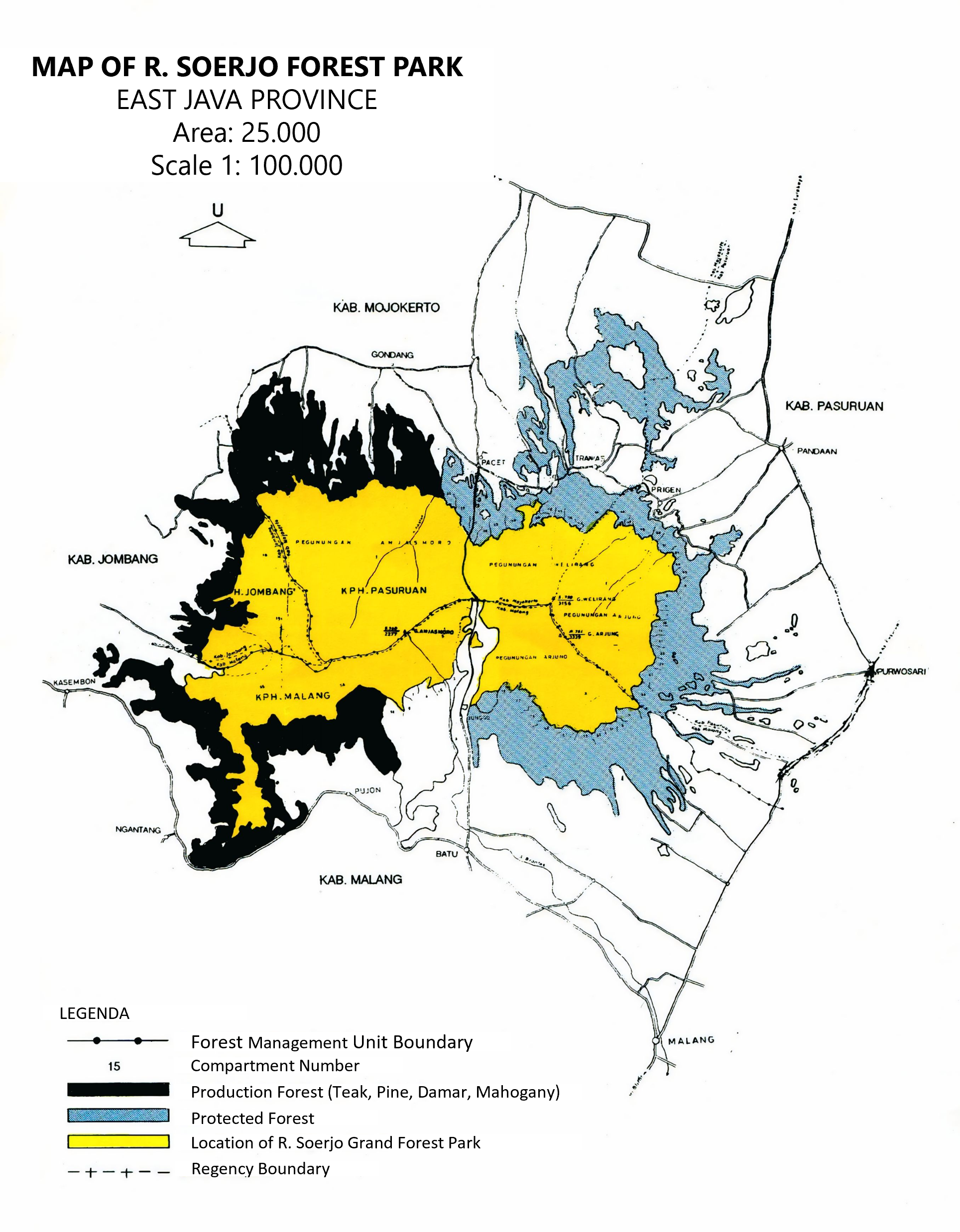
The research was conducted at Tretes Waterfall Resort, part of the Raden Soerjo Grand Forest Park, East Java, as shown in Figure 1.
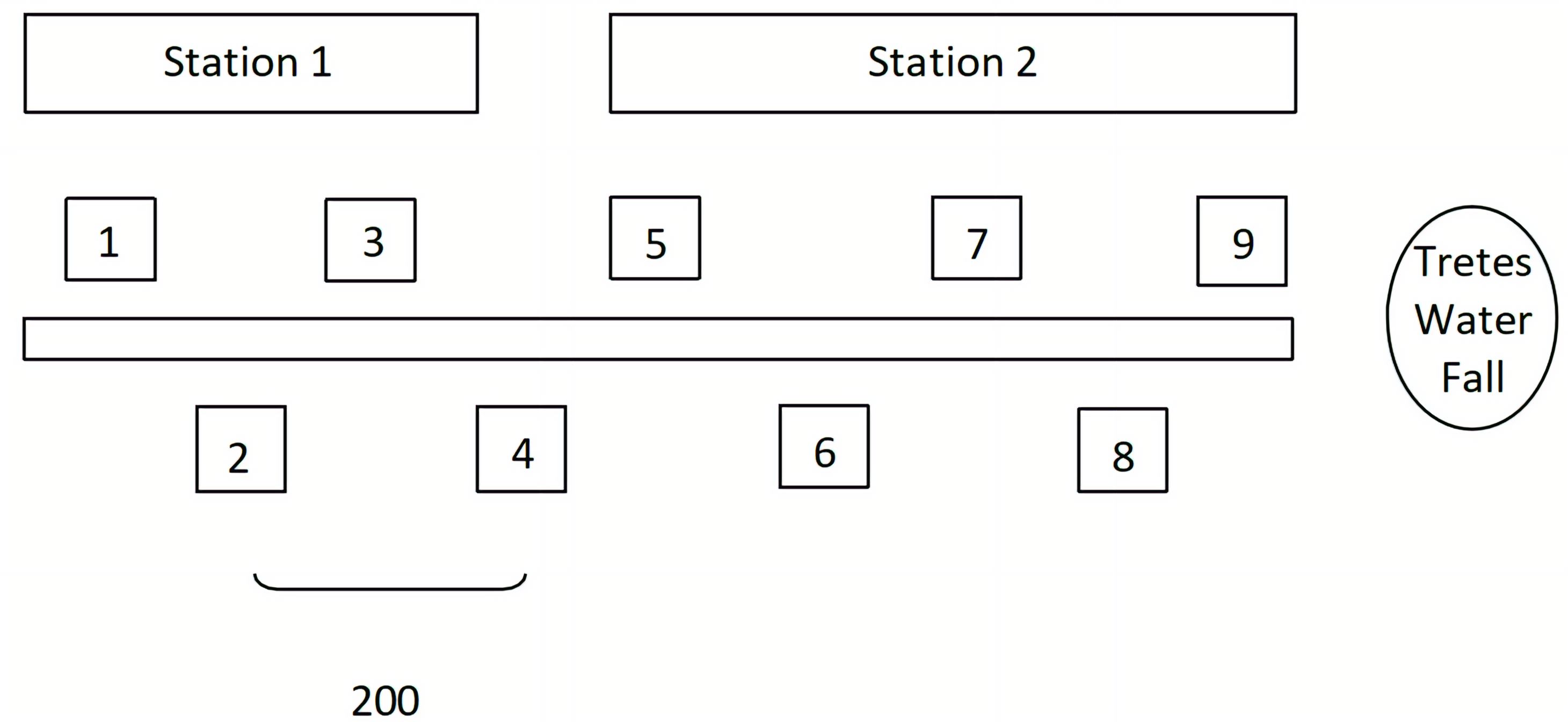
The study area consisted of mixed primary and secondary montane forest, agricultural edges, and transition habitats representing varying vegetation structure and disturbance gradients. Two sampling stations were selected based on habitat differences: Station 1, located near ecotone and agricultural plantation zones, and Station 2, positioned deeper inside the forest to represent less disturbed habitat conditions. The locations of the sampling stations are illustrated in Figure 2.
Sampling Framework and Replication Strategy
A point count sampling design was implemented across the two stations, with nine fixed sampling points distributed systematically along the transect (Points 1, 3, 5, 7, 9 at the upper section and Points 2, 4, 6, 8 along the lower section). Each point served as a sampling replicate, representing microhabitat variability within each station. The spacing between adjacent points was maintained at approximately 200 meters to minimize repeated detection of the same individuals. No randomization was applied due to the fixed nature of access routes and terrain constraints; however, sampling bias was reduced by applying consistent observation duration per point and by avoiding repeated observation of the same flocks.
Data Collection
Bird observations were carried out using the point count method, with one observer surveying each point for 10 min, resulting in a total of 90 min per station per day and 360 total observation min across the two-day survey period. All individuals detected visually or aurally within a maximum detection radius of 50 meters were recorded, following standard avian monitoring protocols. A single trained observer conducted all sampling to maintain observer consistency and reduce variation in species detection probability. Binoculars and field guides were used to assist species identification.
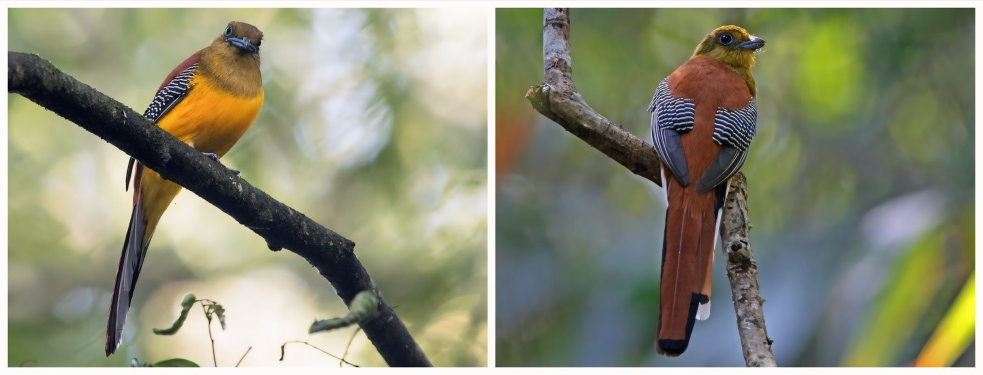
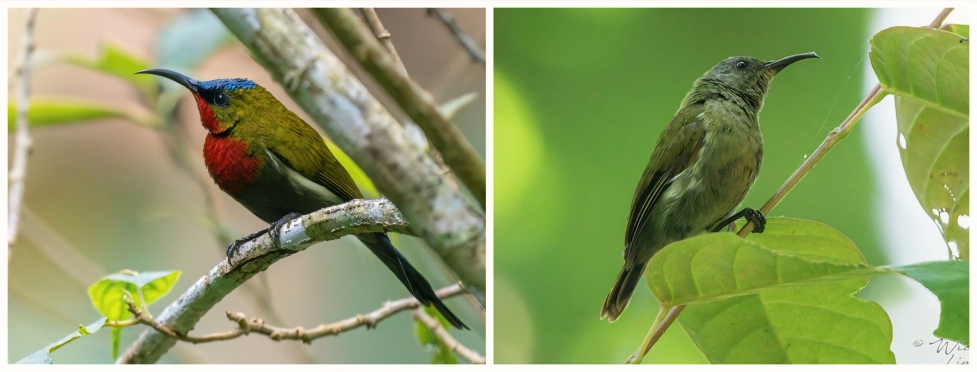
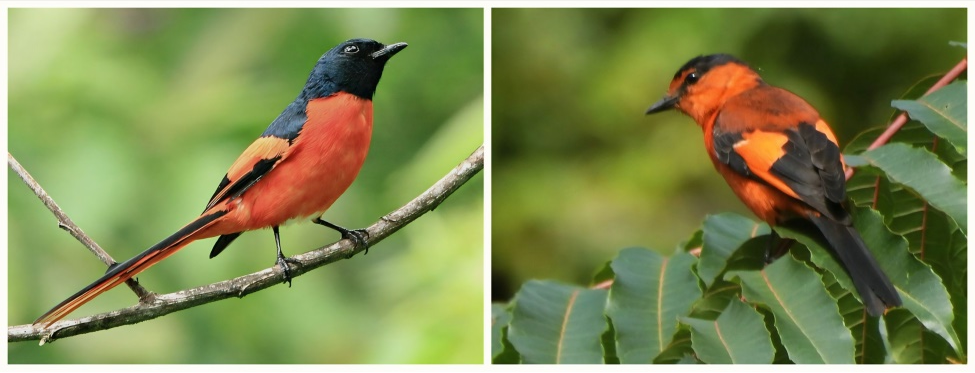
Photographs were taken for key species exhibiting conservation value, ecological sensitivity, or taxonomic uniqueness, particularly those distinguished by specialized morphological traits, restricted geographic distribution, or placement within monotypic or evolutionarily distinct lineages that make them important indicators of ecosystem integrity. Key taxa photographed included Heleia javanica, Psilopogon javensis, Harpactes oreskios, Aethopyga eximia, and Pericrocotus miniatus.
Controlled Variables and Limitations
To minimize confounding environmental effects, all observations were conducted between 06: 00 and 09: 00 WIB, coinciding with peak bird activity. Although weather conditions varied slightly, sampling was restricted to periods without heavy rain or high wind. Seasonal factors, migration, and imperfect detection probabilities were not quantified statistically; therefore, interpretation is limited to short-term temporal conditions.
Variables and Metrics
Ecological metrics used in this study included species richness, relative abundance, the Shannon–Wiener diversity index (H'), Pielou’s evenness index (E′), and Simpson’s dominance index (D). These indices were selected to quantitatively assess community structure and evaluate the balance and distribution of bird species among sampling points. In addition, environmental characteristics such as elevation, vegetation structure, canopy density, and surrounding land-use conditions were recorded qualitatively to support ecological interpretation of observed patterns and to contextualize community variation across sampling stations.
Data Analysis
Data were analyzed descriptively by presenting figures and tables of all bird species recorded at the Tretes Waterfall Resort, Raden Soerjo Grand Forest Park. Quantitative analyses were conducted to describe bird community structure using ecological indices, including species diversity, relative abundance, evenness, and dominance.
Species diversity was calculated using the Shannon–Wiener diversity index (H′) Eq. 1. Relative abundance was determined for each species as the ratio of the number of observed individuals to the total number of individuals recorded across all sampling points Eq. 2. This index was used to classify bird species into dominant, subdominant, and non-dominant categories along the observation transects and to assess their proportional contribution to the overall community structure.
Eq. 1 | H' = species diversity index.
Eq. 2 | Di = Dominance index of a bird species, Ni = Number of individuals of a bird species, N = Total number of individuals of all bird species.
Species evenness was assessed using Pielou’s evenness index Eq. 3 to evaluate the distribution of individuals among species within the community. Species dominance was analyzed using Simpson’s dominance index following Krebs (1989) Eq. 4, which reflects the extent to which one or several species dominate the assemblage.
Eq. 3 | E = Evenness index, H' = Species diversity index, ln = Natural logarithm, S = Number of species.
Eq. 4 | C = Dominance index, ni = Total individuals of each species, N = total number of individuals in the community.
All calculations were initially processed using Microsoft Excel and subsequently verified using PAST version 4.03 software. PAST is widely applied in ecological studies due to its statistical reliability and suitability for community structure and biodiversity analyses.
Ethical Considerations
All methods involved non-invasive observations (6). No birds were handled or captured. Required access permissions for conducting research inside the conservation area were formally obtained from the local management authority of Tahura Raden Soerjo.
Result
Observed Bird Species at Tretes Waterfall Resort
Bird surveys conducted on February 1–2, 2020, at the Tretes Waterfall Resort within the Raden Soerjo Forest Park identified 29 bird species representing 8 orders and 16 families (see Table 1). The most frequently encountered order was Passeriformes, accounting for 9 families and 18 species. The family Muscicapidae had the highest species count, with five distinct species observed.
| Station | H′ Index | Diversity Category |
|---|---|---|
| Station 1 | 2.77 | Moderate |
| Station 2 | 2.75 | Moderate |
Several species documented in this study are legally protected under Indonesian Ministry of Environment and Forestry Regulation No. P.106/MENLHK/SETJEN/KUM.1/2018, including Heleia javanica (Javan Grey-throated White-eye), Psilopogon javensis (Yellow-eared Barbet), Megalaima armillaris (Fire-tufted Barbet), and Harpactes oreskios (Orange-breasted Trogon). The occurrence of these protected species indicates that the Tretes Waterfall Resort provides suitable habitat features such as mature vegetation structure, stable canopy cover, and relatively low disturbance that are essential for the persistence of sensitive and conservation-priority birds. Their continued presence not only reflects the site’s ecological integrity but also reinforces its function as a critical refuge for avian biodiversity within the montane forest landscape.
Observations were conducted between 06: 00 and 09: 00 WIB during peak bird activity. Species identification was carried out through visual observation and auditory cues. See Appendix 1 for the full list of recorded bird species.
Species Diversity Index
Bird species diversity was analyzed using the Shannon-Wiener Diversity Index (H′) to assess the heterogeneity and ecological balance of the Tretes Waterfall Resort area. The analysis revealed that both Station 1 and Station 2 recorded 22 bird species, with 79 and 102 individuals, respectively. The combined total across both stations yielded 29 species from 16 families.
As shown in Table 1, the calculated Shannon–Wiener index was 2.77 at Station 1 and 2.75 at Station 2, placing both in the moderate diversity category (H′ between 1.0 and 3.0). This indicates that the bird community in both stations is relatively balanced, with no single species dominating the assemblage. Moderate diversity values generally reflect habitat conditions that are capable of supporting a wide range of ecological functions such as foraging, roosting, and breeding. The slightly higher index observed at Station 1 may be attributed to the presence of ecotone dynamics, where transitional boundaries between forest and cultivated areas create pronounced edge effects that promote species richness by combining structural and resource characteristics of adjacent habitat types. These ecotonal conditions tend to increase niche availability and facilitate coexistence among both generalist and specialist bird species, thereby enhancing community diversity.
Although both stations fall within the moderate diversity category, the slight variation between Station 1 (H′ = 2.77) and Station 2 (H′ = 2.75) is ecologically meaningful rather than trivial. The marginally higher diversity at Station 1 suggests that ecotonal habitat structure where forest vegetation meets plantation areas creates a mosaic of complementary food and shelter resources that can support both generalist and montane specialists simultaneously. In contrast, the deeper forest at Station 2 presents a more stable but structurally narrower niche spectrum, favoring species adapted to low-disturbance environments. Interpretations that rely only on the numerical diversity category overlook these ecological dynamics; the key insight is that even small differences in Shannon index values can reflect contrasting ecological processes driven by microhabitat heterogeneity, disturbance intensity, and resource partitioning among species. These findings complement, but also challenge, previous studies that reported uniformly negative impacts of plantation proximity on bird diversity, suggesting that under certain vegetation structures, moderate anthropogenic edges may temporarily enhance species coexistence rather than reduce it.
Interestingly, Station 1, which overlapped with agricultural plantations, showed a slightly higher diversity index than Station 2, despite its more homogeneous vegetation. This pattern may be attributed to the presence of ecotones, where transitional boundaries between forest and plantation vegetation generate pronounced edge effects that enhance species richness through increased structural heterogeneity, higher resource diversity, and the overlap of ecological niches from adjacent habitat types. Such ecotonal conditions expand the range of microhabitats available to bird communities, enabling both generalist and specialist species to coexist within the same landscape. Edge effects have been shown to increase bird diversity by introducing greater structural complexity and habitat heterogeneity.
Vegetation structure plays a central role in determining bird diversity. Heterogeneous vegetation provides a diverse range of food sources and microhabitats, supporting a broader spectrum of bird species (7). Thus, while anthropogenic land use, such as plantations, can reduce the quality of natural habitats, under certain structural conditions, they may still support moderate biodiversity, particularly in transition zones (8).
Relative Abundance Index
The Relative Abundance Index (Di%) was used to determine the dominance structure of bird species at the Tretes Waterfall Resort, identifying dominant, sub-dominant, and non-dominant species within the observation transects. The total of 29 species recorded revealed a diverse distribution of abundance values, ranging from 0.005% to 0.13%. (see Appendix 2 for the full dataset).
The most dominant species were Megalaima armillaris (Fire-tufted Barbet) with a relative abundance of 0.13%, and Collocalia linchi (Edible-nest Swiftlet) with 0.12%. The high abundance of M. armillaris can be attributed to the availability of its primary food resources, fruits, seeds, figs, and insects, abundant at observation points 2, 4, 5, 6, and 7. Meanwhile, C. linchi was frequently recorded at sampling points 1, 2, 4, 5, and 9, which are located within Station 1 and Station 2. These sampling points are characterized by more open habitat structure with minimal tall vegetation, creating suitable aerial space for C. linchi to perform its fast, low altitude foraging flights typical of swiftlets, thereby supporting higher encounter rates at those locations.
Conversely, the least abundant species were Harpactes oreskio (Orange-breasted Trogon) and Gallus varius (Green Junglefowl), each with a relative abundance of 0.005%. These species are known to be shy and highly sensitive to habitat disturbances, often preferring undisturbed forests with minimal human activity. The relatively low values suggest sensitivity to human disturbance in areas impacted by tourism and agriculture (9).
Bird abundance patterns reflect habitat quality, resource availability, and species’ ecological tolerances (10). Species with high adaptability to anthropogenic environments tend to dominate disturbed areas, while more specialized or disturbance-averse species decline. Birds thus serve as effective bioindicators of ecosystem health, particularly in transitional or degraded landscapes (11).
Evenness Index
The bird species evenness index (E′) was used to assess the distribution balance among species within each sampling station. This index helps to detect dominance patterns and determine whether the community is equitably structured. As presented in Table 2, the evenness values between Station 1 (0.898) and Station 2 (0.891) were relatively similar, indicating moderately uniform species distributions at both sites.
| Station | Evenness Index (E′) |
|---|---|
| Station 1 | 0.898 |
| Station 2 | 0.891 |
The highest site-specific evenness was recorded at Observation Point 1, where 10 species were identified, including Enicurus velatus, Pycnonotus aurigaster, Pycnonotus analis, Turdinus sepiarius, Pnoepyga pusilla, Orthotomus sepium, Halcyon cyanoventris, Todirhamphus chloris, Chalcophaps indica, and Collocalia linchi. The high evenness value at this point is attributed to the availability of key habitat features such as flowing water, tree canopy cover, shrubs, and food abundance.
In contrast, the lowest evenness was observed at Point 5, where only six species were detected, including Enicurus velatus, Macropygia ruficeps, Muscicapa dauurica, Psilopogon javensis, Ptilinopus porphyreus, and Harpactes oreskio. This lower evenness is likely due to the less diverse habitat dominated by bamboo and sparse undergrowth, which limits suitable microhabitats for various bird species.
According to Fikriyanti et al. (2018), evenness is strongly influenced by vegetation heterogeneity (12). Thus, more structurally complex habitats support a more balanced distribution of species by offering varied resources and ecological niches.
Dominance Index
The dominance index (D) was employed to assess the degree of species dominance within each bird community. This metric quantifies whether a particular species disproportionately dominates the ecosystem, which can reflect ecological imbalance. According to the Shannon-Wiener model, the value of D ranges from 0 to 1. A value approaching 0 indicates no dominance and a more stable, diverse community, whereas values closer to 1 suggest strong species dominance and reduced biodiversity.
As shown in Table 3, Station 1 exhibited a dominance index of 0.079, and Station 2 had a slightly higher value of 0.083. These low values suggest that no single species dominates either sampling station, indicating a well-balanced and ecologically stable bird community. This aligns with the corresponding moderate diversity indices found at both locations.
| Station | Dominance Index (D) |
|---|---|
| Station 1 | 0.079 |
| Station 2 | 0.083 |
The dominance index is inversely related to species diversity: higher diversity is typically associated with lower dominance, and vice versa. In stable habitats, dominance tends to be minimal as multiple species coexist and exploit available resources efficiently. Dominance may occur when a species is particularly well-adapted to the prevailing conditions, allowing it to outcompete others for food and habitat space (13). Conversely, environmental disturbances or changes in habitat conditions can reduce species diversity and increase the dominance of a few tolerant species.
Descriptive Highlights of Key Bird Species Observed at Tretes Waterfall Resort, Raden Soerjo Forest Park
To provide ecological context and support for species diversity findings, selected bird species observed during field surveys are visually documented and briefly described. These species were chosen based on their conservation status, ecological roles, relative abundance, and unique morphological characteristics. Each photograph is accompanied by a short annotation to aid in species identification and habitat interpretation.
Heleia Javanica (Lophozosterops Javanicus)
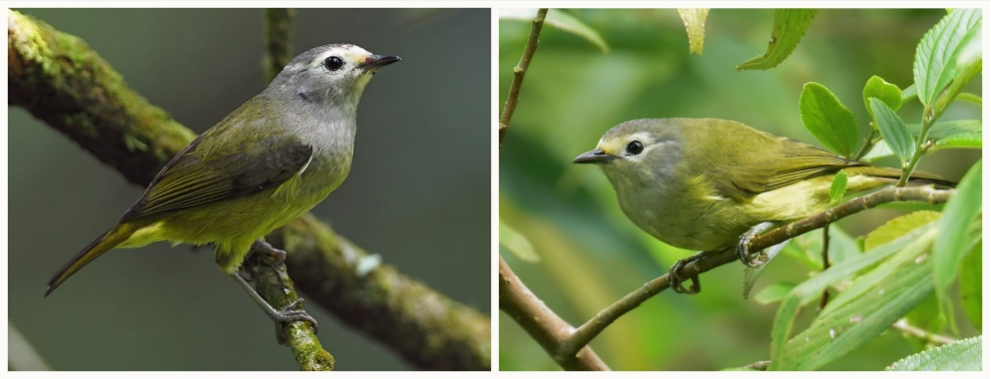
Heleia Javanica, a protected and endemic passerine of the family Zosteropidae, was observed actively foraging in the dense understorey of Station 1. This species favors mid- to high-elevation montane forests (above 1, 500 m), often moving in mixed-species flocks with warblers and other insectivores. Morphologically, it is characterized by its dull olive coloration, grayish throat and breast, pale yellow belly, and minimal white eye-ring, a distinctive trait in West Java populations. Its high-pitched, whistling calls and continuous, trembling song distinguish it from related species. The presence of H. javanica in the surveyed area reflects the ecological significance of structurally complex understorey vegetation in maintaining habitat suitability for endemic avifauna (14). Heleia javanica observed during the survey is shown in Figure 3.
Psilopogon Javensis (Megalaima Javensis)
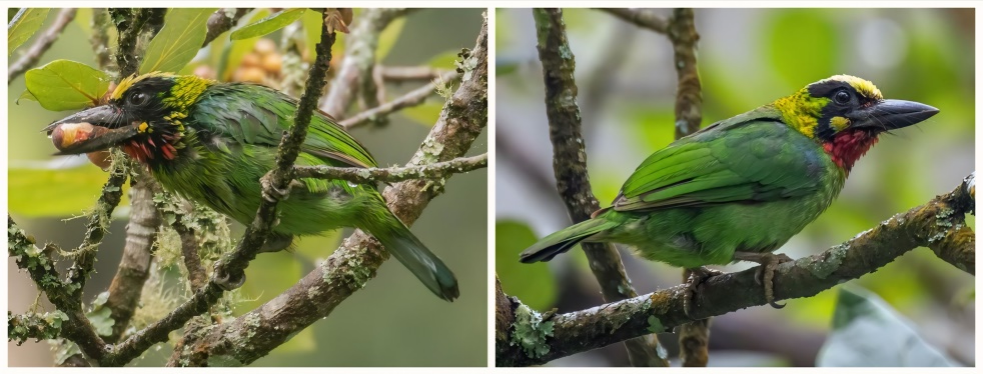
Psilopogon javensis, a protected barbet species endemic to Java and Bali, was encountered in more open canopy areas with moderate light penetration. It inhabits both lowland and montane forests up to 1, 500 meters. This medium-sized bird (~26 cm) is distinguished by its predominantly green plumage, yellow crown, yellow cheek patches, red throat, and a broad black collar across the upper chest. The reddish markings on the breast flanks and its distinct, metallic “tulung tumpuk” call further differentiate it from related species. Its presence in the study area highlights the importance of maintaining semi-open forest structures that support barbet vocalization and foraging behavior (14). Psilopogon javensis observed during the survey is shown in Figure 4.
Harpactes Oreskios (Orange-breasted Trogon)
Harpactes Oreskios, a member of the Trogonidae family, was detected in mid-elevation forest along quiet understory routes. This medium-sized bird (~25 cm) is identified by its olive-gray head and chest, chestnut back and tail, dark wings with barred coverts, and orange underparts. Females are duller with more gray tones, while juveniles appear browner. The species exhibits solitary but conspicuous behavior, often vocalizing while hunting from perches. Though widely distributed from southern China to the Greater Sunda Islands, it is relatively uncommon in Java, where it inhabits lowland to submontane forests (300–1, 200 m). Its presence in this study indicates suitable habitat conditions for specialized, low-disturbance forest species (14). Harpactes oreskios observed during the survey is shown in Figure 5.
Aethopyga Eximia (White-flanked Sunbird)
Aethopyga eximia, a striking member of the Nectariniidae family, was observed actively foraging among flowering shrubs near the forest edge at high elevation. Males display vibrant plumage with a shimmering blue-purple crown, crimson throat and chest, olive wings, and elongated bluish-green tail feathers. Females are duller with an olive-gray body and shorter tail. Typically solitary or in pairs, this species is frequently seen visiting nectar sources in dense montane forests above 1, 200 m. Endemic to Java, its presence indicates well-preserved floral diversity critical to forest pollinator networks (14). Aethopyga eximia observed during the survey is shown in Figure 6.
Pericrocotus Miniatus (Mountain Minivet)
Pericrocotus Miniatus, a striking member of the family Campephagidae, was observed inhabiting the upper forest canopy in the Raden Soerjo Grand Forest Park. This medium-sized passerine (19 cm) is characterized by its vivid red and black plumage and a long tail. Females exhibit unique coloration resembling males, with red markings on the throat, chin, and mantle, but lacking red on the secondary feathers. The species emits sharp, vibrating calls such as “cii-cii-cii” or prolonged “tsrii-ii”.
Typically found in large flocks of up to 30 individuals, P. miniatus frequents both primary montane forests and adjacent pine plantations, occasionally entering cultivated landscapes. This species is endemic to Sumatra and Java, commonly recorded at elevations between 1, 200–2, 400 m. Its presence in the study area reinforces the ecological value of upland forest edges for supporting montane endemics (14). The occurrence of this species suggests the habitat is suitable for montane birds, although further surveys are needed. Pericrocotus miniatus observed during the survey is shown in Figure 7.
DISCUSSION
Bird Community Structure and Habitat Quality Indicators
The diversity index results (H' = 2.77 and 2.75) suggest that Tretes Waterfall Resort supports a moderately diverse bird community. This level of diversity is indicative of habitats that provide a balanced mix of food sources, shelter, and microhabitats necessary for sustaining multiple species.
The slight difference between Station 1 and Station 2 can be attributed to structural variation in vegetation. Station 1's location near agricultural areas likely creates ecotone conditions, increasing diversity through edge effects. According to Dewi et al. (2007), heterogeneous vegetation supports varied ecological niches, enhancing species coexistence (7).
Relative abundance data show that Megalaima armillaris and Collocalia linchi dominate the area due to the availability of their preferred food and habitat structures. In contrast, the rarity of Harpactes oreskios and Gallus varius suggests sensitivity to anthropogenic disturbances, aligning with their known habitat preferences for undisturbed forests.
The evenness index, particularly the high value at Point 1 (E′ = 0.898), reflects an equitable distribution of species, likely influenced by favorable conditions such as water availability, dense shrub layers, and canopy coverage. Conversely, lower evenness at Point 5 may result from habitat simplification dominated by bamboo, limiting ecological niches for bird species (15).
Dominance values confirm the absence of ecological monopolization by any single species. lower dominance typically corresponds with higher habitat stability and greater biodiversity (16).
Overall, the results underscore the ecological value of Tretes Waterfall Resort as a habitat for both common and sensitive bird species, highlighting the need for continued conservation efforts in the region.
Indicator Species and Habitat Implications
Several bird species identified in this study, such as Heleia javanica, Psilopogon javensis, Harpactes oreskios, Aethopyga eximia, and Pericrocotus miniatus, provide further ecological insight beyond the quantitative indices. These species are either protected, endemic, or highly sensitive to habitat disturbances, and their presence underscores the ecological importance of the Tretes Waterfall Resort as a conservation site. For example, H. javanica, a highland-endemic white-eye, was observed in dense understory vegetation, suggesting the significance of shrub-layer complexity in maintaining microhabitat diversity. Similarly, the detection of P. javensis and A. eximia in semi-open canopy and flowering-edge habitats reflects the value of vertical stratification and floral availability. The presence of H. oreskios, a disturbance-sensitive trogon, is particularly notable as it indicates that some sections of the forest still offer low-noise, minimally disturbed environments essential for specialized forest dwellers. These species not only enhance the overall biodiversity value of the area but also serve as bioindicators for habitat integrity and quality. Their detection supports the conclusion that habitat heterogeneity, ranging from dense undergrowth to mixed-use ecotones, plays a key role in sustaining avian diversity in montane ecosystems.
These findings collectively reinforce the significance of preserving structurally diverse montane habitats, which sustain not only species richness but also habitat-sensitive avifauna critical to ecosystem resilience.
Conclusion
The findings of this study demonstrate that the Tretes Waterfall Resort in Raden Soerjo Grand Forest Park supports a moderately diverse and well-structured bird community, as reflected by balanced diversity, evenness, and low dominance indices. Rather than merely indicating moderate diversity, the observed community patterns provide ecological insight into how transitional forest–plantation landscapes can facilitate species coexistence through increased niche availability and resource overlap. The presence of endemic and legally protected species further illustrates that structurally complex edge habitats within conservation areas can function as refugia for sensitive taxa, indicating that ecotonal conditions may contribute positively to biodiversity maintenance when disturbance remains controlled. Although this study offers empirical evidence of the role of microhabitat heterogeneity in shaping community composition, the limited duration of field observations restricts broader temporal inference. Therefore, future investigations should incorporate multi-season monitoring, quantitative habitat assessments, and measurements of vegetation structure and disturbance intensity to more precisely evaluate the mechanisms linking habitat characteristics and avian community dynamics.
Declarations
Conflict of Interest
The author declares no conflicting interest.
Data Availability
The unpublished data is available upon request to the corresponding author.
Ethics Statement
Ethical approval was not required for this study.
Funding Information
The author declares that no financial support was received for the research, authorship, and/or publication of this article.
Supplemental Material
The supplemental material can be found at the link: https://etflin.com/file/document/202509300759471276619658.docx
References
- Nurrofik A, Fathoni M, Kurnianto AS, Septiadi L, Kurniawan N. Avifaunal diversity and community structure in Universitas Brawijaya Forest, East Java, Indonesia. Journal of Tropical Biodiversity and Biotechnology. 2021;6(2):61507.
- Abdullah M, Hakim L, Siswanto D, Setyowati DL. Mountain tourism impact on bird diversity along hiking trails of Mount Prau, Central Java, Indonesia. Biodiversitas Journal of Biological Diversity. 2024;25(12):4690–8.
- Afnan MZ, Fitriandini MS, Firmansyah ME. Potential of forest bird diversity and abundance in Tretes Waterfall, Wonosalam as an avitourism location. Jurnal Biologi Tropis. 2022;22(1):158–72.
- Widodo W, Istiadi Y, Priatna D. Avian communities in forest patches of Mount Halimun-Salak National Park, Bogor. Journal of Posthumanism. 2025;5(7): 2498–2515.
- Francis EA. Paramount roles of wild birds as bioindicators of contamination. Int J Avian & Wildlife Biol. 2017;2(6):00041.
- Direktorat Konservasi Keanekaragaman Hayati. Panduan identifikasi tanda-tanda satwa. Jakarta: Kementerian Lingkungan Hidup dan Kehutanan; 2018.
- Dewi RS, Mulyani Y, Santosa Y. Keanekaragaman jenis burung di beberapa tipe habitat Taman Nasional Gunung Ciremai. 2007.
- Gunawan H, Setyawati T, Atmoko T, Subarudi, Kwatrina RT, Yeny I, et al. A review of forest fragmentation in Indonesia under the DPSIR framework for biodiversity conservation strategies. Global Ecology and Conservation. 2024;51:e02918.
- Bötsch Y, Tablado Z, Jenni L. Experimental evidence of human recreational disturbance effects on bird-territory establishment. Proceedings of the Royal Society B: Biological Sciences. 2017;284(1858):20170846.
- Häkkilä M, Abrego N, Ovaskainen O, Mönkkönen M. Habitat quality is more important than matrix quality for bird communities in protected areas. Ecology and evolution. 2018;8(8):4019-4030.
- Sharma GP, Kumar Siroya A. Avian diversity and behavioral adaptations in anthropogenic habitats: A review of ecological dynamics in dump sites. International Journal of Research and Innovation in Applied Science. 2025;10(6):1215-1225.
- Fikriyanti M, Wulandari W, Fauzi I, Rahmat A. Keragaman jenis burung pada berbagai komunitas di Pulau Sangiang, Provinsi Banten. Jurnal Biodjati. 2018;3(2):157–65.
- Mujahid A, Sudrajat J, Octaviano HA, Wijaya TR, Darmawan A, Romauli CI. Five years of biodiversity index values in the reclamation area of former tin mining. In: Proceedings of the 15th International Conference on Mine Closure. Australian Centre for Geomechanics. 2022:961–72.
- MacKinnon J, Phillipps K, van Balen B. Burung-burung di Sumatera, Jawa, Bali dan Kalimantan (termasuk Sabah, Sarawak dan Brunei Darussalam). Bogor: Puslitbang Biologi LIPI; 2010.
- Wotrunnada A, Agustin D, Putri JM, Friscilla S, Ramadhine TD, Azriel M, et al. Exploration of bird species diversity in Sanggabuana area, Citalaksana, Karawang, West Java. Journal of Tropical Biodiversity. 2025;5(2): 100-117.
- Ardiansyah IN, Aryanti NA, Ahmadi H. Birds distribution in PT Ekosistem Khatulistiwa Lestari, Kubu Raya Regency, West Kalimantan Province. Media Konservasi. 2020;25(3):175–84.