RESEARCH ARTICLE
Potential of Chitosan Extracted from Mangrove Snail Shells (Telescopium Sp.) as a Facial Moisturizing Ingredient
Aquatic Functional Products|Vol. 2, Issue 1, pp. 15-22 (2026)
CC BY 4.0-2026 Authors
Views
Downloads
Shares

Received
Dec 11, 2025Revised
Jan 13, 2026Accepted
Jun 11, 2026Published
Jun 28, 2026
Abstract
Mangrove snail shells (Telescopium sp.) contain chitin that has the potential to be processed into chitosan, a natural active compound useful in cosmetics, particularly as a moisturizer and protector against ultraviolet radiation. This study aimed to evaluate the effect of varying chitosan solution concentrations on the physicochemical characteristics and sun protection factor (SPF) values of facial moisturizer cream preparations. The method used was an experiment with a non-factorial Completely Randomized Design (CRD), consisting of three treatments: 0% (K0), 3% (K3), and 7% (K7). Tests conducted included chitosan quality (yield, degree of deacetylation, water content, ash content, nitrogen content) and cream characteristics (organoleptic, emulsion type, adhesiveness, spreadability, viscosity, pH, and SPF). The results showed that chitosan was of good quality with a yield of 9.54%, a degree of deacetylation of 67%, and a nitrogen content of 4.81%. The cream preparation with the addition of 7% chitosan solution (K7) showed the best quality, reviewed from the homogeneous color, neutral aroma, semi-solid consistency, as well as optimal physical characteristics, adhesive power (6.45 seconds), viscosity (45787.97 cps), and SPF value of (6.46). All quantitative data were analyzed using one-way Analysis of Variance (ANOVA) at a 95% confidence level (p < 0.05) to determine significant differences among treatments. The obtained SPF value indicates that chitosan derived from mangrove snail shells has potential as a natural active ingredient in moderate-level sunscreen moisturizing formulations, supporting the development of sustainable cosmetic products.
Introduction
Riau Province has a fairly extensive mangrove forest area. According to data from the Central Statistics Agency (1), the area of mangrove forest in Bengkalis Regency in 2015 reached 33, 016 hectares, spread along the coast and riverbanks. Mangrove snails (Telescopium sp.) are one of the biota often found in abundance in fishpond areas bordering mangrove forests. Most people utilize mangrove snails as a food source, but unused body parts, such as their shells, have the potential to be used to produce chitin and chitosan. Mangrove snail shells are known to contain high levels of chitin (2), thus offering significant potential for processing into high-value products such as chitosan.
Chitosan is a chitin derivative obtained through a deacetylation process and is a natural polysaccharide that can be extracted from crustaceans, insects, and certain fungi (3). This compound has numerous advantages in various fields, including cosmetics. In cosmetic product formulations, chitosan functions as a humectant, thickening agent, moisturizer, antioxidant, sunscreen, and emulsion stabilizer (4). Chitosan's cationic properties allow it to be absorbed into the negatively charged skin surface, thereby increasing the water content in the stratum corneum and the fluidity of cell membranes. Furthermore, chitosan can protect the skin from ultraviolet radiation. Chitosan's ability to form an edible film also acts as a sunscreen factor (5).
Facial moisturizer is a semi-solid preparation used to treat dry skin while protecting it from ultraviolet radiation. This product functions to nourish, maintain skin health, prevent premature aging, and brighten the complexion. Physically and chemically, moisturizer can inhibit the penetration of UV rays into the skin (6) and form a thin barrier that helps maintain skin softness (7). However, commercial moisturizer products generally offer instant results and contain synthetic chemicals that have the potential to cause negative effects on skin tissue (8), necessitating the need for safer, natural alternatives. In recent years, the global cosmetic industry has shifted toward sustainable, biodegradable, and marine-derived bioactive ingredients. Chitosan has attracted international attention due to its biocompatibility, film-forming ability, and multifunctional role in cosmetic formulations. Nevertheless, studies specifically utilizing chitosan derived from mangrove snail (Telescopium sp. ) shells for facial moisturizer formulations with SPF evaluation remain limited. Most previous studies focused on shrimp or crab shell chitosan, with limited discussion on alternative mollusk sources and their formulation performance.
Therefore, this study addresses this gap by evaluating the physicochemical characteristics and SPF value of facial moisturizer formulated with chitosan extracted from mangrove snail shells, highlighting its novelty as a sustainable cosmetic raw material from underutilized coastal waste.
The purpose of this study was to determine the effect of adding different solution concentrations on the physicochemical characteristics and sun protection factor (SPF) values, as well as to determine the optimal chitosan concentration. This research is also expected to provide a solution for converting underutilized mangrove snail shell waste into something useful and to provide innovation by utilizing chitosan as a facial moisturizer with a high SPF value.
Methodology
Materials
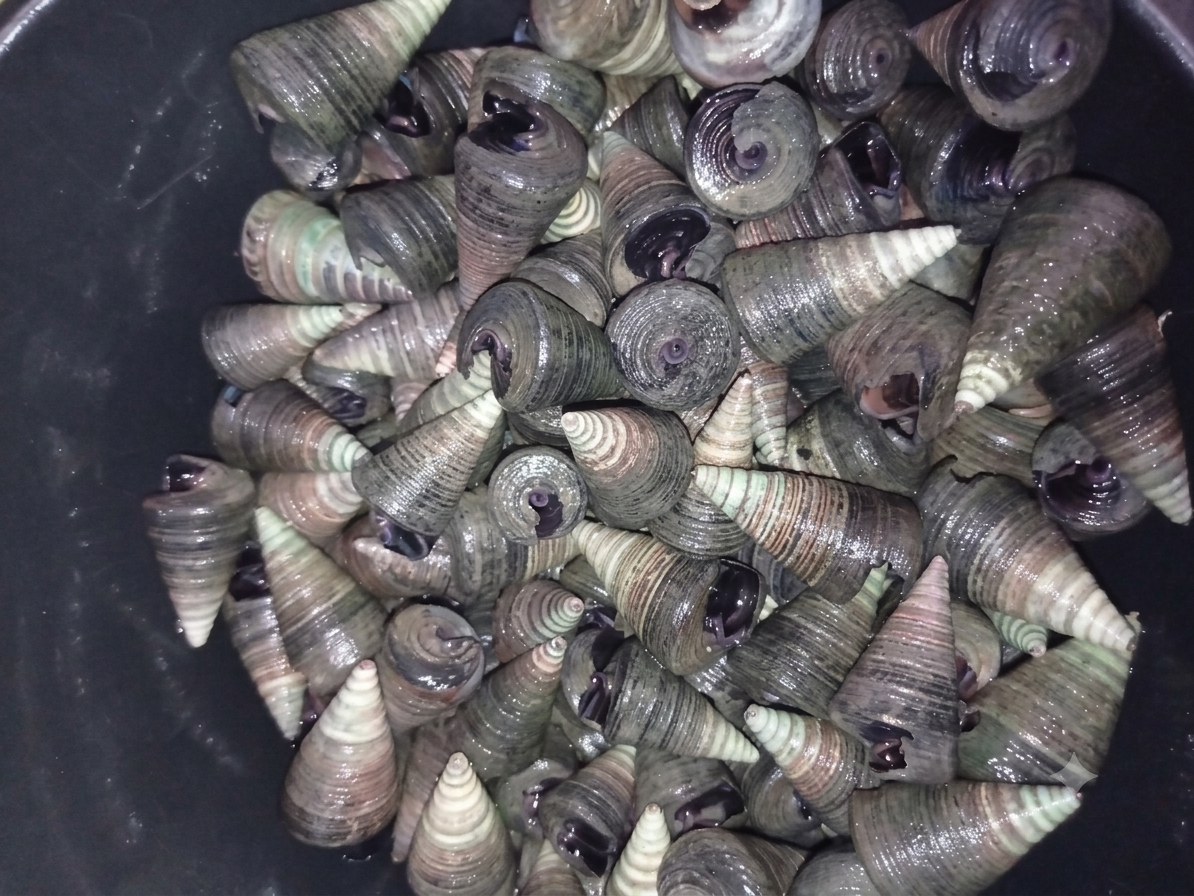
The materials used in this study were mangrove snail shells obtained from Bengkalis Regency, Riau Province. The mangrove snails used in this study had a shell length ranging from 5–10 cm, diameter of 3–5 cm, and an average shell weight of 4-5 g (Figure 1). The shells were hard in texture and dark in color. The chemicals used for chitosan extraction were NaOH (Merck), HCl (Merck), and distilled water; the ingredients for making facial moisturizer were glycerin, triethanolamine, olive oil, stearic acid, cetyl alcohol, propylparaben, propylene glycol, methylparaben; and the consumables were tissue paper, label paper, and aluminum foil.
The tools used for chitosan extraction included a hot plate stirrer (Thermo scientific), a magnetic stirrer (Thermo scientific), a measuring cylinder (IWAKI), an analytical balance (BOECO, Germany), a pH meter (ATC), an FTIR spectrophotometer (Thermo scientific), and an oven (MEMMERT); the tools for making facial moisturizing were an analytical balance (BOECO, Germany), a mortar, a beaker (IWAKI), and a mixer (PHILIPS).
Sampling
A 10 kg sample of mangrove snails of the same size was collected from mangrove forests in the waters of Bantan District, Bengkalis Regency, Riau Province. The snails were transported in Styrofoam boxes to the Fisheries Product Chemistry Laboratory in Pekanbaru, where the shells were separated from the flesh, washed, and oven-dried at 60°C for 12 h.
Chitosan Extraction
Chitosan production begins with a demineralization process, soaking in 1N HCl with a sample-to-HCl ratio of 1:7 (g of powder/mL HCl) while heating at 90°C for 60 min. The samples were then decanted and washed with distilled water until the pH was neutral, and the precipitate was dried. This was followed by a deproteinization process, soaking in a 3N NaOH solution with a NaOH ratio of 1: 10 (g of powder/mL HCl) for 1 h, then heating at 90 °C. After cooling, it was decanted, washed with distilled water until the pH was neutral, and then filtered to remove the precipitate. The precipitate was then deacetylated using a 30% NaOH solution in a 1: 2 ratio. It was soaked for 1 day, then heated at 60 °C for 1 h with stirring. The precipitate was then washed with distilled water until the pH was neutral, and the precipitate was dried. The resulting product is called chitosan (9). The concentration of 1N HCl for demineralization and 3N NaOH for deproteinization was selected based on commonly reported extraction protocols that effectively remove mineral and protein components without excessive depolymerization of chitin. High alkali concentrations may increase deacetylation but can also reduce molecular weight and functional properties. Therefore, the selected concentrations represent optimized conditions widely applied in chitosan extraction studies.
After obtaining chitosan, the chitosan powder was then processed into a chitosan solution. Three g and seven g of chitosan powder were weighed, respectively. Then, each chitosan powder was dissolved in 1% acetic acid at a ratio of 1: 10 (w/v). 100 mL of distilled water was added and homogenized for 60 min. This resulted in 3% and 7% chitosan (10).
Facial Moisturizing
The base cream formulation was prepared following previously published cosmetic formulation protocols (11, 12). The % composition of all excipients was maintained constant across treatments, and only the concentration of chitosan solution (0%, 3%, and 7%) was varied as the independent variable in this study. This approach ensured that any observed differences in physicochemical characteristics and SPF values were attributed solely to chitosan concentration.
Making facial moisturizer cream begins with preparing the oil phase and water phase, and mixing the oil and water phases. Each ingredient in the oil and water phases was melted in a water bath gradually until the temperature reached 70 °C. After the temperature reached 70 °C, propyl paraben was added to the oil phase and methyl paraben to the water phase. Each phase was homogenized at a constant temperature of 70 °C until all ingredients were evenly distributed. The next stage was mixing the oil and water phase ingredients, each ingredient was poured little by little while stirring with a mixer. After all ingredients were mixed and stirred evenly, the temperature was lowered to 45 °C, 1 mL of chitosan solution was added and continued to stir until a cream was formed (11) and (12).
Evaluation of Facial Moisturizer
The facial moisturizer was evaluated for organoleptic properties (color, odor, and consistency), emulsion type, adhesion, spreadability, viscosity, pH, and sun protection factor (SPF). Adhesion was measured using the glass plate method by recording the time required for two glass slides to separate under a specified load (s). Spreadability was determined by measuring the diameter of cream dispersion under standardized weight (cm). Viscosity was measured using a Brookfield viscometer and expressed in centipoise (cPs). The pH was determined using a calibrated digital pH meter. SPF value was analyzed using UV-Vis spectrophotometry at a wavelength range of 290-320 nm. All measurements were performed in triplicate.
Statical Analysis
All experiments were conducted in triplicate. Data obtained from physicochemical tests and SPF measurements were expressed as mean ± standard deviation. Statistical analysis was performed using one-way Analysis of Variance (ANOVA) to evaluate significant differences among treatment groups (0%, 3%, and 7% chitosan concentration). When significant differences were detected (p < 0.05), Duncan’s Multiple Range Test (DMRT) was applied as a post-hoc analysis.
Results and Discussion
Chitosan Characteristics
The chitosan characterization carried out included the yield, water content, ash content, nitrogen content, and degree of deacetylation of mangrove snail (Telescopium sp.) shells.
| Assessesment | Result | EFSA 2010 (13) | SNI 7949: 2013 (14) |
|---|---|---|---|
| Yield | 9.54% | - | - |
| Moisture | 6.02% | ≤ 10% | ≤ 12% |
| Ash | 472% | ≤ 3% | ≤ 5% |
| Nitrogen | 4.81% | ≤ 6% | ≤ 5% |
| Deacetylation degree | 67% | ≥ 90% | ≥ 70% |
Yield
The chitosan yield produced in this study was 9.54% of the total weight of mangrove snail shells (Ta), nearly equivalent to the reported chitosan yield of 8.59% from mangrove snail shells (15). This yield is the result of a deacetylation process associated with the removal of acetyl groups in mangrove snail shells (16). Chitosan yield is influenced by concentration, solvent type, temperature, and raw materials used. High alkali concentrations and temperatures can reduce yield and cause depolymerization and polymer degradation, resulting in lower molecular weight and reduced functional properties for chitosan (17). Furthermore, temperature and time parameters need to be controlled to avoid damaging the chitosan polymer structure (18).
Compared to other marine-derived chitosan sources, the yield obtained in this study is within the commonly reported range of 5-15% (2, 15). For example, chitosan extracted from shrimp shells typically yields 10-20%, while crab shell chitosan ranges from 8-18% depending on extraction conditions (2, 22). The slightly lower yield observed in this study may be attributed to differences in mineral composition, shell structure, and species-specific biochemical characteristics of mangrove snail shells.
Degree of Deacetylation
The degree of deacetylation is an important indicator for assessing chitosan purity. Extracted chitin and chitosan were identified through infrared spectroscopy analysis, which detects characteristic functional groups such as NH, OH, C-C, CH, and C=O (19). In this study, the chitin deacetylation reaction was carried out using a 60% NaOH strong base solution, resulting in a chitosan deacetylation rate of 67%. This value is higher than the 64% obtained from research (20) on mangrove snail chitosan, but still slightly lower than the Indonesian National Standard (SNI) standard of > 70%. The demineralization, deproteinization, and deacetylation processes were not optimal in removing acetyl groups, possibly due to temperature instability, insufficient reaction time, and uneven stirring. A similar finding was also noted by (21) in their study of rice weevil (Sitophilus oryzae) exoskeletons.
The relatively substandard degree of deacetylation (67%) may substantially influence the intrinsic solubility, viscosity behavior, and film-forming capacity of the derived chitosan. A lower degree of deacetylation indicates fewer free amino groups (-NH₂), resulting in a reduced cationic charge density and weaker electrostatic interaction with negatively charged skin proteins. Nevertheless, the obtained chitosan still demonstrated favorable functional performance in a cosmetic formulation, as shown by increased viscosity, adhesion, and SPF values. Therefore, although it does not fully meet the required SNI standard, the chitosan remains applicable for topical cosmetic use (23).
Water Content
Chitosan is a biopolymer whose physicochemical characteristics are influenced by water content. Therefore, determining water content is an important aspect in quality evaluation, as excessively high water content can affect chitosan stability. The water content of mangrove snail shell chitosan in this study was 6.02%, this value meets the chitosan quality standards set by SNI 7949: 2013, which is a maximum of 12%. The water content of chitosan is influenced by the drying process of both the raw materials and the final product of chitosan production, where low water content can be achieved through optimal drying after the deacetylation stage with appropriate temperature and duration settings (22). Conversely, an ineffective drying process can cause the water content to remain high, thereby increasing the risk of microbial contamination and reducing the quality of chitosan.
Ash Content
Ash content is a parameter that indicates the amount of inorganic residue remaining in chitosan after the extraction and purification process. The ash content of mangrove snail shell chitosan in this study was 4.72%, meeting the chitosan quality standard set by SNI 7949: 2013, which is a maximum of 5%. The effectiveness of the demineralization process, particularly the use of acid solutions, plays a role in removing inorganic components such as calcium and magnesium (24). Furthermore, the temperature used during the chitosan manufacturing process also affects the resulting ash content. Higher temperatures can increase the effectiveness of the chemical reaction during the demineralization stage, thus optimally eliminating inorganic residues (25). Higher deacetylation temperatures, without exceeding the maximum limit, will result in lower ash content, making ash content control a crucial aspect in producing high-quality chitosan.
Nitrogen Content
Nitrogen content is an important parameter in understanding the structure and purity of chitosan, as it reflects the success of the deproteinization stage. The nitrogen content of mangrove snail shell chitosan in this study was 4.81%, a value that meets the chitosan quality standard according to SNI 7949: 2013, which is a maximum of 5%. The low total nitrogen content indicates that the deproteinization process was effective, with the remaining nitrogen originating from the amine groups of chitosan (22). Conversely, if the deproteinization process is not optimal, residual protein can increase the nitrogen content above the ideal value, thereby reducing the accuracy of characterization and the quality of the resulting chitosan.
Facial Moisturizing Quality
The physicochemical characteristics of facial moisturizer formulated with different chitosan concentrations (0%, 3%, and 7%) are presented descriptively in the following sections. Measurements were conducted in triplicate, and comparative trends among formulations are discussed based on observed experimental results. Statistical analysis using one-way ANOVA indicated significant differences (p < 0.05) among treatments for adhesion, spreadability, viscosity, pH, and SPF value.
Detailed discussion of each physicochemical parameter is provided below to describe the influence of chitosan concentration on formulation performance.
Emulsion Type
The results of the emulsion type test on the mangrove snail shell chitosan facial moisturizer cream showed that the three formulas with chitosan solution concentrations of 0%, 3%, and 7% exhibited an oil-in-water (O/W) emulsion type. An O/W emulsion is a system with an internal phase consisting of oil dispersed in small particles and an external phase consisting of water that dominates the emulsion system (26). The characteristics of the O/A type cream are in accordance with the purpose of facial moisturizer formulation because it provides hydration without leaving a greasy feeling, producing a preparation that is easy to wash, not sticky, and comfortable to use on facial skin (27). The addition of chitosan solution in different concentrations does not change the emulsion type because chitosan is soluble in the water phase, so the consistency of the O/A type in all formulations indicates that the emulsion system remains stable. This is in line with the opinion (28) which states that the addition of chitosan in various concentrations does not disrupt the emulsion system, but maintains the water phase as a continuous phase. A similar opinion was also expressed by (29) in a study of anti-acne cream made from chitosan from feather clam shells, where chitosan dissolved in the water phase does not cause a shift in the emulsion type and acts as an active ingredient that supports the moisturizing function.
Adhesion
The adhesion value of chitosan facial moisturizer cream ranged from 4.60 to 6.45 s, with the 3% concentration producing the highest value at 6.45 s, while the 0% concentration produced the lowest value at 4.60 s. These values are still in the good category because the generally accepted standard for cream adhesion is more than 4 s (30). The difference in adhesion values between treatments reflects the effect of chitosan concentration on the cream's adhesion, where the higher the chitosan concentration, the greater the adhesion. This finding supports research (31) which recorded a maximum adhesion value of 6.20 s. The 7% concentration treatment showed the best results because it had a longer adhesion time than the 0% and 3% concentrations, thus expected to provide a longer-lasting skin therapeutic effect. The adhesive properties of chitosan, derived from its positively charged amino groups, enable it to interact with the negatively charged skin surface, thereby enhancing the preparation's adhesion (32). The increase in adhesion with higher chitosan concentration can be explained by electrostatic interactions between protonated amino groups (-NH₃⁺) of chitosan and negatively charged skin surface components. In addition, hydrogen bonding and polymer chain entanglement contribute to stronger intermolecular cohesion, enhancing adhesive strength.
Spreadability
The spreadability of chitosan facial moisturizer cream ranged from 5.51 to 6.50 cm, with the 3% concentration showing the highest value at 6.50 cm, while the 0% concentration produced the lowest value at 5.51 cm. This range is within the general standard for topical preparations, which is 5–7 cm (33). The difference in spreadability values between concentrations indicates that the addition of chitosan affects the cream's spreadability. The 3% concentration had a higher spreadability value than the 7% concentration, consistent with research (34) that showed that higher chitosan concentrations decrease spreadability. The decrease in spreadability at higher concentrations is thought to be due to increased viscosity, making the cream thicker and less spreadable. Spreadability is inversely proportional to viscosity, as the higher the extract concentration added, the thicker the cream consistency, thus reducing spreadability (35). This behavior is associated with increased internal resistance within the polymer matrix. Higher chitosan concentration promotes denser network formation through hydrogen bonding, which limits molecular mobility and reduces spreading capacity.
Viscosity
The viscosity of chitosan facial moisturizer cream ranged from 19, 629.07 to 45, 787.97 cPs, with the 7% concentration showing the highest value of 45, 787.97 cPs, while the 0% concentration produced the lowest value of 19, 629.07 cPs. This range of values still meets the ideal viscosity requirements according to SNI 16-4399-1996. The difference in viscosity values between concentrations indicates that the higher the chitosan concentration, the higher the viscosity value. This finding supports research (36) which recorded viscosity values in the range of 18, 079 to 38, 045 cPs. The 7% concentration showed the best results because it had the highest viscosity value compared to the 0% and 3% concentrations. This indicates that chitosan functions as a thickener due to its polar and nonpolar groups and hygroscopic properties, thereby increasing the viscosity of facial moisturizer cream (37). The increase in viscosity is attributed to the formation of a three-dimensional polymer network within the cream system. Chitosan interacts with water molecules and lipid components through hydrogen bonding and electrostatic interactions, increasing structural rigidity and resistance to flow.
pH
The pH value of chitosan facial moisturizer cream ranges from 5.11 to 6.82, with a 0% concentration showing the highest pH value of 6.82, while a 7% concentration produced the lowest pH value of 5.11. This range still meets the ideal pH requirements according to SNI 16-4399-1996. The difference in pH values between concentrations indicates that the higher the chitosan concentration, the lower the resulting pH value. The decrease in pH is thought to be caused by the influence of additives in the preparation and changes in the active ingredient due to environmental conditions (38). The resulting pH variation emphasizes the importance of controlling the composition of ingredients in cream formulations, as a pH that is too low or too high can negatively impact the comfort and safety of product use. Moisturizing creams with a pH that is too acidic or too basic can potentially cause skin irritation and increase the risk of dryness (39).
Sun Protection Factor
The SPF value of chitosan facial moisturizer cream ranges from 0.84 to 6.46, with a 7% concentration showing the highest value of 6.46, while a 0% concentration yielded the lowest value of 0.84. Concentrations of 3% and 7% fall into the moderate sunscreen category (40). The variation in SPF values for each treatment reflects the effect of chitosan concentration on the effectiveness of the moisturizer cream in protecting the skin from ultraviolet light exposure. In general, increasing the concentration of chitosan in the cream formulation tends to be followed by an increase in the resulting SPF value. This finding aligns with research (31) which reported the highest SPF value of 5.41. Increasing the concentration of chitosan extract in facial moisturizer cream can increase the SPF value, as chitosan forms a protective layer on the skin and enhances the effectiveness of the active ingredient in absorbing UV rays (8). The enhancement of SPF value with increasing chitosan concentration may be attributed to its film-forming ability and UV light scattering properties. The polymer layer formed on the skin surface acts as a physical barrier, reducing UV penetration. Additionally, the presence of chromophoric functional groups within the chitosan structure may contribute to partial UV absorption, thereby improving photoprotective performance.
Conclusion
Based on the research results, the characteristics of chitosan from mangrove snail shells (Telescopium sp. ) were: a yield of 9.54%, powder form, with a deacetylation degree of 67%, a water content of 6.02%, an ash content of 4.72%, and a nitrogen content of 4.81%. The addition of different chitosan concentrations significantly affected the characteristics of the facial moisturizer, including adhesion, spreadability, viscosity, pH, and sun protection factor. The best treatment was the addition of 7% chitosan.
This study contributes scientifically by demonstrating that chitosan derived from mangrove snail shells possesses functional physicochemical properties suitable for cosmetic application, despite having a moderate degree of deacetylation. The incorporation of 7% chitosan improved viscosity, adhesion, and provided a moderate SPF value, indicating its dual function as a moisturizing and photoprotective agent in topical formulations.
From an industrial perspective, this research introduces mangrove snail shell waste as an alternative sustainable source of chitosan, supporting circular economy principles and reducing dependency on conventional crustacean-derived chitosan. The findings provide a foundation for the development of eco-friendly and marine-based cosmetic products aligned with global trends in green beauty and sustainable formulation technology.
However, this study is limited by the suboptimal degree of deacetylation and the absence of long-term stability and in vivo dermatological safety testing. Future research should focus on optimizing extraction parameters to achieve higher deacetylation degree, conducting stability studies, and performing skin irritation assessments to support industrial-scale application in the beauty industry.
Abbreviation
SNI = Indonesian National Standard
Declarations
Acknowledgment
We would like to express our gratitude to the Department of Fisheries Product Technology, Universitas Riau for the financial, especially for the moral support.
Conflict of Interest
The authors declare no conflict of interest regarding this research article.
Data Availability
The data generated during and/or analyzed during the current research are available from the corresponding author upon reasonable request.
Ethics Statement
Ethical approval was not required for this study.
Funding Information
The author declares that no financial support was received for the research, writing, or publication of this article.
References
- Badan Pusat Statistik. Luas hutan menurut jenis hutan di Kabupaten Bengkalos. Riau: Badan Pusat Statistik; 2015.
- Sihombing K, Hasan B, Sidauruk S. Potential of Chitosan from Mangrove Snail Shells (Telescopium sp.) in Body Scrub Formulation. aqlis. 2025;2(1):21-27. doi: https://doi.org/10.58920/aqlis0201340
- Mackay RG, Tait JM. Handbook of chitosan research and applications. New York: Nova Science; 2012.
- Kulka K, Sionkowska A. Chitosan Based Materials in Cosmetic Applications: A Review. Molecules. 2023 Feb 15;28(4)
- Ristia Rahman I, Masykuroh A. Karakteristik dan Nilai Sun Protecting Factor (SPF) Kitosan dari Tulang Sotong (Sephia officinalis). JIFI. 2020;3(2):298-306. doi: https://doi.org/10.36387/jifi.v3i2.539
- Rajkumar J, Chandan N, Lio P, Shi V. The Skin Barrier and Moisturization: Function, Disruption, and Mechanisms of Repair. Skin Pharmacol Physiol. 2023;36(4):174-185. doi: https://doi.org/10.1159/000534136
- Safitri NI, Ermawati N, Oktaviani N. Sediaan krim pelembab ekstrak air buah semangka (cirullus lanatus). benzena. 2022;1(1). doi: https://doi.org/10.31941/benzena.v1i01.2101
- Dasopang ES, Siahaan DN, Saputri M, Irnabila S. Activity test of bestselling moisturizers on shopee in treating skin problems. Biolink. 2024;10(2):149-156. doi: https://doi.org/10.31289/biolink.v10i2.10704
- Attar Nosrati S, Alizadeh R, Ahmadi SJ, Erfani M. Optimized precipitation process for efficient and size-controlled synthesis of hydroxyapatite–chitosan nanocomposite. J. Korean Ceram. Soc. 2020;57(6):632-644. doi: https://doi.org/10.1007/s43207-020-00064-7
- Apriadi RA. Pengaruh penambahan larutan kitosan terhadap mutu produk gel surimi ikan nila (Oreochromis sp.) [skripsi]. Bogor: Institut Pertanian Bogor; 2004.
- Kasim R, Kalsum K. Pengolahan kakao bubuk dari biji kakao fermentasi dan tanpa fermentasi sebagai sediaan bahan pangan fungsional. Jihp. 2018;13(2):107. doi: https://doi.org/10.33104/jihp.v13i2.4157
- Hasan NH. Pembuatan alas bedak rose [tidak dipublikasikan]. Makassar: Laboratorium Terpadu Program Profesi Apoteker, Fakultas Farmasi UNHAS; 2008.
- European Food Safety Authority. Scientific opinion on the safety of chitinglucan as a novel food ingredient. EFSA J. 2010;8(7):1-17.
- Sardjono H, Khairiyati L, Perangin-angin WK, Syahadi M, Azzumar M, Amalia H, et al. Metrologi Kelistrikan Terapan: : Untuk Laboratorium Kalibrasi di Industri dan Perguruan Tinggi. LIPI Press; 2021. doi: https://doi.org/10.14203/press.234
- Noviyanti NI, Johan RB, Padlilah R, Ruqaiyah R. Analisis Pengaruh Status Gizi Terhadap Kejadian Anemia pada Remaja Putri di SMA Hangtuah Kota Tarakan. Joim. 2024;8(1):11-18. doi: https://doi.org/10.21776/ub.joim.2024.008.01.2
- Sudianto, Heri Suseno S, Suptijah P. Optimasi Produksi Kitosan Larut Air menggunakan Metode Hidrolisis Bertekanan. Jphpi. 2020;23(3):441-446. doi: https://doi.org/10.17844/jphpi.v23i3.30022
- Citrowati AN, Satyantini WH, Mahasri G. Pengaruh Kombinasi NaOH dan Suhu Berbeda Terhadap Nilai Derajat Deasetilasi Kitosan dari Cangkang Kerang Kampak (Atrina pectinata). JAFH. 2019;6(2):48. doi: https://doi.org/10.20473/jafh.v6i2.11279
- Suryani S, Abdullah NA, Akib NI, Ruslin R, Ramadhan LOAN, Anton A, et al. Optimasi Depolimerisasi Kitosan Menggunakan Asam Asetat dengan Variasi Suhu, Waktu, dan Konsentrasi. jmpi. 2023;9(2):364-373. doi: https://doi.org/10.35311/jmpi.v9i2.283
- Stuart BH. Infrared spectroscopy: fundamentals and applications. Chichester (UK): John Wiley & Sons Ltd; 2004.
- Panggalo D, Bahri S, Sumarni NK. PEmanfaatan Kitosan Cangkang Keong Bakau (Telescopium sp) sebagai Pengikat Ion Logam Timbal (Pb) dalam Larutan. Kovalen. 2016;2(1). doi: https://doi.org/10.22487/j24775398.2016.v2.i1.6041
- Komariah K. Karakterisasi kitin dan kitosan yang terkandung dalam eksoskeleton kutu beras (Sitophilus oryzae). Proc Biol Educ Conf. 2013;10(2):278-286.
- Sipahutar YH, Hutapea NS, Afifah RA, Sitorus PPR. Isolasi kitosan dari limbah kulit udang vaname. Pros Semin Nas Perikan Indones. 2021;13(1):152-159.
- Parthiban F, Balasundari S, Gopalakannan A, Rathnakumar K, Felix S. Comparison of the Quality of Chitin and Chitosan from Shrimp, Crab and Squilla Waste. Curr. World Environ. 2017;12(3):670-677. doi: https://doi.org/10.12944/cwe.12.3.18
- Luthfiyana N, Ratrinia PW, Rukisah R, Asniar A, Hidayat T. Optimasi Tahap Demineralisasi pada Ekstraksi Kitosan dari Cangkang Kepiting Bakau (Scylla sp.). Jphpi. 2022;25(2). doi: https://doi.org/10.17844/jphpi.v25i2.41853
- Hasriani, Olii A, Najib A. The effect of temperature variations on the deacetylation process of chitosan characteristics from mud crab (scylla serrata) shell waste. Univ J Pharm Res. 2024. doi: https://doi.org/10.22270/ujpr.v9i4.1151
- Hayati R, Vanira J. Formulasi Krim Ekstrak Etanol Umbi Bawang Dayak (Eleutherine Palmifolia (L.) Merr) dan Efektivitasnya terhadap Staphylococcusaureus. Jifs. 2021;1(1):1-7. doi: https://doi.org/10.30867/jifs.v1i1.78
- Arbie S, Sugihartini N, Wahyuningsih I. Formulasi Krim M/A dengan Variasi Konsentrasi Ekstrak Buah Pepaya (Carica papaya L.) Menggunakan Emulgator Asam Stearat dan Trietanolamin. MF. 2021;16(1):97. doi: https://doi.org/10.32382/mf.v16i1.1420
- Astuti, M.Sc. KW, Widiana I, Hayat M. Optimasi Formulasi Krim Moisturizer Virgin Coconut Oil (VCO) dan Kitosan sebagai Bahan Antioksidan. Warta Akab. 2024;48(2). doi: https://doi.org/10.55075/wa.v48i2.217
- Syaefudin S, Oktovianti V, Andrianto D. Formulasi dan evaluasi krim antijerawat berbahan limbah cangkang kerang bulu (Anadara antiquata Linn.). Jphpi. 2023;26(2):314-325. doi: https://doi.org/10.17844/jphpi.v26i2.44109
- Meta SB. Pemeriksaan hidrokuinon dan asam retinoat pada sediaan kosmetik dengan metode kromatografi lapis tipis [skripsi]. Medan: Universitas Sumatera Utara; 2019.
- Wahid H, Karim SF, Sari N. Formulasi Sediaan Krim Anti-aging dari Ekstrak Kolagen Limbah Sisik Ikan Bandeng (Chanos chanos). J. Sains. Kes. 2022;4(4):428-436. doi: https://doi.org/10.25026/jsk.v4i4.1289
- Ferri M, Ganzerli F, Portone A, Petrachi T, Veronesi E, Morselli D, et al. Skin Barrier Restoration by Waste-Derived Multifunctional Adhesive Hydrogel Based on Tannin-Modified Chitosan. ACS Appl. Mater. Interfaces. 2025;17(24):35066-35079. doi: https://doi.org/10.1021/acsami.5c03066
- Mudhana AR, Pujiastuti A. Pengaruh Trietanolamin Dan Asam Stearat Terhadap Mutu Fisik Dan Stabilitas Mekanik Krim Sari Buah Tomat. Ijpnp. 2021;4(2). doi: https://doi.org/10.35473/ijpnp.v4i2.1342
- Tungadi R, Sy. Pakaya M, D.as'ali PW. Formulasi dan Evaluasi Stabilitas Fisik Sediaan Krim Senyawa Astaxanthin. Ijpe. 2023;3(1). doi: https://doi.org/10.37311/ijpe.v3i1.14612
- Khattak RZ, Nawaz A, Alnuwaiser MA, Latif MS, Rashid SA, Khan AA, et al. Formulation, In Vitro Characterization and Antibacterial Activity of Chitosan-Decorated Cream Containing Bacitracin for Topical Delivery. Antibiotics. 2022;11(9):1151. doi: https://doi.org/10.3390/antibiotics11091151
- Rahayu LH, Purnavita S. Optimasi Pembuatan Kitosan Dari Kitin Limbah Cangkang Rajungan (Portunus pelagicus) Untuk Adsorben Ion Logam Merkuri. Reaktor. 2017;11(1):45. doi: https://doi.org/10.14710/reaktor.11.1.45-49
- Mustapa R, Restuhadi F, Efendi R. Pemanfaatan kitosan sebagai bahan dasar pembuatan edible film dari pati ubi jalar kuning. J Online Mahasiswa. 2017;4(2):1-12.
- Wahid H, Karim SF, Sari N. Formulasi Sediaan Krim Anti-aging dari Ekstrak Kolagen Limbah Sisik Ikan Bandeng (Chanos chanos). J. Sains. Kes. 2022;4(4):428-436. doi: https://doi.org/10.25026/jsk.v4i4.1289
- Gonçalves GM, Brianezi G, Miot HA. The pH of the main Brazilian commercial moisturizers and liquid soaps: considerations on the repair of the skin barrier. An. Bras. Dermatol. 2017;92(5):736-738. doi: https://doi.org/10.1590/abd1806-4841.20176049
- Kusuma DI, Pramono S, Rohman A, Martien R. Kosmetik alam: tongkol jagung sebagai whitening agent. Penerbit Gracias; 2021.