RESEARCH ARTICLE
Helianthus annuus (Sunflower) Petal Extract as an Effective and Sustainable Natural Acid-Base Indicator
Academic Editor: Khafit Wiradimafan
Sciences of Phytochemistry|Vol. 5, Issue 1, pp. 192-197 (2026)
CC BY 4.0-2026 Authors
Views
Downloads
Shares

Received
Jan 16, 2026Revised
Mar 11, 2026Accepted
Mar 27, 2026Published
Jun 10, 2026
Abstract
The pursuit of safe, cost-effective, and environmentally friendly alternatives to synthetic chemical indicators remains a central objective in green analytical chemistry. This study explored the potential of sunflower petal extract as a natural acid-base indicator to replace phenolphthalein. The plant pigment was obtained through cold maceration using methanol. Characterization of the extract yielded a recovery of 29%, a pH of 6.51, a maximum absorbance wavelength of 450 nm, and a melting point of 248–250 °C. The extract exhibited a transition from brown in acidic media to yellow in basic media. Its performance was evaluated against standard phenolphthalein across four titration types: strong acid versus strong base, strong acid versus weak base, weak acid versus strong base, and weak acid versus weak base. Mean titre values obtained using the sunflower extract were 25.65 ± 0.00, 8.65 ± 0.07, 16.16 ± 0.07, and 6.65 ± 0.00 mL, respectively, closely corresponding to phenolphthalein values of 26.65 ± 0.07, 8.65 ± 0.07, 16.05 ± 0.07, and 5.65 ± 0.07 mL. The maximum deviation was 1.00 mL, reflecting comparable accuracy and precision. The extract also demonstrated stability under varying temperature and light exposure conditions, supporting its suitability for routine laboratory use. The pigment responsible for the color transitions is presumed to belong to the flavonoid class, recognized for its pH-dependent sensitivity. These findings confirm that sunflower petal extract serves as an effective natural indicator and viable substitute for synthetic phenolphthalein in educational and analytical titrimetry applications in modern laboratory practice for broader sustainable chemistry implementation.
Introduction
Acid-Based titration remains the foundation of quantitative analytical chemistry in industrial, educational and research laboratories globally (1, 2). And to get an accurate result of equivalent point in these titrations is facilitated by the help of synthetic chemical indicators such as methyl orange, phenolphthalein, which undergoes distinct physical color changes at a specific range of pH (3).
While the effective use of these synthetic compounds in the environment raised significant concern to environmental sustainability, occupational safety and economic cost (4). Most of these compounds are derived from petrochemicals which contribute to chemical waste burdens (5). Green chemistry emphasizes the replacement of these toxic compounds with harmless renewable alternatives (6, 7).
The exploration of natural pigments such as flowers, fruits and leaves contain anthaocyanins, flavonioids and betalains as Acid-Base indicator has emerged as vibrant research field (8). These pigments are pH sensitive and changing color predictably in response to the protonation and deprotonation of their chemical structure make them suitable for indicator application (9). The use of natural plant extract is advantage in term of safety and less cost effective than the common acid base indicators (10). Previous study demonstrated the efficacy of Hibiscus sabadoriffa, Bougainvillea globra and Impatiens Balsamina as reliable substitute for synthetic indicator in titrimetric analysis (11, 12). Despite this progress, there is need to discover readily available and high-performance natural sources for local needs and specific plant materials validation. Helianthus annuus (sun flower) is a globally cultivated agricultural plant producing abundant petals which mostly considered as a waste product after flowering, but this petals are documented to possess various natural compounds such as flavonol and anthocyanin pigments with a strong potential for pH response (13). However, several studies explored natural indicators but there is lack of systematic investigation into the performance of H. annuus across all fundamental titrations types. This study aims to characterize the physicochemical properties of the H. annuus petal extract and validate its performance against standard phenolphthalein to provide a sustainable and high performance natural Acid-Base indicators for analytical and educational settings.
Materials and Methods
Materials and Reagent
All the chemicals used for this work were of analytical grade, methanol, hydrochloric acid, glacial acetic acid, sodium hydroxide pellets and anhydrous sodium carbonate were obtained from Merck. The phenolphthalein indicator solution was used as standard and distilled water was used throughout the experiments.
Preparation of Plant Material
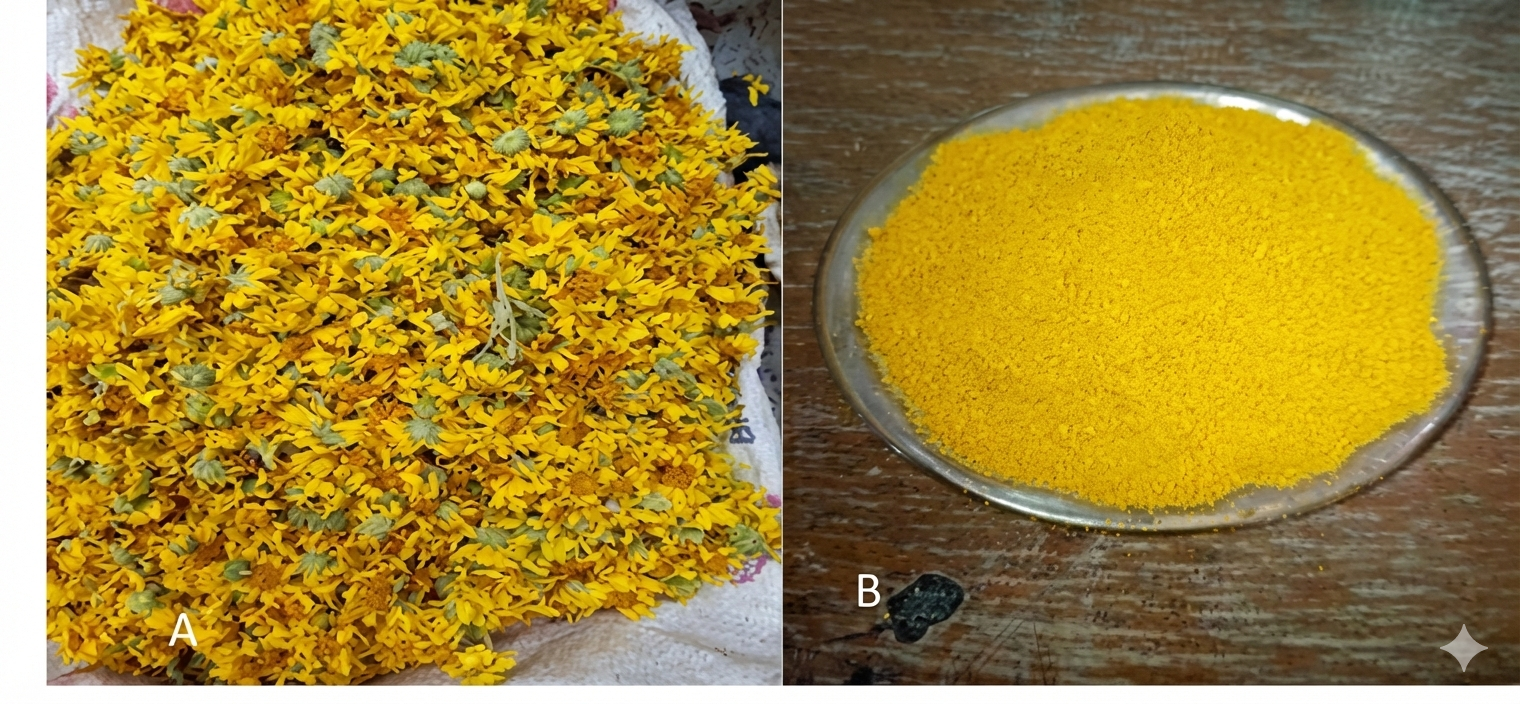
Fresh yellow petals of H. annuus flowers were collected in June, 2023 from a garden called “kwarin dan kunkuru” in Ungogo, Kano state, Nigeria. The plant was authenticated by botanist Mr Namadi Sunusi of the biological science Department of Ahmad Bello University Zaria, Kaduna state with verification number of ABU0900254. The petals were separated and dried in air for one week under the shade and grinded into powder using a mortar and pestle as shown in Figure 1.
Extraction of Pigments
The dried petals of the plant (20.0 g) were pulverized into fine powder using a mechanical grinder and the extraction was carried out via cold macerations to prevent the thermal degradation of sensitive anthocyanin and flavonoid pigments. The prepared powder was immersed in 250 mL of analytical grade methanol (99.8%) in an airtight amber glass flask to protect the extract from photo-oxidation. The mixture was then kept at room temperature (25 ± 2 °C) for 24 h with occasional manual agitation. After the maceration, the mixture was then filtered through Whatman No 1 filter paper and filtered was concentrated using a water bath at 60 ℃ until a viscous, brownish residue was obtained. The percentage yield was calculated based on the initial dry weight of the petals.
Characterization of the Extract
Percentage Yield
A total of 10 g of sunflower powder was extracted with 50 mL of methanol until a concentrated extract was obtained. The extract was then dried and weighed in a desiccator. The percentage yield of the extract was calculated using Equation 1.
Acids-Bases Test for the Extract
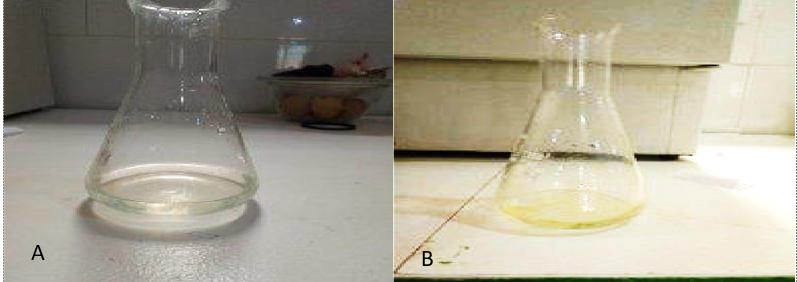
Each 1 mL of the stock extract was added into four different separate beakers with 10 mL portions of 0.1 M of hydrochloric acid (HCl), ethanoic acid (CH₃COOH), sodium hydroxide (NaOH) and sodium carbonate (Na₂CO₃) solutions respectively and the color changes were observed as seen in Figure 2.
pH Measurement of the Extract
The pH measurement was done directly using a calibrated digital pH meter (Hanna instruments).
UV- Visible spectroscopy
The plant extract was diluted with a distilled water and the absorption spectrum was recorded within the wavelength range of 400-750 nm using UV-Vis spectrophotometer to support the observed yellow-brown. A 0.1% w/v solution of the extract in methanol was used to identify the to confirm the electronic transitions responsible for the observed color change.
Determination of Melting Point (Mp)
The melting point of the dried extract was determined using open capillary tube in a was placed in a Gallenkamp melting point apparatus. The beginning and the end point of the melting point was found to be within the range of 248 – 250 °C.
Thin Layer Chromatography
The separation of pigments was performed on pre coated silica Gel G64 plates and the mobile phase consisted of a mixture of n-hexane and acetone in a 1:1 (v/v) ratio. The Rf value was calculated to provide a standardized reference for the polarity of the primary chromophore.
Titration Experiments Protocols
To evaluate the indicator efficacy, four different types of titration were performed as follows; (a). Strong acid (0.1M of HCl) vs Strong base (0.1M of NaOH), (b). (Strong acid (0.1M of HCl) vs Weak base (0.1M of Na₂CO₃), (c). Weak acid (0.1M of CH₃COOH) vs Strong base (0.1M of NaOH), (d). Weak acid (0.1M of CH₃COOH) vs Weak base (0.1M of Na₂CO₃).
For each titration run, 10.0 mL of the titrand was pipetted into 250 mL conical flask and 2-3 drops of the sun flower extract with phenolphalein as a control were added. The titrant was delivered from a 50 mL burette (0.1 mL graduation). All the titrations were performed in triplicate to ensure statistical reproducibility, and the endpoint was recorded when a sharp persistent color change (brown to yellow) was observed for at least 30 s. The mean titre values, standard deviations and percentage deviations were calculated using Equation 2.
Results
Characterization of the Extract
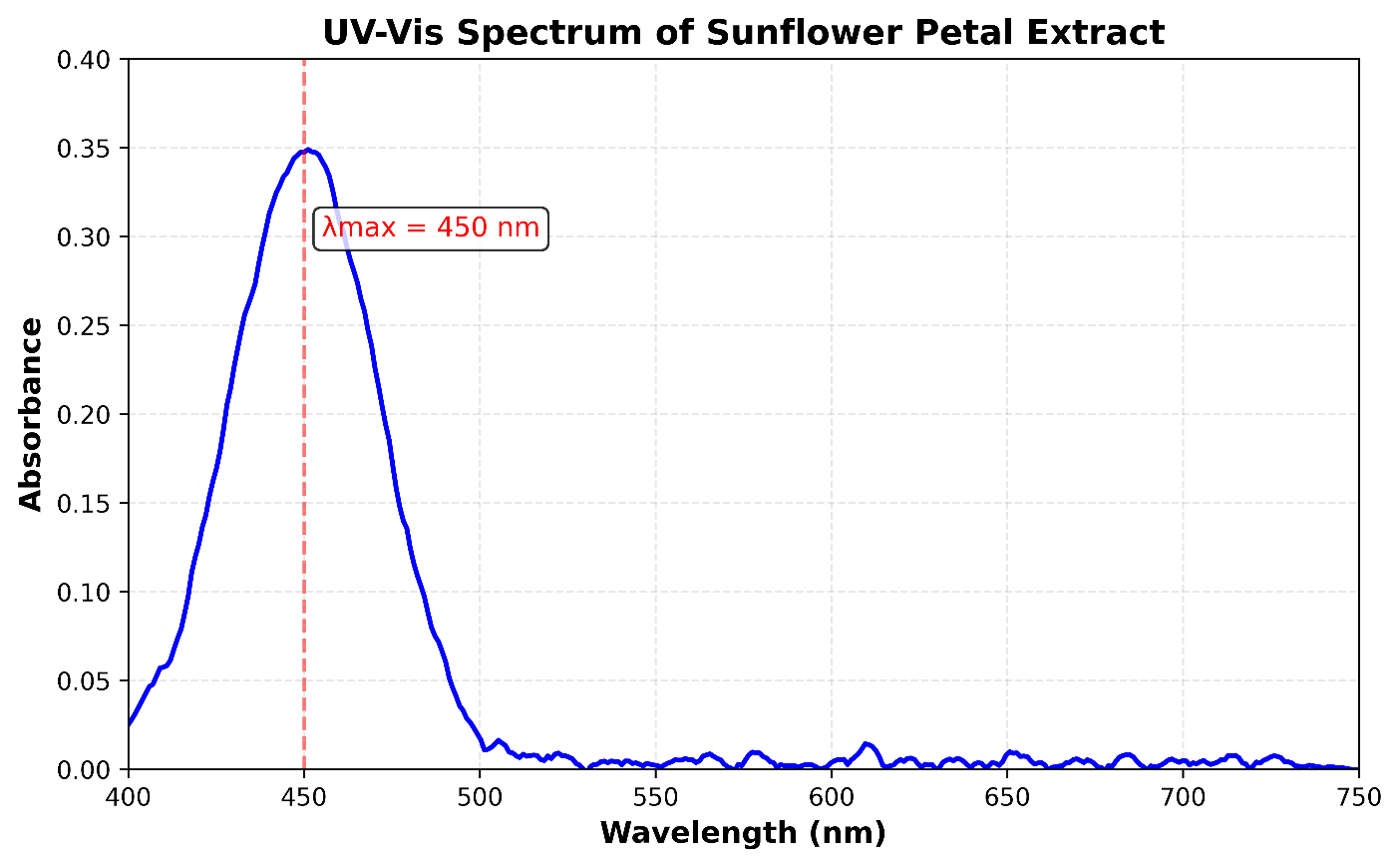
The methanolic extract of sunflower petals showed a brownish viscous residue with yield of 29%, and it shows slightly acidic pH of 6.51 and maximum absorption wavelength of 450 nm as shown in Figure 3. Its physicochemical properties are shown in Table 1. The melting point occur between 248 to 250 ℃ and thin layer chromatography yielded an Rf value of 0.1 in the acetone/n- hexane system.
| Parameters | Values |
|---|---|
| Percentage yield | 29% |
| Melting point | 248 – 250 °C |
| Absorption wavelength () | 450 nm |
| Retention Factor (Rf) | 0.1 |
| pH | 6.51 |
Indicator Colour Response
The extract demonstrates a clear and reversible change of colour in acidic and basic media. Its initial colour was brown, upon addition of 0.1 M HCl and CH₃COOH, the colour remained brown. when addition of 0.1M NaOH and Na₂CO₃ solutions, the colour turned to bright yellow Table 2, which provides a sharp endpoint during titrations.
| System | Observed Colour change |
|---|---|
| Crude Methanolic Extract | Brown |
| Extract + 0.1 M HCl | Brown |
| Extract + 0.1 CH₃COOH | Brown |
| Extract + 0.1 M NaOH | Yellow |
| Extract + 0.1 M Na₂CO₃ | Yellow |
| Note: pH of synthesized phenolphthalein 8.85 | |
Performance in Acid Base Titrations
The property of the extract was evaluated by comparing its activity with a standard phenolphthalein indicator activity across four titration analyses. Their mean titre values and standard deviation are presented in Table 3. The result shows a close agreement between the two indicators. For a strong acid vs weak base titration, the mean values were identical unlike the strong acid vs strong base and weak acid vs weak base titrations where the maximum deviation of 1.00 mL was observed. Also, the minimum deviation of 0.11 mL was observed in a weak acid vs strong base titration and the low standard deviation of ≤0.07 mL across replicates for both indicators confirm good precisions.
| Titration system | Phenolphthalein (Mean ± SD) | Sun flower Extract (Mean ± SD) |
|---|---|---|
| Strong acid (HCl) vs Strong base (NaOH) | 25.65 + 0.07 | 26.65 + 0.00 |
| Strong acid (HCl) vs weak base (Na₂CO₃) | 8.65 + 0.070 | 8.65 + 0.070 |
| Weak acid (CH₃COOH) vs Strong base (NaOH) | 16.05 + 0.070 | 16.16 + 0.070 |
| Weak acid (CH₃COOH) vs weak base (Na₂CO₃) | 5.65 + 0.070 | 6.65 + 0.000 |
| Key: SD = Standard Deviation | ||
Discussion
The drive of providing sustainable laboratory practices is essential by replacing the harmful chemicals that contribute to environmental problems with a safe and renewable alternatives (14). The exploration of natural sources as functional reagents as Acid-Base indicators gained significant momentum (3, 4). These plants that will be used align with green chemistry principles and provide educational benefits (15, 16). This study successfully investigated a methanolic extract of H. annuus petals and fulfills its role effectively. The extracts key characteristics include reversible and sharp color changes from brown in acidic solutions to yellow in basic solutions which is the fundamental role of acid base indicator. This change is likely due to the presence of pH sensitive pigments such as anthocyanins or flavonoids, which undergo structural changes and associated color shifts (8). Also, the observed maximum absorption wavelength of 450 nm from the extract is within the visible spectrum, confirming its strong light absorbing properties in a region corresponding to its yellow brown colors. The 29% yield obtained from our findings is consistent with the recent findings which reported that the methanolic extract of sunflower aerial parts are rich in phenolic compounds such as hydroxycinnamic acid derivatives which are essential for visible color change during titrimetric (13). Also, the close agreement between our sunflower mean titre value and phenolphthalein (8.65 mL strong acid-weak base titration) reflects the findings of a recent studies, which demonstrated that natural pigments flowers such as Nerium oleander provide equivalence points that coincide almost perfectly with synthetic standards, reinforcing the reliability of H. annuus as a substitute of some natural indicators (17, 18).
Our findings was the extension of the recent studies on flora indicators that demonstrate performance on strong acid – strong base system (19). The notable result observed in strong acid vs weak base titration, where the average titre values are identical. The minor variations of result observed in other titrations fall within the recommended experimental error for manual titrimetry analysis and don't detract from the exact functional efficacy. Our findings align with previous findings on Hibiscus sabdariffa and I. balsamina, which demonstrated the potential of plant extract as synthetic substitutes by offering a distinct advantage with its sharp brown to yellow transition (11, 12). Beyond its indicator performance, sun flower is globally cultivated making it the raw material abundant and virtually free. Also, the extraction process is very simple, it requires no specialized equipment and aligns with green chemistry principles of avoiding complex synthesis, unlike phenolphthalein production which involves multi step organic synthesis from potentially harmful precursors. By utilizing H. annuus, this approach adheres to the principles of Green analytical chemistry in replacement of synthetic phenolphthalein with biodegradable, non-toxic plant extract to reduces chemical waste and improves laboratory safety without sacrificing analytical precision (20).
Consequently, sun flower extract is safe to use especially in an educational setting where student exposure is concerned and is biodegradable presenting no persistence to environmental burden. Our study did not cover the potential perishability of the plant extract due to microbial growth or oxidative degradation, which make fresh extract preparations. However, this is a minor issue considering the significant benefits of the plant in less cost, safety and sustainability.
Conclusion
This study successfully characterized and validated the H. annuus extracts as an effective natural acid base indicator considering its performance when compared with the synthetic phenolphthalein across different ranges of titration types. Its simplicity of preparation, less cost, non-toxic nature and environmental friendliness make it a suitable natural compound to be used for academic teaching laboratories and resources in a limited analytical setting. This work contributes to the growing libraries of green chemical methodologies and highlighting the value of plant bio resources in modern science research. future research should be conducted to investigate the long term stability and shelf-life of the methanolic extracts to address potential oxidative degradation. Also, to explore the development of solid state indicator papers impregnated with H. annuus extract to enhance the portability and ease of use in a resource's limited settings.
Declarations
Conflict of Interest
The authors declare no conflicting interest.
Data Availability
The datasets generated during this study are not publicly available due to [privacy/ethical/commercial restrictions] but may be available from the corresponding author on reasonable request.
Ethics Statement
Ethical approval was not required for this study.
Funding Information
The authors declare that no financial support was received for the research, authorship, and/or publication of this article.
References
- Harvey D. Modern analytical chemistry. Boston: McGraw-Hill; 2000. 798 p.
- Karayannis MI, Efstathiou CE. Significant steps in the evolution of analytical chemistry--is the today's analytical chemistry only chemistry? Talanta. 2012;102(1):7–15.
- Khan PMA, Farooqui M. Analytical applications of plant extract as natural pH indicator: a review. Journal of Advanced Scientific Research. 2011;2(4):20–7.
- Abugri D, Apea DO, Pritchett G. Investigation of a simple and cheap source of a natural indicator for acid-base titration: effects of system conditions on natural indicators. Green and Sustainable Chemistry. 2012;2(3):82–9.
- Pathade K, Patil S, Kondawar M, Naikwade N, Magdum C. Morus alba fruit herbal alternative to synthetic acid base indicators. International Journal of ChemTech Research. 2009;1(3):549–51.
- Gałuszka A, Migaszewski Z, Namieśnik J. The 12 principles of green analytical chemistry and the SIGNIFICANCE mnemonic of green analytical practices. TrAC Trends in Analytical Chemistry. 2013;50(1):78–84.
- Warner JC, Cannon AS, Dye KM. Green chemistry. Environmental Impact Assessment Review. 2004;24(7–8):775–99.
- Bhuvaneshwari B, Sivaelango G, Parthiban D, Arun N, Kumaravel P. Natural dyes as acid-base indicators from Beta vulgaris. Research Journal of Pharmacognosy and Phytochemistry. 2015;7(2):65–8.
- Grotewold E. The genetics and biochemistry of floral pigments. Annual Review of Plant Biology. 2006;57(1):761–80.
- Abbas SK, Pillai PG, Iyer PP. A study on acid–base indicator property of flowers of Impatiens balsamina. The Pharmaceutical and Chemical Journal. 2018;5(5):88–92.
- Nuryanti S, Puspitasari DJ, Supriadi S. Rosella (Hibiscus sabdariffa) flowers as alternative indicators of blue and red litmus. Oriental Journal of Chemistry. 2019;35(1):476–80.
- Gai F, Karamać M, Janiak MA, Amarowicz R, Peiretti PG. Sunflower (Helianthus annuus L.) plants at various growth stages subjected to extraction—comparison of the antioxidant activity and phenolic profile. Antioxidants. 2020;9(6):535.
- Meher AK, Zarouri A. Green analytical chemistry—recent innovations. Analytica. 2025;6(1):10.
- Nowak PM, Wietecha-Posłuszny R, Pawliszyn J. White analytical chemistry: an approach to reconcile the principles of green analytical chemistry and functionality. TrAC Trends in Analytical Chemistry. 2021;138(1):116223.
- Olanrewaju AO, Adeosun NO. Application of principles and tools in green chemistry to education using rose flower extract as acid-base indicator. Journal of the Chemical Society of Nigeria. 2023;48(1):1–8.
- Kadam S, Yadav A, Raje V, Waghmare K. Comparative study of natural and synthetic indicators. International Journal of Universal Pharmacy and Bio Sciences. 2013;2(3):397–406.
- Desai S, Ganatra D, Maisuriya A, Patel I. Flower extract as an organic indicator in acid base titration. International Journal of Pharmaceutical Sciences Review and Research. 2023;82(2):36–40.
- Patil S, Kondawar M, Ghodke D, Naikwade NS, Magdum C. Use of flower extracts as an indicator in acid-base titrations. Research Journal of Pharmacy and Technology. 2009;2(2):421–2.
- Lin H. Green analytical chemistry: principles, applications, and future directions. Boca Raton: CRC Press; 2022. 210 p.
- Nag M, Paul RK, Biswas S, et al. A review on application of natural indicators in acid–base titration. Pharmacognosy Reviews. 2023;17(34):308–19.