RESEARCH ARTICLE
Effects of Red Guava Extract Seed Priming on Rice Viability and Vigor under Salinity Stress
Crop Life|Vol. 2, Issue 1, pp. 37-44 (2026)
CC BY 4.0-2026 Authors
Views
Downloads
Shares

Received
Jan 21, 2026Revised
Feb 22, 2026Accepted
Jun 15, 2026Published
Jun 28, 2026
Abstract
Soil salinity severely restricts rice establishment by impairing seed germination and early seedling growth. Seed priming with antioxidant-rich natural extracts is a low-cost approach to improve seed performance under saline conditions, although the optimal priming duration and the role of aeration remain poorly understood. This laboratory-based study was conducted from June to September 2021 at the Laboratory of the Faculty of Agriculture, Universitas Tidar, Indonesia, to evaluate the effects of priming duration (6, 12, 18, and 24 h) and aeration (with and without) using 50% red guava (Psidium guajava L.) extract on the viability and vigor of rice cv. Pepe under salinity stress (6 g L⁻¹ NaCl). Each treatment was replicated four times using 100 seeds per replication. A factorial completely randomized design was employed, and data were analyzed using two-way ANOVA followed by LSD tests. Results showed that priming duration significantly affected seed vigor index, root length, and plumule length. Seeds primed for 18 h produced the highest vigor index (74.38%) and showed improved seedling growth compared to other treatments. Aeration showed a significant effect on root length, while showing no significant effect on other observed parameters. No significant interaction between priming duration and aeration was observed. These findings indicate that 18 h priming with red guava extract improved several early seedling performance traits under controlled laboratory salinity conditions. Further studies under field environments are necessary to validate its practical applicability in saline-prone rice cultivation systems.
Keywords:
Introduction
Rice (Oryza sativa L.) is the primary staple food for more than half of the global population, yet its production is increasingly threatened by land degradation and climate-driven abiotic stresses. In Indonesia, national rice production declined to approximately 53.63 million tons of unhusked rice in 2023, representing a reduction of more than one million tons compared with the previous year, largely due to decreasing harvested area and land quality degradation (1). One major constraint is soil salinity, particularly prevalent in coastal regions and arid zones where insufficient rainfall and seawater intrusion lead to salt accumulation. Saline soils impair crop establishment from the earliest growth stages by inducing osmotic stress, ionic toxicity, nutrient imbalance, and excessive generation of reactive oxygen species (ROS), ultimately reducing seed viability and seedling vigor (2, 3). Salinity-induced ROS overproduction has been widely reported to disrupt membrane integrity, enzyme activity, and cellular metabolism in rice and other crops under stress conditions (23). Given that seed germination is the most salinity-sensitive phase of the crop life cycle, failure at this stage directly compromises stand establishment and yield stability, underscoring the urgency for effective mitigation strategies.
Expanding rice cultivation into marginal saline lands has therefore become a strategic priority; however, success is constrained by poor seed performance under sub-optimal conditions. To address this, the salt-tolerant rice cultivar 'Pepe' (an IR64 derivative) was selected for this study because, despite its adaptive potential, its genetic tolerance alone is often insufficient to overcome severe early-stage stress (4). Seed priming has emerged as a practical pre-sowing technique to enhance germination, synchronize emergence, and improve stress tolerance by activating pre-germinative metabolic processes without radicle protrusion (5). Recent international studies have demonstrated that seed priming can improve antioxidant defense systems, maintain ionic balance, and enhance seedling establishment under abiotic stresses including salinity and drought (23). Nevertheless, the effectiveness of priming is highly dependent on methodological factors, particularly hydration duration and oxygen availability. Excessively short soaking may fail to trigger metabolic pathways, whereas prolonged periods (typically exceeding 24 h in cereals) can induce hypoxia (6, 7). Consequently, durations of 6 to 24 h were chosen in this study to pinpoint the physiological threshold between insufficient repair and hypoxic damage. Natural antioxidants, such as those in red guava (Psidium guajava L. ) extract, further protect cellular membranes from reactive oxygen species (ROS) during priming (8).
Despite these benefits, the interactive role of soaking duration and aeration in maximizing the efficacy of antioxidant-rich extracts remains a critical research gap. Previous studies have focused on single factors, leaving the synergy between oxygen supply and hydration time poorly understood. Therefore, this study aims to explicitly identify the optimal priming duration and aeration requirements using red guava extract to improve the viability and vigor of Pepe rice under saline conditions. By utilizing a factorial completely randomized design, this research seeks to provide a scalable, low-cost solution for rice cultivation on saline marginal lands.
Methodology
Study Location and Period
This study was conducted from June to September 2021 at the Laboratory of the Faculty of Agriculture, Universitas Tidar, Indonesia, under controlled laboratory conditions.
Study Design and Experimental Rationale
The study was designed to evaluate the effects of seed priming duration and aeration during primingon the viability and vigor of rice seeds under salinity stress. A factorial completely randomized design (CRD) was employed to enable simultaneous assessment of main effects and their interaction, which is appropriate for controlled laboratory-based seed physiology experiments where environmental variation is minimal. This design allows robust statistical inference regarding treatment efficacy and interaction effects. The experiment consisted of two fixed factors: (i) priming duration and (ii) aeration during priming, arranged factorially and replicated to ensure adequate statistical power.
Plant Material and Sample Size
Certified seeds of rice (O. sativa L. ) cultivar Pepe were obtained from the Regional Seed Certification Center (UPTD Balai Benih Pertanian Barongan, Bantul, Indonesia). Seeds were uniform in size and free from visible mechanical or pathological damage.
Each experimental unit consisted of 100 seeds, with four replications per treatment combination, resulting in a total of 32 experimental units (3, 200 seeds). This sample size is consistent with International Seed Testing Association (ISTA) recommendations for laboratory germination and vigor testing and ensures sufficient precision for detecting treatment effects (9).
Experimental Treatments
Two experimental factors were applied in a factorial arrangement. The first factor was priming duration (P) using red guava (P. guajava L.) extract, consisting of four soaking periods: 6 h (P₁), 12 h (P₂), 18 h (P₃), and 24 h (P₄). The s factor was aeration during priming (A), comprising two levels: without aeration (A₀) and with continuous aeration supplied by an aquarium aerator (A₁). The combination of these factors resulted in eight treatment combinations (4 × 2), which were randomly assigned to the experimental units.
Preparation of Red Guava Extract
Physiologically mature red guava fruits (≈90% yellow peel coloration) were washed with distilled water, cut into small pieces (including peel and seeds), and homogenized using a laboratory blender without added solvent. The homogenate was filtered through a fine mesh sieve to obtain a crude extract.
Red guava crude extract (50% v/v) was prepared by diluting the crude filtrate with distilled water. The selection of the 50% concentration was based on preliminary laboratory observations and previous studies indicating that moderate-to-high concentrations of plant-based antioxidant extracts are effective in enhancing seed metabolic activation and stress tolerance without inducing phytotoxic effects. Similar concentrations have also been reported in studies involving natural antioxidant priming under salinity stress conditions, where bioactive compounds such as phenolics, flavonoids, and ascorbic acid contributed to improved seedling performance and oxidative stress mitigation (24).
Seed priming was conducted in a controlled environment at 28 ± 1 °C with a seed-to-solution ratio of 1: 5 (w/v). For aeration treatments, continuous oxygen was supplied via electric aerators to prevent hypoxia. After soaking, seeds were rinsed and air-dried at room temperature for 48 h to reach their original moisture content.
The antioxidant profile and phytochemical properties of P. guajava L. , particularly its high contents of ascorbic acid, phenolic compounds, and flavonoids, have been extensively reported in previous international studies (10, 11). Recent reviews also confirmed that guava tissues possess substantial antioxidant potential associated with ROS-scavenging activity and stress protection mechanisms (25). However, direct characterization of the extract used in the present study, including total phenolic content, flavonoid concentration, and antioxidant capacity assays, was not performed. This limitation should be acknowledged because it may affect the reproducibility and biochemical comparability of the priming treatment across studies. Therefore, the present work focused primarily on the physiological optimization of priming duration and oxygen availability under salinity stress conditions.
Seed Priming Procedure
Seeds were surface-cleaned and visually inspected prior to treatment. Priming was conducted at 28 ± 1 °C using a seed-to-solution ratio of 1: 5 (w/v), corresponding to 50 g seeds immersed in 250 mL priming solution per unit.
Seeds were soaked for the assigned durations (6, 12, 18, or 24 h). For aeration treatments, continuous oxygen supply was provided using an electric aerator throughout the soaking period to maintain dissolved oxygen levels and prevent hypoxic conditions.
Following priming, seeds were rinsed thoroughly with distilled water, surface-dried, and air-dried at room temperature for 48 h until returning to near-original moisture content, ensuring uniform physiological status prior to germination testing.
Salinity Stress and Germination Test
Seed germination was evaluated using the rolled paper method under controlled salinity stress. Three sheets of germination paper were moistened with NaCl solution (6 g L⁻¹) to simulate saline conditions and allowed to drain excess solution (12).
Seeds were placed at approximately 1 cm spacing, covered with moistened paper, rolled, secured with rubber bands, and enclosed in polyethylene sleeves. Rolls were incubated in a growth chamber at 25 ± 3 °C in darkness. Moisture was maintained by periodic spraying with the NaCl solution throughout the test period.
Measured Parameters
Seed viability and vigor were evaluated through a series of physiological and morphological parameters following standard seed testing procedures. Germination % (GP) was used as a primary indicator of seed viability and was determined by counting the number of normal seedlings on the fifth and seventh days after sowing. The germination % was calculated using Equation 1, where the cumulative number of normal seedlings observed at both counting times was expressed as a proportion of the total number of seeds tested. Note: GP = germination % (%), KN₅ = number of normal seedlings on day 5, KN₇ = number of normal seedlings on day 7, N = total number of seeds tested.
To further assess seed viability under salinity stress, maximum growth potential (MGP) was determined on the seventh day after sowing by counting all germinated seeds, including both normal and abnormal seedlings. This parameter reflects the overall capacity of seeds to initiate growth under suboptimal conditions and was calculated using Equation 2, where the total number of germinated seeds was divided by the total number of seeds tested. Note: MGP = maximum growth potential (%), G = total number of germinated seeds (normal + abnormal), N = total number of seeds tested.
Seed vigor was evaluated using the seed vigor index (SVI), which represents the proportion of seeds that germinated rapidly and uniformly. The vigor index was calculated based on the % of normal seedlings observed on the fifth day after sowing, as expressed in Equation 3. This parameter is particularly sensitive to early seedling performance under stress conditions. Note: VI = vigor index (%), KN₅ = number of normal seedlings on day 5, N = total number of seeds tested.
The germination speed index (GSI) was used to quantify the rate of seed germination and serves as an important indicator of seed vigor index. Germination speed was calculated according to Equation 4, which sums the ratio of the % of normal seedlings emerging at each observation time to the corresponding time in days. Higher GSI values indicate faster and more vigorous germination. Note: GSI = germination speed index (% day⁻¹), Nₜ = % of normal seedlings at time t, t = time of observation (days after sowing).
Uniformity of seedling emergence was assessed through emergence uniformity (EU), calculated as the % of normal seedlings observed on the sixth day after sowing. This parameter reflects the synchronization of germination and was determined using Equation 5. Note: EU = emergence uniformity (%), KN₆ = number of normal seedlings on day 6, N = total number of seeds tested.
In addition to viability and vigor indices, seedling growth parameters were measured to evaluate early seedling performance. Root length and plumule length were measured on ten randomly selected normal seedlings per experimental unit on the seventh day after sowing, using a ruler, and expressed in cm. Seedling biomass was assessed by determining fresh weight of all normal seedlings on day seven, followed by oven-drying at 60 °C for 72 h to obtain dry weight, which reflects the accumulation of structural biomass during early growth.
Statistical Analysis
Data were subjected to two-way analysis of variance (ANOVA) to evaluate the effects of priming duration, aeration, and their interaction. When significant differences were detected (p ≤ 0.05 or p ≤ 0.01), means were separated using the Least Significant Difference (LSD) test.
All analyses were conducted under the assumptions of normality and homogeneity of variance, appropriate for factorial CRD experiments in seed science.
Results and Discussion
The analysis of variance demonstrated that seed priming treatments significantly affected several physiological traits of O. sativa L. cv. Pepe subjected to salinity stress (Table 1). Priming duration exerted a highly significant effect (p < 0.01) on seed vigor index, normal root length, and normal plumule length, while aeration during priming significantly influenced normal root length (p < 0.05). In contrast, no significant interaction between priming duration and aeration was observed for any parameter evaluated, indicating that both factors operated independently in modulating seed physiological responses under saline conditions. These findings suggest that seed metabolic readiness induced by priming duration plays a more dominant role than oxygen supplementation in determining early seedling performance under salinity stress.
| Observed parameter | F value (P) | F value (A) | F value (P × A) |
|---|---|---|---|
| Germination % (%) | 1.13 ns | 0.01 ns | 0.99 ns |
| Maximum growth potential (%) | 2.94 ns | 0.62 ns | 1.03 ns |
| Seed vigor index (%) | 6.19 ** | 0.56 ns | 0.70 ns |
| Germination speed (% day⁻¹) | 2.94 ns | 0.04 ns | 0.23 ns |
| Emergence uniformity (%) | 2.36 ns | 0.32 ns | 0.34 ns |
| Normal seedling root length (cm) | 9.34 ** | 6.65 * | 0.31 ns |
| Normal seedling plumule length (cm) | 5.28 ** | 1.86 ns | 1.07 ns |
| Normal seedling fresh weight (g) | 2.86 ns | 0.03 ns | 0.91 ns |
| Normal seedling dry weight (g) | 0.16 ns | 0.02 ns | 0.66 ns |
| Notes: ns = not significant, * = significant at p ≤ 0.05, ** = highly significant at p ≤ 0.01. P = priming duration. | |||
Effects of Priming Duration on Seed Viability and Vigor under Salinity Stress
Seed priming is a physiological preconditioning technique that enhances seed germination uniformity and seedling establishment under salinity stress. Salinity typically reduces seed water uptake due to lowered osmotic potential, resulting in delayed imbibition and suppressed metabolic activation (13). In this study, priming Pepe rice seeds with red guava extract significantly improved several vigor-related traits, highlighting the importance of optimizing priming duration.
Among the measured parameters, seed vigor index was highly responsive to priming duration. Seeds primed for 18 h exhibited the highest vigor index (74.38%), significantly outperforming other treatments (Figure 1). This indicates that an 18 h soaking period represents an optimal hydration threshold that enables sufficient imbibition to activate pre-germinative metabolic processes while avoiding physiological stress. Imbibition triggers membrane reorganization and reserve mobilization, ensuring synchronized germination (14).
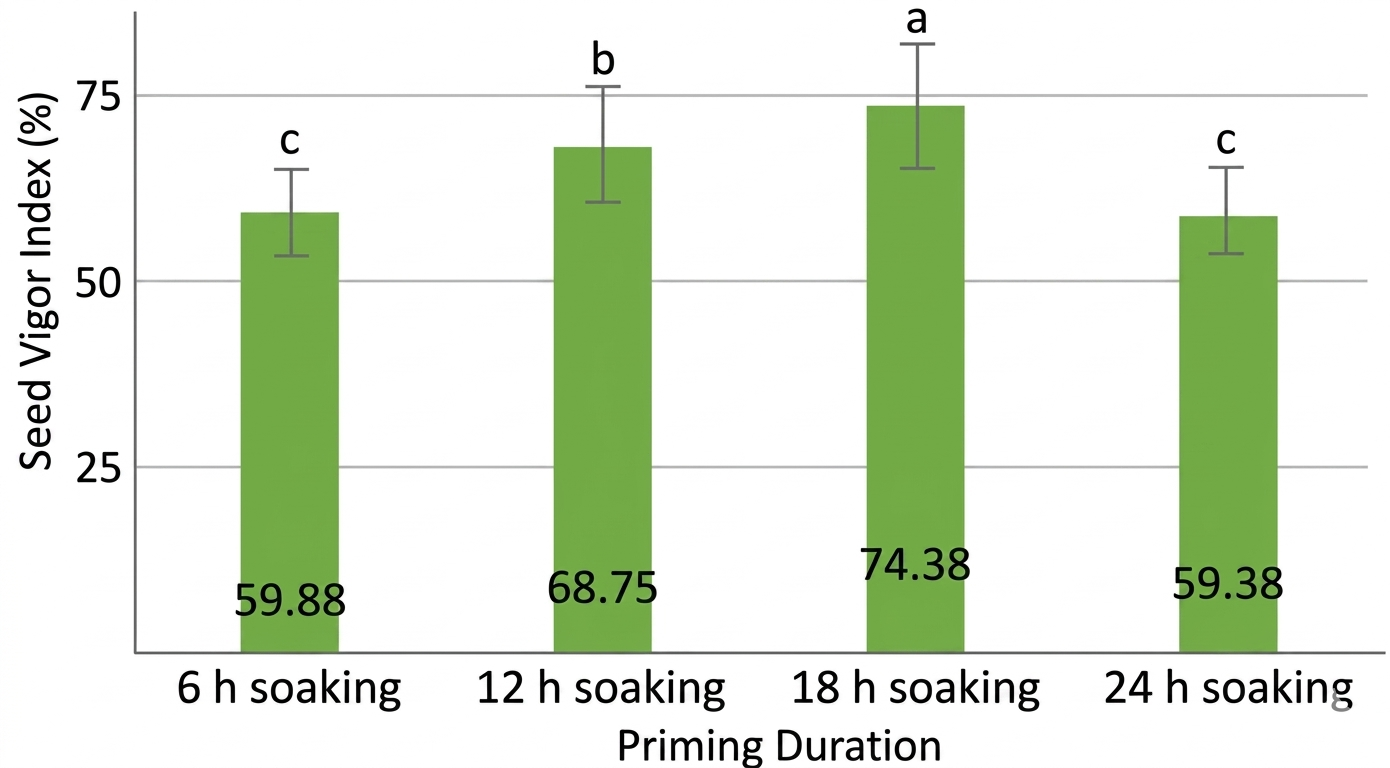
Conversely, the reduced vigor index in seeds primed for only 6 h suggests insufficient hydration for full metabolic activation. Meanwhile, extending the duration to 24 h led to a decrease in the vigor index. This decline may be attributed to excessive hydration and limited oxygen availability during prolonged soaking, which potentially restricts aerobic respiration and accumulates metabolic imbalances (7, 15).
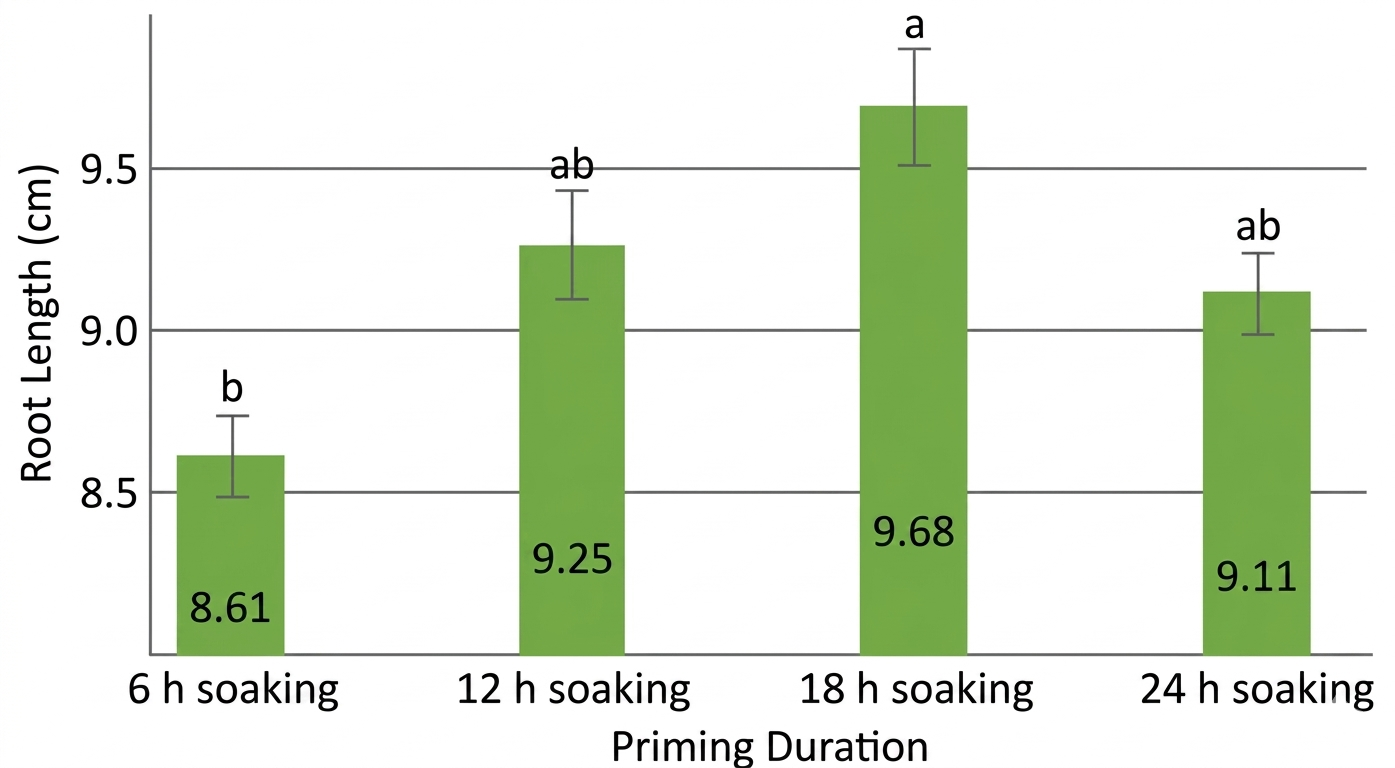
Priming duration also significantly influenced normal seedling root length, which is a critical indicator of seedling fitness under saline stress. Roots are highly sensitive to salinity due to osmotic stress and ion toxicity. Seeds primed for 12, 18, and 24 h produced significantly longer roots compared to those primed for 6 h (Figure 2). This enhancement could be supported by the bioactive and antioxidant properties of the red guava extract, which contains ascorbic acid and phenolic compounds known to assist in cellular protection mechanisms under environmental stress (8, 16). The 6 h duration, however, was inadequate to induce substantial root elongation.
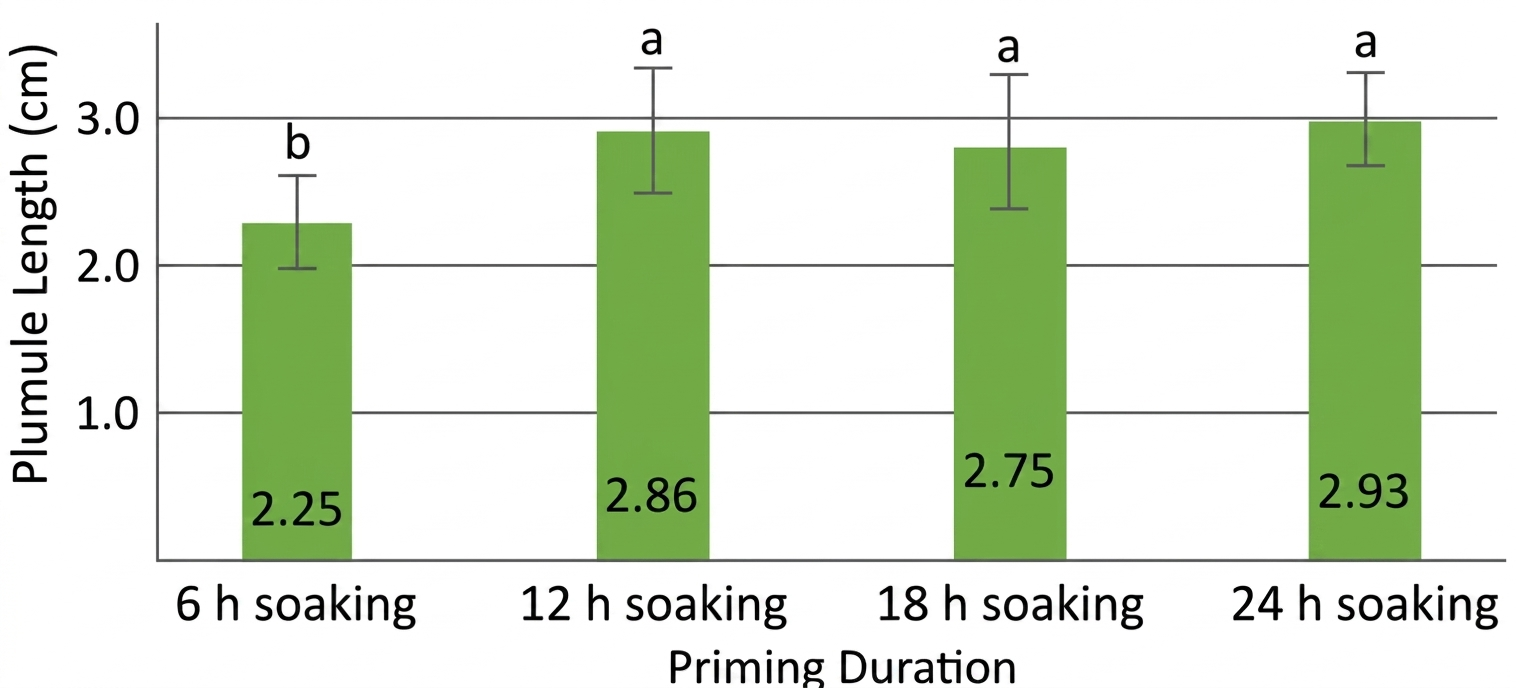
A comparable pattern was observed for normal plumule length (Figure 3). Seeds primed for 12 to 24 h produced significantly longer plumules than those primed for 6 h, reflecting enhanced early shoot development. Plumule elongation depends heavily on efficient reserve mobilization initiated during the early stages of imbibition (17). The shorter plumules observed in the 6 h treatment further confirm that insufficient hydration limits early growth, consistent with recent findings on rice seed priming under abiotic stress (18).
Effects of Aeration during Priming on Seed Performance
Aeration (factor A) showed a significant effect on normal seedling root length according to ANOVA results (p < 0.05) (Table 1). Mean comparisons indicated that aerated priming resulted in slightly higher root length than non-aerated conditions (Table 2). This suggests that oxygen supplementation during priming improves root elongation under salinity stress by enhancing aerobic respiration and reducing hypoxic conditions during imbibition (19). Enhanced oxygen availability prevents hypoxic stress, thereby maintaining early root development and elongation (20).
Despite this benefit for root growth, aeration did not significantly affect germination %, vigor index, or emergence uniformity (Table 2). This indicates that the ambient oxygen diffusion during non-aerated priming was sufficient to sustain basic germinative metabolism, especially during shorter soaking windows. Water imbibition itself can facilitate structural changes in the seed coat that allow necessary oxygen diffusion to proceed even without forced external aeration (21).
| Observed parameter | Without aeration | With aeration |
|---|---|---|
| Germination percentage (%) | 86.69 | 86.81 |
| Maximum growth potential (%) | 92.25 | 91.44 |
| Seed vigor index (%) | 66.69 | 64.50 |
| Germination speed (% day⁻¹) | 16.43 | 16.37 |
| Emergence uniformity (%) | 83.94 | 82.88 |
| Normal seedling root length (cm) | 8.97 | 9.35 * |
| Normal seedling plumule length (cm) | 2.60 | 2.79 |
| Normal seedling fresh weight (g) | 4.96 | 4.98 |
| Normal seedling dry weight (g) | 1.92 | 1.92 |
| Notes: Values represent means (P = priming duration; A = aeration treatment). Table 2 presents descriptive means; statistical significance of factors was determined via two-way ANOVA (Table 1). *p < 0.05 indicates a significant difference compared to the non-aerated value. | ||
Absence of Interaction between Priming Duration and Aeration
No significant interaction between priming duration and aeration was detected for all measured parameters, indicating that both factors acted independently in regulating seed physiological responses under salinity stress. This suggests that priming duration and aeration influence different physiological pathways during seed imbibition and early germination.
Following the absence of interaction effects, the main effects of each factor were interpreted separately. Priming duration primarily influenced metabolic activation and reserve mobilization, while aeration mainly affected oxygen availability during soaking.
While literature suggests that antioxidant-rich extracts like red guava protect cellular structures from oxidative stress (22), the present study confirms the physiological efficacy of the treatment combination based on external morphological performance under controlled salinity conditions, without establishing specific intracellular biochemical pathways.
Limitations
The concentration of red guava extract in this study was fixed at 50% (v/v) to ensure that the physiological effects of its antioxidant compounds were clearly observable under saline stress. Although this research successfully optimized priming duration and aeration, we acknowledge that the extract concentration itself requires further evaluation. Identifying the minimum effective concentration will improve the resource efficiency and cost-effectiveness of this technique. Consequently, future studies should conduct multi-level concentration trials to refine the application of red guava extract in seed invigoration.
Conclusion
The present study demonstrates that seed priming with 50% red guava extract improved several early vigor and seedling growth parameters of rice (O. sativa L. ) cv. Pepe under controlled laboratory salinity stress conditions (6 g L⁻¹ NaCl). Among the tested treatments, an 18 h priming duration produced the highest seed vigor index and promoted better seedling elongation compared to shorter or longer soaking durations. Aeration had a significant effect on root length, although its effects on other physiological parameters were not significant. No significant interaction between priming duration and aeration was observed.
These findings indicate that optimization of priming duration may contribute to improved seed physiological performance under saline conditions in laboratory environments. Nevertheless, because the experiment was conducted under controlled conditions, the applicability of this priming method under field environments with more complex soil and climatic variability remains uncertain. Therefore, further studies involving biochemical analyses and multi-location field evaluations are necessary to validate the consistency, scalability, and practical effectiveness of red guava extract priming for rice cultivation in saline-prone areas.
Ethical Considerations
This study did not involve human participants, animals, or genetically modified organisms; therefore, ethical approval was not required.
Declarations
Conflict of Interest
The authors declare no conflicting interest.
Data Availability
Data supporting the findings of this study are available from the corresponding author upon reasonable request.
Ethics Statement
Ethical approval was not required for this study.
Funding Information
The author(s) declare that no financial support was received for the research, authorship, and/or publication of this article.
References
- Badan Pusat Statistik. Luas panen dan produksi padi di Indonesia tahun 2023. Jakarta: Badan Pusat Statistik; 2023.
- Rachman A, Dariah A, Sutono S. Pengelolaan sawah salin berkadar garam tinggi. Jakarta: IAARD Press; 2018.
- Suryaman M, Hodiyah I, Inten N. Potensi Ekstrak Kulit Buah Naga untuk Mitigasi Cekaman Salinitas pada Perkecambahan Benih Kedelai. Agrotechnology Res J. 2020;4(2):106. doi: https://doi.org/10.20961/agrotechresj.v4i2.43434
- Jalil M, Sakdiah H, Deviana E, Akbar I. Respon Pertumbuhan dan Hasil Beberapa Genotip Padi (Oryza sativa L.) Pada Berbagai Sistem Tanam. J Agrotek Lestari. 2016;2(2):63–74. doi: https://doi.org/10.33661/jai.v1i2.341.s12
- Junita D, Syamsuddin S, Hasanuddin H. UJI EFEKTIVITAS PRIMING DENGAN BEBERAPA KONSENTRASI EKSTRAK KUNYIT TERHADAP DAYA SIMPAN BENIH KEDELAI (Glycine max (L.) Merrill). Agari. 2020;5(2):10-19. doi: https://doi.org/10.35308/jal.v5i2.2227
- Priyanto YA. (VIABILITAS BENIH KEDELAI (Glycine max. L. Merril) DENGAN PERLAKUAN INVIGORASI MATRICONDITIONING DAN OSMOCONDITIONING). Hexagro. 2019;1(1):518-527. doi: https://doi.org/10.36423/hexagro.v1i1.120
- Ruliyansyah A. Peningkatan Performansi Benih Kacangan dengan Perlakuan Invigorasi. Perkebunan dan Lahan Tropika. 2012;1(1):13. doi: https://doi.org/10.26418/plt.v1i1.26
- Hasibuan R, Rahmadina, Idris M. Perbandingan Uji Kadar Vitamin C Dan Antioksidan Buah Jambu Biji Merah (Psidium guajava L.,) Segar dan Dalam Kemasan Menggunakan Metode DPPH Di Kecamatan Marbau. JB&P. 2024;11(2):173-181. doi: https://doi.org/10.29407/jbp.v11i2.22277
- International Seed Testing Association. Chapter 1: ISTA Certificates. Int. rules seed test. 2015;2015(1):1-1-1-12. doi: https://doi.org/10.15258/istarules.2015.01
- Naseer S, Hussain S, Naeem N, Pervaiz M, Rahman M. The phytochemistry and medicinal value of Psidium guajava (guava). Clin Phytosci. 2018;4(1):32. doi: https://doi.org/10.1186/s40816-018-0093-8
- Chen HY, Yen GC. Antioxidant activity and free radical-scavenging capacity of extracts from guava (Psidium guajava L.) leaves. Food Chemistry. 2007;101(2):686-694. doi: https://doi.org/10.1016/j.foodchem.2006.02.047
- Farid M, Ridwan I. Tolerance limits of Indonesian rice varieties to drought and salinity in germination phase using PEG and NaCl as selection agents. IOP Conf. Ser.: Earth Environ. Sci. 2018;157:012011. doi: https://doi.org/10.1088/1755-1315/157/1/012011
- Maemunah M, Adelina E, Ete A, Jeki J, Yusran Y, Rismayani R. Uji ketahanan kekeringan beberapa kultivar padi gogo menggunakan berbagai konsentrasi peg 6000 pada fase perkecambahan. agrotekbis. 2023;11(4):808-817. doi: https://doi.org/10.22487/agrotekbis.v11i4.1786
- Hanapi NA. PENGARUH PEMBERIAN RAGI TAPE (Saccharomyces ceriviceae) TERHADAP KECEPATAN PERKECAMBAHAN BENIH PADI (Oryza sativa) SEBAGAI SUMBER BELAJAR BIOLOGI. biodidaktika. 2021;16(1):38-44. doi: https://doi.org/10.30870/biodidaktika.v16i1.10769
- Adilistyani W, Asih PR, Munambar S, Juhariah J. Aplikasi Beberapa Bahan Invigorasi untuk Meningkatkan Viabilitas Benih Jagung (Zea mays L.) pada Beberapa Taraf Perendaman. Arj. 2022;3(2):6-11. doi: https://doi.org/10.36596/arj.v3i2.805
- Ellouzi H, Ben Slimene Debez I, Amraoui S, Rabhi M, Hanana M, Alyami NM, et al. Effect of seed priming with auxin on ROS detoxification and carbohydrate metabolism and their relationship with germination and early seedling establishment in salt stressed maize. BMC Plant Biol. 2024;24(1):704. doi: https://doi.org/10.1186/s12870-024-05413-w
- Yamin M, Qadri SN. Aplikasi Teknik Hydropriming untuk Meningkatkan Invigorasi Benih Kapas Cokelat pada Tahap Perkecambahan. Perbal. 2023;11(3):399-407. doi: https://doi.org/10.30605/perbal.v11i3.3011
- Zhang H, Zhang X, Gao G, Ali I, Wu X, Tang M, et al. Effects of various seed priming on morphological, physiological, and biochemical traits of rice under chilling stress. Front. Plant Sci. 2023;14:1146285. doi: https://doi.org/10.3389/fpls.2023.1146285
- Ren M, Tan B, Xu J, Yang Z, Zheng H, Tang Q, et al. Priming methods affected deterioration speed of primed rice seeds by regulating reactive oxygen species accumulation, seed respiration and starch degradation. Front. Plant Sci. 2023;14:1267103. doi: https://doi.org/10.3389/fpls.2023.1267103
- Dharmayanti NKSA, Sumiyati S, Yulianti NL. Pengaruh Pemberian Aerasi Terhadap Pertumbuhan dan Produksi Selada (Lactuca sativa L.) pada Sistem Hidroponik Rakit Apung (Floating Raft Hydroponic System). jbeta. 2021;10(1):121. doi: https://doi.org/10.24843/jbeta.2022.v10.i01.p12
- Irwan A, Sunarto T, Wahyudin A. Pengaruh Penggunaan Jenis Desikan dan Penyimpanan terhadap Viabilitas dan Vigor Benih Kedelai (Glycine max L. Merr.) Kultivar Anjasmoro. Agronu. 2024;3(02):55-64. doi: https://doi.org/10.53863/agronu.v3i02.1232
- Chen S, Pan Z, Peralta-Videa JR, Zhao L. Multi-omics revealed the mechanisms of AgNP-priming enhanced rice salinity tolerance. Environ. Sci.: Nano. 2025;12(1):466-480. doi: https://doi.org/10.1039/d4en00685b
- Pandey M, Paladi RK, Srivastava AK, Suprasanna P. Thiourea and hydrogen peroxide priming improved K+ retention and source-sink relationship for mitigating salt stress in rice. Sci Rep. 2021;11(1):3000. doi: https://doi.org/10.1038/s41598-020-80419-6
- Radwan AM, Ahmed EA, Donia AM, Mustafa AE, Balah MA. Priming of Citrullus lanatus var. Colocynthoides seeds in seaweed extract improved seed germination, plant growth and performance under salinity conditions. Sci Rep. 2023;13(1):11884. doi: https://doi.org/10.1038/s41598-023-38711-8
- Emam Y, Abdou RM, Younis IY, Farag MA. Metabolomics in guava: a comprehensive review of quality, agricultural traits, composition, and nutraceutical applications of Psidium guajava fruits and byproducts. Phytochem Rev. 2025. doi: https://doi.org/10.1007/s11101-025-10153-2