RESEARCH ARTICLE
Cinematographic Techniques in Conveying the Value of Tawakkal in the Short Film ‘Doa Suto
Artistic Studies|Vol. 2, Issue 1, pp. 1-6 (2026)
CC BY 4.0-2026 Authors
Views
Downloads
Shares

Received
Jan 28, 2026Revised
Feb 22, 2026Accepted
Apr 13, 2026Published
Apr 20, 2026
Abstract
Religious short films have increasingly become a powerful medium for conveying Islamic values in the modern digital era; however, their limited duration often challenges filmmakers in communicating complex spiritual concepts through concise visual storytelling. This study examines how specific cinematographic techniques are strategically utilized to represent the fundamental Islamic values of ikhtiar (earnest human effort) and tawakkal (absolute trust in God) within the short film Doa Suto. A qualitative content analysis approach was employed by examining selected scenes, lighting, and visual compositions throughout the film. The analysis was primarily guided by Mascelli’s Five C’s of cinematography camera angles, continuity, cutting, close-ups, and composition and further supported by the interactive data analysis model of Miles and Huberman to ensure rigorous interpretation. The findings indicate that ikhtiar is visually represented through focused close-up and medium-shot framing, precise continuity editing, and repetitive visual patterns that emphasize persistence, physical labor, and internal emotional struggle. In contrast, the concept of tawakkal is effectively conveyed through expansive wide shots, balanced symmetrical compositions, minimal camera movement, and extended shot durations that symbolize spiritual calmness, divine presence, and total surrender. These visual strategies demonstrate how cinematography functions not only as a narrative tool but also as a symbolic device in communicating deep religious meaning to a digital audience. This study contributes significantly to religious film and media studies by showing how cinematographic techniques operate as a specialized form of visual theology that successfully translates abstract Islamic spiritual values into tangible, evocative cinematic representation for contemporary viewers and filmmakers.
Keywords:
Introduction
Film has long been acknowledged as a powerful medium of mass communication that functions not only as entertainment but also as a vehicle for education, cultural transmission, and religious messaging (1, 2). Through audiovisual narration, film is capable of shaping audience perception and internalizing values more effectively than purely verbal discourse. In the context of Islamic communication, film increasingly functions as a medium of dakwah, conveying moral and spiritual values in forms accessible to contemporary audiences (3)
Short films, in particular, demand high visual efficiency due to their limited duration, making cinematography a decisive factor in meaning construction (4, 5). Cinematographic elements such as camera angle, framing, lighting, and shot continuity operate as visual language that guides audience interpretation (6, 7). However, despite the growing production of religious short films in Indonesia, scholarly attention has largely focused on narrative or semiotic interpretation (8), leaving the role of cinematographic technique in conveying Islamic values underexplored.
In recent years, the relationship between religion and cinema has received increasing scholarly attention. Film has been widely recognized as a powerful medium for expressing spiritual narratives, religious identities, and theological meanings through visual storytelling and symbolic representation (9, 10). Scholars argue that religious films often communicate spiritual experiences not only through narrative structure but also through cinematic techniques such as framing, composition, and camera movement that shape audience interpretation and emotional engagement (11).
Despite the growing body of research on religion and film, many studies still focus primarily on narrative interpretation, symbolic representation, or audience reception rather than on cinematographic techniques themselves. Previous studies on religious cinema have examined the representation of Islamic identity in films and their role in shaping cultural and religious discourse in society (12). However, limited attention has been given to how cinematographic elements function as visual mechanisms for conveying Islamic spiritual values, particularly within the format of short films where visual efficiency becomes essential.
One of the core Islamic values frequently represented in religious media is tawakkal, understood as total trust in God following sincere human effort (ikhtiar) (13). Scholars emphasize that tawakkal is not passive resignation but an active spiritual state achieved after maximal effort (14, 15). This study addresses a research gap by examining how cinematographic techniques function as visual instruments to articulate tawakkal in the short film Doa Suto, thereby contributing to film studies, communication studies, and Islamic media discourse.
The short film Doa Suto was selected as the object of this study because it represents a contemporary example of Islamic short film production distributed through digital platforms. The film portrays the spiritual struggle of its protagonist through a concise narrative while relying significantly on visual storytelling. This characteristic makes Doa Suto a relevant case for examining how cinematographic techniques communicate the Islamic values of ikhtiar and tawakkal through visual language.
Methodology
Study Design and Rationale
This study employed a qualitative descriptive research design to examine how cinematographic techniques are utilized to convey the value of tawakkal in the short film Doa Suto. A qualitative approach was selected because the study aims to interpret meaning, visual symbolism, and contextual representation embedded within audiovisual texts rather than to measure variables statistically (16). Qualitative inquiry is particularly appropriate for film studies, where meaning is constructed through visual language, narrative structure, and aesthetic decisions. The study was grounded in qualitative content analysis, which allows for systematic and replicable examination of media texts to identify patterns and meanings (8).
While narrative analysis is commonly used in film studies to examine plot development and story structure, the present study focuses specifically on cinematographic techniques as visual communication mechanisms. Therefore, the analysis prioritizes visual elements such as framing, shot distance, composition, and continuity that shape audience interpretation of religious meaning in audiovisual texts.
Research Object and Unit of Analysis
The primary research object was the short film Doa Suto (2021), directed by Anton Magaski and produced by NU Online in collaboration with Koperasi Film Halte Moencrat. The film has a duration of 14 minutes and 10 seconds and was distributed via the NU Online YouTube channel. The units of analysis consisted of selected scenes, shots, dialogues, camera movements, and visual compositions that explicitly or implicitly represented the values of ikhtiar (human effort) and tawakkal (trust in God).
Materials, Tools, and Analytical Framework
The primary material analyzed was the digital audiovisual file of Doa Suto. Supporting materials included screenshots of key scenes, scene segmentation notes, and production-related documentation where accessible. The analytical framework was based on Joseph V. Mascelli’s Five C’s of Cinematography, namely camera angle, continuity, cutting, composition, and close-up, which provided a structured lens for examining how cinematographic techniques construct visual meaning. Mascelli’s Five C’s was selected because it provides a systematic framework for examining how cinematographic elements influence visual meaning construction in film.
In this study, the concepts of ikhtiar and tawakkal were operationalized through identifiable visual indicators in the film. Ikhtiar was interpreted as visual representations of effort, persistence, and struggle before spiritual surrender, such as repetitive learning activities, emotional concentration during Qur’anic recitation practice, or determined actions by the protagonist. Cinematographically, these scenes are commonly supported by close-up or medium-shot framing that emphasizes facial expressions, effort, and emotional intensity.
Tawakkal, on the other hand, was interpreted as visual representations of spiritual surrender and trust in God following human effort. Scenes categorized as representing tawakkal include prayer, moments of reflection, and stillness. These scenes are often characterized by wide shots, balanced composition, minimal camera movement, and longer shot duration, which visually symbolize calmness, acceptance, and spiritual submission. These visual indicators were used as analytical criteria for identifying and classifying relevant scenes in the film.
The framework emphasizes camera angle, composition, cutting, continuity, and close-up as fundamental visual components that guide audience perception and emotional engagement. Since this study investigates how cinematographic techniques communicate Islamic spiritual values, the Five C’s offers an appropriate analytical lens for identifying how visual strategies function as meaning-making devices within the short film format. This framework was complemented by conceptual insights on film language and narrative–cinematic interaction as proposed by (17), ensuring analytical depth and theoretical consistency.
Data Collection Procedures
Data collection was conducted using a systematic documentation technique. First, the film was viewed repeatedly, with a minimum of five complete viewings, to achieve narrative and visual familiarity. Second, scenes containing religious dialogue, ritual actions, emotional expressions, or symbolic visual framing related to tawakkal were identified and logged. Third, relevant scenes were segmented into analytical units, and high-resolution screenshots were captured to support visual examination. Fourth, dialogues and significant actions within each selected scene were transcribed verbatim to ensure interpretative accuracy. All data were organized chronologically following the film’s narrative structure to maintain continuity and contextual integrity.
Analytical Procedures
Data analysis followed the interactive model proposed by Miles and Huberman (1992), consisting of three concurrent processes: data reduction, data display, and conclusion drawing/verification (18).
While narrative analysis is commonly used in film studies to examine plot development and story structure, the present study focuses specifically on cinematographic techniques as visual communication mechanisms. Therefore, the analysis prioritizes visual elements such as framing, shot distance, composition, and continuity that shape audience interpretation of religious meaning in audiovisual texts.
During data reduction, only scenes directly relevant to the representation of ikhtiar and tawakkal were retained. Data display was conducted through descriptive analytical matrices linking specific cinematographic techniques to visual outcomes and religious meanings. Conclusions were drawn by interpreting how these cinematographic elements function collectively to visually articulate tawakkal, with continuous verification through cross-scene comparison to ensure analytical consistency and credibility.
To further enhance analytical credibility, the researcher conducted repeated viewing of the film to verify visual patterns and minimize interpretative bias. Cross-scene comparison was also used to ensure consistency in identifying representations of ikhtiar and tawakkal. Additionally, the interpretation of cinematographic elements was grounded in established theoretical perspectives in film studies and Islamic ethical concepts, which functioned as a form of theoretical triangulation.
Moreover, detailed note-taking and scene categorization were systematically applied to organize visual data and strengthen analytical transparency. The researcher also maintained a reflective approach throughout the analysis to critically evaluate subjective assumptions that might influence interpretation. By integrating visual evidence with theoretical frameworks, the study ensures a more comprehensive and balanced understanding of how meaning is constructed within the film. This rigorous analytical process not only reinforces the validity of the findings but also provides a clear methodological pathway for future research examining religious values through cinematic techniques, particularly in short film formats within the digital media landscape.
Results
The analysis demonstrates that Doa Suto employs cinematographic techniques consistently to construct and communicate the Islamic values of ikhtiar (human effort) and tawakkal (trust in God). These values are visually articulated through framing, camera distance, continuity, and composition rather than explicit narration.
Visual Representation of Ikhtiar
The value of ikhtiar is predominantly represented through close-up and medium close-up shots that emphasize the protagonist’s emotional struggle and perseverance during Qur’anic recitation practice. Figure 1 illustrates the use of close-up framing to highlight facial expressions and lip movement, directing audience attention to the process of effort and concentration. According to Brown (2002), close-up shots intensify emotional engagement and strengthen audience identification with the subject (6).

Continuity editing reinforces ikhtiar as a sustained and repetitive process. As shown in Figure 2, a medium-shot sequence depicts Suto repeatedly engaging in learning activities. The repetition of similar framing and smooth transitions constructs visual rhythm, symbolizing persistence and discipline (4). The absence of abrupt cutting allows the struggle to unfold naturally, supporting narrative realism (19).
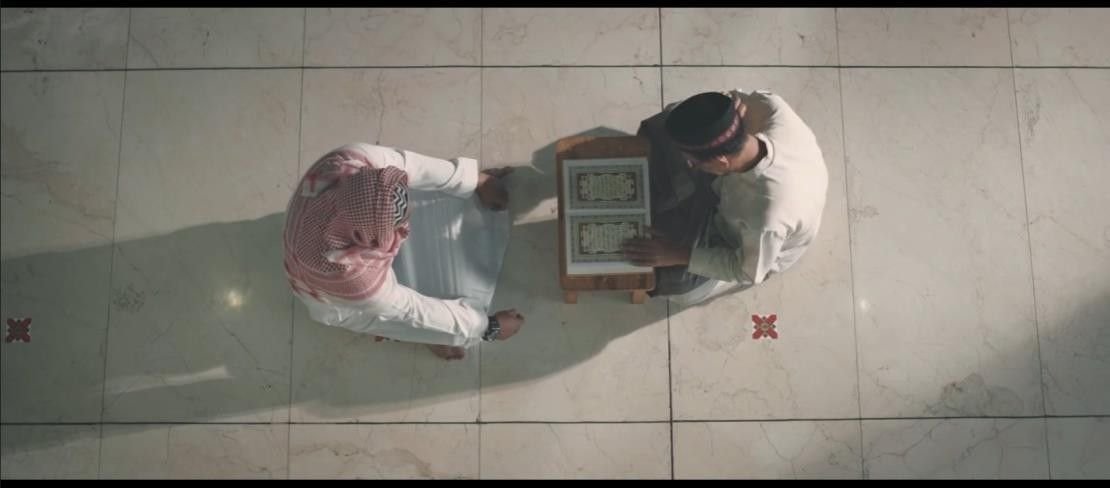
From a cinematographic perspective, the use of close-up and medium shots in these scenes emphasizes the emotional intensity and persistence of the main character. Close-up shots allow viewers to observe subtle facial expressions, concentration, and psychological effort during Qur’anic recitation practice. According to Mascelli, close-up shots function to direct audience attention to emotional details and internal states of characters, making them effective visual tools for conveying struggle and determination. In this context, the cinematographic emphasis reinforces the Islamic concept of ikhtiar, which refers to human effort and perseverance before placing trust in God. Similarly, studies in film semiotics argue that visual framing, cinematography, and mise-en-scène contribute to the construction of symbolic meaning in films, allowing audiences to interpret moral and cultural messages through visual cues rather than explicit narration (20).
The visual construction of ikhtiar is further reinforced by the character’s dialogue expressing determination during the learning process. In one scene, Suto verbally acknowledges the difficulty of mastering the recitation while continuing his practice. This combination of verbal expression and close-up visual framing strengthens the narrative coherence between dialogue and cinematographic technique, allowing the audience to interpret perseverance not merely as a narrative theme but as an embodied spiritual practice represented through audiovisual language.
Beyond illustrating emotional struggle, the cinematographic emphasis on close-up framing also functions as a narrative mechanism that visually communicates the Islamic ethical principle of effort preceding reliance on God. In the context of the film, the audience is repeatedly positioned in close proximity to the protagonist’s facial expressions, allowing viewers to observe subtle emotional transitions during the process of Qur’anic recitation practice. This visual strategy transforms individual perseverance into a cinematic representation of ikhtiar, reinforcing the theological notion that spiritual surrender must be preceded by sustained human effort.
Visual Representation of Tawakkal
In contrast, tawakkal is conveyed through stillness, balanced composition, and extended shot duration. Figure 3 presents a wide shot with symmetrical composition during a prayer scene, positioning the protagonist centrally within the frame. This visual balance signifies spiritual harmony and acceptance, supporting the assertion that composition functions as a carrier of thematic meaning.
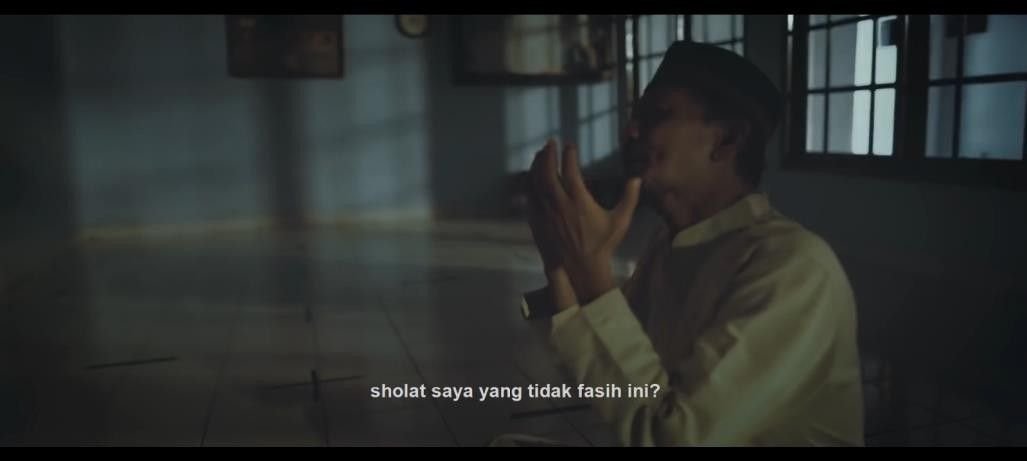
The culmination of tawakkal appears in the final prayer scene. In Figure 4 shows a long take of prostration (sujud), characterized by minimal camera movement and uninterrupted continuity. This visual restraint allows emotional resonance to develop organically, portraying tawakkal as conscious surrender following sincere effort (21).
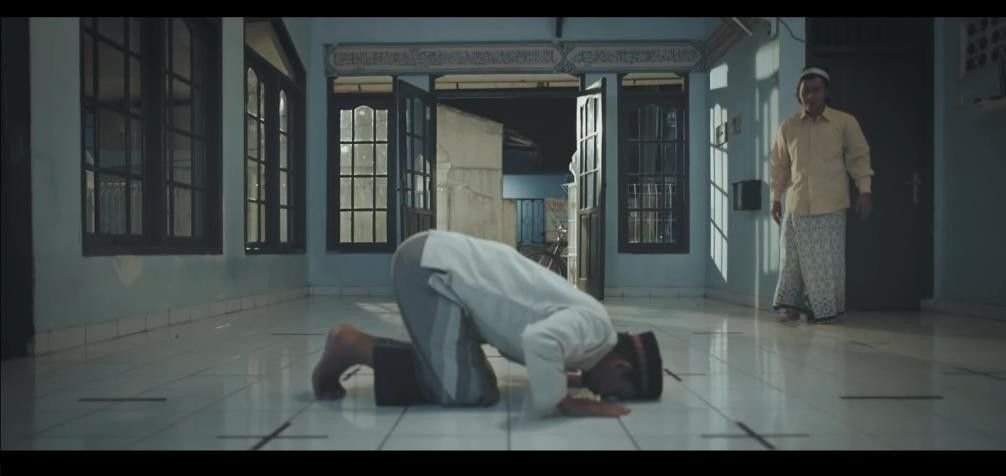
The transition from visually intense effort-driven scenes to calmer compositions in the prayer sequences reflects an important theological progression in Islamic ethics. While ikhtiar emphasizes active human agency, tawakkal represents the stage in which individuals entrust the outcome of their efforts to divine will. The film visually expresses this transition through a shift in cinematographic tempo from close and dynamic framing toward wider and more stable compositions suggesting that visual language can effectively translate abstract theological principles into experiential cinematic form.
In contrast to the dynamic visual emphasis associated with ikhtiar, the representation of tawakkal is characterized by calmer visual composition and slower pacing. Wide shots and stable framing create a sense of spatial openness and emotional stillness, visually symbolizing surrender and trust in divine will. Mascelli explains that wider framing often situates characters within their environment, allowing the audience to perceive the broader emotional atmosphere of a scene.
Overall, the findings indicate that the representation of ikhtiar and tawakkal in Doa Suto is constructed through a coherent visual strategy in which cinematographic techniques function as primary meaning-making devices. Close-up framing, continuity, and repetition visually articulate effort and perseverance, while balanced composition, stillness, and long takes signify spiritual surrender. These results demonstrate that cinematography in Doa Suto operates not merely as a technical component but as a structured visual language that effectively conveys Islamic values, providing a foundation for further interpretative discussion of its theological and communicative implications.
Discussion
The findings confirm that cinematography functions as a central mechanism for religious meaning-making in Doa Suto. The integration of Mascelli’s Five C’s—camera angle, continuity, cutting, composition, and close-up—demonstrates how visual techniques operate as narrative and theological instruments rather than decorative elements.
Figures 1 and 2 collectively illustrate how ikhtiar is constructed through emotional proximity, repetition, and continuity. Close-up framing intensifies internal struggle, while repetitive medium shots reinforce perseverance as an essential prerequisite to spiritual submission. This aligns with Islamic ethical teachings that emphasize effort before surrender (14, 15).
Conversely, Figures 3 and 4 highlight a distinct visual grammar for tawakkal, characterized by compositional balance, stillness, and long takes. The shift in visual tempo from dynamic effort to calm acceptance emerges as a significant cinematic variable derived from cutting and continuity. This transition reinforces the theological understanding of tawakkal as an active spiritual resolution rather than passive resignation.
From a communication perspective, the use of eye-level camera angles and naturalistic lighting positions tawakkal as an attainable practice embedded in everyday life, enhancing audience identification and pedagogical impact (Morissan et al. , 2010; Halik, 2013) (1, 2). Compared to previous studies focusing on narrative or audience reception, this study foregrounds cinematography as visual theology, contributing a novel perspective to religious film and media studies. To situate these findings within broader scholarly discussions, several recent studies have also emphasized the role of visual techniques in shaping meaning within cinematic narratives.
Recent studies have highlighted the importance of visual techniques in constructing meaning within cinematic narratives, including religious films. For instance, research on visual representation in film demonstrates that cinematographic elements such as framing, lighting, and camera movement function as symbolic devices that shape viewers’ interpretation of narrative themes and ideological messages. These visual strategies allow filmmakers to translate abstract concepts into concrete visual experiences for audiences (22). Similarly, studies examining Islamic values in media have shown that films often serve as platforms for communicating moral and religious messages through audiovisual storytelling, where narrative structure and visual composition work together to reinforce ethical teachings (23). In the context of Indonesian cinema, recent analyses of cinematographic elements also indicate that shot composition, camera positioning, and visual framing significantly influence how characters’ emotions and narrative meanings are conveyed to viewers (24). These studies suggest that cinematography functions not merely as a technical component of filmmaking but as a crucial narrative tool that shapes the representation of cultural and religious values in film.
Although the scenes analyzed in this study primarily represent tawakkal, alternative interpretations are also possible. For instance, the stillness and prolonged duration of the final prayer scene may also be interpreted as a cinematic depiction of emotional exhaustion following prolonged struggle. However, when interpreted within the broader narrative context and Islamic ethical framework, the visual stillness more convincingly reflects spiritual surrender after effort rather than passive resignation. This multiplicity of possible readings illustrates the interpretative richness of cinematographic language in religious film narratives.
Overall, the analysis indicates that cinematographic techniques in the short film function as visual strategies for communicating Islamic spiritual values. The progression from visually intense effort-oriented scenes to calm contemplative imagery reflects the conceptual relationship between ikhtiar and tawakkal. This demonstrates that cinematography can serve as an effective medium for translating abstract religious concepts into concrete visual experiences that are accessible to audiences.
Conclusion
This study concludes that Doa Suto effectively employs cinematographic techniques to visually construct the Islamic values of ikhtiar and tawakkal through framing, continuity, composition, and shot duration. The findings demonstrate that ikhtiar is represented through close-up and repetitive visual patterns emphasizing effort, while tawakkal is conveyed through stillness, balanced composition, and long takes signifying spiritual surrender. Overall, cinematography in Doa Suto functions as a structured visual language that transforms abstract religious values into experiential and communicative cinematic meaning.
Theoretically, this study contributes to religious film studies by demonstrating how cinematographic techniques function as mechanisms of visual theology that translate Islamic ethical concepts into cinematic representation. Methodologically, the study illustrates how Mascelli’s Five C’s can be applied as an analytical framework for examining religious meaning in short films. These findings also highlight the potential of Islamic short films as effective media for visual religious communication in the digital era.
Future studies may expand this analysis by examining a broader range of Islamic short films or by integrating audience reception analysis to explore how viewers interpret the visual representation of religious values in contemporary media.
Declarations
Conflict of Interest
The authors declare no conflicting interest.
Data Availability
All data generated or analyzed during this study are included in this published article.
Ethics Statement
Ethical approval was not required for this study.
Funding Information
The author(s) declare that no financial support was received for the research, authorship, and/or publication of this article.
References
- Halik A, Sos S, Si M. Buku daras komunikasi massa. Makassar: Universitas Islam Negeri Alauddin Makassar; 2013.
- Morissan, Wardhani AC. Teori komunikasi massa. Jakarta: Ghalia Indonesia; 2010.
- Estuningtyas RD. Strategi komunikasi dan dakwah pada kalangan milenial di era modernisasi. Muttaqien: Indonesian Journal of Multidisciplinary Islamic Studies. 2021; 2 (1): 75–86.
- Prakosa G. Ketika film pendek bersosialisasi. Jakarta: Penerbit Layar; 2001.
- Javandalasta P. 5 hari mahir bikin film. Surabaya: Mumtaz Media; 2011.
- Brown B. Cinematography: theory and practice. Oxford: Focal Press; 2002.
- Ankersmit KS. Beginner’s guide to cine photography. London: George Newnes Ltd; 1962.
- Sobur A. Analisis teks media: suatu pengantar untuk analisis wacana, analisis semiotik, dan analisis framing. Bandung: PT Remaja Rosdakarya; 2004.
- Knauss S. Religion and film. Brill Research Perspectives in Theology. 2020; 4 (1): 1–103.
- Linze L, Desa MAM. Exploring the intersection of religion and cinema: trends and reflections in contemporary film culture. Journal of Ecohumanism. 2024; 3 (4): 225–35.
- Xue B, Wang Z, Liu Y, Song Y. Faith in frames: unveiling therapeutic narratives in religion-related cinema through computational analysis. Frontiers in Public Health. 2024; 12.
- Rahmatikawati Y, Rusmana D, Jauhari A. Religion and film: the commodification of Quranic verses in Indonesian religious films from 2008 to 2020. International Journal of Islamic Khazanah. 2021; 11 (2): 103–17.
- Al-Ghazali M. Selalu melibatkan Allah. Jakarta: Serambi Ilmu Semesta; 2003.
- Ilyas Y. Kuliah akhlaq. Yogyakarta: Lembaga Pengkajian dan Pengamalan Islam; 2011.
- Shihab MQ. Secerca cahaya Ilahi. Bandung: Mizan; 2013.
- Gunawan I. Metode penelitian kualitatif: teori dan praktik. Jakarta: PT Bumi Aksara; 2013.
- Ardana SE. Modul mata kuliah sinematografi. Yogyakarta: Fakultas Dakwah dan Komunikasi; 2013.
- Miles MB. Analisis data kualitatif: buku sumber tentang metode-metode baru. Jakarta: UI Press; 1992.
- Tjasmadi MJ. Seratus tahun bioskop Indonesia. Jakarta: Megindo Tunggal Sejahtera; 2008.
- Rizal K, Ziaul Haq M, Andini M. Analisis semiotik framing visual dan auditori dalam seni film. Cinematology: Journal Anthology of Film and Television Studies. 2025; 5 (2): 115–29.
- Ibn Qayyim Al-Jauziyah. Pendakian menuju Allah. Jakarta: Pustaka Al-Kautsar; 1998.
- Munawaroh G. Analisis representasi visual: kajian kekerasan simbolik dalam film. Journal of Religion and Film. 2023; 2 (2): 293–312.
- Fitria N, Rachman RF. Islamic values in the media: critical discourse analysis of the film Hati Suhita. Jurnal Spektrum Komunikasi. 2024; 12 (1): 66–75.
- Semesta CJ, Ersyad FA, Sintowoko DAW. An analysis of cinematographic elements in the film Autobiography. TEXTURE Art and Culture Journal. 2025; 8 (1): 17–26.