RESEARCH ARTICLE
Species Richness, Abundance, and Conservation Status of Butterflies in Inadan, San Miguel, Surigao del Sur, Philippines
Academic Editor: Tri Atmoko
Tropical Animals|Vol. 2, Issue 1, pp. 1-7 (2026)
CC BY 4.0-2026 Authors
Views
Downloads
Shares

Received
Feb 2, 2026Revised
Feb 17, 2026Accepted
Mar 27, 2026Published
Apr 6, 2026
Abstract
The butterfly species found in Sitio Inadan, San Miguel, Surigao del Sur, Philippines were surveyed and documented using transect walks, visual observation, and hand net collection. Four transects were established in selected habitat areas, each measuring approximately 3.05 mi. Sampling was conducted from 7:00 AM to 5:00 PM over six consecutive weekends, with one primary observer recording all sightings and captures. A total of 16 species belonging to four families and 14 genera were identified. The family Nymphalidae comprised about 56% of the recorded species, followed by Pieridae, Papilionidae, and Lycaenidae. Abundance categories were based on encounter frequency, where species observed once or twice were classified as Very Rare, and those seen more often were categorized as Common or Very Common. Conservation status was verified using the International Union for Conservation of Nature (IUCN) Red List to distinguish global status from local rarity. Although most species are listed as Least Concern, limited sampling suggests possible undersampling of the area.
Introduction
Butterflies (Order Lepidoptera) play a crucial ecological role in terrestrial ecosystems, functioning as pollinators, components of food webs, and sensitive bioindicators of environmental quality (1). Their close dependence on vegetation structure, availability of larval host plants, floral resources, and microclimatic conditions makes butterfly communities strongly linked to habitat integrity and overall biodiversity health (2). Consequently, patterns of butterfly species richness and abundance have been widely used to reflect environmental change, land-use dynamics, and ecosystem condition across forested and semi-natural landscapes (3). In the Philippines, a recognized biodiversity hotspot, approximately 915 butterfly species have been recorded, of which more than 350 are endemic, accounting for nearly 10% of the world’s endemic butterfly fauna (4). Despite this remarkable richness, comprehensive and site-specific data on butterfly communities remain limited, particularly in forested and semi-natural landscapes outside formally protected areas (5).
The urgency of documenting butterfly diversity is underscored by widespread population declines reported across Southeast Asia, driven primarily by anthropogenic pressures such as deforestation, agricultural expansion, urbanization, and climate variability (6). Numerous studies have consistently shown that habitat fragmentation, loss of floral and larval resources, changes in vegetation structure, and extreme weather events contribute to reductions in species richness and shifts in butterfly community composition (7). Although some generalist species may persist in disturbed environments, habitat specialists are particularly vulnerable to sustained habitat degradation, emphasizing the importance of localized biodiversity assessments (8). In Surigao del Sur, previous research has identified relatively high butterfly diversity in selected lowland forests; however, these studies remain spatially limited and do not adequately represent smaller, less-studied forest patches.
Inadan, a forested area in San Miguel, Surigao del Sur, supports heterogeneous vegetation and provides a suitable habitat for various faunal groups, yet no scientific assessment of butterfly species richness, abundance, and conservation status has been conducted in this area (9). This lack of baseline ecological data constrains informed conservation planning and biodiversity management at the local scale (10). Current approaches to butterfly conservation rely heavily on biodiversity inventories, habitat quality assessments, and long-term monitoring to guide management strategies, but many rural forest ecosystems in the Philippines remain underrepresented in such efforts (11). Addressing this gap, the present study provides the first systematic documentation of butterfly species richness, abundance, and conservation status in Inadan, San Miguel, Surigao del Sur. Using transect-based visual encounter surveys and opportunistic sampling with hand nets, this study aims to generate baseline ecological data to support future monitoring, conservation initiatives, and sustainable land-use planning. By contributing localized biodiversity information, the study advances current knowledge on butterfly distribution in Mindanao and highlights the ecological significance of understudied forest habitats.
Methodology
Study Design and Rationale
This study employed a descriptive, field-based ecological survey to document butterfly species richness, relative abundance, and conservation status in an understudied forest landscape in Inadan, San Miguel, Surigao del Sur, Philippines. A cross-sectional sampling design was adopted to generate baseline biodiversity data, consistent with the study objective of providing an initial ecological assessment for an area lacking prior entomological documentation. Butterflies were selected as focal taxa due to their sensitivity to habitat structure, vegetation composition, and microclimatic conditions, making them reliable indicators of ecosystem integrity.
Study Area
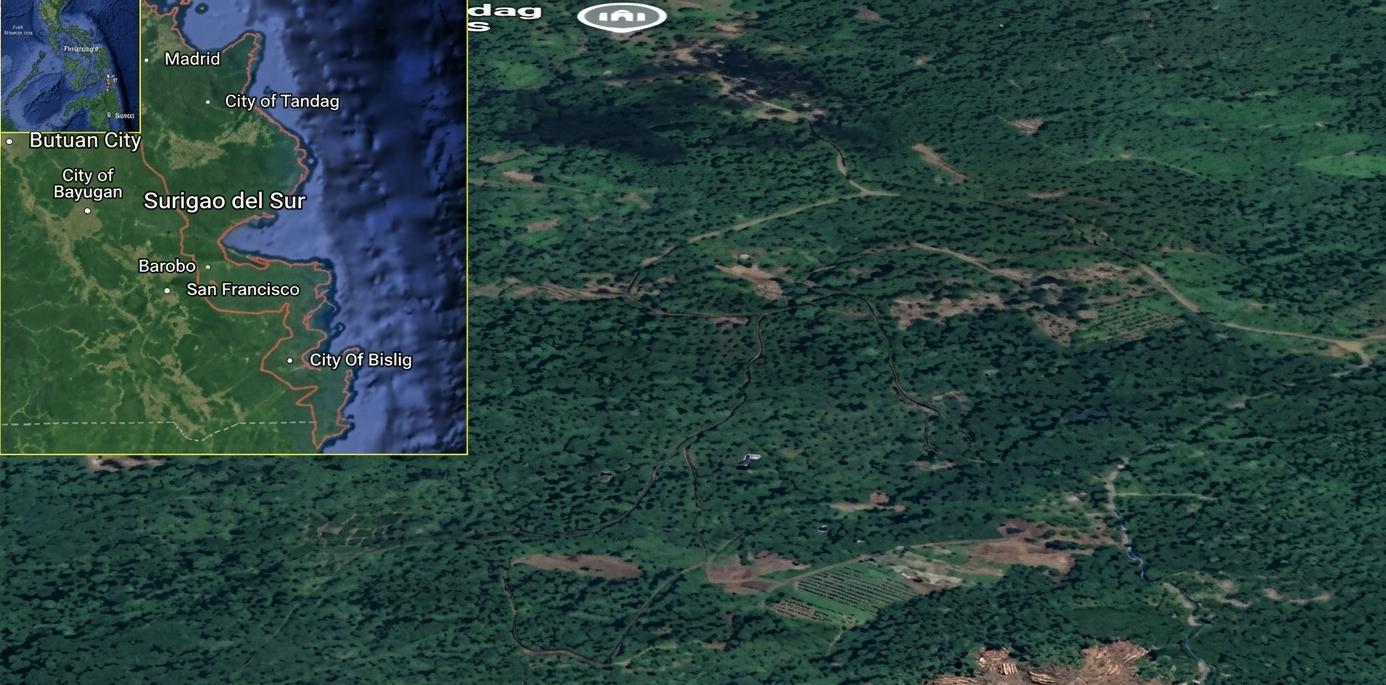
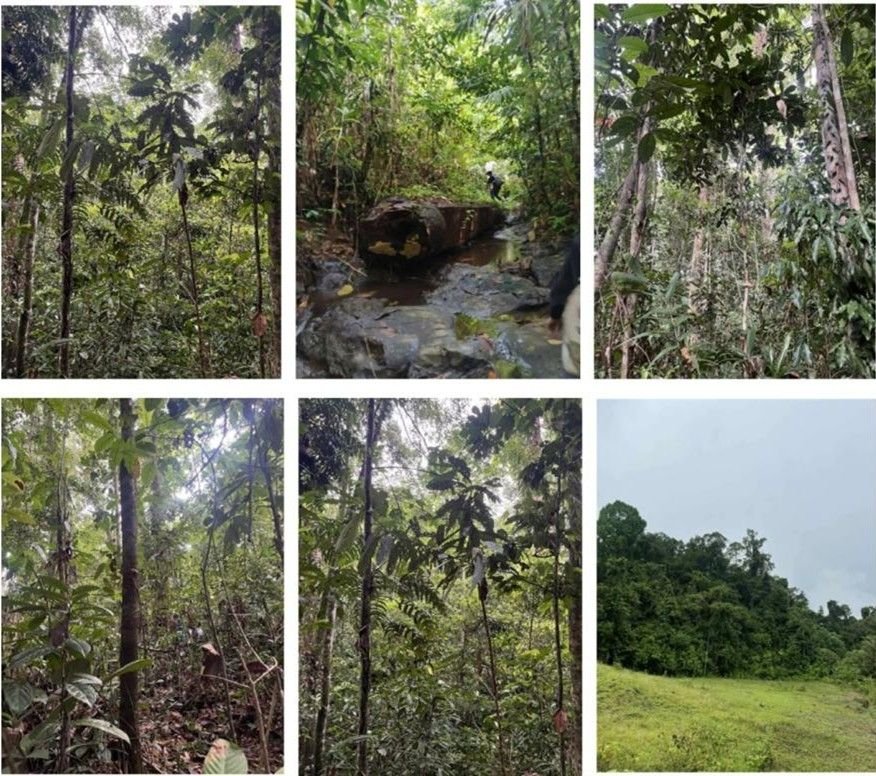
Field surveys were conducted in Sitio Inadan, Barangay Magroyong, San Miguel, Surigao del Sur, Mindanao, Philippines, as illustrated in Figure 1 while the actual condition of the sampling site is presented in Figure 2. The area is characterized by secondary forest vegetation interspersed with shrubs, flowering plants, and small-scale agroforestry patches, forming a heterogeneous habitat mosaic. Sampling locations were established along existing forest trails and semi-open areas to capture variation in vegetation structure and resource availability. Geographic coordinates and elevation of each transect were recorded using a handheld Global Positioning System (GPS) unit to ensure spatial accuracy and facilitate reproducibility.
Sampling Design and Criteria
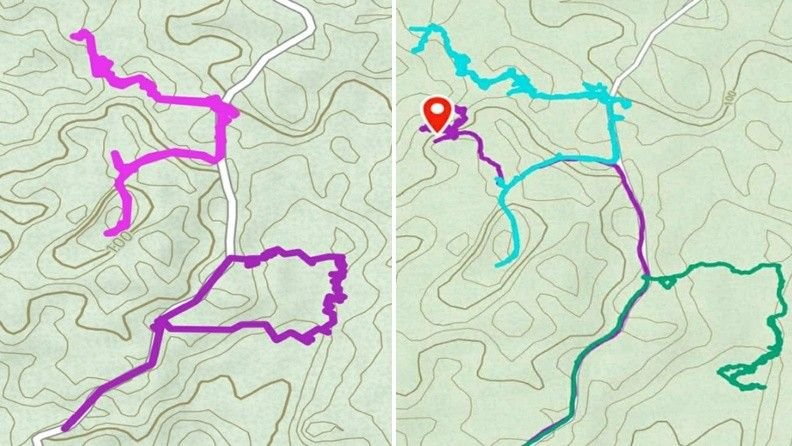
Butterfly sampling was conducted using transect-based visual encounter surveys combined with opportunistic net capture. Surveys were performed once per week over a four-week sampling period during favorable weather conditions (clear to partly cloudy skies, no rainfall, low wind speed) to minimize detectability bias. Observations were carried out between 7:00 AM to 4:00 PM, corresponding to peak butterfly activity periods. The mapped transect routes established within the study area are shown in Figure 3. This sampling schedule was designed to maximize detection probability while ensuring consistency in observation effort across sampling days. Weather conditions were monitored prior to each survey to maintain comparable environmental circumstances throughout the study period.
Each transect was surveyed by walking at a constant slow pace, recording all butterflies observed within an approximate 5 m horizontal distance on either side of the transect line. Individuals were included regardless of sex; life stages were recorded when identifiable, although quantitative analyses focused on adult butterflies. Individuals that could not be confidently identified to species level, either visually or through capture, were excluded from abundance analyses to ensure data reliability.
Materials and Field Techniques
Butterflies were captured using handheld insect nets. Specimens were handled using soft-tipped forceps to minimize physical damage and stress. Captured individuals were temporarily placed in labeled, transparent containers for documentation. Each specimen was photographed in both dorsal and ventral orientations using a high-resolution smartphone camera to support subsequent taxonomic verification.
Specimens selected for preservation were processed following standard entomological procedures, including relaxation, wing spreading using tracing paper, pinning, and air-drying. Preserved specimens were protected from fungal growth and insect damage using naphthalene-based repellents and stored in sealed containers.
Species Identification and Taxonomic Verification
Species identification was conducted using regional field guides and taxonomic keys for Philippine Lepidoptera, supplemented by verified online databases (12). Diagnostic morphological characters, including wing coloration, pattern, venation, size, and antennal structure, were examined. Taxonomic determinations were cross-validated by an experienced entomologist affiliated with the Department of Environment and Natural Resources (DENR), Surigao del Sur, to ensure accuracy and consistency.
Data Analysis
Species richness was calculated as the total number of butterfly species recorded during the sampling period. Relative abundance was assessed using frequency of occurrence and categorized into four qualitative classes, very rare, rare, common, and very common, based on encounter rates across sampling occasions. Conservation status (e. g., vulnerable, endangered) and ecological status (native or endemic) were assigned based on established national and regional conservation references.
Data analysis was primarily descriptive, reflecting the exploratory nature and baseline objective of the study. Inferential statistical analyses were not applied due to the limited temporal scope and absence of prior comparative datasets, an approach appropriate for preliminary biodiversity inventories in data-deficient areas.
Ethical Considerations
Specimen collection was minimized and conducted solely for scientific documentation and taxonomic verification. All field activities complied with local environmental regulations and ethical standards for wildlife research. Permissions to conduct fieldwork were obtained from relevant local authorities and landowners before data collection.
Results and Discussion
Species Composition of Butterflies
There were 16 species of butterflies belonging to four families and 14 genera from Sitio Inadan, Magroyong, San Miguel, Surigao del Sur (Table 1). The butterfly species inhabiting the area are fewer than in other places surveyed. Thus, it can be seen quite clearly that the devastation of forests by tree felling is destroying the food and habitat of the butterflies. The Nymphalidae family or brush-footed butterflies are the most widely distributed butterfly family throughout Inadan. These low numbers contrast with previous studies (12-14) conducted in the area, which reported a much healthier and more undisturbed forest ecosystem with greater availability of host plants. This underscores the need to conserve this site (15). The sampling accumulation across survey days, including the number of individuals collected and species detected, is summarized in Table 2.
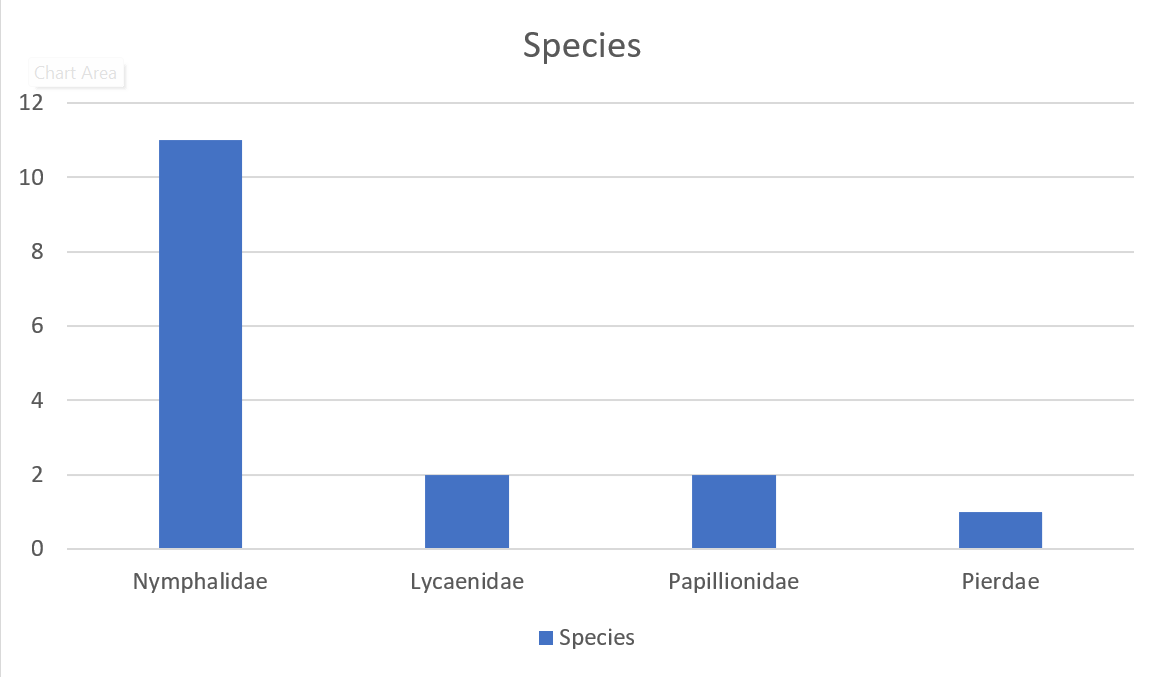
The most specious families are Nymphalidae (11), Lycaeenidae (2), Papilionidae (2) and Pieridae (1). The Nymphalidae family, also known as brush-footed butterflies, is the largest and most ecologically diverse butterfly lineage in the world.
| Family | Genus | Species | Scientific Name |
|---|---|---|---|
| Lycaenidae | Jamides | Jamides alecto manilana | Toxopeus, 1930 |
| Lycaenidae | Zizina | Zizina otis oriebis | Fabricius, 1787 |
| Nymphalidae | Athyma | Athyma ranga | H. Moore, 1858 |
| Nymphalidae | Euploea | Euploea tobleri snellerii | Osada & Hashimoto, 1987 |
| Nymphalidae | Euploea | Euploea sp. | - |
| Nymphalidae | Hypolimnas | Hypolimnas anomala | Wallace, 1869 |
| Nymphalidae | Tirumala | Tirumala limniace | Cramer, 1775 |
| Nymphalidae | Mycalesis | Mycalesis janardana micromedex | Fruhstorfer, 1900 |
| Nymphalidae | Neptis | Neptis hylas | Linnaeus, 1758 |
| Nymphalidae | Phaedyma | Phaedyma columella | Cramer, 1780 |
| Nymphalidae | Junonia | Junonia almana | Linnaeus, 1758 |
| Nymphalidae | Junonia | Junonia sp. | - |
| Nymphalidae | Yoma | Yoma sp. | - |
| Papilionidae | Menelaides | Menelaides deiphobus rumanzovia | Eschscholtz, 1821 |
| Papilionidae | Papilio | Papilio polytes | Linnaeus, 1758 |
| Pieridae | Eurema | Eurema sarilata sarilata | Semper, 1891 |
| Sampling Day | Collected | New Species Found | Total species (Cumulative) |
|---|---|---|---|
| Day 1 | 3 | 0 | 1 |
| Day 2 | 6 | 0 | 1 |
| Day 3 | 4 | 0 | 1 |
| Day 4 | 3 | 0 | 1 |
Assessment of Conservation and Ecological Status of Butterflies
A total of 16 butterfly species were recorded in Sitio Inadan, Magroyong, San Miguel, Surigao del Sur, Philippines, and their conservation and ecological classifications are summarized in Table 3. In the Eological Status six butterfly species were recorded as Endemic this are the, J. alecto manilana Toxopeus, 1930, E. tobleri snellerii Osada and Hashimoto, 1987, H. anomala Wallance, 1869, M. janardana micromede Frushtofer, 1900, M. deophobus rumanzovia Eshsholtz, 1821, and E. sarilata sarilata Semper, 1891; ten butterfly species were also recorded as Native this are the, Z. otis oriebs Fabricus, 1781, A. ranga H. Moore, 1858, Euploea sp. T. limniace Cramer, 1775, N. hylas Linnaeus, 1780. P. columella Cramer, 1780, J. almana Linnaeus, 1978, Junonia sp., Yoma sp., and P. polytes Linnaeus 1758.
In the Conservation Status there were nine butterfly species were recorded as Vulnerable this species are the, J. alecto, manilana Toxopeus, 1930, Euploea sp., T. limniae Cramer, 1775, N. hylas Linnaeus, 1758, P. columella, 1780, J. almana Linnaeus, 1978, Junonia sp., Yoma sp., and P. polytes 1758; six butterfly species were also recorded as Endangered this species are the, Z. otis oriebs Fabricu, 1787, A. ranga H. Moore 1858, E. toobbleri snellerii Osada and Hashimoto, 1987, H. anomala Wallace, 1869, M. janardana micromede Frushtofer, 1900, M. deophobus rumanzovia Eshsccholts, 1821, and E. sarilata Semper, 1891.
The IUCN Red List was used to determine the conservation and ecological status of the recorded butterfly species, categorizing them according to their level of extinction risk based on internationally recognized assessment criteria and threat categories.
| Species Scientific Name | Conservation Status | Ecological Status |
|---|---|---|
| Jamides alecto manilana Toxopeus, 1930 | Least Concern | Native |
| Zizina otis oriebs Fabricus, 1787 | Least Concern | Native |
| Athyma ranga H. Moore, 1858 | Not assessed | Not assessed |
| Euploea tobleri snellerii Osada and Hashimoto, 1987 | Near threatened | Endemic |
| Euploea sp. | Not assessed | Not assessed |
| Hypolinas anomala Wallace, 1869 | Least Concern | Endemic |
| Tirumala limniace Cramer, 1775 | Least Concern | Native |
| Mycalesis janardana micromede Frushtofer, 1900 | Least Concern | Native |
| Neptis hylas Linnaeus, 1758 | Not assessed | Not assessed |
| Phaedyma columella Cramer, 1780 | Not assessed | Not assessed |
| Junonia almana Linnaeus, 1978 | Not assessed | Not assessed |
| Junonia sp. | Not assessed | Not assessed |
| Yoma sp. | Not assessed | Not assessed |
| Menelaides deophobus rumanzovia Eshscholtz, 1821 | Not assessed | Not assessed |
| Papilio polytes Linnaeus, 1758 | Least concern | Native |
| Eurema sarilata sarilata Semper, 1891 | Not assessed | Not assessed |
Frequency of Butterfly Species
The frequency results showed that butterfly occurrence in Sitio Inadan varied among species and families, with members of the family Nymphalidae recorded most frequently during the sampling period, as illustrated in Figure 4 and summarized in Table 4. Species such as J. almana, T. limniace, and N. hylas were observed more often compared to other species, indicating that these butterflies are well-adapted to the existing habitat conditions, including the availability of nectar plants and suitable host plants. In contrast, species under Papilionidae and Pieridae were recorded less frequently, which may suggest limited resources, habitat disturbance, or specific ecological requirements. The higher frequency of certain species reflects their ecological flexibility and tolerance to moderate environmental changes, while the lower frequency of others may indicate sensitivity to habitat alteration. Overall, the variation in butterfly frequency highlights the influence of vegetation structure, food availability, and microclimatic conditions on species distribution in the study area.
| Transect | Visit 1 | Visit 2 | Visit 3 | Visit 4 | Total Individuals | Encounter Frequency (%) |
|---|---|---|---|---|---|---|
| T1 | 1 | 1 | 3 | 2 | 7 | 60% |
| T2 | 0 | 1 | 0 | 0 | 1 | 5% |
| T3 | 2 | 1 | 0 | 0 | 3 | 15% |
| T4 | 0 | 1 | 1 | 2 | 4 | 20% |
Conclusion
Inadan exhibited a medium level of butterfly diversity across four regions, with sixteen species recorded during the sampling period, indicating a moderately structured butterfly community overall within the study area and surrounding habitats. Species richness was low, and several species were observed only once or twice, suggesting a high proportion of locally rare species and uneven distribution across sampling sites. Although many identified butterflies are generally common in the Philippines, their low encounter rate suggests possible habitat pressure or localized environmental constraints influencing species occurrence. Conservation status was verified using the International Union for Conservation of Nature (IUCN) listings to ensure standardized classification and reliable assessment of species vulnerability. The presence of rare and vulnerable species, together with limited encounters, may reflect environmental changes, habitat modification, or human disturbance affecting ecological stability in the area. These findings highlight the importance of continued biodiversity monitoring to better understand temporal changes in butterfly populations and habitat quality. Maintaining suitable vegetation structure and minimizing anthropogenic disturbances may help sustain butterfly diversity and support ecosystem balance. Furthermore, the results provide baseline ecological information that can assist future conservation planning and environmental management initiatives within the locality. Long-term monitoring and community-based conservation efforts are therefore recommended to protect butterfly habitats and promote sustainable biodiversity conservation in Inadan and adjacent areas.
Declarations
Acknowledgment
The researchers would like to express their deepest gratitude and appreciation to the many individuals and institutions whose support, guidance, and cooperation made this study possible. First and foremost, a special thanks is extended to Mr. Clinton D. Sequihod, the research advisor, for his invaluable patience, expertise, and consistent guidance throughout the development and completion of this paper. The researchers also wish to thank the faculty and administration of San Miguel National Comprehensive High School for providing the academic environment and resources necessary to pursue this study in partial fulfillment of the requirements for Research III. Furthermore, sincere appreciation is given to the local authorities and community members of Magroyong and Sitio Inadan, including the Barangay Captain for granting the necessary Prior Informed Consent to conduct the survey, and the forest owners who kindly allowed the establishment of sampling stations and transect walks on their property. The researchers are also grateful to the primary observers and field assistants who dedicated their time over six consecutive weekends to document the butterfly species accurately. Finally, the researchers wish to thank their parents for their unwavering moral and financial support, which ensured both the progress of the project and the safety of the team during field sampling. Above all, they offer their praise to the Almighty God for providing the strength, protection, and wisdom required to see this research journey through to its successful conclusion.
Conflict of Interest
The authors declare no conflicting interest.
Data Availability
All data generated or analyzed during this study are included in this published article.
Ethics Statement
Ethical approval was not required for this study.
Funding Information
The author(s) declare that no financial support was received for the research, authorship, and/or publication of this article.
References
- Butterflies as pollinators: what do they do for farms? [Internet]. Delve Experiences; [cited 2026 Jan 19].
- Ndandika F, Lyimo PJ, Mwakalukwa EE. Butterflies’ diversity indicates habitat quality in Magombera Nature Forest Reserve, Tanzania. Agric For Fish [Internet]. 2025;14(5):215-25.
- Blair RB, Launer AE. Butterfly diversity and human land use: species assemblages along an urban gradient. Biol Conserv. 1997;80(1):113-25.
- Ruales JJJ, Demetillo MT, Along AA, Mohagan AB, Jumawan JH. Diversity and status of true butterflies (Lepidoptera: Papilionoidea) in two ecological parks of Butuan City, Agusan del Norte, Philippines with new locality record. Species. 2023;24(73):1-12.
- Yau EYH, Jones EE, Tsang TPN, Xing S, Corlett RT, Roehrdanz P, et al. Spatial occurrence records and distributions of tropical Asian butterflies. Sci Data [Internet]. 2025;12(1):1004.
- Koh LP. Impacts of land use change on South-east Asian forest butterflies: a review. J Appl Ecol [Internet]. 2007;44(4):703-13.
- Leidner AK, Haddad NM, Lovejoy TE. Does tropical forest fragmentation increase long-term variability of butterfly communities? PLoS One [Internet]. 2010;5(3):e9534.
- Popović M, Nowicki P. Movements of a specialist butterfly in relation to mowing management of its habitat patches. Biology (Basel) [Internet]. 2023;12(3):344.
- Guadalquiver DM, Nuñeza OM, Dupo AL. Species diversity of Lepidoptera in Mimbilisan Protected Landscape, Misamis Oriental, Philippines. Entomol Appl Sci Lett [Internet]. 2019;6(3):33-47.
- Mihoub JB, Henle K, Titeux N, Brotons L, Brummitt NA, Schmeller DS. Setting temporal baselines for biodiversity: the limits of available monitoring data for capturing the full impact of anthropogenic pressures. Sci Rep [Internet]. 2017;7(1):41591.
- Koh LP. Impacts of land use change on South-east Asian forest butterflies: a review. J Appl Ecol. 2007;44(4):703-13.
- Gracia AG, Albios LP, Alvero RLB. Faunistic study on butterflies in the lowland forests of Central Surigao del Sur, Philippines. Borneo J Resour Sci Technol. 2021;11(1):84-95.
- Abao MCG, Quiñonez KC, Elegio LJG, Suarez MFD, Mohagan AB, Gracia AG. Diversity and status of butterflies in Awasian Water Forest Reserve, Mt. Hilong-Hilong, Philippines. Biotropia (Bogor). 2022;29(3):203-12.
- Mohagan AB, Mohagan DP, Tambuli AE. Diversity of butterflies in the selected key biodiversity areas of Mindanao, Philippines. Asian J Biodivers. 2011;2(1).
- Montero YPM, Patano R, Gumapac KR, Cainglet LM, Mohagan D, Abrea BV, et al. Preliminary inventory of butterflies in the northern slope of Mt. Kitanglad with an updated checklist of Mindanao butterflies since Treadaway and Schroeder (2012) [Internet]. 2025 [cited 2026 Jan 19].