RESEARCH ARTICLE
Comparative Study on the Nutritional Profile of Cultured and Captured African Catfish (Clarias gariepinus)
Academic Editor: Putri Anugerah
Aquatic Life Sciences|Vol. 3, Issue 1, pp. 35-43 (2026)
CC BY 4.0-2026 Authors
Views
Downloads
Shares

Received
Feb 14, 2026Revised
Mar 11, 2026Accepted
Mar 30, 2026Published
Apr 28, 2026
Abstract
Aquaculture contribution to human nutrition, consumers’ preferential bias towards capture fisheries and concerns on food safety has necessitated the need for information on the nutritional composition of fish species from diverse settings such as geographical locations and aquaculture rearing facilities. This study determined the nutritional profile and associated human health risk of adult size African catfish (Clarias gariepinus) cultured in plastic tanks with those harvested from the wild. Results showed the mean protein (18.04%) and lipid (8.71%) values of cultured C. gariepinus were significantly higher than reported values in C. gariepinus from the wild, which makes them of more nutritional value to consumers. Captured fishes reported higher ash, mineral and trace metal contents, which was attributed to the elevated levels of these elements in their habitat waters due to water pollution. Low metal pollution index (MPI) values in cultured and captured fishes indicated an insignificant bioaccumulation of trace metals, and the absence of non – carcinogenic (HI <1) and carcinogenic (ICR < 1 × 10⁻⁶) risk associated with their consumption. Although the captured fishes at present poses no health risk to consumers; their recorded higher contents of trace metals, MPI, HI and CPI values is a cause for concern on the safe consumption of capture fishes. With increasing concerns on aquatic food safety, this study has shown that the consumption of cultured C. gariepinus provides more nutritional quality to consumers. The need for more monitoring studies on different culturing methods and settings on the nutritional composition and food safety is recommended.
Introduction
Fish is largely recognised as one of the healthiest, affordable and accessible source of animal protein, with no cultural bias to its consumption. Globally, the importance of fish to the sustenance of animal protein supply and human nutrition particularly in coastal regions and low income economies has been acknowledged (1, 2, 3). Over the years, the increasing awareness of the distinctive nature of fish nutrients and their functional roles in human growth and development, has resulted in unprecedented increase in demand for fish. At the global level, total fish production is expected to expand from 179 million tonnes in 2018 to 204 million tonnes in 2030. According to the World Fish Center (4), although Nigeria produces around 1.2 million metric tons of fish annually, and spends about USD 1 billion a year on fish imports which accounts for 45% of its supply; her annual per capita fish consumption of 11.3 kg is far below the global average of 21 kg. This is particularly alarming for sub-Saharan Africa where many countries are dependent on aquatic foods to meet their nutritional needs, particularly animal proteins and micronutrients. In recent times, aquaculture has become the main source of fish for human consumption, with a production of 26 million tonnes in 2018 and a projected production of 109 million tonnes in 2030 (5).
Fish culture in tanks is a well-known aquaculture practice in Nigeria especially in areas lacking access to surface freshwater bodies such as rivers, lakes and reservoirs. The African Catfish (Clarias gariepinus) has successfully been reared in captivity using different facilities such as concrete ponds, plastic tanks, tarpaulin tanks and earthen ponds over the years in Nigeria. Despite this achieved success and the contribution of aquaculture to the fisheries sector in Nigeria, there still exist a cultural and preferential bias towards capture fisheries, as fish consumers have shown preference for capture fishes due to perceived factors of taste, health benefits, and the availability of diverse species in rivers (6). These perceived preferences among consumers in Nigeria for captured fishes over cultured fishes has influenced the market penetration of cultured fishes and increased pressure on unsustainable fishing practices which have led to the depletion of fish stocks. The combination of several factors such as water quality (7, 8), diet and habitat (9), fat content and species variation (3) have been identified to contribute to the perceived consumers’ preference of captured fishes to cultured ones. However, reported studies on increasing deterioration in the water quality of freshwater bodies in Nigeria (10, 11, 12, 13) and its effects on the physiology and food safety of capture fisheries has raised public health concerns on capture fisheries and the contribution of the practice of aquaculture to food security (3, 14). Also, the convergence of nutrition insecurity and increasing dependence on fish for animal protein has necessitated the need for more information of the nutrient composition of fish species from diverse settings such as geographical locations and aquaculture practices. Therefore, the aim of this study is to determine and compare the nutritional profile and human health risk assessment of adult size African catfish (C. gariepinus) cultured in plastic tanks with those harvested from the wild.
Materials and Methods
Study Locations
This study was carried out at the Grow Out Unit facility of the TETFund Centre of Excellence in Aquaculture and Food Technology situated in the University of Benin, Benin City, Nigeria. The facility used for the study were installed plastic tank ponds made with black rubber, with a capacity of 6,000 litres each (Figure 1). The Ikpoba Reservoir and Owan River in Edo State were locations for collection of captured fish samples. These natural water bodies were selected for the comparative study based on existing literatures on their water quality, which recorded that Ikpoba Reservoir is severely polluted (10, 11) and Owan River is slightly polluted (12).
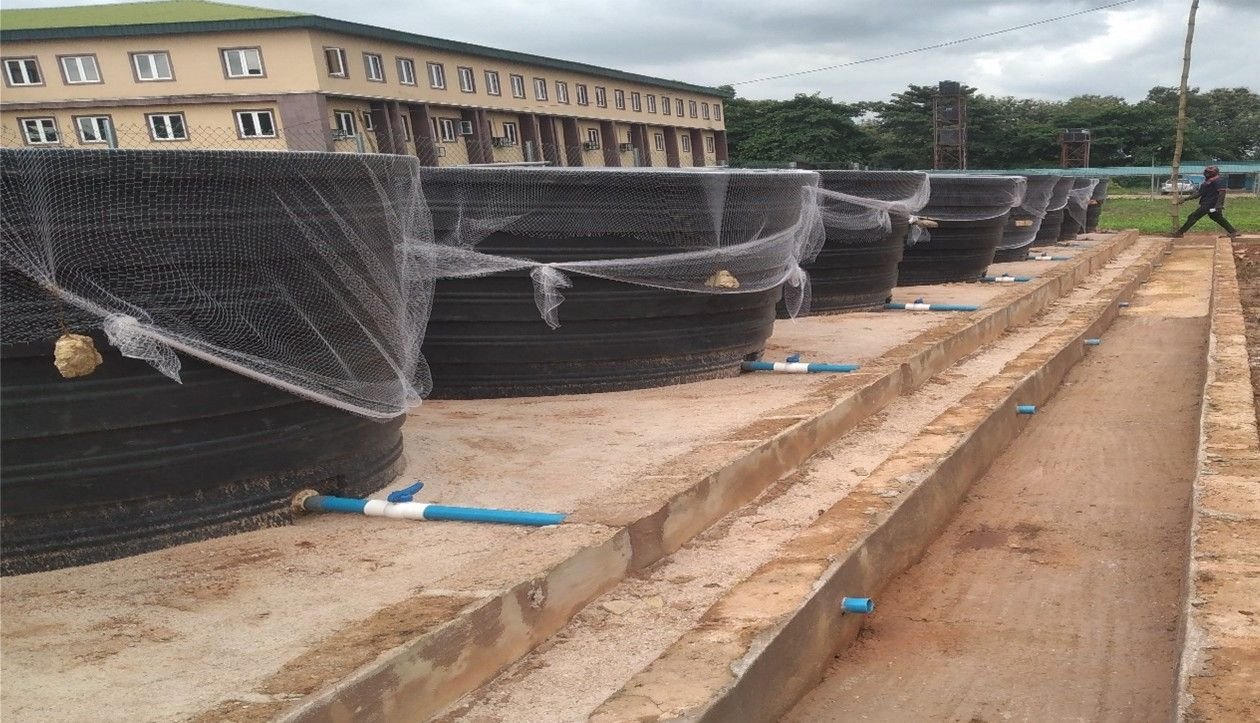
Study Setup
For the study, ten (10) units of the plastic tank ponds were used. Each of the tanks were stocked with C. gariepinus fingerlings and cultured to table size (wgt. 800 – 1300 g) in five (5) months using conventional commercial fish feeds. No growth inducing hormone/ treatment was administered to the fishes throughout the study. Captured table sized C. gariepinus (wgt. 800 – 1200 g) were collected from Owan River and Ikpoba Reservoir with the assistance of artisanal fishermen over a period of three (3) months and properly identified using taxonomic guides (15). Collected fish samples from the tank ponds (n = 30), Ikpoba reservoir (n = 30) and Owan River (n = 30) were packed in polyethylene bags, preserved in ice blocks and taken to a National reference analytical laboratory - the Benin Owena River Basin Authority/ University of Benin Analytical laboratory for analysis.
Analytical Methods
In the laboratory, fish samples were thoroughly washed with distilled water and drained under folds of filter paper. The fish samples were dissected and fish fillets were collected along the lateral line. The fillet samples of both cultured and captured fishes were homogenised and subsamples of the homogenate were taken for respective analytical tests using methods summarized in Table 1.
| Analyte | Units | Method reference |
|---|---|---|
| Moisture | g/100 g | Oven drying (16) |
| Protein | g/100 g | Block digestion (17) |
| Fat | g/100 g | Acid hydrolysis (17) |
| Ash | g/100 g | Direct method (17) |
| Minerals/ Metal contents | mg/100 g | Acid Digest, AAS (18) |
Quality Assurance and Control
To ensure consistency and correctness of analyzed samples, analytical procedures were carried out in triplicate samples. The equipment - atomic absorption spectrophotometer (Model 210 VGP, Buck Scientific) was calibrated using buck-certified atomic absorption standards for the several trace metals to obtain a calibration curve. Reagent blank was first run at intervals of every 10 samples analysis to eliminate equipment drift. Information on certified reference materials, detection limits, quantification limits and percentage material recovery on each metal is presented in Table 2.
| Metals | Detection limits (DL) (µg/mL) | Quantification limit (QL) (µg/mL) | Relative Standard Deviation (%RSD) | % Recovery |
|---|---|---|---|---|
| Fe | 0.1 – 1.0 | 0.01 – 1.0 | 1 – 5 | 99 |
| Zn | 0.1 – 1.0 | 0.01 – 1.0 | 1 – 5 | 99 |
| Cu | 0.1 – 1.0 | 0.01 – 1.0 | 1 – 5 | 90 |
| Cd | 0.1 – 1.0 | 0.01 – 1.0 | 1 – 5 | 99 |
| Pb | 0.1 – 1.0 | 0.01 – 1.0 | 1 – 5 | 99 |
| *Standard Reference Material (SRM) 3233 (2020) | ||||
Metal Pollution Index (MPI)
The Metal pollution index as described by USEPA (19) was used to compute the total amount of trace metals found in the fish samples. Metal Pollution index was determined for the fish fillets using the Eq. 1:
Where 1) M is the concentration of metals measured and expressed (mg/kg), and 2) n is the number of metals measured.
Human Health Risk Assessment
Exposure Assessment
The estimated daily intake (EDI) of each metal from the consumption of C. gariepinus was determined by Eq. 2 (20):
Where, 1) Cm is the mean concentration of metal in fish (mg/kg), 2) IR is the ingestion rate of medium (Fish g/day). According to the Food and Agriculture Organization (FAO) of the United Nations, in year 2021 the per capita consumption of fish in Nigeria was 8.39 kg, which is equivalent to 23 g (0.023 kg) portion per day (21), 3) ED is Exposure duration (Conventional life expectancy of 70 years for adults), 4) EF is Exposure frequency (days/year i. e. 365 days/year), 5) BW is the body weight (approximate average of 70 kg for adults), 6) AT is Averaging time; for non-carcinogenic risk, AT is equal to ED × 365 days. While for carcinogenic risk, AT is the average life expectancy of people x 365 days (USEPA, 2004). Average life expectancy is 63.4 years for adults in Nigeria (22).
Non – carcinogenic Risk Assessment
The potential non – cancer risk of metal concentrations in C. gariepinus was characterized using the target hazard quotient (THQ) and hazard index (HI) (20).
For THQ estimations, the assumptions of no effect of cooking on the toxicity of metals and that ingested dose of metal is equal to the absorbed pollutant dose are considered (23). The target hazard quotient (THQ) was calculated using Eq. 3.
Target Hazard quotient (THQ):
Where RfD (mg/kg/day): reference dose level of a particular metal through oral exposure (20), as presented in Table 3.
| Metals | RfDo (mg/kg/day) |
|---|---|
| Iron | 7.00E-01 |
| Zinc | 3.00E-01 |
| Copper | 4.00E-02 |
| Lead | 3.00E-03 |
| Cadmium | 1.00E-03 |
Reference: USEPA (15)
Since fishes are able to accumulate more than one metal which may result in interactive effects, therefore the Hazard Index (HI) is the arithmetic sum of the THQ of the individual metals in a particular fish sample (24, 25). The hazard index (HI) was calculated using Eq. 4.
Hazard Index (HI):
The exposed population is considered safe to health risk where HI < 1.0; and when HI > 1.0 there may be a concern for potential non – cancer health effect (26, 27).
Carcinogenic Risk Assessment
The potential carcinogenic risk of metals in C. gariepinus were estimated using the incremental or excess individual lifetime cancer risk. Carcinogenic risk (CR) is the product of daily exposure dose (CDI) and cancer slope factor (CSF), as calculated using Eq. 5.
Here, CRᵢ represents carcinogenic risk via oral exposure, CDIᵢ denotes the daily exposure dose, and CSFᵢ refers to
the cancer slope factor of carcinogenic pollutants. The integrated carcinogenic risk (ICR) is determined as the sum
of risks from multiple pollutants, assuming no antagonistic or synergistic interactions Eq. 6.
USEPA (28) believes that carcinogenic risk value for humans is acceptable within 1 × 10⁻⁴, while the maximum acceptable risk value recommended by International Commission on Radiological Protection (ICRP) is 5 × 10⁻⁵ (29). For clarity of risk evaluation results, risk classification based on the Delphi method, assessment criteria of USEPA and ICRP was carried out in this study as shown in Table 4 (30, 31, 32).
| Risk Grades | Range of Risk Value | Acceptability | |
|---|---|---|---|
| Grade I | Extremely low risk | < 10−6 | Completely accept |
| Grade II | Low risk | (10−6, 10−5) | Not willing to care about the risk |
| Grade III | Low-medium risk | (10−5, 5 × 10⁻⁵) | Do not mind about the risk |
| Grade IV | Medium risk | (5 × 10⁻⁵, 10−4) | Care about the risk |
| Grade V | Medium-high risk | (10−4, 5 × 10⁻⁴) | Care about the risk and willing to invest |
| Grade VI | High risk | (5 × 10⁻⁴, 10−3) | Pay attention to the risk and take action to solve it |
| Grade VII | Extremely high risk | > 10−3 | Reject the risk and must solve it |
Data Analysis
All statistical analysis was computed Statistical Package for Social Sciences (SPSS) version 21. Analytical results are presented as the pooled means ± SD per 100 g of fish specimen collected from plastic tanks, Ikpoba reservoir and Owan River respective and preliminary data analysis using ANOVA (p < 0.05) and Duncan Multiple Tests showed no significant variation among fish specimens from the various plastic tanks.
Results
The result of the nutritional composition of the fillets of C. gariepinus from the three (3) study locations are presented in Table 5. Range of values for moisture content (63.76 – 67.21%), protein (17.43 – 19.75%), crude fat (7.45 – 9.76%), ash content (2.08 – 3.73%), sodium (0.73 – 1.28 mg/100 g), potassium (1.93 – 3.05 mg/100 g), magnesium (1.09 – 1.60 mg/100 g), calcium (3.02 – 4.09 mg/100 g), iron (2.79 – 3.56 mg/100 g) and zinc (0.92 – 1.36 mg/100 g) were recorded. For trace metal contents (Table 6), range of values for copper (0.31 – 0.43 mg/100 g), manganese (0.28 – 0.49 mg/100 g), nickel (0.011 – 0.021 mg/100 g), cobalt (0.012 – 0.022 mg/100 g), chromium (0.0009 – 0.0017 mg/100 g) and lead (0.0008 – 0.0013 mg/100 g) were recorded in the fillets of C. gariepinus from the study locations. For metal pollution index (MPI) the computed MPI value based on the trace metals examined is ranged from 0.05 (Plastic tanks) to 0.30 (Ikpoba River).
| Plastic Tanks (TCEAFT) | Owan River | Ikpoba Reservoir | P - Value | |
|---|---|---|---|---|
| Mean ± SD | Mean ± SD | Mean ± SD | ||
| Proximate Composition (% wet weight) | ||||
| Moisture | 65.62 ± 0.89b | 68.00 ± 1.38b | 61.09 ± 3.73a | p < 0.05 |
| Protein | 18.04 ± 0.75b | 16.52 ± 0.69a | 15.15 ± 0.39a | p < 0.05 |
| Crude fat | 8.71 ± 0.69b | 7.18 ± 0.46a | 6.03 ± 0.25a | p < 0.01 |
| Ash content | 3.00 ± 0.47a | 3.56 ± 0.39a | 4.58 ± 0.28b | p < 0.05 |
| Mineral Composition (mg/100mg) | ||||
| Sodium | 0.96 ± 1.90a | 4.29 ± 0.50b | 4.87 ± 2.76b | p < 0.05 |
| Potassium | 2.61 ± 3.91a | 7.36 ± 0.49b | 8.56 ± 2.78b | p < 0.05 |
| Magnesium | 1.33 ± 2.11a | 2.67 ± 0.46b | 3.87 ± 3.87b | p < 0.05 |
| Calcium | 3.51 ± 3.75a | 3.43 ± 5.83a | 5.13 ± 4.06b | p < 0.05 |
| Iron | 3.10 ± 2.85a | 4.84 ± 3.10b | 7.43 ± 6.59c | p < 0.05 |
| Zinc | 1.15 ± 1.55a | 2.05 ± 2.01b | 3.16 ± 2.95b | p < 0.05 |
| Note: Across each row, similar superscript indicates no significant difference (p > 0.05), while dissimilar superscript indicates significant difference (p < 0.05). | ||||
| mg/100 g | Plastic Tanks (TCEAFT) | Owan River | Ikpoba Reservoir | P - Value |
|---|---|---|---|---|
| Mean ± SD | Mean ± SD | Mean ± SD | ||
| Copper | 0.38 ± 0.04a | 0.45 ± 0.05a | 1.82 ± 0.72b | p < 0.05 |
| Lead | 0.0011 ± 0.0002a | 0.003 ± 0.005a | 0.015 ± 0.003b | p < 0.05 |
| Cadmium | 0.0003 ± 0.0002a | 0.002 ± 0.003b | 0.004 ± 0.0001b | p < 0.05 |
| Note: Across each row, similar superscript indicates no significant difference (p > 0.05), while dissimilar superscript indicates significant difference (p < 0.05). | ||||
Human Health Risk Assessment
The results of the exposure intake (EXP), target hazard quotient (THQ) and hazard index (HI) in consumers for non – carcinogenic risk assessment of the cultured and captured C. gariepinus is summarized in Table 7. The calculated HI values of 0.006 (Plastic Tanks) to 0.025 (Ikpoba Reservoir) did not exceed the threshold value of 1 (HI < 1). For carcinogenic risk assessment, calculated integrated cancerous risk (ICR) values which varied from 4.47 x 10⁻⁸ (plastic tanks) to 5.98 x 10⁻⁷ (Ikpoba Reservoir) were below the USEPA carcinogenic risk permissible limit value for humans (1 × 10⁻⁶) (Table 8).
| Metals | Plastic Tanks (TCEAFT) | Owan River | Ikpoba Reservoir | |||
|---|---|---|---|---|---|---|
| EXP | THQ | EXP | THQ | EXP | THQ | |
| Iron | 1.02E-03 | 1.46E-03 | 1.59E-03 | 2.27E-03 | 2.44E-03 | 3.49E-03 |
| Zinc | 3.78E-04 | 1.26E-03 | 6.74E-04 | 2.25E-03 | 1.04E-03 | 3.46E-03 |
| Copper | 1.25E-04 | 3.12E-03 | 1.48E-04 | 3.70E-03 | 5.98E-04 | 1.50E-02 |
| Lead | 3.61E-07 | 1.20E-04 | 9.86E-07 | 3.29E-04 | 4.93E-06 | 1.64E-03 |
| Cadmium | 9.86E-08 | 9.86E-05 | 6.57E-07 | 6.57E-04 | 1.31E-06 | 1.31E-03 |
| HI | 6.06E-03 | 9.20E-03 | 2.49E-02 | |||
| Note: EXP – Non carcinogenic exposure intake of metals from C. gariepinus; THQ – Target hazard quotient of metals from C. gariepinus; HI – Hazard index. | ||||||
| Metals | Plastic Tanks (TCEAFT) | Owan River | Ikpoba Reservoir | |||
|---|---|---|---|---|---|---|
| EXP | CR | EXP | CR | EXP | CR | |
| Lead | 3.61E-07 | 3.39E-09 | 9.86E-07 | 9.25E-09 | 4.93E-06 | 4.63E-08 |
| Cadmium | 9.86E-08 | 4.14E-08 | 6.57E-07 | 2.76E-07 | 1.31E-06 | 5.51E-07 |
| ICR | 4.47E-08 | 2.85E-07 | 5.98E-07 | |||
| Note: EXP – Carcinogenic exposure intake of metals from C. gariepinus; CR – Carcinogenic risk of metals from C. gariepinus; ICR – Integrated carcinogenic risk. | ||||||
Discussion
The perceived preference among consumers for fishes harvested from the wild to those reared in captivity has
influenced their purchasing cost, as the fishes caught from the wild are priced more than those reared in captivity
(33). This is because many
consumers Many consumers hold beliefs about fish that contradict scientific knowledge (34). The daunting challenge of surface water
pollution in Nigeria, and its effect on the sustainability of capture fisheries, has necessitated the need for
scientific information on the nutritional profile of cultured and captured C. gariepinus. Providing such data
will not only help consumers make more informed and health-conscious purchasing decisions but also potentially
enhance the economic value and competitiveness of aquaculture products in the market, supporting sustainable
fisheries management.
Nutritional Composition
The nutritional composition of fish is the relative amounts of moisture, fat, protein, ash, carbohydrate and mineral contents (35, 36). In this study, the mean moisture content in the fillets of cultured and captured C. gariepinus were within the documented range of 60% to 80% for freshwater fishes (37), and it influences the taste, texture, weight, appearance and shelf life of fish (38). Nutritionally, fish is principally consumed because of its protein content which determines its wholesomeness and quality. Freshwater fishes generally contain protein content in the range of 16 – 20% of their wet weight (39). The mean protein content in the fillets of cultured and captured C. gariepinus indicate that they are good sources of dietary protein for human consumption (40). However, the protein content in fillets of cultured C. gariepinus (18.04%) was significantly higher than the protein contents in the fillets of fishes collected from the wild. Fishes are important dietary source of polyunsaturated omega-3 fatty acids which is important for improved cardiovascular and better infant health outcomes (41). The lipid contents (crude fat) in the cultured and captured fishes categorizes them as intermediate fat fishes (2 – 10% total fat), which implies that they are good sources of fish oils, with significant higher lipid content recorded in cultured C. gariepinus. The the ash content gives a measure of the total mineral content present in a foodstuff (33), the mean ash content in the fillets of cultured and captured C. gariepinus indicate that they are good sources of mineral elements. In comparing the protein and lipid contents of the cultured and captured C. gariepinus samples, the cultured fishes recorded significant higher protein and lipid contents than fish samples collected from the wild, which is indicative of higher nutritive value of the cultured fishes to consumers. The observed lower protein and lipid contents in captured fish samples from Owan and Ikpoba River is attributed to the influence of water quality on the nutritional composition of fishes, as Owan River and Ikpoba reservoir are slightly and heavily polluted respectively.
Fishes are good sources of essential mineral elements in a readily usable form, which are required for proper growth and development of the human body. In this study, the mineral contents - sodium, potassium, magnesium, calcium, iron and zinc in cultured C. gariepinus indicate that they are good sources of these mineral elements, as iron and zinc contents were within their respective permissible concentrations of 100 mg/kg (iron) and 30 mg/kg (zinc) in fish food (42). Comparatively, the mineral contents in the fillets of C. gariepinus harvested from the wild were significantly higher than the mineral contents in cultured C. gariepinus, and this can be attributed to the elevated levels of these elements in Ikpoba reservoir and Owan River due to water pollution (1, 2). The mineral contents in fishes are influenced by the amounts of these elements in the habitat waters (9).
Trace Metal Concentrations
Trace metals are elements that are present in small amounts in the environment and in living organisms. Factors such as feeding habits, fish size, species variation, position in the trophic structure and type of pollutants present in their aquatic environment have been identified to influence the uptake and accumulation of trace metals in fishes in the wild (23, 43). However, in aquaculture practice using groundwater, uptake and accumulation of trace metals in cultured fishes is mainly influenced by water quality and feed composition. In this study, essential trace metals - iron, zinc and copper contents in the fillets of cultured and captured C. gariepinus were relatively low and did not exceed their respective WHO permissible content limits of 100 mg/kg for iron, zinc (30 mg/kg) and copper (2.50 mg/kg) in fish and fish products (42). Despite the importance of these trace metals to fish physiology and human nutrition, toxicological studies have reported negative effects of high contents of these metals on the physiology of fishes exposed to elevated levels of these metals in their habitats (44, 45, 46). For the non-essential trace metals – lead and cadmium; their lack of biological function in fishes and consumers necessitates that their detection levels be very low as they portend health risk to the fishes and consumers (47). The concentration levels of lead and cadmium in the cultured and captured C. gariepinus were very low when compared with their respective World Health Organization (WHO) permissible limit of 0.5 mg/kg (lead) and 0.15 mg/kg (cadmium) for fish food. The recorded low levels of these essential and non-essential trace metals in both cultured and captured C. gariepinus is indicative of their low concentrations in the water bodies and also makes the fishes good sources of mineral elements for consumers. In comparison with reported studies, elevated levels of iron, zinc, copper, cadmium and lead contents have been reported in captured C. gariepinus which was attributed to the levels of these metals in the various water bodies (48, 49).
Metal Pollution Index (MPI)
The Metal Pollution Index (MPI) has gained interest as valuable tool for estimating trace metal contamination within a biota as it gives an indication of the magnitude of bioaccumulation of trace metals in the biota and its implication on food safety (19). In this study, the MPI value for the fillets of C. gariepinus from plastic tanks (0.05), Owan River (0.12) and Ikpoba reservoir (0.30) were very low. This is indicative of non-significant bioaccumulation of trace metals in the cultured and captured fishes and also guarantees the food safety to consumers. However, higher MPI values particularly in the fillets of C. gariepinus from Ikpoba River is indicative of the increased level of heavy metal accumulation in fishes and heavy metal pollution of the fish habitat water (11). In a similar study, high MPI values of 5.94 and 5.28 were reported in the fillets of captured Tilapia zillii and Synodontis schall respectively (50).
Human health risk assessment
The consumption of contaminated foodstuffs has been identified as one the sources of human exposure to metal toxicity and associated non – carcinogenic and carcinogenic health risk (51). In this study, the probability of non – carcinogenic health risk (HI) through the consumption of the cultured and captured fish meat indicate that the fishes are safe for consumption (THQ values < 1; HI < 1). Also, the estimated integrated carcinogenic risk (ICR) value for the cultured and captured C. gariepinus did not exceed carcinogenic risk value for humans (1 × 10⁻⁴) and classified the consumption of the fishesas extremely low risk (Grade I). This implies that consumers are not predisposed to non-carcinogenic and carcinogenic health risk from trace metal contents in C. gariepinus gotten from the sources in this study. Although the consumption of the cultured and captured C. gariepinus poses no health risk to consumers, higher risk values recorded for captured C. gariepinus in the study is an indication of the influence of habitat water quality on trace metal contents in fishes.
Conclusion
The contribution of aquaculture to human nutrition, and the need for consumers’ reorientation on their preferential bias towards capture fisheries, with concerns on nutritive value and food safety has necessitated this study. This study determined and compared the nutritional profile and human health risk assessment of adult size African catfish (C. gariepinus) cultured in plastic tanks with those harvested from the wild. Results showed the protein and lipid content values of cultured C. gariepinus were significantly higher than reported values in C. gariepinus from the wild, which makes the cultured fishes of more nutritional value to consumers. Captured fishes reported higher ash content, mineral composition and trace metal contents, which was attributed to the elevated levels of these elements in their harvest waters as a consequent of water pollution. Low metal pollution index in the cultured and captured fishes indicated an insignificant bioaccumulation of trace metals, and the absence of non – carcinogenic and carcinogenic risks associated with their consumption. Although the captured fishes at present poses no health risk to consumers; their recorded higher contents of trace metals, MPI, HI and CPI values is a cause for concern on the safe consumption of capture fishes due to water pollution. This study has shown that the consumption of C. gariepinus cultured in plastic tank facilities is more nutritious and guarantees food safety to consumers. Therefore, it is recommended that more monitoring studies be carried out on the influence of different culturing methods and settings on the nutritional composition and food safety of cultured fishes. As this will provide more information for policy decision on aquaculture practices that will guarantee nutritious fish availability and food safety to consumers in Nigeria. Also, concerted efforts should be made in enlightening consumers on the health benefits associated with the consumption of cultured fishes, as this will increase the market value of cultured products.
Declarations
Acknowledgment
The authors are grateful to Mr. Ufuoma Itejere – Farm Supervisor, the Project Management Team (PMT) and Staff of the TETFUND Centre of Excellence in Aquaculture and Food Technology (TCEAFT) University of Benin for their assistance.
Conflict of Interest
The authors declare no conflicting interest.
Data Availability
The data generated during and/or analyzed during the current study are available from the corresponding author on reasonable request.
Ethics Statement
Ethical approval was not required for this study.
Funding Information
This study was funded by Tertiary Education Trust Fund (TETFUND) Abuja, Nigeria.
References
- Egun NK, Oboh IP. Potential contribution of captured fishes to the recommended nutrient intakes (RNIs): A case study of commercial fish species from Ikpoba reservoir, Edo State, Nigeria. Measurement: Food. 2022;5:100014. doi: https://doi.org/10.1016/j.meafoo.2021.100014
- Nkonyeasua Kingsley E, U Cyril O, Ijeoma Patience O. Potential contribution of selected wild fish species to the minerals intake of Pregnant and Lactating Women, Children and Adults in Rural Riverine Communities of Edo State: Insights and Outcomes. Measurement: Food. 2022;8:100063. doi: https://doi.org/10.1016/j.meafoo.2022.100063
- Egun NK, Oboh IP, Olowo CU, Enabulele CO. Fish Food and Community Health: An Assessment of the Contribution of Capture Fisheries to Nutritional Needs of Households in Nigeria. Afs. 2024;4(2). doi: https://doi.org/10.4194/afs260
- World Fish Center. Nigeria – Country Profile. 2026. https://worldfishcenter.org/where- we-work/africa/nigeria Accessed 22 April 2026.
- Food and Agricultural Organization of the United Nations. The State of World Fisheries and Aquaculture 2020. Sustainability in action. Rome. https://doi.org/10.4060/ca9229en.
- Suzette SE, Nelson AW, Regina E, Philip A, Mark YA, Raphael NG, Shabana A. Corrigendum to 'Consumer preference, growth and profitability of African catfish (Clarias gariepinus) grown in treated and aerated wastewater fed ponds in Kumasi, Ghana. Heliyon. 2024;10(4). doi: https://doi.org/10.1016/j.heliyon.2024.e26324.
- Jim F, Garamumhango P, Musara C. Comparative Analysis of Nutritional Value ofOreochromis niloticus(Linnaeus), Nile Tilapia, Meat from Three Different Ecosystems. Journal of Food Quality. 2017;2017:1-8. doi: https://doi.org/10.1155/2017/6714347
- Egun NK. Effect of water quality on the nutritional composition of Clarias gariepinus and Tilapia zillii from Ikpoba Reservoir and Owan River, Edo State, Nigeria [PhD thesis]. Benin City: University of Benin; 2021.
- Egun NK, Olowo UC, Omoruwou PE, Oboh IP. Comparative analysis on the nutritional composition of Clarias gariepinus from a lentic and lotic freshwater ecosystem. Nigerian Journal of Fisheries, 2025;22(1):3082 – 3086. https://fisonjournal.org.ng/index.php/njf/article/view/359 [Accessed 22 April 2026].
- Egun NK, Oboh IP. Freshwater Source Suitability for Aquaculture: A Case Study of Ikpoba Reservoir, Edo State, Nigeria. International Science and Technology Journal of Namibia, 2022;15:50–56. https://journals.unam.edu.na/index.php/ISTJN/article/view/1647.
- Egun NK, Oboh IP. Surface water quality evaluation of Ikpoba reservoir, EDO State, Nigeria. Int J Energ Water Res. 2021;6(4):509-519. doi: https://doi.org/10.1007/s42108-021-00139-z
- Egun NK, Oboh IP. Assessment of water quality for suitability and human health risk: a study of the Owan River, Edo State, Nigeria. African Journal of Aquatic Science. 2023;48(1):19-27. doi: https://doi.org/10.2989/16085914.2022.2156468
- Egun NK, Edoreh J, Olowo UC, Oboh IP. Water quality and aquaculture: an assessment of the suitability of ogidekpe river for aquaculture. Fjs. 2025;9(2):89-92. doi: https://doi.org/10.33003/fjs-2025-0902-3137
- Egun NK, Okotie UR, Oboh IP. Distribution and toxicological risk assessment of metals in commercial fish species from a lentic ecosystem in Nigeria. Journal of Trace Elements and Minerals. 2023;6:100100. doi: https://doi.org/10.1016/j.jtemin.2023.100100
- Idodo-Umeh G. Freshwater fisheries of Northern Nigeria: Taxonomy, ecological notes, diet and utilization. Benin City: Idodo-Umeh Publishers; 2003.
- Olvera-Novoa MA, Martínez-Palacios CA, Real de León E. Nutrition of Fish and Crustaceans: a Laboratory Manual. document prepared by GCP/RLA/102/ITA Project “Support to Regional Aquaculture Activities in Latin America and The Caribbean” — AQUILA II. Mexico, Food and Agriculture Organization of the United Nations (FAO), 1994. https://www.fao.org/4/ab479e/AB479E00.htm#TOC [Accessed 23 April, 2026].
- Association of Official Analytical Chemists. Official methods of analysis of AOAC International. 18th ed. Washington DC: AOAC; 2010.
- APHA, AWWA, WEF. Standard methods for the examination of water and wastewater. Washington DC: American Public Health Association; 2012.
- United States Environmental Protection Agency. Regional screening level summary table. Washington DC: USEPA; 2011.
- United States Environmental Protection Agency. Risk assessment guidance for Superfund. Volume III Part A: Process for conducting probabilistic risk assessment. Washington DC: USEPA; 2012.
- Food and Agriculture Organization. Fishery and aquaculture statistics yearbook 2021. Rome: FAO; 2024.
- World Health Organization. Nigeria: Health data overview of the Federal Republic of Nigeria. Geneva: WHO; 2024.
- Cooper CB, Doyle ME, Kipp K. Risks of Consumption of Contaminated Seafood: The Quincy Bay Case Study. Environmental Health Perspectives. 1991;90:133. doi: https://doi.org/10.2307/3430857
- Chien LC, Hung TC, Choang KY, Yeh CY, Meng PJ, Shieh MJ, et al. Daily intake of TBT, Cu, Zn, Cd and As for fishermen in Taiwan. Science of The Total Environment. 2002;285(1-3):177-185. doi: https://doi.org/10.1016/s0048-9697(01)00916-0
- Zheng N, Wang Q, Zhang X, Zheng D, Zhang Z, Zhang S. Population health risk due to dietary intake of heavy metals in the industrial area of Huludao city, China. Science of The Total Environment. 2007;387(1-3):96-104. doi: https://doi.org/10.1016/j.scitotenv.2007.07.044
- Tripathee L, Kang S, Sharma CM, Rupakheti D, Paudyal R, Huang J, et al. Preliminary Health Risk Assessment of Potentially Toxic Metals in Surface Water of the Himalayan Rivers, Nepal. Bull Environ Contam Toxicol. 2016;97(6):855-862. doi: https://doi.org/10.1007/s00128-016-1945-x
- Saha P, Paul B. Suitability Assessment of Surface Water Quality with Reference to Drinking, Irrigation and Fish Culture: A Human Health Risk Perspective. Bull Environ Contam Toxicol. 2018;101(2):262-271. doi: https://doi.org/10.1007/s00128-018-2389-2
- United States Environmental Protection Agency. Guidelines for carcinogen risk assessment. Washington DC: USEPA; 2005.
- Zeng GM, Li XM, Zhuo L, Zhong ZL, Zhang PY. Assessment models for water environmental health risk analysis. Advances in Water Science. 1998;9:212–217.
- Yuan XH, Wang FF, Zhang JS. Integrated fuzzy model based on interval number for assessment of environmental health risk of drinking water resources. Journal of Safety and Environment. 2011;11:129–133.
- Li F, Qiu Z, Zhang J, Liu C, Cai Y, Xiao M. Spatial Distribution and Fuzzy Health Risk Assessment of Trace Elements in Surface Water from Honghu Lake. Ijerph. 2017;14(9):1011. doi: https://doi.org/10.3390/ijerph14091011
- Liu J, Liang J, Yuan X, Zeng G, Yuan Y, Wu H, et al. An integrated model for assessing heavy metal exposure risk to migratory birds in wetland ecosystem: A case study in Dongting Lake Wetland, China. Chemosphere. 2015;135:14-19. doi: https://doi.org/10.1016/j.chemosphere.2015.03.053
- Musa S, Aura C, Kundu R. Wild-caught fish versus aquaculture fish products: A fish marketing concept for aquaculture quality improvement. International Journal of Science and Research. 2014;3(9):1972–1978.
- López-Mas L, Claret A, Reinders MJ, Banovic M, Krystallis A, Guerrero L. Farmed or wild fish? Segmenting European consumers based on their beliefs. Aquaculture. 2021;532:735992. doi: https://doi.org/10.1016/j.aquaculture.2020.735992
- Adewumi AA, Adewole HA, Olaleye VF. Proximate and elemental composition of fillets of some fish species in Osinmo Reservoir, Nigeria. Asian Journal of Biological and Natural Sciences. 2014;5(3):109–117.
- Byrd KA, Thilsted SH, Fiorella KJ. Fish nutrient composition: a review of global data from poorly assessed inland and marine species. Public Health Nutr. 2020;24(3):476-486. doi: https://doi.org/10.1017/s1368980020003857
- Gallagher ML, Harrell ML, Rulifson RA. Variation in Lipid and Fatty Acid Contents of Atlantic Croakers, Striped Mullet, and Summer Flounder. Transactions of the American Fisheries Society. 1991;120(5):614-619. doi: https://doi.org/10.1577/1548-8659(1991)120<0614:vilafa>2.3.co;2
- Rittenschober D, Nowak V, Charrondiere UR. Review of availability of food composition data for fish and shellfish. Food Chemistry, 2013;141(4):4303-4310. doi: https://doi.org/10.1016/j.foodchem.2013.07.007.
- Steffens W. Freshwater fish – wholesome foodstuffs. Bulgarian Journal of Agricultural Science. 2006;12:320–328.
- World Health Organization. Protein and amino acid requirements in human nutrition. WHO Technical Report Series. Geneva: WHO; 2007.
- U.S. Department of Agriculture and U.S. Department of Health and Human Services (USDA and HHS). Dietary Guidelines for Americans, 2020-2025. 9th Edition. December 2020. Available at https://www.dietaryguidelines.gov/sites/default/files/2020-12/Dietary_Guidelines_for_Americans_2020-2025.pdf [Accessed 22 April 2026].
- FAO/WHO. Codex Alimentarius International Food Standards: General standard for contaminants and toxins in food and feed (CXS 193-1995). 2025. https://www.fao.org/fao- who-codexalimentarius/sh-proxy/en/?lnk=1&url=https%253A%252F%252Fworkspace.fao.org%252Fsites%252Fcodex%252Fstandards%252FCXS%2B193-1995%252FCXS_193e.pdf#:~:text=established.%20A%20Codex%20guideline%20level%20 (GL)%20is,be%20distributed%20within%20their%20territory%20or%20jurisdiction. Accessed 22 April 2026..
- V. SK, Raman RK, Talukder A, Mahanty A, Sarkar DJ, Das BK, et al. Arsenic Bioaccumulation and Identification of Low-Arsenic-Accumulating Food Fishes for Aquaculture in Arsenic-Contaminated Ponds and Associated Aquatic Ecosystems. Biol Trace Elem Res. 2021;200(6):2923-2936. doi: https://doi.org/10.1007/s12011-021-02858-0
- Akan JC, Mohmoud S, Yikala BS, Ogugbuaja VO. Bioaccumulation of Some Heavy Metals in Fish Samples from River Benue in Vinikilang, Adamawa State, Nigeria. Ajac. 2012;03(11):727-736. doi: https://doi.org/10.4236/ajac.2012.311097
- Ali Z, Yousafzai AM, Sher N, Muhammad I, Nayab GE, Aqeel SAM, et al. Toxicity and bioaccumulation of manganese and chromium in different organs of common carp (Cyprinus carpio) fish. Toxicology Reports. 2021;8:343-348. doi: https://doi.org/10.1016/j.toxrep.2021.02.003
- Zaghloul GY, Eissa HA, Zaghloul AY, Kelany MS, Hamed MA, Moselhy KME. Impact of some heavy metal accumulation in different organs on fish quality from Bardawil Lake and human health risks assessment. Geochem Trans. 2024;25(1). doi: https://doi.org/10.1186/s12932-023-00084-2
- Lee JW, Choi H, Hwang UK, Kang JC, Kang YJ, Kim KI, et al. Toxic effects of lead exposure on bioaccumulation, oxidative stress, neurotoxicity, and immune responses in fish: A review. Environmental Toxicology and Pharmacology. 2019;68:101-108. doi: https://doi.org/10.1016/j.etap.2019.03.010
- Ogbeide O, Asoya EJ. Impact of Urban Runoff on Benthic and Pelagic Fish Fauna in Ikpoba River: Metals Levels in Gonads. dujopas. 2024;10(2b):78-92. doi: https://doi.org/10.4314/dujopas.v10i2b.8
- Khawar M, Masood Z, Ul Hasan H, Khan W, De los Ríos-Escalante PR, Aldamigh MA, et al. Trace metals and nutrient analysis of marine fish species from the Gwadar coast. Sci Rep. 2024;14(1). doi: https://doi.org/10.1038/s41598-024-57335-0
- Kingsley EN, Cyril OU, Ekene B, Jacob JN, Patience OI. Trace metal distribution in Tilapia zillii and Synodontis schall from the Siluko River, Edo State, Nigeria. biologija. 2025;71(3). doi: https://doi.org/10.6001/biologija.2025.71.3.2
- Egun NK. Toxicological Assessment of Captured Fish Species from a Lotic Freshwater Ecosystem in Nigeria. Ecotoxicol. Environ. Contam. 2025;19(2):31-40. doi: https://doi.org/10.5132/eec.2024.02.04