RESEARCH ARTICLE
Cranial and External Morphometric Variation in Rattus tiomanicus Across the Sunda Shelf: Evidence from Sumatra, Kalimantan, and Java (Including the Riau Archipelago)
Tropical Animals|Vol. 2, Issue 1, pp. 26-32 (2026)
CC BY 4.0-2026 Authors
Views
Downloads
Shares

Received
Feb 24, 2026Revised
May 27, 2026Accepted
Jun 6, 2026Published
Jun 30, 2026
Abstract
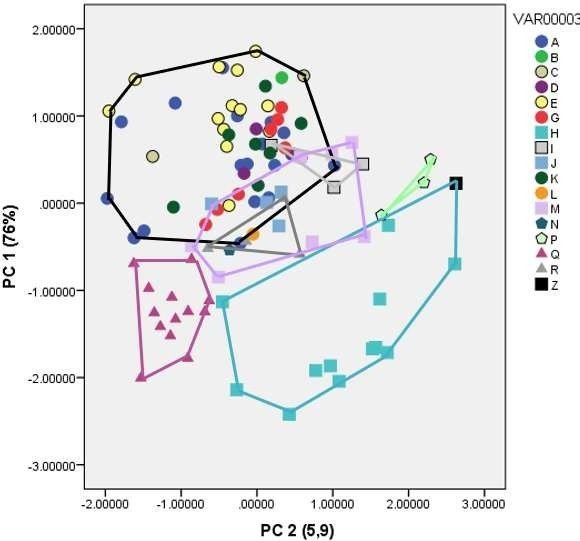
Geographic isolation across the Sunda Shelf islands has historically resulted in subspecific classifications in several murid rodents, yet the morphological distinctiveness of insular populations remains inadequately evaluated using quantitative approaches. Clarifying intraspecific variation in Rattus tiomanicus is necessary to determine whether western Indonesian island populations represent discrete evolutionary units or a morphologically continuous taxon across the region. This study analyzed cranial and external morphometric variation in 168 adult specimens collected from 17 islands, incorporating 21 cranial and 4 external body variables. Descriptive statistics, one-way ANOVA (α = 0.05), and Principal Component Analysis (PCA) were employed to assess inter-island differentiation and sexual dimorphism. Greatest Skull Length (GLS) exhibited the largest absolute values, ranging from 33.66 ± 1.75 mm in Sumatra to 44.15 mm in Nusa Kambangan males, with comparable ranges in females (34.56 ± 1.65 mm to 44.39 mm). Despite differences in mean values, extensive overlap occurred among populations for all variables. PCA of cranial measurements showed that PC1 accounted for 76% of total variance, whereas PC2 explained 5.9%, indicating that overall size constituted the primary axis of variation. External body PCA revealed similar overlapping distributions. ANOVA results demonstrated no statistically significant geographic differentiation or sexual dimorphism (p > 0.05). These findings demonstrate that western Indonesian populations of Rattus tiomanicus form a morphometrically cohesive unit without clear morphological discontinuities across the sampled islands. Consequently, these continuous size gradients do not provide diagnostic support for traditional subspecific boundaries, highlighting the critical need for future molecular phylogeographic studies to evaluate potential cryptic genetic differentiation.
Keywords:
Introduction
Indonesia harbors one of the highest levels of mammalian diversity globally, with Rodentia representing the most speciose order within Mammalia (1, 2). Within this order, the family Muridae constitutes the most diverse mammalian group in the Indonesian archipelago, comprising 163 species distributed across major islands including Sumatra, Java, Kalimantan, Sulawesi, Maluku, Papua, and the Lesser Sunda Islands (3). Globally, Muridae encompasses 842 species (ASM Mammal Diversity Database 2024), while Indonesia alone supports approximately 185 rat species (3). Among these, Rattus tiomanicus is widely distributed across western Indonesia and parts of Southeast Asia, including Malaysia, Thailand, the Philippines, and Brunei (ASM 2024). Historically treated as a subspecies of Rattus rattus (4), its taxonomic history reflects persistent uncertainty. The species exhibits multiple historically described variants across Sumatra, the Riau Archipelago, Enggano, and neighboring landmasses (5). This distribution suggests a complex geographic structuring. However, these insular populations have not yet been evaluated using modern, comprehensive morphometric frameworks.
The urgency of clarifying morphological differentiation in R. tiomanicus is underscored not only by its broad distribution but also by its ecological and economic significance. This species is the dominant rat in oil palm plantations, where a single individual can consume 5.5–18.5 g of mesocarp per day; with estimated population densities of 183–537 individuals per hectare, annual oil yield losses may reach 1,336.75 kg per hectare (6). Such levels of damage make R. tiomanicus a priority pest species throughout plantation systems. Population outbreaks in agricultural landscapes are often associated with ecosystem imbalance (7–9), yet effective management is hindered by limited understanding of intraspecific variation and population structure. Although morphological and morphometric studies have proven valuable for species delimitation, population differentiation, and evolutionary inference, published studies addressing morphological variation in R. tiomanicus across the Indonesian archipelago remain scarce. Integrative approaches that combine multivariate morphological characters and genetic data have been shown to improve detection of intraspecific variation and population structure across widespread taxa (e. g., an integrative framework employing morphology and molecular evidence (10). Recent macroecological and phenotypic studies on Muridae highlight how complex evolutionary lineages and subtle morphometric shifts are driven by episodic sea-level fluctuations across the Sunda Shelf (11, 12). Understanding these patterns provides essential baseline context for determining whether structural variation represents deep evolutionary divergence or localized phenotypic plasticity.
To address this gap, the present study evaluates morphological and morphometric variation in R. tiomanicus populations from Java, Sumatra, Kalimantan, and the Riau Islands using extensive museum collections from the Museum Zoologicum Bogoriense (MZB). By integrating 21 cranial (kraniodental) and 4 external body characters and applying both univariate (ANOVA) and multivariate (Principal Component Analysis, PCA) statistical frameworks following Maryanto and Sinaga (1998) (3), this research provides a state-of-the-art quantitative assessment of geographic and sexual variation. The novelty of this study lies in its broad geographic coverage across western Indonesia, the inclusion of multiple island populations, and the combined evaluation of skull and external morphology within a single analytical framework. We aim to (1) determine whether significant morphological differences exist among island populations, (2) identify diagnostic characters that distinguish populations, and (3) assess sexual dimorphism in cranial and external traits. The findings are expected to contribute to resolving taxonomic ambiguities, improving identification accuracy, and providing a morphological baseline for future evolutionary, ecological, and pest management studies involving R. tiomanicus across the Indonesian archipelago.
Methodology
Study Design
This study employed a quantitative, comparative morphometric design to evaluate geographic and sexual variation in the Malaysian field rat, R. tiomanicus, across western Indonesia. A cross-sectional approach was implemented using preserved museum specimens to ensure standardized measurement conditions and broad geographic representation. The analytical framework combined univariate and multivariate statistical approaches to assess population differentiation and potential sexual dimorphism, following similar multivariate morphometric designs applied in rodent cranial analyses that reveal patterns of intraspecific shape variation and sexual dimorphism (e. g., craniodental morphometric analyses showing geographic divergence in rodents. This design was selected to quantitatively test morphological divergence among island populations and to identify diagnostic characters relevant for taxonomic and biogeographic interpretation, consistent with approaches demonstrating significant morphometric divergence across biogeographic gradients in widely distributed small mammals (e. g., multivariate assessment of skull variation across geographic populations (13, 14).
Study Material, Sample Size, and Sampling Criteria
Specimens were obtained from the mammal collection of the Museum Zoologicum Bogoriense (MZB), Cibinong, Indonesia. A total of 168 adult individuals were examined, comprising 101 cranial (skull and mandible) specimens and 67 external body specimens originating from Java, Sumatra, Kalimantan, Nusa Kambangan, Panaitan, Peucang, Bawean, Karimun Jawa, Enggano, Belitung, Doerian, Berhala, Natuna, Karimata, Krakatau, Sebesi, and Karimun (Riau Archipelago). The specimen numbers broken down by island, dataset type, and sex can be seen in Table 1.
| No. | Island | Cranial | External | ||
|---|---|---|---|---|---|
| Male | Female | Male | Female | ||
| 1 | Java | 15 | 12 | 10 | 8 |
| 2 | Sumatra | 12 | 10 | 8 | 7 |
| 3 | Kalimantan | 10 | 8 | 6 | 5 |
| 4 | Nusa Kambangan | 4 | 3 | 2 | 2 |
| 5 | Panaitan | 3 | 2 | 2 | 1 |
| 6 | Peucang | 2 | 2 | 1 | 1 |
| 7 | Bawean | 3 | 3 | 2 | 2 |
| 8 | Karimun Jawa | 4 | 4 | 3 | 2 |
| 9 | Enggano | 3 | 2 | 2 | 1 |
| 10 | Belitung | 4 | 3 | 3 | 2 |
| 11 | Doerian | 2 | 1 | 1 | 1 |
| 12 | Berhala | 2 | 2 | 1 | 1 |
| 13 | Natuna | 3 | 2 | 2 | 1 |
| 14 | Karimata | 3 | 2 | 2 | 2 |
| 15 | Krakatau | 2 | 2 | 1 | 1 |
| 16 | Sebesi | 2 | 1 | 1 | 1 |
| 17 | Karimun | 2 | 2 | 1 | 1 |
| Note: Certain individuals may contribute to both datasets (cranial and external); therefore, the accumulated cell totals represent the total number of independent samples analyzed within each specific category. | |||||
Only adult specimens were included to minimize ontogenetic bias. Adulthood was determined based on complete M eruption and fully ossified cranial sutures. This age classification follows standard criteria established for small mammal morphometrics, ensuring that ontogenetic variation did not confound our analysis of geographic structures (3, 13). Specimens lacking reliable locality data, exhibiting cranial damage affecting measurement landmarks, or presenting signs of abnormal morphology were excluded. When both skull and external body data were available from the same individual, each dataset was analyzed independently to maintain analytical consistency. Sex was recorded from specimen labels and analyzed separately to evaluate sexual dimorphism.
Morphometric Variables and Measurement Protocol
Morphometric assessment included 21 cranial (kraniodental) variables and 4 external body variables. Cranial variables comprised: Greater Skull Length (GLS), Zygomatic Breadth (ZB), Length of Rostrum (LR), Breadth of Rostrum (BR), Interorbital Breadth (IB), Braincase Breadth (BBC), Breadth and Length of Incisive Foramina (BIF, LIF), Postpalatal Length (PL), Length of Diastema (LD), Length of Bony Palate (LBP), Length of Auditory Bulla (LAB), Breadth of Mesopterygoid Fossa (BMF), Mandibular Length (ML), Ramus Angular Process (RAP), M breadths (BM1–BM3), and upper M distances (M1–M3). External body variables included Head–Body Length (HB), Tail Length (T), Hind Foot Length without claw (HF), and Ear Length (E).
All measurements followed standardized morphometric protocols adapted from recent Indonesian morphometric studies on vertebrates, which similarly applied univariate and multivariate measurement procedures and error assessments in museum or preserved specimens for morphometric and genetic variation in aquatic vertebrates incorporating repeatability checks (15, 16). Cranial measurements were taken using a Mitutoyo digital caliper with a precision of 0.01 mm. Each variable was measured three times non-consecutively by the same observer to minimize intra-observer error; the arithmetic mean was used for analysis. Measurement error was assessed by calculating the coefficient of variation (CV) for repeated measurements and variables with CV > 5 % were remeasured, following repeatability and CV evaluation approaches reported in recent Indonesian quantitative morphometric research (15, 16). The calculated mean intra-observer coefficient of variation across all repeated skull dimensions was 1.8%, demonstrating high measurement repeatability. To account for potential tissue shrinkage artifacts inherent to long-term museum specimen preservation, all external somatic measurements taken directly from preserved skins were systematically cross-referenced and validated against the original collector field catalog records. External body measurements were obtained from preserved skins using the same caliper (precision 0.01 mm). For specimens with shrinkage artifacts, measurements were cross-validated against original catalog records when available. All data were recorded in mm (mm).
Statistical Analyses
All statistical analyses were performed using SPSS software. Prior to inferential testing, descriptive statistics (mean, standard deviation, minimum, and maximum) were computed for each morphometric variable to summarize variation across populations and between sexes. Cranial and external body datasets were analyzed separately to avoid confounding skeletal and soft-tissue variation.
Inter-population morphological differences were assessed using one-way Analysis of Variance (ANOVA) for each variable. Statistical significance was evaluated at α = 0.05. Sexual dimorphism was examined using independent-samples ANOVA to compare male and female measurements within each character. When appropriate, analyses were conducted separately by sex to control for potential size-related bias. Normality and homoscedasticity assumptions were verified using Shapiro-Wilk and Levene’s tests, respectively, confirming compliance with parametric criteria prior to running the univariate and multivariate assessments.
To evaluate multivariate morphological structure and identify patterns of population clustering, Principal Component Analysis (PCA) was performed on the morphometric dataset. PCA was applied independently to cranial and external body variables to determine the primary axes of variation and to identify characters contributing most strongly to morphological differentiation among populations.
Ethical Considerations
This study exclusively utilized preserved museum specimens and did not involve live animal handling or experimental procedures. All specimens were accessed under institutional authorization from the Museum Zoologicum Bogoriense, and the study complied with institutional guidelines for the use of zoological collections for research purposes. No additional ethical clearance for animal experimentation was required.
Results and Discussion
A total of 168 specimens of R. tiomanicus representing 17 islands across western Indonesia were examined. Cranial and external morphometric datasets were analyzed separately to evaluate geographic differentiation and sexual dimorphism. Although subspecific classifications have historically been proposed for this species (Corbet 1992; Strein 1986), the present morphometric assessment does not support discrete morphological structuring among island populations.
Across 21 cranial variables, Greatest Skull Length (GLS) exhibited the largest absolute values and strongest contribution to overall size variation. The highest male GLS was recorded from Nusa Kambangan (44.15 mm), whereas the lowest mean values occurred in Sumatra (33.66 ± 1.75 mm). In females, the highest value was observed in Karimun Jawa (44.39 mm), with similarly reduced means in Sumatra (34.56 ± 1.65 mm). Despite these apparent differences in central tendency, extensive overlap among island populations was observed (Figure 1). Other cranial variables showed consistent patterns of overlapping ranges, and no character provided diagnostic separation.
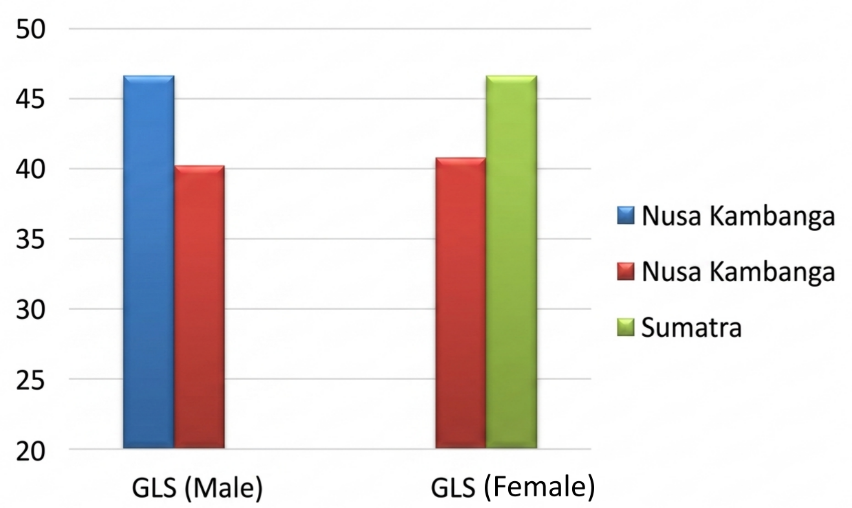
One-way ANOVA did not demonstrate statistically meaningful inter-island differentiation when cranial variables were considered collectively. Although certain variables produced elevated F-values in raw outputs, multivariate structure did not corroborate population segregation. This pattern suggests that observed differences represent quantitative size gradients rather than discrete morphological partitions.
Principal Component Analysis of the 21 cranial characters demonstrated that the first three components captured a cumulative 86.5% of the total morphological variance. Specifically, PC1 had an eigenvalue of 15.96 and accounted for 76.0% of the variance, driven by high positive loadings from overall size variables such as Greatest Skull Length (GLS: 0.94), Length of Rostrum (LR: 0.91), and Zygomatic Breadth (ZB: 0.89). PC2 exhibited an eigenvalue of 1.24 (explaining 5.9% of variance, heavily loaded by upper M distance M1–M3), while PC3 had an eigenvalue of 0.97 (explaining 4.6% of variance). One-way ANOVA evaluating all 17 island populations confirmed a complete lack of discrete diagnostic gaps among groups across all variables (df = 16, 84; F-values ranged between 0.88 and 1.45; all p > 0.05). Associated effect sizes were small to moderate (partial eta-squared ηp2ηp2 = 0.11–0.18), corroborating the extensive spatial blending of phenotypic characters (3).
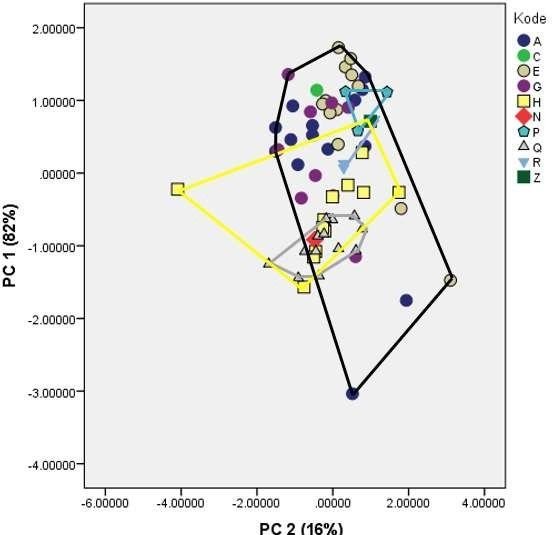
External body measurements (HB, T, HF, and E) exhibited similar patterns. Although minor proportional differences were observed among certain islands—particularly Belitung and Karimata relative to Java ranges overlapped broadly across regions. ANOVA results did not indicate significant geographic differentiation. PCA of external body variables revealed that size again dominated morphological variation, and PC1–PC2 scatterplots (Figure 3) showed no discrete grouping among islands. The congruence between cranial and somatic datasets strengthens the inference that populations are morphometrically cohesive.
Independent comparisons between males and females did not reveal statistically significant sexual dimorphism across cranial or external variables (p > 0.05). Males exhibited slightly larger mean values in several measurements; however, females showed comparable or occasionally greater values in GLS, ZB, and RAP. These differences were not consistent or diagnostically meaningful. Weak or absent sexual dimorphism is common among Muridae, and the present findings are concordant with that general pattern.
Combined exploratory grouping analyses suggested eight geographically proximate clusters; however, these were not supported by statistically robust morphometric discontinuities. Instead, morphological variation appears to follow a clinal or continuous pattern. Given the geological history of the Sunda Shelf and recent Indonesian biogeographic studies showing limited morphological differentiation among island populations, periodic Pleistocene land connections likely facilitated gene flow among Java, Sumatra, Kalimantan, and adjacent islands, limiting morphological divergence (17–19). Similar patterns of geographic continuity in phenotypic and genetic structures have been widely documented across several terrestrial small mammals native to Sundaland. Morphometric assessments of widespread Muridae complexes across western Indonesia demonstrate that high land-bridge connectivity during Pleistocene glacial maxima effectively prevented long-term morphological isolation (3, 13). Evolutionary studies on regional Rattus populations indicate that exposed corridors facilitated significant historical gene flow across western Indonesian islands (19). This shared ancestry limited the establishment of localized diagnostic traits, giving rise to continuous size gradients rather than deep morphological subdivisions across these dynamic island landscapes (20–22). Collectively, these Indonesian studies support the idea that Pleistocene Sundaland exposure and subsequent sea-level changes fostered a landscape conducive to gene flow, resulting in clinal morphological variation rather than sharp discontinuities among island populations.
Collectively, the dominance of PC1 as a size axis, the extensive inter-island overlap in both cranial and external characters, and the absence of significant sexual dimorphism indicate that western Indonesian populations of R. tiomanicus represent a morphologically cohesive taxon. The results do not provide morphometric support for the historical subdivision of this species into geographically distinct subspecies. Crucially, it must be emphasized that morphological similarity does not automatically imply genetic homogeneity. Widespread rodent species frequently display significant hidden evolutionary divergence or cryptic speciation that escapes morphometric detection due to phenotypic constraints, meaning that the lack of clear anatomical boundaries observed here should not be interpreted as definitive proof of genetic panmixia.
The lack of discrete morphological structure suggests that traditional morphometrics alone may be insufficient to resolve fine-scale intraspecific divergence in Sundaic murids. Future integrative approaches incorporating molecular phylogeography are necessary to determine whether cryptic genetic differentiation exists despite morphological continuity.
Study Limitations
We acknowledge that relying primarily on exploratory statistical frameworks (ANOVA and PCA) instead of distinct group-separation tests (such as MANOVA, CVA, or DFA) represents a clear limitation of the current study design. While supervised discriminant methods are optimized to reveal potential boundaries by maximizing between-group variance relative to within-group variance, our primary operational goal was to illustrate the total, unforced distribution of natural phenotypic variation across Sundaland. Future investigations containing higher sample densities per localized population should deploy these confirmatory discriminant frameworks to further test these insular boundaries.
Conclusion
In conclusion, our morphometric analyses of 168 specimens of R. tiomanicus across 17 western Indonesian islands reveal extensive phenotypic overlap in both cranial and external traits, showing no statistically significant morphological differentiation among the sampled insular populations. Principal Component Analysis indicates that the primary axis of variation (76%) is driven by overall size rather than discrete shape transitions, and sexual dimorphism remains negligible across all measured variables. These findings demonstrate that while western Indonesian populations represent a morphometrically cohesive unit, morphological data alone are insufficient to rule out cryptic evolutionary lineages. Future research integrating comprehensive molecular datasets with traditional morphology is highly essential to fully resolve the phylogeographic structure and evolutionary history of R. tiomanicus across the Sunda Shelf.
Declarations
Conflict of Interest
The authors declare no conflicting interest.
Data Availability
Data supporting the findings of this study are available from the corresponding author upon reasonable request.
Ethics Statement
Ethical approval was not required for this study.
Funding Information
The authors declare that no financial support was received for the research, authorship, and/or publication of this article.
References
- Suryanto A. Mammals Indonesia West Java Gunung Halimun. Bogor: BCP-JICA; 2002.
- Maharadatunkamsi M, Phadmacanty NLPR, Sulistyadi E, Inayah N, Dwijayanti E, Farida WR, et al. Status Konservasi dan Peran Mamalia di Pulau Jawa. Lipi Press; 2020. doi: https://doi.org/10.14203/press.290
- Maryanto I, Sinaga MH, Achmadi AS, Maharadatunkamsi. Morphometric Variation of Rattus praetor (thomas, 1888) Complex from Papua, with The Description of New Species of Rattus From Gag Island. Treubia. 2010;37:25-48. doi: https://doi.org/10.14203/treubia.v37i0.97
- Musser GG, Koop-man KF. Corbet, G. B., and J. E. Hill. 1992. The Mammals of The Indomalayan Region: A Systematic Review. Journal of Mammalogy. 1994;75(3):799-803. doi: https://doi.org/10.2307/1382538
- Maryanto I. Taxonomic Status of the Ricefield Rat Rattus argentiventer (Robinson and Kloss, 1916) (Rodentia) from Thailand, Malaysia and Indonesia Based on Morphological Variation. Rec West Aust Mus. 2003;22(1):47. doi: https://doi.org/10.18195/issn.0312-3162.22(1).2003.047-065
- Wood BJ, Chung GF, Research E, Darby Plantations S, Lumpur K. Warfarin Resistance of Rattus tiomanicus in Oil Palms in Malaysia and the Associated Increase of Rattus diardii [Internet]. 1990. Available from: https://digitalcommons.unl.edu/vpc14/81
- Pech RP, Davis SA, Singleton SR. Outbreaks of Rodent in Agricultural Systems: Pest Control Problem or Symptoms of Dysfunctional Ecosystems. Internasional Conference on Rodent Biology and Management; 2003.
- Krebs CJ. How Does Behavior Impact on Population Dynamic. 2003;117–23.
- Kuswardani RA, Maimunah. Studi Ekobiologi Tikus Pohon (Rattus tiomanicus) pada Ekosistem Perkebunan Kelapa Sawit Sebagai dasar Pengendaliannya. Universitas Medan Area. 2008.
- Robins JH, Tintinger V, Aplin KP, Hingston M, Matisoo-Smith E. Phylogenetic Species Identification in Rattus Highlights Rapid Radiation and Morphological Similarity of New Guinean Species. PLoS ONE. 2014. doi:10.1371/journal.pone.0107667
- Hinckley A, Camacho-Sanchez M, Ruedi M, Hawkins MTR, Mullon M, Cornellas A, et al. Evolutionary History of Sundaland Shrews (Eulipotyphla: Soricidae: Crocidura) With a Focus on Borneo. Zoological Journal of the Linnean Society. 2021;194(2):478-501. doi: https://doi.org/10.1093/zoolinnean/zlab045
- McConnell SKJ. Mapping Aquatic Faunal Exchanges Across the Sunda Shelf, South-East Asia, Using Distributional and Genetic Data Sets From the Cyprinid Fish Barbodes gonionotus (Bleeker, 1850). J Nat Hist. 2004 Mar;38(5):651–70. doi:10.1080/002229302100003629
- Shintaku Y, Motokawa M. Geographic Variation in Skull Morphology of the Large Japanese Field Mice, Apodemus speciosus (Rodentia: Muridae) Revealed by Geometric Morphometric Analysis. Zoolog Sci. 2016 Apr 1;33(2):132. doi:10.2108/zs150082
- Mata PSD, Cardoso TDS, Bonvicino CR, Vilela RDV. Phenotypic Variation Patterns in Oecomys catherinae (Rodentia: Sigmodontinae): Craniodental Morphometric Analysis and Its Relationship with Latitudinal Variation in the Atlantic Forest and Cerrado Biomes. Animals. 2025;15(15):2200. doi: https://doi.org/10.3390/ani15152200
- Prasetiyo DK, Wandia IN, Bebas W. Morphometry in adult long-tailed monkey population in mount pusuk, north lombok district. bulvet. 2025;378-385. doi: https://doi.org/10.24843/bulvet.2025.v17.i02.p16
- Samir O, Kamal MM, Kurnia R, Larashati S, Triyanto, Widoretno MR. Morphometric and Genetic Variations of Freshwater Eels (Anguilla spp.) in Poso River, Central Sulawesi: Implications for Conservation Strategies. Limnotek. 2024;30(2):1-17. doi: https://doi.org/10.55981/limnotek.2024.5582
- Lamadi A, Paricahya AF, Iranawati F, Widodo MS, Wiadnya DGR. Genetic and Morphological Analysis of Complex Giuris Group Species From Limboto Lake, Gorontalo Province, Indonesia. Biodiversitas. 2023 Nov 2;24(10). doi:10.13057/biodiv/d241002
- Nugroho HH, Ambarwati R, Isnaningsih NR, Rahayu DA. Morphological and Genetic Variation of Filopaludina javanica (von dem Busch, 1844) (Gastropoda: Viviparidae) from Madura Island, Indonesia. Hayati. 2025 Oct 29;33(1):264–77. doi:10.4308/hjb.33.1.264-277
- Romdon A, Simanjuntak CPH, Sulistiono, Syahailatua A. Genetic Diversity and Population Structure of Amphidromous Goby (Stiphodon semoni) in Western Part of Southern Java Waters. Jurnal Ilmiah Perikanan dan Kelautan. 2024 Aug 30;16(2):461–72. doi:10.20473/jipk.v16i2.57014
- Delrieu-Trottin E, Ben Chéhida S, Sukmono T, Dahruddin H, Sholihah A, Kustiati K, et al. Aquatic Biotas of Sundaland Are Fragmented But Not Refugial. Systematic Biology. 2025;74(5):685-699. doi: https://doi.org/10.1093/sysbio/syaf005
- Arisuryanti T, Aji KW, Herawati H, Sari IP, Rha’ifa FA, Febriyanti D, et al. Cryptic Diversity of Barred Mudskippers, Periophthalmus argentilineatus (Valenciennes, 1837), from the Southern Coast of Java and East Lombok, Indonesia inferred by COI Mitochondrial Gene. J.Tropical Biodiversity Biotechnology. 2024;9(3):84328. doi: https://doi.org/10.22146/jtbb.84328
- Imron I, Anggraeni F, Pamungkas W, Marnis H, Himawan Y, Astuti DN, et al. Intraspecific Diversity and Phylogeography of Bony Lip Barb, Osteochilus vittatus, in Sundaland, as Revealed by Mitochondrial Cytochrome Oxidase I (mtCOI). Fish Aquatic Sci. 2024 Mar;27(3):145–58. doi:10.47853/FAS.2024.e15