RESEARCH ARTICLE
Phytochemical Profile and Antioxidant Potential of Ethanolic Extracts from Ficus sur and Psidium guajava Leaves
Academic Editor: Devi Ratnawati
Sciences of Phytochemistry|Vol. 5, Issue 1, pp. 198-207 (2026)
CC BY 4.0-2026 Authors
Views
Downloads
Shares

Received
Feb 28, 2026Revised
May 25, 2026Accepted
Jun 4, 2026Published
Jun 17, 2026
Abstract
This study evaluated the phytochemical profile and antioxidant activity of ethanolic leaf extracts of Ficus sur and Psidium guajava, two plants widely used in traditional medicine. Standard AOAC methods were employed for qualitative and quantitative phytochemical analyses. Antioxidant potential was assessed using DPPH, ferric reducing antioxidant power (FRAP), hydrogen peroxide (H₂O₂), and nitric oxide (NO) scavenging assays. Screening revealed that both species contained tannins, flavonoids, alkaloids, saponins, terpenoids, and steroids. Quantitatively, P. guajava outperformed F. sur in total phenolics (123.79 mg GAE/g), flavonoids (95.06 mg QE/g), and alkaloids (88.91 mg AE/g). However, at 1.0 mg/mL, F. sur demonstrated greater FRAP (2.19 µmol Fe²⁺/g) and DPPH scavenging (60.21%), while P. guajava exhibited superior H₂O₂ (61.18%) and NO (70.85%) scavenging activities. L-ascorbic acid showed the highest overall activity. In conclusion, both extracts possess significant antioxidant properties, supporting their traditional uses and highlighting their potential for pharmaceutical and nutraceutical formulations.
Introduction
Medicinal plants remain an important source of bioactive compounds for the prevention and management of various diseases. In recent years, increasing interest has focused on plant-derived antioxidants because of their ability to mitigate oxidative stress, a key factor implicated in the development of chronic diseases such as cancer, cardiovascular disorders, diabetes, and neurodegenerative conditions (1–5). The antioxidant potential of medicinal plants is largely associated with their phytochemical constituents, particularly phenolic compounds, flavonoids, tannins, and terpenoids, which can scavenge free radicals, chelate metal ions, and inhibit oxidative damage (1, 6).
Among the medicinal plants commonly used in tropical Africa, Ficus sur (Moraceae) and Psidium guajava (Myrtaceae) have attracted considerable scientific interest because of their ethnomedicinal relevance and reported biological activities. F. sur is traditionally used in the treatment of skin infections, diarrhoea, malaria, and inflammatory conditions, while P. guajava is widely employed for managing gastrointestinal disorders, respiratory infections, and other microbial diseases (7). Previous phytochemical investigations have identified diverse bioactive constituents in both plants, including flavonoids, phenolic acids, tannins, and terpenoids, which are believed to contribute to their antioxidant, anti-inflammatory, and antimicrobial properties (8–10).
Although numerous studies have independently reported the phytochemical composition and antioxidant activities of F. sur and P. guajava, direct comparisons between the two species are scarce (11, 12). Existing studies often differ in extraction procedures, analytical methods, plant sources, and experimental conditions, making it difficult to accurately determine their relative phytochemical richness and antioxidant efficacy (13). Consequently, the relationship between differences in phytochemical composition and the corresponding antioxidant performance of these plants remains insufficiently understood.
A comparative evaluation of these species under identical experimental conditions is scientifically important because it provides a more reliable assessment of how variations in phytochemical profiles influence antioxidant activity. Such information may facilitate the identification of plant species with superior antioxidant potential and support their development as natural sources of therapeutic and nutraceutical agents. Therefore, the present study comparatively investigated the phytochemical constituents and antioxidant activities of F. sur and P. guajava leaf extracts, with the aim of elucidating the association between their phytochemical composition and antioxidant capacity and identifying the species with greater potential for antioxidant-based applications.
Methodology
Collection, Identification and Preparation of Plant Extracts
Fresh leaves of F. sur and P. guajava were collected from Amassoma, Bayelsa State, Nigeria. The plants were authenticated by Prof. Inetiminebi Arrow Ogidi, Department of Plant Science, Niger Delta University, Bayelsa State, Nigeria. Voucher specimens (NDUP/24/11 and NDUP/24/12 for F. sur and P. guajava, respectively) were deposited in the Herbarium Unit of Niger Delta University, Wilberforce Island, Bayelsa State, Nigeria.
The leaves were washed, air-dried under shade at room temperature (25–28 °C) for two weeks, and pulverized into coarse powder using a laboratory grinder. Five hundred g (500 g) of each powdered sample was macerated in 2 L of absolute ethanol for 72 h with intermittent agitation. The mixtures were filtered through cheesecloth followed by Whatman No. 1 filter paper. The filtrates were concentrated under reduced pressure using a rotary evaporator at 50 °C and further dried to constant weight. The % extraction yield was calculated according to the equation: Extraction Yield (%) = (Weight of dried extract / Weight of powdered plant material) × 100. The dried extracts were stored at 4 °C until analysis. Working solutions were prepared by dissolving the extracts in distilled water to the required concentrations.
Phytochemical Analysis
Qualitative Phytochemical Screening
The phytochemical assays were used to screen for bioactive chemical components in the F. sur and P. guajava leaf samples that were under research. All of these tests adhered to the predetermined procedures that had been described before (14, 15).
Quantitative Phytochemical Analysis
Total Tannin Content (TTC): TTC was estimated using a Folin and Ciocalteu method that was significantly modified. The Folin Phenol reagent, 3.8 mL of distilled water, and 0.25 mL of a solution containing 35% sodium carbonate were included in a 0.5 mL mixture of F. sur and P. guajava leaves. The absorbance was determined at a wavelength of 725 nm. Standard solutions were produced by diluting tannic acid in a range of 0 to 0.5 mg/mL. The quantity of tannins in a sample is frequently expressed in milligrammes of tannic acid per mL (16).
Total Alkaloid Content (TAC): Full alkaloid concentration was determined were one millilitre (1 mL) of F. sur and P. guajava leaves was dissolved in a solution of 10 % acetic acid in ethanol in a 40 mL volume. The mixture was subsequently covered and not handled for a period of four h. The filtrate was subsequently concentrated using a water immersion until it was only a quarter of its original volume. The sample was treated with concentrated ammonium hydroxide in small increments until precipitation was complete. The solution was allowed to settle before the precipitate formed was removed using a diluted ammonium hydroxide solution. The precipitate was subsequently filtered, after which the remaining material was dried and weighed (17).
Total Flavonoid Content (TFC): The total flavonoid content was quantified through the use of the aluminium chloride method. The concentrated leaves of F. sur and P. guajava were combined with a solution of sodium bicarbonate, distilled water, and an AlCl3 solution after they had been left to sit for six min. To accomplish the final volume, a solution of distilled water and NaOH was added to the mixture after it was allowed to sit undisturbed for 6 min. The liquid was placed aside after receiving an additional 15 min of vigorous vortexing. The optical density of the mixture was ascertained at 510 nm. Quercetin was employed as a reference compound to ascertain the total flavonoid content. The results were expressed as milligrammes per gramme of the sample, which is the quercetin equivalent, and the total flavonoids were measured using a standard curve (14).
Total Saponin Content (TSC): Measurements were conducted to determine the total saponin content. The reaction mixture consisted of 2 mL of 8% (w/v) vanillin solution prepared in ethanol, 2 mL of 72% sulphuric acid, and 2 mL of 80% methanol. After thorough mixing, 1 mL of the leaf extract sample was added to the mixture. The resulting solution was heated in a water bath at 60 °C for 10 min and then allowed to cool to room temperature. Absorbance was subsequently measured at 554 nm against a reagent blank. Diosgenin was used as the reference standard, and the results were expressed as diosgenin equivalents (15).
Total Phenolic Content (TPC): The total phenolic content was determined by incubating 0.1 mL of the plant extract with 0.5 mL of Folin–Ciocalteu reagent at room temperature for 3 min. Subsequently, 2 mL of 20% sodium carbonate solution was added, and the mixture was heated in a boiling water bath for 1 min. The resulting blue colour was measured at 650 nm using a spectrophotometer. Gallic acid was used as the reference standard for the preparation of the calibration curve (15).
Assay Validation and Quality Control
For all quantitative phytochemical assays, calibration curves were prepared using appropriate reference standards. Linearity was assessed using the coefficient of determination (R²), with values ≥ 0.99 considered acceptable. All measurements were performed in triplicate and reagent blanks were included to correct for background absorbance. Instrument calibration was verified prior to analysis, and intra-assay precision was evaluated by calculating the relative standard deviation (RSD), which was maintained below 5%.
Antioxidant Activity Assays
The antioxidant capacity of the ethanolic extracts was evaluated by several in vitro experiments (17, 19).
DPPH Radical Scavenging Activity: The free radical scavenging activity of the extracts was evaluated using the DPPH assay. A 0.1 mM DPPH solution was prepared in methanol. Subsequently, 2 mL of the DPPH solution was mixed with 1 mL of the extract at concentrations ranging from 0.2 to 1.0 mg/mL. The mixture was incubated in the dark at room temperature for 30 min, after which the absorbance was measured at 517 nm using a UV–Vis spectrophotometer. The % inhibition was calculated using the Equation 1, where the absorbance of DPPH solution without is extract and is the absorbance of the extract-DPPH mixture.
Ferric Reducing Antioxidant Power (FRAP) Assay: A mixture containing 1 mL of extract, 2.5 mL of 0.2 M phosphate buffer (pH 6.6), and 2.5 mL of 1% potassium ferricyanide was used for the FRAP assay. The mixture was incubated at 50 °C for 20 min, after which 2.5 mL of 10% trichloroacetic acid was added. The solution was centrifuged at 3000 rpm for 10 min, and the resulting supernatant was mixed with 2.5 mL of distilled water and 0.5 mL of 0.1% ferric chloride. Absorbance was measured at 700 nm. Higher absorbance indicated greater reducing power.
Hydrogen Peroxide (H₂O₂) Scavenging Assay: A 4 mM H₂O₂ solution was prepared in phosphate buffer (pH 7.4). One millilitre of the extract was mixed with 2 mL of the H₂O₂ solution and allowed to incubate at room temperature for 10 min. Absorbance was then measured at 230 nm. The % inhibition was calculated using the same formula employed in the DPPH assay.
Nitric Oxide (NO) Scavenging Assay: Nitric oxide (NO) scavenging activity was evaluated using sodium nitroprusside. A mixture containing 1 mL of the extract and 1 mL of 10 mM sodium nitroprusside was incubated at 25 °C for 2 h. Following incubation, 1 mL of Griess reagent was added, and the absorbance was measured at 546 nm. The % inhibition was calculated using the same formula employed in the DPPH assay.
Determination of IC₅₀ Values
The half maximal inhibitory concentration (IC₅₀) values for DPPH, hydrogen peroxide, and nitric oxide scavenging assays were determined from concentration-response curves generated using extract concentrations of 0.2–1.0 mg/mL. IC₅₀ values were obtained by nonlinear regression analysis and expressed as mg/mL. Lower IC₅₀ values were interpreted as higher antioxidant potency.
Statistical Analysis
All experiments were performed in triplicate and results are presented as mean ± standard error of the mean (SEM). Statistical analyses were conducted using GraphPad Prism version 10.0 (GraphPad Software Inc. , San Diego, CA, USA).
Differences among groups were evaluated using one-way analysis of variance (ANOVA) followed by Tukey's multiple comparison post hoc test. Statistical significance was established at p < 0.05. Different superscript letters in tables indicate significant differences between means.
Ethical Considerations
This study adhered to ethical research guidelines, ensuring plant collection and extraction methods were environmentally sustainable. No human or animal subjects were involved in the study.
Results and Discussion
Phytochemical Analysis of P. guajava and F. sur
Qualitative phytochemical results (Table 1) of both P. guajava and F. sur showed the presence of tannins. Flavonoids and alkaloids were more abundant in P. guajava while F. sur had trace amounts. Saponins were highly abundant in P. guajava but only moderately present in F. sur. Terpenoids and steroids were moderately present in P. guajava, but only in trace amounts in F. sur. Reducing sugars were absent in P. guajava but present in F. sur. Table 2 depicts the quantitative phytochemical results where P. guajava had a higher concentration of all quantified phytochemicals compared to F. sur, except for tannins, which were equal in both species (31.35 mg GAE/g). Total phenolics were higher in P. guajava (123.79 mg GAE/g) compared to F. sur (104.4 mg GAE/g). P. guajava contained more than double the amount of flavonoids (95.06 mg QE/g vs. 39.68 mg QE/g) in F. sur. Alkaloid content in P. guajava (88.91 mg AE/g) was higher than F. sur (58.78 mg AE/g). Saponins were also higher in P. guajava (48.82 mg/100g) compared to F. sur (32.11 mg/100g).
| Phytochemicals | Psidium guajava | Ficus sur |
|---|---|---|
| Tannins | ++ | ++ |
| Flavonoids | ++ | + |
| Alkaloids | ++ | + |
| Saponins | +++ | ++ |
| Terpenoids | ++ | + |
| Steroids | ++ | + |
| Reducing sugar | - | + |
| Key: +++: abundant, ++: moderate, +: trace, -: absent | ||
| Phytochemicals | Psidium guajava | Ficus sur | p-value |
|---|---|---|---|
| Total phenolics (mg GAE/g) | 123.79 ± 2.36ᵃ | 104.40 ± 3.47ᵇ | <0.05 |
| Flavonoids (mg QE/g) | 95.06 ± 0.95ᵃ | 39.68 ± 1.34ᵇ | <0.05 |
| Alkaloids (mg AE/g) | 88.91 ± 1.02ᵃ | 58.78 ± 1.37ᵇ | <0.05 |
| Saponins (mg/100 g) | 48.82 ± 1.28ᵃ | 32.11 ± 1.20ᵇ | <0.05 |
| Tannins (mg GAE/g) | 31.35 ± 1.80ᵃ | 31.35 ± 1.80ᵃ | >0.05 |
| Key: Values are presented as mean ± SEM of triplicate determinations. Values with different superscript letters within the same row are significantly different at p < 0.05. | |||
Phytochemicals in plants play a crucial role in their therapeutic and medicinal properties. This study examined the qualitative and quantitative phytochemical composition of F. sur and P. guajava, emphasizing the varying levels of bioactive compounds present in the two plant species. These findings provide insight into the potential pharmacological, antibacterial, and antioxidant properties of the plants. The qualitative analysis (Table 1) revealed the presence of tannins in both P. guajava and F. sur, compounds known for their astringent properties and ability to neutralize free radicals (20). F. sur contained low levels of flavonoids and alkaloids, whereas P. guajava exhibited significantly higher concentrations of these compounds. Flavonoids are well known for their anti-inflammatory and antioxidant activities, as well as their roles in cardiovascular protection and immune regulation (21). Alkaloids have also been reported to possess important pharmacological activities, including anti-cancer, anti-malarial, and analgesic effects (22).
F. sur contained moderate levels of saponins, whereas P. guajava exhibited significantly higher levels. Saponins have been reported to possess cholesterol-lowering, antimicrobial, and immune-stimulating properties (23). In addition, terpenoids and steroids were present in substantial amounts in P. guajava but occurred only in minimal quantities in F. sur. These compounds are known to exhibit anti-inflammatory and cytotoxic activities (24). Furthermore, reducing sugars were detected in F. sur but were absent in P. guajava, and these differences may influence metabolic processes and the prebiotic potential of the plants (25).
Table 2 presents quantitative data that further corroborate the variations observed in the qualitative analysis. Apart from tannins, which were present at the same concentration in both species (31.35 mg GAE/g), P. guajava exhibited higher levels of the other assessed phytochemicals than F. sur. Tannins have been reported to contribute to gastrointestinal health, reduce inflammation, and exhibit antibacterial properties (26). P. guajava showed a higher total phenolic content (123.79 mg GAE/g) than F. sur (104.4 mg GAE/g), indicating stronger antioxidant potential. Phenolic compounds are known to reduce oxidative stress and lower the risk of chronic diseases such as cancer and cardiovascular disorders (27). The higher flavonoid content observed in P. guajava (95.06 mg QE/g) compared with F. sur (39.68 mg QE/g) further supports its enhanced antioxidant and anti-inflammatory properties (28).
P. guajava also exhibited a higher alkaloid content (88.91 mg AE/g) than F. sur (58.78 mg AE/g), suggesting greater therapeutic potential (29). Alkaloids have been associated with anti-diabetic, neuroprotective, and antimicrobial activities (30). In addition, the higher saponin content of P. guajava (48.82 mg/100 g) compared with F. sur (32.11 mg/100 g) may contribute to its superior haemolytic, anti-inflammatory, and cholesterol-lowering properties (31).
P. guajava has long been used in traditional medicine, largely because of its abundance of bioactive compounds. Previous studies have demonstrated that its high flavonoid and phenolic contents contribute significantly to its antioxidant and antibacterial activities (32–34). Similarly, F. sur has been recognized for its medicinal properties, particularly in the treatment of inflammatory conditions and microbial infections. However, its therapeutic efficacy may be comparatively lower or dependent on the synergistic effects of multiple phytochemicals because of its lower phytochemical content relative to P. guajava.
Antioxidant Activities of F. sur and P. guajava
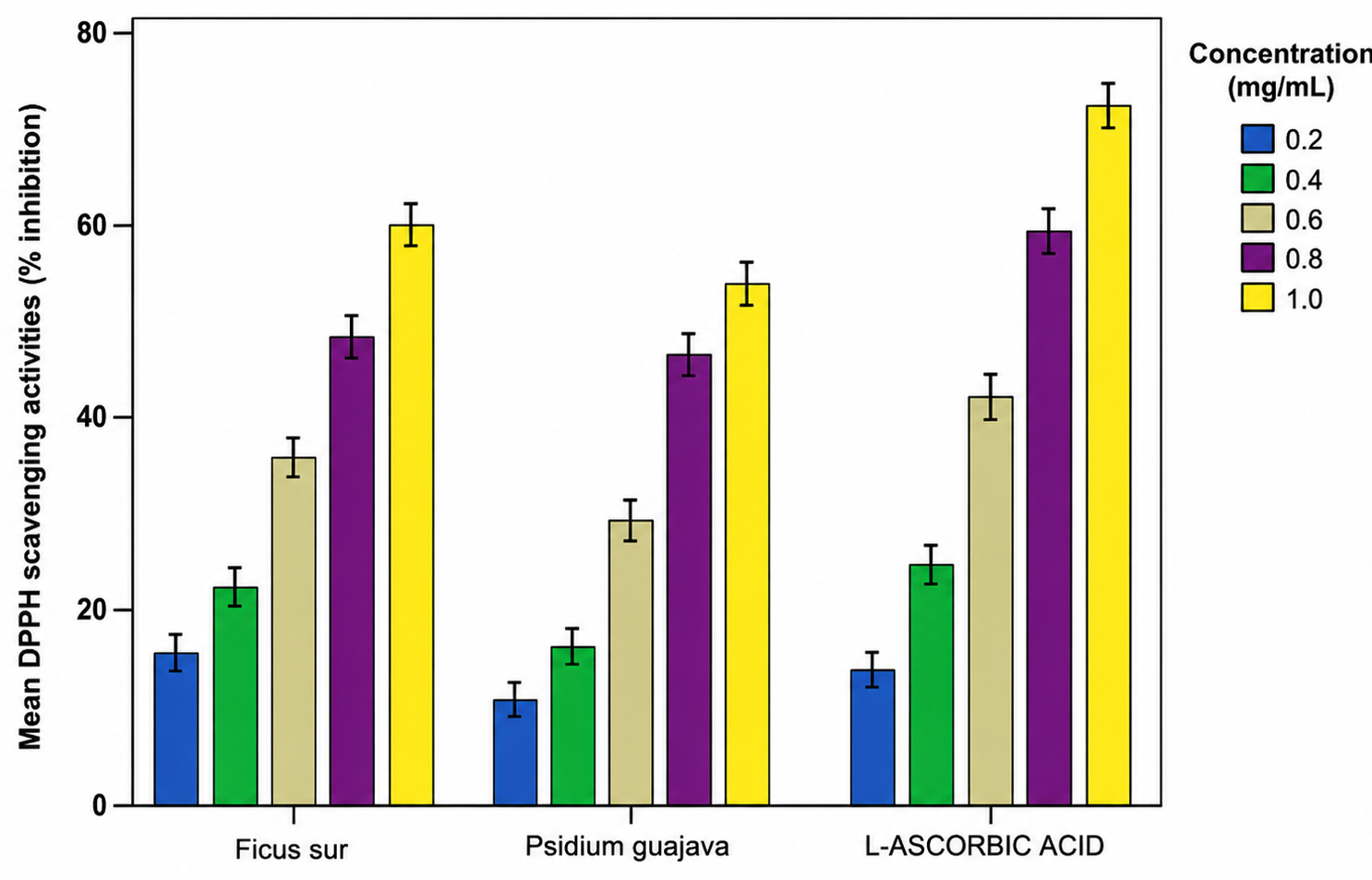
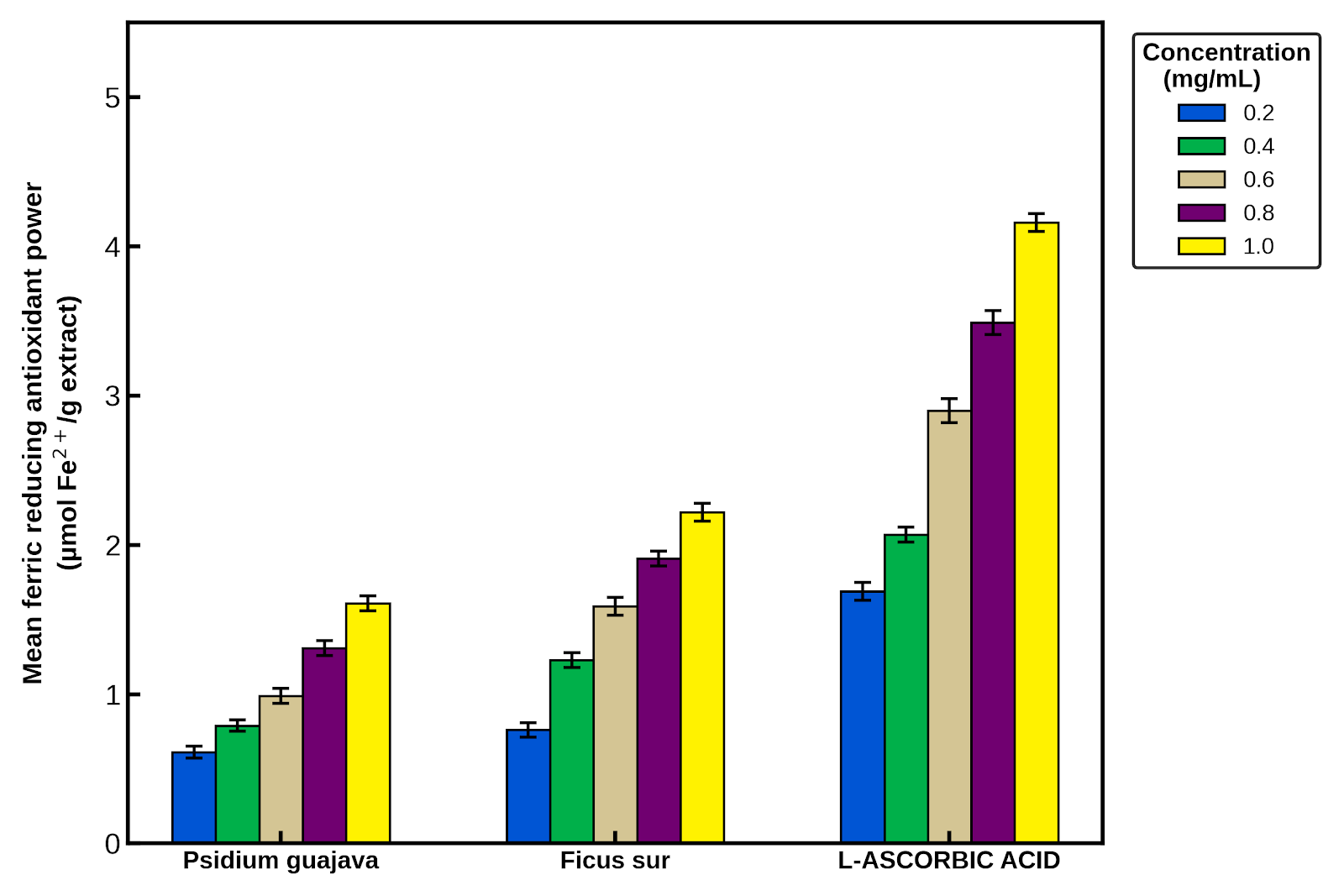
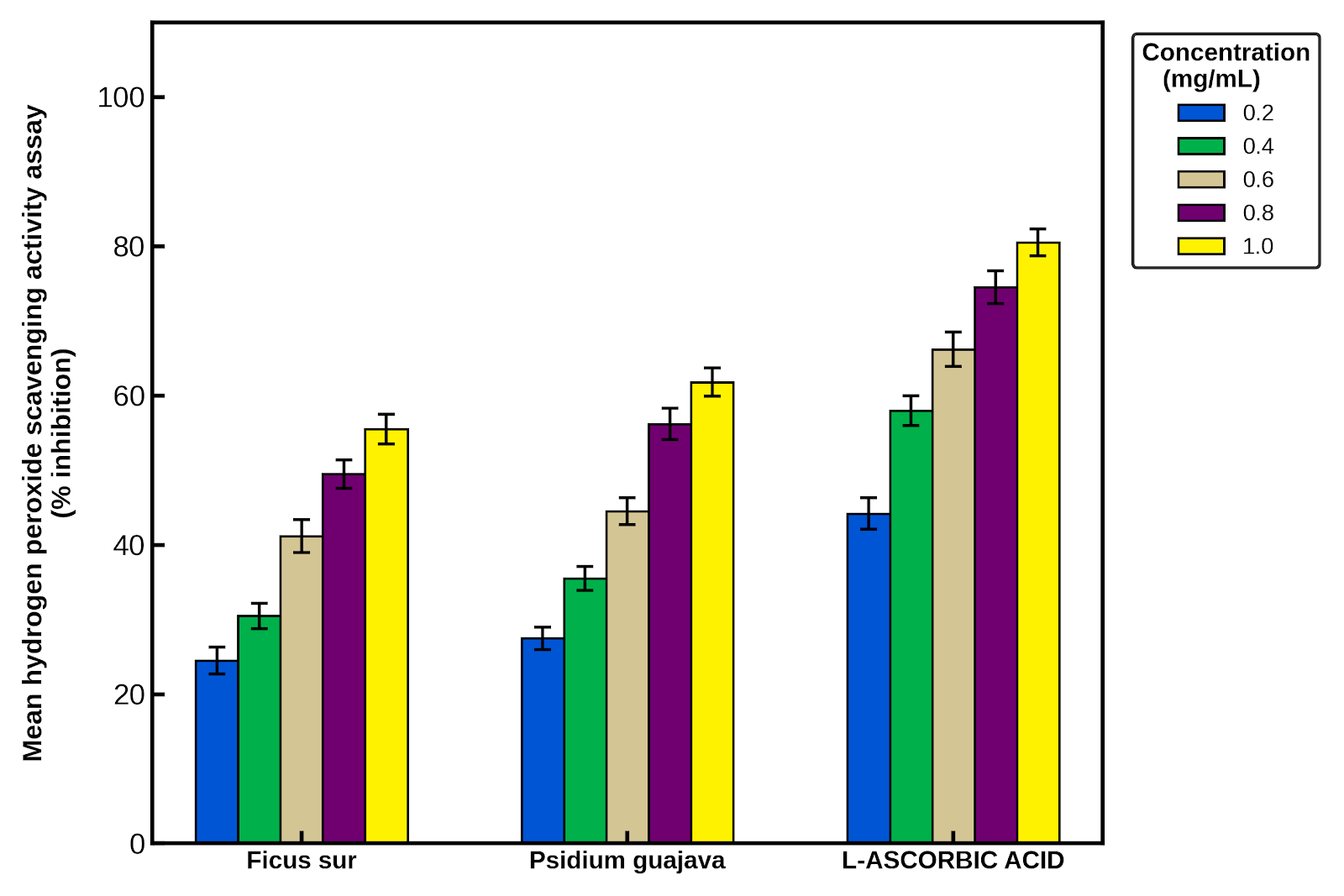
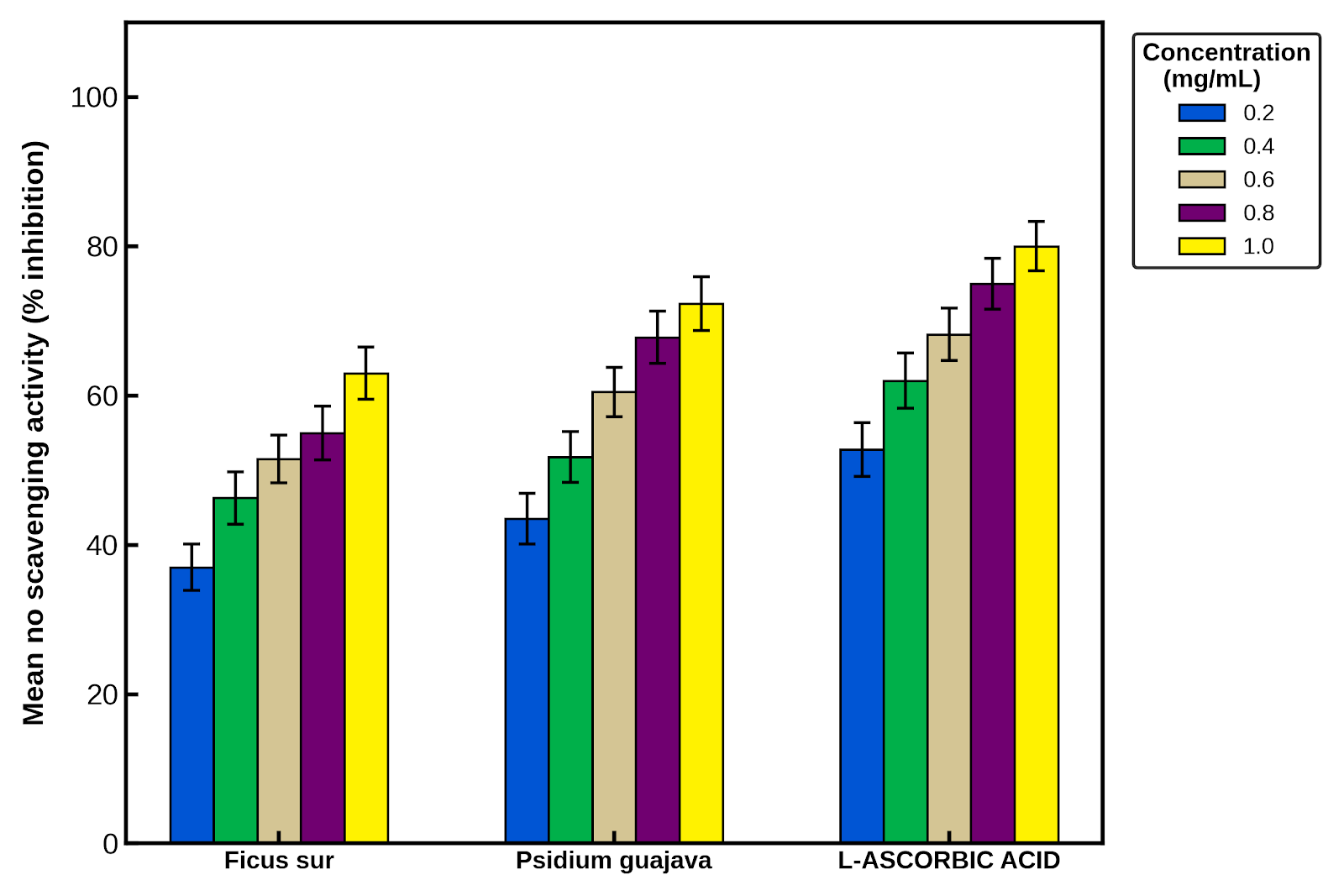
At all concentrations, F. sur demonstrated stronger DPPH radical scavenging activity than P. guajava, with 60.21 % inhibition at 1.0 mg/mL compared with 53.23 % inhibition, while L-ascorbic acid exhibited the highest activity (71.84 % inhibition). Similarly, F. sur showed greater ferric ion-reducing power (2.19 µmol Fe²⁺/g extract) than P. guajava (1.58 µmol Fe²⁺/g extract), although L-ascorbic acid remained the most effective (4.13 µmol Fe²⁺/g extract). In contrast, P. guajava demonstrated higher hydrogen peroxide scavenging activity (61.18 % inhibition) than F. sur (55.02 % inhibition), with L-ascorbic acid again exhibiting the highest activity (76.32 % inhibition). For nitric oxide scavenging activity, P. guajava also outperformed F. sur, achieving 70.85 % inhibition at 1.0 mg/mL, whereas F. sur recorded 51.66 % inhibition, while L-ascorbic acid showed the highest activity (78.82 % inhibition). Overall, F. sur exhibited stronger DPPH radical scavenging activity and ferric reducing power, whereas P. guajava was more effective in hydrogen peroxide and nitric oxide scavenging activities. L-ascorbic acid consistently demonstrated the strongest antioxidant potential across all assays (Tables 3–6). These variations suggest that the two species possess distinct profiles of bioactive compounds that selectively interact with different radical species and reactive oxygen pathways.
| Concentration (mg/mL) | Ficus sur | Psidium guajava | L-Ascorbic acid | p-value |
|---|---|---|---|---|
| 0.2 | 15.27 ± 0.50ᵃ | 11.10 ± 1.02ᵇ | 14.02 ± 0.39ᶜ | <0.05 |
| 0.4 | 21.85 ± 1.30ᵇ | 16.93 ± 0.80ᶜ | 25.17 ± 0.94ᵃ | <0.05 |
| 0.6 | 35.79 ± 0.74ᵇ | 29.79 ± 1.29ᶜ | 42.17 ± 0.48ᵃ | <0.05 |
| 0.8 | 48.35 ± 0.44ᵇ | 46.10 ± 0.75ᶜ | 58.35 ± 0.22ᵃ | <0.05 |
| 1.0 | 60.21 ± 0.49ᵇ | 53.23 ± 0.38ᶜ | 71.84 ± 0.50ᵃ | <0.05 |
| Key: Values are presented as mean ± SEM of triplicate determinations. Values with different superscript letters within the same row are significantly different at p < 0.05. | ||||
| Concentration (mg/mL) | Ficus sur | Psidium guajava | L-Ascorbic acid | p-value |
|---|---|---|---|---|
| 0.2 | 0.81 ± 0.01ᵇ | 0.62 ± 0.01ᶜ | 1.76 ± 0.01ᵃ | <0.05 |
| 0.4 | 1.18 ± 0.02ᵇ | 0.79 ± 0.01ᶜ | 2.04 ± 0.01ᵃ | <0.05 |
| 0.6 | 1.62 ± 0.03ᵇ | 0.97 ± 0.01ᶜ | 2.93 ± 0.02ᵃ | <0.05 |
| 0.8 | 1.89 ± 0.01ᵇ | 1.23 ± 0.01ᶜ | 3.48 ± 0.03ᵃ | <0.05 |
| 1.0 | 2.19 ± 0.02ᵇ | 1.58 ± 0.02ᶜ | 4.13 ± 0.01ᵃ | <0.05 |
| Key: Values are presented as mean ± SEM of triplicate determinations. Values with different superscript letters within the same row are significantly different at p < 0.05. | ||||
| Concentration (mg/mL) | Ficus sur | Psidium guajava | L-Ascorbic acid | p-value |
|---|---|---|---|---|
| 0.2 | 24.72 ± 1.14ᶜ | 28.03 ± 0.48ᵇ | 44.28 ± 0.94ᵃ | <0.05 |
| 0.4 | 30.81 ± 1.06ᶜ | 35.53 ± 0.34ᵇ | 58.09 ± 0.63ᵃ | <0.05 |
| 0.6 | 40.30 ± 0.78ᶜ | 43.96 ± 0.62ᵇ | 64.93 ± 0.67ᵃ | <0.05 |
| 0.8 | 49.43 ± 0.86ᶜ | 55.88 ± 1.31ᵇ | 73.97 ± 0.84ᵃ | <0.05 |
| 1.0 | 55.02 ± 1.30ᶜ | 61.18 ± 0.66ᵇ | 76.32 ± 0.43ᵃ | <0.05 |
| Key: Values are presented as mean ± SEM of triplicate determinations. Values with different superscript letters within the same row are significantly different at p < 0.05. | ||||
| Concentration (mg/mL) | Ficus sur | Psidium guajava | L-Ascorbic acid | p-value |
|---|---|---|---|---|
| 0.2 | 36.08 ± 0.63ᶜ | 41.42 ± 0.84ᵇ | 52.14 ± 0.63ᵃ | <0.05 |
| 0.4 | 43.34 ± 0.34ᶜ | 51.71 ± 0.56ᵇ | 60.69 ± 0.64ᵃ | <0.05 |
| 0.6 | 50.25 ± 0.77ᶜ | 58.31 ± 0.23ᵇ | 65.32 ± 0.47ᵃ | <0.05 |
| 0.8 | 54.96 ± 0.74ᶜ | 64.95 ± 0.27ᵇ | 71.14 ± 0.66ᵃ | <0.05 |
| 1.0 | 51.66 ± 1.15ᶜ | 70.85 ± 1.06ᵇ | 78.82 ± 1.29ᵃ | <0.05 |
| Key: Values are presented as mean ± SEM of triplicate determinations. Values with different superscript letters within the same row are significantly different at p < 0.05. | ||||
IC₅₀ Values of Antioxidant Assays
The estimated IC₅₀ values for DPPH, hydrogen peroxide, and nitric oxide scavenging activities are presented in Table 7. Lower IC₅₀ values indicate greater antioxidant potency. L-ascorbic acid exhibited the strongest antioxidant activity across all assays. Among the plant extracts, F. sur showed slightly stronger DPPH scavenging activity than P. guajava, whereas P. guajava demonstrated superior hydrogen peroxide and nitric oxide scavenging activities.
| Sample | DPPH IC₅₀ (mg/mL) | H₂O₂ IC₅₀ (mg/mL) | NO IC₅₀ (mg/mL) |
|---|---|---|---|
| F. sur | 0.83 | 0.82 | 0.59 |
| P. guajava | 0.91 | 0.70 | 0.37 |
| L-Ascorbic acid | 0.70 | 0.28 | 0.19 |
A crucial approach for evaluating the bioactivity of plant extracts is the assessment of their antioxidant activity. Oxidative stress is particularly important because it contributes to the development of several chronic diseases, including cancer, cardiovascular diseases, and neurological disorders. However, it should be noted that antioxidant activity observed in in vitro systems does not directly translate to in vivo therapeutic effects due to physiological limitations such as bioavailability, metabolism, and cellular uptake. The present study evaluated the antioxidant potential of P. guajava and F. sur using four different assays: DPPH radical scavenging activity, ferric reducing antioxidant power (FRAP), hydrogen peroxide scavenging activity, and nitric oxide (NO) scavenging activity. The findings demonstrated that both plant extracts possess measurable antioxidant properties, although their relative efficacies differed from that of the standard antioxidant, L-ascorbic acid.
The DPPH assay is a widely used method for evaluating free radical scavenging activity. This assay measures the ability of antioxidants to stabilize DPPH free radicals through the donation of electrons or hydrogen atoms (35). F. sur exhibited greater DPPH scavenging activity than P. guajava at all tested concentrations (Table 3 and Figure 1). At a concentration of 1.0 mg/mL, the inhibition values for F. sur and P. guajava were 60.21% and 53.23%, respectively. However, neither extract exhibited activity comparable to that of L-ascorbic acid, which showed 71.84 % inhibition. The stronger DPPH scavenging activity of F. sur may be attributed to its phytochemical composition, particularly its flavonoid and alkaloid contents (Table 1). Flavonoids are recognized as potent radical scavengers, while alkaloids exhibit antioxidant activity through metal chelation and free radical neutralization (21, 29). Although P. guajava possessed higher total phenolic and flavonoid contents, its slightly lower DPPH activity compared with F. sur may reflect the complexity of antioxidant mechanisms, including synergistic or antagonistic interactions among phytochemicals rather than total concentration alone (27).
The FRAP assay evaluates the electron-donating capacity of antioxidants by measuring their ability to reduce ferric ions (Fe³⁺) to ferrous ions (Fe²⁺). L-ascorbic acid demonstrated the highest FRAP activity across all tested concentrations, with a value of 4.13 µmol Fe²⁺/g extract at 1.0 mg/mL (Table 4 and Figure 2). At the highest concentration examined, F. sur exhibited greater FRAP activity (2.19 µmol Fe²⁺/g extract) than P. guajava (1.58 µmol Fe²⁺/g extract). These findings suggest that F. sur possesses a relatively stronger reducing capacity, consistent with its DPPH activity. However, FRAP reflects only electron transfer potential under acidic conditions and does not fully represent antioxidant behavior in biological systems (33). Therefore, results should be interpreted as chemical reducing capacity rather than direct biological efficacy.
Hydrogen peroxide (H₂O₂) can generate hydroxyl radicals after penetrating cell membranes, thereby causing cellular damage (33). Consequently, the ability of plant extracts to scavenge H₂O₂ may help reduce oxidative stress under in vitro conditions. As shown in Table 5 and Figure 3, P. guajava demonstrated stronger H₂O₂ scavenging activity than F. sur. At 1.0 mg/mL, P. guajava and F. sur exhibited inhibition values of 61.18% and 55.02%, respectively, whereas L-ascorbic acid showed the highest activity (76.32%). The enhanced H₂O₂ scavenging activity of P. guajava may be associated with its higher levels of total phenolics and saponins, which contribute to redox modulation and radical neutralization (34). However, H₂O₂ assays in vitro do not account for enzymatic antioxidant systems (e. g. , catalase, glutathione peroxidase) present in living organisms, which significantly influence oxidative stress responses (34).
Nitric oxide plays a dual role in biological systems. Although it functions as an important signaling molecule, excessive NO production contributes to inflammatory disorders and tissue damage. The NO scavenging assay evaluates the ability of plant extracts to mitigate NO-related oxidative stress under chemical conditions. As presented in Table 6 and Figure 4, P. guajava exhibited significantly greater NO scavenging activity than F. sur at all tested concentrations. At 1.0 mg/mL, P. guajava showed 70.85% inhibition, whereas F. sur exhibited 51.66% inhibition. L-ascorbic acid demonstrated the highest activity (78.82%). The superior NO scavenging activity of P. guajava may be associated with its high flavonoid content, as flavonoids are known to modulate nitric oxide production and scavenge reactive nitrogen species (35). Nevertheless, in vitro NO scavenging assays do not reflect enzymatic regulation of nitric oxide synthase in biological systems (36).
The comparative analysis of the antioxidant assays revealed distinct differences in the radical scavenging capacities of P. guajava and F. sur. Whereas F. sur demonstrated stronger DPPH radical scavenging activity and ferric reducing power, P. guajava exhibited superior hydrogen peroxide and nitric oxide scavenging activities. These variations suggest that different antioxidant mechanisms predominate in each plant species and are influenced by their specific phytochemical compositions. However, the present study did not isolate or characterize individual bioactive compounds; therefore, attributing activity to specific phytochemical classes remains inferential rather than causal (37).
The IC₅₀ values further supported the concentration-dependent antioxidant activities observed in the extracts. The lower IC₅₀ values obtained for P. guajava in the hydrogen peroxide and nitric oxide assays suggest a greater relative potency in these systems. However, IC₅₀ values derived from in vitro assays should be interpreted strictly as comparative indicators of chemical activity and not as direct measures of pharmacological or therapeutic effectiveness.
Study Limitations
It is important to acknowledge that this study was limited to in vitro chemical assays, which do not fully replicate physiological conditions such as metabolism, absorption, and bioavailability in living systems. Crude extracts were used rather than purified compounds, which limits the ability to identify the specific bioactive constituents responsible for the observed antioxidant effects. Furthermore, only two plant species were investigated, which restricted the possibility of conducting broader statistical analyses such as correlation between phytochemical content and antioxidant activity. Therefore, the findings were interpreted as preliminary evidence of antioxidant potential rather than definitive indicators of in vivo biological or therapeutic efficacy.
Conclusion
This study demonstrated that both F. sur and P. guajava possess significant phytochemical constituents and antioxidant activities, thereby supporting their traditional medicinal applications. Qualitative and quantitative phytochemical analyses revealed the presence of important bioactive compounds, including tannins, flavonoids, alkaloids, saponins, terpenoids, and steroids in both plant species. However, P. guajava generally exhibited higher concentrations of most phytochemicals, particularly total phenolics, flavonoids, alkaloids, and saponins, suggesting a greater reservoir of bioactive compounds.
The antioxidant assays further demonstrated notable differences in the mechanisms of antioxidant action between the two species. F. sur exhibited stronger DPPH radical scavenging activity and ferric reducing antioxidant power, indicating a greater electron-donating and free radical neutralizing capacity. In contrast, P. guajava showed superior hydrogen peroxide and nitric oxide scavenging activities, suggesting enhanced efficiency in neutralizing reactive oxygen and nitrogen species. Nevertheless, L-ascorbic acid consistently exhibited the highest antioxidant activity across all assays, serving as an effective standard reference.
Overall, the findings indicate that both F. sur and P. guajava are promising natural sources of antioxidants with potential therapeutic value in the prevention and management of oxidative stress-related diseases. The observed antioxidant activities may be attributed to the synergistic effects of their phytochemical constituents. These results highlight the potential application of the two plant species in pharmaceutical, nutraceutical, and functional food formulations. Further studies are recommended to isolate and characterize the specific bioactive compounds responsible for these activities and to evaluate their mechanisms of action and safety profiles in vivo.
Abbreviations
AOAC = Association of Analytical Chemists; DPPH = 2, 2-Diphenyl-1-picrylhydrazyl; FRAP = Reducing antioxidant power; H2O2 =Hydrogen peroxide scavenging, NO = Nitric oxide; TTC = Total Tannin Content, TAC = Total alkaloid content; TFC = Total Flavonoid Content; TSC = Total Saponin Content; TPC = Total Phenolic Content; SEM = Standard error of mean; ANOVA = Analysis of variance; ROS = Reactive oxygen species; RNS = Reactive nitrogen species.
Declarations
Acknowledgment
We would like to express our gratitude to Mr. Sunday Chukwuma. The Laboratory Technologist who provided support during performance of the job.
Conflict of Interest
The authors declare no conflicting interest.
Data Availability
The data generated during and/or analyzed during the current study are available from the corresponding author on reasonable request.
Ethics Statement
This study adhered to ethical research guidelines, ensuring plant collection and extraction methods were environmentally sustainable. No human or animal subjects were involved in the study.
Funding Information
The author(s) declare that no financial support was received for the research, authorship, and/or publication of this article.
References
- Ghosh P, Das C, Biswas S, Nag SK, Dutta A, Biswas M, et al. Phytochemical composition analysis and evaluation of in vitro medicinal properties and cytotoxicity of five wild weeds: A comparative study. F1000Res. 2020;9(6):493. doi: https://doi.org/10.12688/f1000research.22966.1
- Ogidi OI, Ogoun TR, Tobia PS. Antimalarial activities and lipid profile of ethanolic extract of Ficus sur Forssk (described by Peter Forsskål) in Plasmodium berghei infected albino rats. J Ethnopharmacol. 2025;348(5):119901.1-12. doi:10.1016/j.jep.2025.119901.
- Bunu SJ, Alfred-Ugbenbo D, Owaba ADC, Okelekele B. Determination of phytochemicals and anti-bacterial properties evaluation of the leaves extracts of Psidium guajava (L) Myrtaceae. Eur J Pharm Res. 2023;3(3):13-16. doi:10.24018/ejpharma.2023.3.3.67.
- Ogidi OI, Oguoma LMO, Adigwe PC, Anthony BB. Phytochemical Properties and In-vitro Antimicrobial Potency of Wild Edible Mushrooms (Pleurotus ostreatus) obtained from Yenagoa, Nigeria. J Phytopharmacol. 2021;10(3):180-184. doi: https://doi.org/10.31254/phyto.2021.10306
- Ogidi OI, Mike NoahAyebabogha, Patricia Ukamaka Eze, Omu Okiemute, Chinaza Esther Okafor. Determination of Phytoconstituents and Antimicrobial activities of aqueous and methanol extracts of Neem (Azadirachta indica) leaves. Int J Pharm Chem. 2021;2(2):60-67. doi: https://doi.org/10.46796/ijpc.vi.155
- Wickens GE, Burkill HM. The Useful Plants of West Tropical Africa. Kew Bulletin. 1986;41(2):471. doi: https://doi.org/10.2307/4102963
- Iwu MM. Handbook of African medicinal plants. 2nd ed. Boca Raton (FL): CRC Press; 2014.
- Ogidi OI, Tobia PS, Poripo BE. Hematological evaluation of ethanolic extract of Ficus sur in Plasmodium berghei infected albino rats. Adv J Biomed Med. 2026;14(1):37-56. doi:10.18081/ajbm.2026.1.37.
- Oguoma LMO, Ogidi OI, Igwe OO, Enenebeaku UE. The evaluation of phytochemical and antimicrobial properties of Cnidoscolus aconitifolius leaf extracts on selected organisms. J Adv Pharm Res. 2025;9(2):91-98. doi:10.21608/aprh.2025.352034.1304.
- Tavanappanavar AN, Mulla SI, Shekhar Seth C, Bagewadi ZK, Rahamathulla M, Muqtader Ahmed M, et al. Phytochemical analysis, GC-MS profile and determination of antibacterial, antifungal, anti-inflammatory, antioxidant activities of peel and seeds extracts (chloroform and ethyl acetate) of Tamarindus indica L. Saudi J Biol Sci. 2024;31(1):103878:1-9. doi:10.1016/j.sjbs.2023.103878.
- Pereira GA, Chaves DSDA, Silva TME, Motta REDA, Silva ABRD, Patricio TCDC, et al. Antimicrobial Activity of Psidium guajava Aqueous Extract against Sensitive and Resistant Bacterial Strains. Microorganisms. 2023;11(7):1784. doi: https://doi.org/10.3390/microorganisms11071784
- Das B, Hussain M, Lalrinthari, Phukan T, Mossadique S. In vitro antioxidant activity of Psidium guajava L. leaf extract. Int J Pharm Bio Med Sci. 2026;6(4):965-971. doi:10.47191/ijpbms/v6-i4-07.
- Halliwell B. Biochemistry of oxidative stress. Biochemical Society Transactions. 2007;35(5):1147-1150. doi: https://doi.org/10.1042/bst0351147
- Enenebeaku UE, Ukwandu NC, Mgbemena IC, Nwigwe HC, Enenebeaku CK, Duru CE, et al. Oral acute toxicity and antimalarial potentials of aqueous and methanolic extracts of roots, leaves and stem of Dictyandra arborescens (Welw.) on Plasmodium berghei infected mice. Bull Natl Res Cent. 2021;45:75:1-13. doi:10.1186/s42269-021-00530-0.
- Enenebeaku UE, Ukwandu NC, Mgbemena IC, Nwigwe HC, Enenebeaku CK, Duru CE, et al. Oral acute toxicity and antimalarial potentials of aqueous and methanolic extracts of roots, leaves and stem of Dictyandra arborescens (Welw.) on Plasmodium berghei infected mice. Bull Natl Res Cent. 2021;45(1):62-70. doi: https://doi.org/10.1186/s42269-021-00530-0
- Ogidi OI, Tobia PS, Ijere DN, Akpan UM, Omu O, Carbom HE, et al. Investigation of bioactive compounds and antimicrobial sensitivity of pawpaw (Carica papaya) leave extracts against morbific micro-organisms. Joapr. 2022;10(1):21-28. doi: https://doi.org/10.18231/j.joapr.2020.21.28
- Inetiminebi Ogidi O. "Investigation of Phytochemical Compounds of Selected Nigerian Poly-Herbal Formulations". Biomed J Sci Tech Res. 2024;53(1):44313-44317. doi: https://doi.org/10.26717/bjstr.2023.53.008345
- Ogidi OI, Joshua MT. In vitro antioxidant and anti-inflammatory activities of selected polyherbal formulations sold in Nigeria. Future Nat Prod. 2024;9(2):63-68. doi: https://doi.org/10.34172/fnp.2307-1252
- Enenebeaku CK, Ogukwe CE, Nweke CO, Anyado-Nwadike SO, Obi M, Duru IA, et al. Antiplasmodial and in vitro antioxidant potentials of crude aqueous and methanol extracts of Chasmanthera dependens (Hochst). Bull Natl Res Cent. 2022;46(1):1-12. doi: https://doi.org/10.1186/s42269-022-00721-3
- Makkar H, Francis G, Becker K. Bioactivity of phytochemicals in some lesser-known plants and their effects and potential applications in livestock and aquaculture production systems. Animal. 2007;1(9):1371-1391. doi: https://doi.org/10.1017/s1751731107000298
- Panche AN, Diwan AD, Chandra SR. Flavonoids: an overview. J Nutr Sci. 2016;5:e47.1-15. doi: https://doi.org/10.1017/jns.2016.41
- Wink M. Evolution of secondary metabolites from an ecological and molecular phylogenetic perspective. Phytochemistry. 2003;64(1):3-19. doi:10.1016/s0031-9422(03)00300-5.
- Sparg S, Light M, van Staden J. Biological activities and distribution of plant saponins. Journal of Ethnopharmacology. 2004;94(2-3):219-243. doi: https://doi.org/10.1016/j.jep.2004.05.016
- Salminen A, Kauppinen A, Kaarniranta K. Phytochemicals suppress nuclear factor-κB signaling. Current Opinion in Clinical Nutrition and Metabolic Care. 2012;15(1):23-28. doi: https://doi.org/10.1097/mco.0b013e32834d3ae7
- Liu Y, Zhong W, Li X, Shen F, Ma X, Yang Q, Hong S, Sun Y. Diets, gut microbiota and metabolites. Phenomics (Cham). 2023;3(3):268-284. doi:10.1007/s43657-023-00095-0.
- Balasundram N, Sundram K, Samman S. Phenolic compounds in plants and agri-industrial by-products: Antioxidant activity, occurrence, and potential uses. Food Chemistry. 2006;99(1):191-203. doi: https://doi.org/10.1016/j.foodchem.2005.07.042
- Tsao R. Chemistry and Biochemistry of Dietary Polyphenols. Nutrients. 2010;2(12):1231-1246. doi: https://doi.org/10.3390/nu2121231
- Kumar S, Pandey AK. Chemistry and Biological Activities of Flavonoids: An Overview. The Scientific World Journal. 2013;2013(1):1-16. doi: https://doi.org/10.1155/2013/162750
- Cushnie TT, Cushnie B, Lamb AJ. Alkaloids: An overview of their antibacterial, antibiotic-enhancing and antivirulence activities. International Journal of Antimicrobial Agents. 2014;44(5):377-386. doi: https://doi.org/10.1016/j.ijantimicag.2014.06.001
- Borges F, Roleira F, Milhazes N, Santana L, Uriarte E. Simple Coumarins and Analogues in Medicinal Chemistry: Occurrence, Synthesis and Biological Activity. Cmc. 2005;12(8):887-916. doi: https://doi.org/10.2174/0929867053507315
- Francis G, Kerem Z, Makkar HPS, Becker K. The biological action of saponins in animal systems: a review. Br J Nutr. 2002;88(6):587-605. doi: https://doi.org/10.1079/bjn2002725
- Kumar M, Tomar M, Amarowicz R, Saurabh V, Nair MS, Maheshwari C, et al. Guava (Psidium guajava L.) leaves: nutritional composition, phytochemical profile, and health-promoting bioactivities. Foods (Basel). 2021;10(4):752:1-20. doi:10.3390/foods10040752.
- Biswas B, Rogers K, McLaughlin F, Daniels D, Yadav A. Antimicrobial activities of leaf extracts of guava (Psidium guajava L.) on two Gram-negative and Gram-positive bacteria. Int J Microbiol. 2013;2013:746165:1-7. doi:10.1155/2013/746165.
- Ahmed F, Urooj A. Traditional uses, medicinal properties, and phytopharmacology of Ficus racemosa: a review. Pharm Biol. 2010;48(6):672-681. doi:10.3109/13880200903241861.
- Sharma OP, Bhat TK. DPPH antioxidant assay revisited. Food Chemistry. 2009;113(4):1202-1205. doi: https://doi.org/10.1016/j.foodchem.2008.08.008
- Swartz HM, Mason RP, Hogg N, Kalyanaraman B, Sarna T, Plonka PM, et al. Free radicals and medicine. In: Berliner LJ, editor. Biomedical EPR, Part A: free radicals, metals, medicine, and physiology. 2005;23:25-74. doi:10.1007/0-387-26741-7_3.
- Pacher P, Beckman JS, Liaudet L. Nitric Oxide and Peroxynitrite in Health and Disease. Physiological Reviews. 2007;87(1):315-424. doi: https://doi.org/10.1152/physrev.00029.2006