RESEARCH ARTICLE
Effect of Eucheuma cottonii Addition on Protein Content and Sensory Properties of Catfish (Clarias sp.) Meatballs
Aquatic Functional Products|Vol. 2, Issue 1, pp. 23-32 (2026)
CC BY 4.0-2026 Authors
Views
Downloads
Shares

Received
Mar 4, 2026Revised
May 11, 2026Accepted
Jun 30, 2026Published
Jun 30, 2026
Abstract
Catfish (Clarias sp.) is a widely consumed freshwater fish in Indonesia and serves as an important source of dietary protein. However, fish meatball products commonly contain high proportions of tapioca flour, which may reduce protein concentration and affect product quality. This study aimed to evaluate the effect of Eucheuma cottonii addition on the protein content and sensory characteristics of catfish meatballs and to determine the optimal formulation. A Completely Randomized Design (CRD) with five treatments and three independent replications was applied: P1 (75% catfish, 25% tapioca, 0% E. cottonii), P2 (65% catfish, 25% tapioca, 10% E. cottonii), P3 (55% catfish, 25% tapioca, 20% E. cottonii), P4 (45% catfish, 25% tapioca, 30% E. cottonii), and P5 (35% catfish, 25% tapioca, 40% E. cottonii). Protein content was analyzed using the Kjeldahl method, while sensory evaluation was conducted using a five-point hedonic scale involving 25 semi-trained panelists. The results showed that protein content decreased with increasing E. cottonii substitution, ranging from 20.67% in P1 to 13.02% in P5. Sensory evaluation indicated that treatment P2 achieved the highest overall acceptance, with scores of 3.9 for color, 3.8 for aroma, 3.9 for texture, and 4.1 for taste. Moderate incorporation of E. cottonii maintained acceptable protein levels while improving sensory acceptance. This study evaluated protein content and sensory characteristics only; mineral composition and iron bioavailability were not assessed
Keywords:
Introduction
Indonesia possesses abundant aquatic resources that play a crucial role in supporting national food security and protein intake. Among freshwater commodities, catfish (Clarias spp.) represents one of the most accessible and economically viable protein sources due to its rapid growth rate, low mortality, ease of cultivation, and high consumer acceptance (1, 2). Nutritionally, catfish contains high-quality protein, essential amino acids such as lysine and leucine, vitamin D, and iron, making it a valuable functional food ingredient (3, 4). The protein content of catfish ranges from 15–19% per 100 g (4), supporting its diversification into processed products to increase fish consumption and added value (5).
One widely consumed processed product is meatball (bakso), a comminuted meat emulsion system whose quality is strongly influenced by protein functionality, fat distribution, and water-binding capacity (4). According to the Indonesian National Standard (SNI No. 7266–2017) (6), meatballs must meet specific physicochemical and organoleptic criteria, including minimum protein levels and acceptable texture characteristics. However, in practice, commercially available meatballs often exhibit excessively firm or rubbery textures due to high tapioca incorporation, which affects product acceptability (7). This condition indicates a technological challenge in balancing texture formation, protein retention, and consumer preference in fish-based meatball formulations.
Tapioca flour is commonly used as a filler and binder in meatball production because of its high starch content (approximately 88%) and strong water-binding capacity (8, 9). It improves emulsion stability and elasticity but may reduce protein concentration when used excessively (10). Moreover, tapioca contains negligible protein and gluten (11), meaning that increasing its proportion may dilute the nutritional value of fish-based products. Therefore, identifying alternative hydrocolloid sources that enhance texture without compromising protein content becomes necessary. Indonesia is one of the world’s major producers of red E. cottonii, yet its utilization in small-scale food processing remains limited (12, 13). E. cottonii is the primary commercial source of carrageenan, a sulfated polysaccharide extracted from its cell walls and known for its gelling, thickening, stabilizing, and water-retention properties (14, 15). Carrageenan interacts with proteins improve viscosity, gel strength, and emulsion stability (4), and has been widely applied in various food systems, including dairy products, dessert gels, processed meats, and beverages.
For instance, in dairy products, carrageenan functions as a stabilizer to prevent whey separation in chocolate milk and yogurt; in desserts, it provides the gelling structure of jellies and puddings; in processed meats, it improves water retention and texture; and in beverages, it acts as a suspending agent to maintain homogeneity. Nutritionally, E. cottonii also contains dietary fiber, minerals, and bioactive compounds while maintaining very low lipid levels (< 1%), making it suitable for functional food development (16, 17). Beyond the food industry, carrageenan is also widely utilized in the pharmaceutical sector as a binder and controlled-release agent in tablet formulations, in the cosmetic industry as a thickener and stabilizer in creams and lotions, and in biotechnology as a medium for cell immobilization and tissue engineering scaffolds. Several previous studies have investigated the use of E. cottonii in meatball formulations with varying results. A research reported that tapioca substitution with E. cottonii influenced the texture and sensory properties of meatballs, though the effect on protein content was not the primary focus (18). Similarly, a study demonstrated that increasing Kappaphycus alvarezii addition in fish meatballs progressively reduced protein content, yet sensory acceptability remained within an acceptable range at moderate substitution levels (19). However, these studies did not systematically evaluate graded substitution levels within a controlled design nor identify an optimal formulation that balances protein retention and sensory quality simultaneously. Therefore, the combined effects of E. cottonii substitution on both protein content and organoleptic quality in catfish meatballs remain underexplored.
Given the technological limitations of starch-dominant formulations and the underutilization of carrageenan-rich E. cottonii in traditional meatball production, this study proposes partial substitution of tapioca flour with E. cottonii in catfish meatballs as an innovative approach to improve physicochemical and sensory characteristics. The novelty of this research lies in systematically evaluating graded incorporation levels of E. cottonii within a controlled experimental design to determine the optimal formulation that balances protein retention and consumer acceptability while meeting (SNI No. 7266–2014) standards. Using a Completely Randomized Design (CRD) with five formulation treatments and triplicate analyses, the study examines protein content and organoleptic attributes (color, aroma, texture, and taste). By integrating locally abundant freshwater fish and E. cottonii resources, this research contributes to value-added diversification of aquatic products, supports sustainable utilization of marine biomass, and offers a scalable strategy for improving the nutritional and functional quality of fish-based meatball products.
Methodology
Study Design and Rationale
This study employed a laboratory-based experimental design using a Completely Randomized Design (CRD) to evaluate the effect of partial substitution of tapioca flour with E. cottonii on the protein content and sensory properties of catfish (Clarias sp.) meatballs. Five formulation treatments were tested with three independent replications per treatment. The independent variable was the proportion of E. cottonii in the formulation, while dependent variables included protein content and organoleptic attributes (color, aroma, texture, and taste).
The CRD was selected to minimize systematic bias and allow unbiased estimation of treatment effects under homogeneous laboratory conditions. All experimental units were processed under identical environmental and processing parameters.
Time and Location of Study
The study was conducted between September and October 2020. Meatball production was carried out at a E. cottonii Processing Center in Bantaeng Regency, South Sulawesi Province, Indonesia. Protein analysis was performed at the Food Technology Laboratory, Faculty of Agriculture, Universitas Bosowa, Makassar. Sensory evaluation was conducted in a controlled sensory testing room to minimize external interference.
Materials
Fresh catfish (Clarias sp.) were obtained from a local supplier and processed within 24 h of harvest. Dried E. cottonii was sourced from local aquaculture producers. Food-grade tapioca flour, garlic, ground white pepper, refined salt, chicken eggs, fried shallots, and ice water were used in standardized quantities across treatments.
Reagents for protein analysis included concentrated sulfuric acid (H₂SO₄), potassium sulfate (K₂SO₄), copper sulfate (CuSO₄), sodium hydroxide (NaOH) 40%, boric acid (H₃BO₃), hydrochloric acid (HCl) 0.1 N, mixed indicator (BCG-MR), and distilled water. All reagents were analytical grade.
Meatball Preparation Procedure
Fresh catfish were eviscerated, decapitated, skinned, deboned, and filleted manually to ensure complete removal of bones. The flesh was minced using a mechanical meat grinder until a homogeneous paste was obtained.
Dried E. cottonii was rehydrated by soaking in potable water for 10 min, followed by boiling for 15 min until softened. The hydrated E. cottonii was blended into a fine slurry to ensure uniform dispersion within the meat matrix.
Ingredient weighing was conducted using a calibrated digital balance according to the treatment formulation (Table 1). Seasonings were standardized across treatments: garlic (50 g), salt (50 g), pepper (5 g), fried shallots (50 g), ice water (10 g), and one whole egg per batch.
The minced fish, E. cottonii slurry, and tapioca flour were mixed gradually in a mechanical mixer while maintaining batter temperature below 22°C using ice water to prevent premature protein denaturation. Mixing continued until a homogeneous viscoelastic batter was achieved.
Meatballs were formed manually into spherical shapes (approximately 3 cm diameter) and cooked in hot water maintained at 40–70°C for approximately 15 min until floating, indicating thermal coagulation and doneness. Cooked samples were drained and cooled to room temperature prior to analysis.
Treatment Formulations
The formulation ratios were presented in Table 1.
| Treatment | Tapioca Flour (%) | Catfish Meat (%) | E. cottoni (%) |
|---|---|---|---|
| P1 | 25 | 75 | 0 |
| P2 | 25 | 65 | 10 |
| P3 | 25 | 55 | 20 |
| P4 | 25 | 45 | 30 |
| P5 | 25 | 35 | 40 |
All treatments maintained constant tapioca levels (25%) to isolate the effect of E. cottonii substitution on product characteristics.
Protein Analysis
Protein content was determined using the Kjeldahl method (AOAC, 2001). Approximately 1 g of homogenized sample was digested with 7 g K₂SO₄ and 0.8 g CuSO₄ in concentrated H₂SO₄ (12 mL) under controlled heating until a clear digest was obtained. After cooling, the digest was diluted with distilled water and made alkaline using 40% NaOH. Ammonia was distilled into 30 mL boric acid solution containing BCG-MR indicator and titrated with standardized 0.1 N HCl until the endpoint was reached (color change from green to pink). Blank determinations were conducted under identical conditions. Protein content was calculated using Equation 1, where N = Normality of HCl, Protein correction factor = 14.008 Results were expressed as percentage protein (w/w).
Sensory Evaluation
Organoleptic evaluation was conducted using a hedonic scale test involving 25 semi-trained panelists. Samples were coded with three-digit random numbers and presented in randomized order. Panelists evaluated color, aroma, texture, and taste using a five-point hedonic scale: 1 = strongly dislike; 2 = dislike; 3 = moderately like; 4 = like; 5 = strongly like. Water was provided for palate cleansing between samples. Testing was conducted under standardized lighting and ambient temperature conditions. Ethical considerations were observed by informing panelists about the study purpose and ensuring voluntary participation.
Statistical Analysis
Data were analyzed using analysis of variance (ANOVA) under a Completely Randomized Design with three replications. The statistical model applied was Equation 2, where: 𝑌𝑖j = observed response value, 𝜇 = overall mean, 𝐴𝑖 = treatment effect, 𝐸𝑖j = experimental error.
Significance was determined at α = 0.05 (p < 0.05). Statistical analysis was performed using SPSS software. Post-hoc tests (Tukey) were conducted only when ANOVA results were significant (p < 0.05). When ANOVA was not significant, no post-hoc test was performed, and results were interpreted descriptively only.
Results and Discussion
Product Characteristics of Catfish–E. cottonii Meatballs
The production of catfish meatballs supplemented with E. cottonii was successfully carried out according to the experimental formulations. The resulting products were subsequently analyzed for protein content and evaluated through organoleptic testing, including color, aroma, texture, and taste, in order to determine the influence of E. cottonii addition on the quality characteristics of the catfish meatballs. The protein analysis aimed to identify changes in protein composition across treatments, while the sensory evaluation was conducted to assess the level of panelist preference toward the developed products.
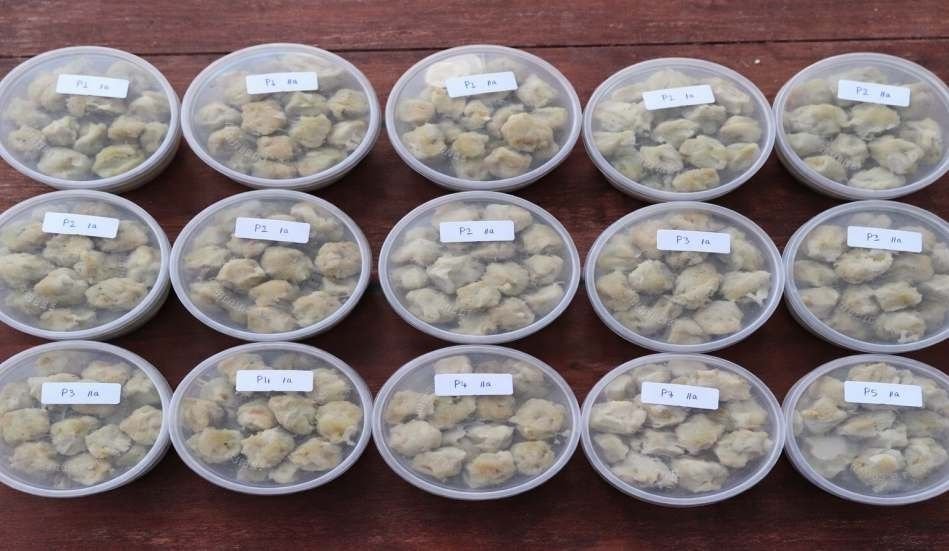
The
appearance of the produced catfish–E. cottonii meatballs was presented in Figure 1. The samples showed relatively uniform spherical shapestypical of fish
meatball products, indicating that the incorporation of E. cottonii did
not alter the basic physical form of the meatballs. The products were produced
under different treatment formulations, which were later evaluated to determine
their physicochemical and sensory properties.
Protein Content
Statistical analysis further showed that the addition of E. cottonii significantly affected the protein content of the catfish meatballs, with a significance value of p < 0.05. The results of the post-hoc test indicated that treatment P1 was not significantly different from P2 (p > 0.05), whereas P1 showed significant differences compared with P3, P4, and P5 (p < 0.05).
This finding suggests that moderate substitution of fish with E. cottonii (up to 10%) did not significantly reduce protein content, but higher substitution levels significantly lowered the protein concentration in the product (20).
The analysis of protein content in catfish meatballs supplemented with was conducted to determine the effect of different formulation ratios on the protein composition of the final product. The results of the protein analysis for each treatment are presented in Figure 2. The treatments consisted of different proportions of catfish meat, tapioca flour, and E. cottonii addition, namely P1 (75% catfish: 25% tapioca: 0% E. cottonii), P2 (65% catfish: 25% tapioca: 10% E. cottonii), P3 (55% catfish: 25% tapioca: 20% E. cottonii), P4 (45% catfish: 25% tapioca: 30% E. cottonii), and P5 (35% catfish: 25% tapioca: 40% E. cottonii).
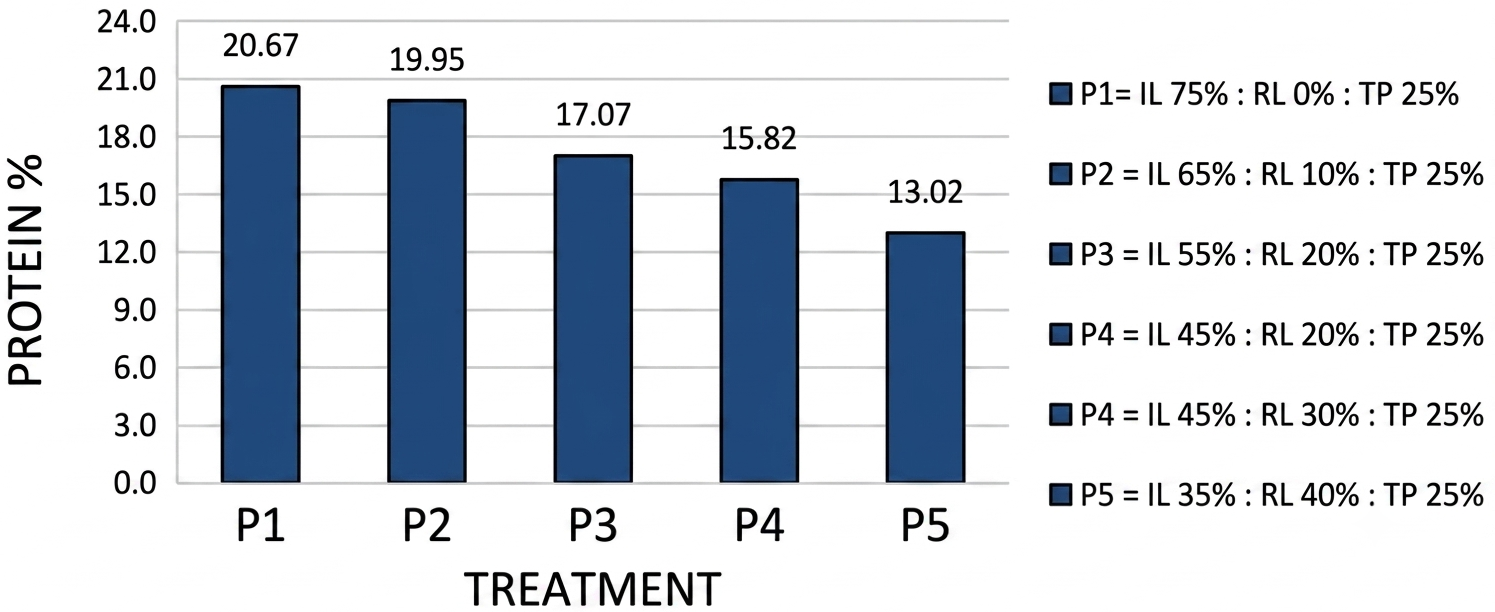
Based on the results illustrated in Figure 2, the highest protein content was obtained in treatment P1, with a value of 20.67%, corresponding to the formulation containing 75% catfish meat and no E. cottonii addition. Meanwhile, treatment P2 (65% catfish: 10% E. cottonii) produced a protein content of 19.95%, followed by P3 (55% catfish: 20% E. cottonii) with 17.07%, P4 (45% catfish: 30% E. cottonii) with 15.82%, and the lowest protein content was observed in P5 (35% catfish: 40% E. cottonii) with a value of 13.02%. These results indicate a gradual decrease in protein content as the proportion of catfish meat decreased and the proportion of E. cottonii increased. This clearly demonstrates that increasing E. cottonii substitution decreased protein content in a dose-dependent manner, with reductions ranging from 0.72 percentage points (P1 to P2) to 7.65 percentage points (P1 to P5). Notably, only the reductions at higher substitution levels (P3, P4, and P5) were statistically significant (p < 0.05), while moderate substitution at 10% E. cottonii (P2) did not significantly reduce protein content compared with the control (P1).
The highest protein value obtained in treatment P1 (20.67%) meets the reference criteria of the Indonesian National Standard for meatball products (SNI 7266: 2014), which stipulates a minimum protein content of 7.0% (w/w) for fish meatball products, while the lowest protein content was observed in treatment P5 (13.02%). The results clearly demonstrated that the protein level in catfish meatballs was strongly influenced by the proportion of fish used in the formulation. Increasing the proportion of catfish meat in the formulation resulted in higher protein content in the final product, whereas increasing the proportion of E. cottonii led to a decrease in protein concentration.
Statistical analysis further showed that the addition of E. cottonii significantly affected the protein content of the catfish meatballs, with a significance value of p < 0.05. The results of the post-hoc test indicated that treatment P1 was not significantly different from P2, whereas treatment P1 showed significant differences compared with P3, P4, and P5.
This finding suggests that moderate substitution of fish with E. cottonii (up to 10%) did not significantly reduce protein content, but higher substitution levels significantly lowered the protein concentration in the product.
The observed decrease in protein content as the concentration of E. cottonii increases in the formulation is primarily attributed to a "nutrient dilution effect," wherein the protein-dense catfish meat is progressively substituted by E. cottonii (21). Because E. cottonii is characteristically dominated by carbohydrates, particularly dietary fiber and carrageenan, its incorporation reduces the overall nitrogen content of the product while simultaneously increasing the relative percentage of non-protein constituents. Therefore, the decline in protein percentage is not a reflection of protein degradation but rather a mathematical consequence of replacing a high-protein animal substrate with a plant-based material that is functionally rich in structural polysaccharides but nutritionally lean in protein.
The results of this study are consistent with previous research conducted by Sali R (2024), which reported that the protein content of fish meatballs produced from payus fish (Elops hawaiensis) decreased with increasing addition of E. cottonii (Kappaphycus alvarezii) (19). The study demonstrated that higher E. cottonii concentrations reduced the protein percentage of the resulting fish meatballs. This trend can be explained by the relatively lower protein content of E. cottonii compared with fish meat.
Furthermore, according to a study (22), the use of carrageenan in food products depends on several properties, including solubility, viscosity, and its interaction with proteins and other polysaccharides. The effect of carrageenan on protein systems is influenced by the number of sulfate groups present in the carrageenan molecule. Another study reported that increasing the sulfate group concentration may neutralize the protein charge, causing the protein to approach its isoelectric point (23). As the sulfate group concentration increases, the protein system reaches the isoelectric point more easily, which may influence protein stability and functional interactions within the food matrix.
Overall, the results indicate that the formulation ratio between catfish meat and E. cottonii plays a crucial role in determining the protein content of the resulting meatball product. Higher fish proportions increase protein levels, while increasing E. cottonii substitution reduces protein content but may contribute to other functional properties related to hydrocolloid interactions within the product matrix.
Organoleptic Evaluation
Color
Organoleptic evaluation was conducted to assess consumer acceptance of catfish meatballs supplemented with E. cottonii. The sensory evaluation included four parameters: color, aroma, texture, and taste. Panelists were asked to express their level of preference for each attribute based on a hedonic scale. The hedonic scale used ranged from 1 to 5, where 5 = very like, 4 = like, 3 = slightly like, 2 = dislike, and 1 = strongly dislike. This assessment was intended to determine the degree of panelist acceptance toward the developed catfish meatball products with E. cottonii addition.
Color is one of the most important sensory attributes influencing consumer perception and acceptance of food products. According to a report, the color of meatball products is influenced by the type and proportion of filler and binding materials added during processing (24). Excessive addition of certain ingredients may produce a brownish color, which can reduce the sensory quality of the product, particularly in terms of color and overall visual appeal.
The results of the organoleptic color evaluation for catfish meatballs with E. cottonii addition are presented in Figure 3. The treatments consisted of five formulation ratios: P1 (75% catfish: 25% tapioca: 0% E. cottonii), P2 (65% catfish: 25% tapioca: 10% E. cottonii), P3 (55% catfish: 25% tapioca: 20% E. cottonii), P4 (45% catfish: 25% tapioca: 30% E. cottonii), and P5 (35% catfish: 25% tapioca: 40% E. cottonii).
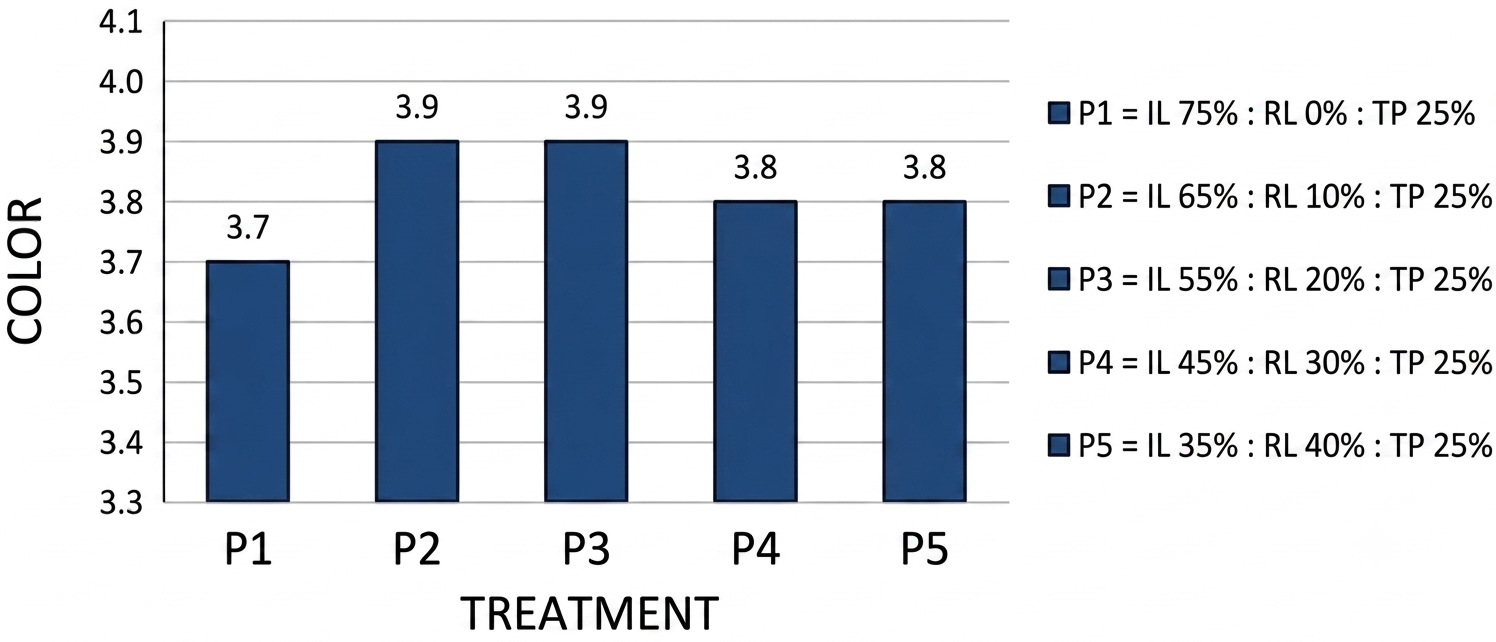
Based on the results illustrated in Figure 3, treatment P1 (75% catfish: 25% tapioca: 0% E. cottonii) obtained a color preference score of 3.7, while P2 (65% catfish: 10% E. cottonii) and P3 (55% catfish: 20% E. cottonii) both obtained the highest color preference scores of 3.9. Meanwhile, P4 (45% catfish: 30% E. cottonii) and P5 (35% catfish: 40% E. cottonii) each obtained a color score of 3.8. Overall, the sensory scores indicate that all treatments were generally accepted by panelists within the “slightly like” to “like” category.
The highest level of panelist preference for color was observed in treatments P2 and P3, with an average score of 3.9, corresponding to the formulation containing 65% catfish with 10% E. cottonii and 55% catfish with 20% E. cottonii, respectively. Conversely, the lowest preference score was obtained in treatment P1 (75% catfish: 25% tapioca: 0% E. cottonii), which yielded a score of 3.7, although it still fell within the acceptable category of slightly liked.
The color of the resulting catfish meatballs appeared grayish to slightly whitish, which corresponds to the natural color of catfish meat. The addition of E. cottonii provided only a minor visual modification because the color of E. cottonii tends to be relatively neutral in the processed form. Consequently, the inclusion of E. cottonii did not substantially alter the appearance of the meatballs.
Statistical analysis further indicated that the addition of E. cottonii did not significantly affect the color of the catfish meatballs, as indicated by the significance value (p > 0.05; p = 0.395). This result demonstrates that variation in the proportion of E. cottonii within the tested formulations did not cause significant differences in the color acceptance of the product.
The findings of this study are consistent with the previous report, which showed that the color of meatballs produced without E. cottonii addition was not significantly different from meatballs supplemented with E. cottonii. However, these results differ from the previous report, who found that the addition of E. cottonii significantly affected the color characteristics of meatball products (12). The lack of significant differences in color preference between the control and supplemented samples suggests that the concentration of E. cottonii used was below the threshold of visual detection for the panelists. This consistency is likely due to the inherent color compatibility between the E. cottonii powder and the pale matrix of the catfish meat, which remained the dominant visual characteristic. While some studies report significant color variations (12), those results may stem from higher substitution levels, differences in E. cottonii pigment intensity, or distinct processing methods. Consequently, the low inclusion level in this study maintained the product's original sensory appeal, as the addition did not create a color contrast sufficient to alter consumer perception
According to Setyaningsih et al. (2010), color is the first sensory attribute perceived by consumers and plays a critical role in shaping the initial impression and acceptance of a food product (22). Therefore, although statistical differences were not observed in this study, maintaining an appealing and consistent color remains an important factor in determining the overall acceptance of processed fish products.
Aroma
Aroma is an important sensory attribute that influences consumer acceptance of processed fish products. The dominant aroma in fish meatballs originates from the fish meat itself, as fish typically possesses a distinctive odor that may remain present even after processing. In addition, tapioca flour used as a filler ingredient is generally odorless and therefore does not significantly contribute to the aroma of the final product (25).
The results of the organoleptic aroma evaluation of catfish meatballs supplemented with E. cottonii are presented in Figure 4. The treatments consisted of five formulation ratios: P1 (75% catfish: 25% tapioca: 0% E. cottonii), P2 (65% catfish: 25% tapioca: 10% E. cottonii), P3 (55% catfish: 25% tapioca: 20% E. cottonii), P4 (45% catfish: 25% tapioca: 30% E. cottonii), and P5 (35% catfish: 25% tapioca: 40% E. cottonii).
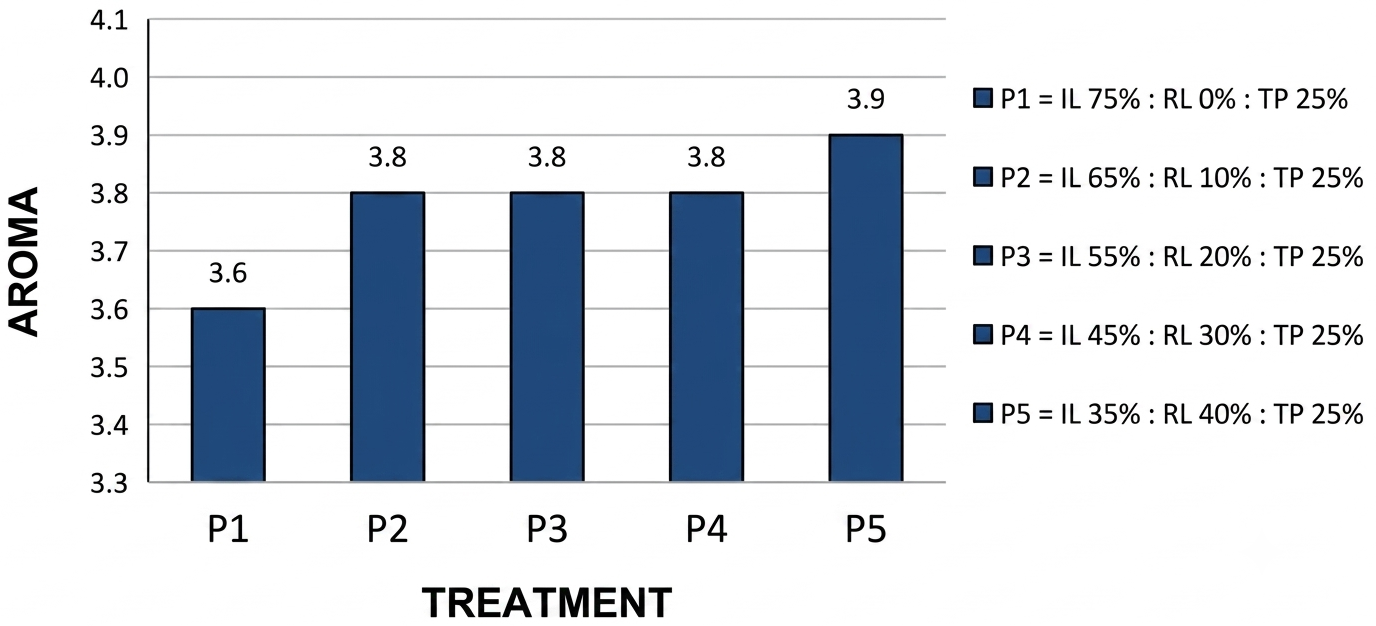
Based on the sensory evaluation results shown in Figure 4, treatment P1 (75% catfish: 25% tapioca: 0% E. cottonii) obtained an aroma score of 3.6. Treatments P2, P3, and P4 each obtained aroma scores of 3.8, corresponding to formulations containing increasing levels of E. cottonii (10%, 20%, and 30%, respectively). Meanwhile, the highest aroma preference score was observed in P5 (35% catfish: 25% tapioca: 40% E. cottonii), which obtained a score of 3.9. These results indicate that all treatments were generally accepted by panelists within the slightly like category.
The highest level of panelist preference for aroma was observed in P5, with a score of 3.9, corresponding to the formulation containing 40% E. cottonii addition. Conversely, the lowest preference score was observed in P1, which obtained a score of 3.6, although it still fell within the acceptable category. These findings indicate that the addition of E. cottonii may influence the aroma characteristics of catfish meatballs.
The aroma produced in the catfish meatballs is primarily influenced by the proportion of catfish meat and E. cottonii used in the formulation. Increasing the proportion of catfish meat tends to intensify the typical fish aroma of the product. Conversely, increasing the proportion of E. cottonii results in a more pronounced E. cottonii aroma, which may partially mask the fishy odor of catfish meat.
Statistical analysis of the aroma attribute showed that the addition of E. cottonii significantly affected the aroma of the catfish meatballs, with a significance value of p < 0.05. The results of the post-hoc test indicated that treatment P1 differed significantly from P2 and P3 (p < 0.05), whereas P1 was not significantly different from P4 (p > 0.05; p = 0.097). These results suggest that the addition of E. cottonii can modify the aroma profile of catfish meatballs, particularly at moderate levels of substitution. The findings of this study are consistent with the previous report, which indicated that the addition of E. cottonii did not significantly influence the aroma of meatball products (18). The observed increase in aroma acceptance at higher E. cottonii concentrations may be attributed to the masking effect of the hydrocolloid on the intense, characteristic odor of catfish (26). By partially diluting the volatile compounds associated with raw fish, the E. cottonii creates a more neutral aroma profile, which was more favorably perceived by the panelists in this study.
Texture
Texture is an important parameter influencing the acceptability of food products. The evaluation of texture is typically conducted by assessing the smoothness and elasticity of the product, which represent a combination of the physical properties of food perceived through the senses of touch, sight, and mastication (27). In meatball products, texture plays a critical role in determining consumer acceptance because desirable meatballs are generally characterized by a firm yet elastic structure.
The results of the organoleptic texture evaluation for catfish meatballs supplemented with E. cottonii are presented in Figure 5. The treatments consisted of five formulation ratios: P1 (75% catfish: 25% tapioca: 0% E. cottonii), P2 (65% catfish: 25% tapioca: 10% E. cottonii), P3 (55% catfish: 25% tapioca: 20% E. cottonii), P4 (45% catfish: 25% tapioca: 30% E. cottonii), and P5 (35% catfish: 25% tapioca: 40% E. cottonii).
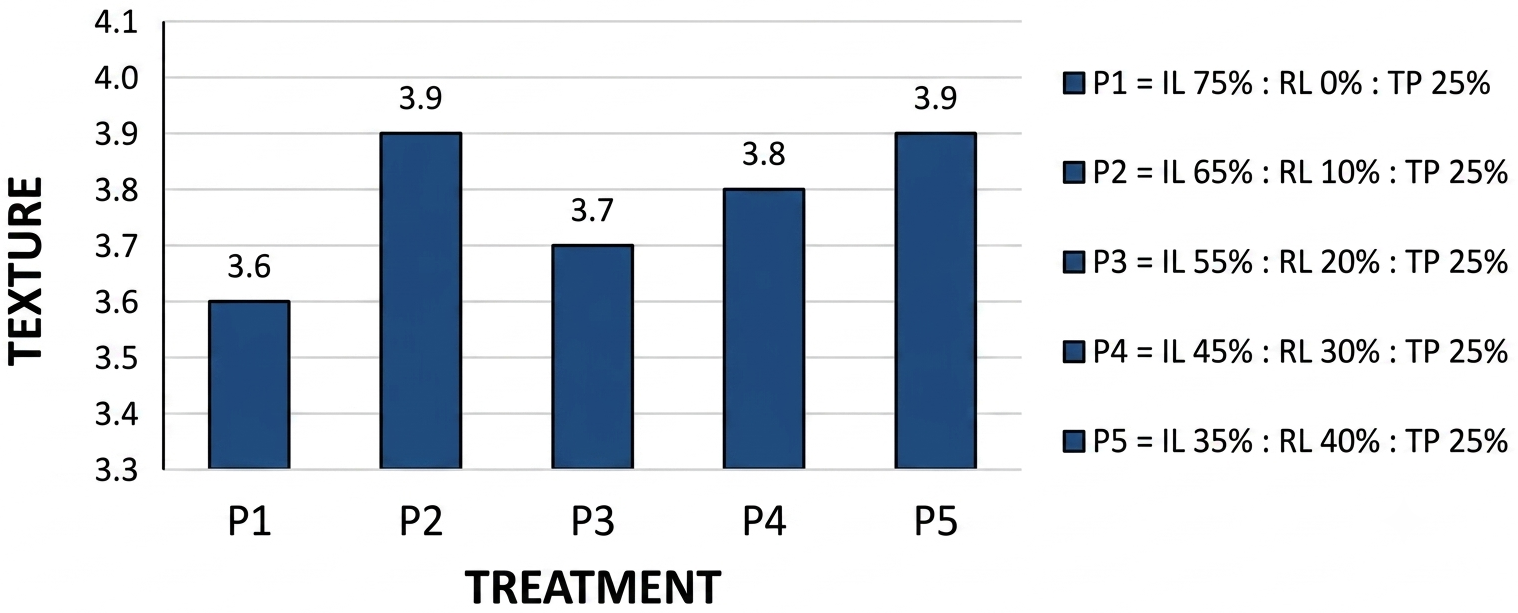
Based on the sensory evaluation results shown in Figure 5, treatment P1 obtained a texture preference score of 3.6, while P2 obtained a score of 3.9, P3 obtained 3.7, P4 obtained 3.8, and P5 obtained 3.9. These results indicate that all treatments were generally accepted by panelists, falling within the “slightly like” to “like” category.
The highest level of panelist preference for texture was observed in treatments P2 and P5, each receiving a score of 3.9, corresponding to formulations containing 10% E. cottonii and 40% E. cottonii, respectively. Meanwhile, the lowest texture preference score was observed in P1, which obtained a score of 3.6, although this value still fell within the acceptable range of panelist preference.
The texture produced in the catfish–E. cottonii meatballs tended to be elastic and soft, which can be attributed to the presence of E. cottonii in the formulation. The addition of E. cottonii contributes to improved elasticity because E. cottonii contains carrageenan, a hydrocolloid compound capable of forming gels and enhancing the structural integrity of food matrices. As the proportion of E. cottonii increased, the resulting meatballs tended to exhibit a softer and more elastic texture due to the gel-forming properties of carrageenan.
The sensory evaluation of the meatball texture revealed that the incorporation of E. cottonii did not significantly alter the panelists' preference scores across the different formulations. From a rheological perspective, this stability is likely due to the functional properties of the carrageenan present in E. cottonii, which acts as a stabilizer and binder within the meat matrix (28). The addition of seaweed porridge contributes structural polysaccharides that help maintain the integrity of the protein gel network formed by the catfish myofibrillar proteins during the cooking process (29). As the E. cottonii acts as a supplemental hydrocolloid, it effectively compensates for any potential loss in structural density caused by the reduction of fish meat, allowing the meatballs to maintain a consistent bite and firmness that the panelists perceived as uniform regardless of the substitution level (30).
The findings of this study are consistent with the previous report (18), which demonstrated that the addition of E. cottonii significantly influences the texture characteristics of meatball products. Texture is also closely associated with the overall quality of food products because it reflects the structural integrity of food when chewed or consumed (27).
Taste
Taste is an important sensory attribute that determines whether a food product will be accepted by consumers. Although color is the first parameter perceived by consumers, taste ultimately determines product acceptance. If a food product has an unattractive taste, it will not be accepted by consumers. Taste perception primarily involves the human gustatory system, which detects flavor compounds present in food.
The results of the sensory evaluation for taste in catfish meatballs supplemented with E. cottonii are presented in Figure 6. The treatments consisted of five formulation ratios: P1 (75% catfish: 25% tapioca: 0% E. cottonii), P2 (65% catfish: 25% tapioca: 10% E. cottonii), P3 (55% catfish: 25% tapioca: 20% E. cottonii), P4 (45% catfish: 25% tapioca: 30% E. cottonii), and P5 (35% catfish: 25% tapioca: 40% E. cottonii).
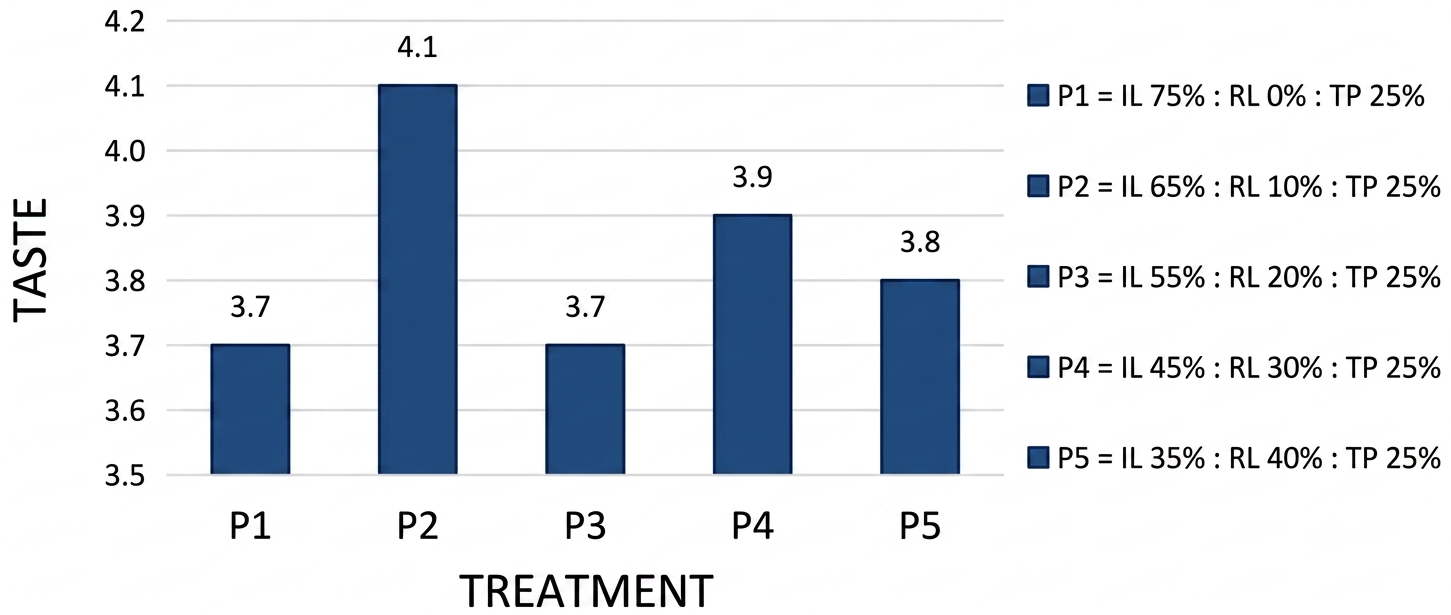
Based on the sensory evaluation results shown in Figure 6, treatment P1 obtained a taste score of 3.7, P2 obtained the highest score of 4.1, P3 obtained 3.7, P4 obtained 3.9, and P5 obtained 3.8. These results indicate that all treatments were generally accepted by the panelists, with sensory scores ranging from “slightly like” to “like. ”
The highest level of panelist preference was observed in treatment P2 (65% catfish: 25% tapioca: 10% E. cottonii), which obtained a score of 4.1. This score indicates that panelists liked the product. Conversely, the lowest preference scores were observed in P1 (75% catfish: 25% tapioca: 0% E. cottonii) and P3 (55% catfish: 25% tapioca: 20% E. cottonii), each obtaining a score of 3.7, which still falls within the “slightly like” category.
Based on panelist observations, the taste of catfish meatballs with E. cottonii addition produced a flavor that represented a combination of the natural taste of catfish and the subtle flavor contributed by E. cottonii. Increasing the proportion of catfish meat intensified the typical taste of catfish meatballs, whereas increasing the proportion of E. cottonii slightly reduced the intensity of the fish flavor.
Statistical analysis of taste evaluation showed that the addition of E. cottonii significantly affected the taste of the catfish meatballs (p < 0.05). The post-hoc Tukey test revealed that treatment P1 differed significantly from P2 (p < 0.05), whereas P1 did not differ significantly from P3, P4, and P5 (p > 0.05). These results indicate that moderate levels of E. cottonii addition may enhance the taste characteristics of the product.
The slight reduction in fish flavor intensity observed at higher E. cottonii substitution levels may be attributed to the dilution effect of E. cottonii on the dominant fishy taste compounds derived from catfish meat. From a consumer acceptability perspective, this reduction in flavor intensity is not necessarily a disadvantage. Consumers who are sensitive to or less tolerant of strong fishy odors and flavors may find the milder flavor profile of E. cottonii-supplemented meatballs more appealing. Therefore, the moderate addition of E. cottonii at 10% (P2), which achieved the highest taste score of 4.1, may broaden the market appeal of catfish meatballs to a wider consumer segment, including children and individuals who typically avoid strongly flavored fish products.
The presence of additional ingredients in a product formulation can influence the resulting taste because flavor compounds are produced from interactions among ingredients during processing (31). Various types of flour and their proportions may affect the final product characteristics. In addition, the use of seasoning ingredients and processing methods also contribute to the sensory quality of meatball products (32). For example, garlic contains volatile sulfur compounds such as allyl disulfide, which contribute to the characteristic aroma and flavor of food products.
Based on the overall panelist evaluation, the most preferred product formulation was treatment P2 (65% catfish: 25% tapioca: 10% E. cottonii), with a taste score of 4.1. This formulation produced the most balanced flavor between catfish meat and E. cottonii, resulting in higher consumer preference compared with the other formulations.
Conclusion
The incorporation of E. cottonii in catfish meatballs significantly influenced protein content and several sensory attributes of the product. Protein content decreased with increasing E. cottonii substitution, with the highest value observed in P1 (20.67%) and the lowest in P5 (13.02%). The decrease in protein content ranged from 0.72 percentage points (P1 to P2) to 7.65 percentage points (P1 to P5). Statistical analysis confirmed that protein reduction was significant at higher substitution levels (P3, P4, and P5; p < 0.05), whereas moderate substitution at 10% E. cottonii (P2) did not significantly reduce protein content compared with the control (P1; p > 0.05), indicating that low-level E. cottonii incorporation can maintain acceptable protein quality. Organoleptic evaluation indicated that all treatments were generally accepted by panelists, while the most preferred formulation was P2 (65% catfish, 25% tapioca, and 10% E. cottonii), which achieved high scores for color (3.9), aroma (3.8), texture (3.9), and taste (4.1). Therefore, the addition of 10% E. cottonii can be recommended as the optimal formulation for producing nutritionally acceptable and sensory-preferred catfish meatballs.
Declarations
Conflict of Interest
The authors declare no conflicting interest.
Data Availability
Data supporting the findings of this study are available from the corresponding author upon reasonable request.
Ethics Statement
Ethical approval was not required for this study.
Funding Information
The authors declare that no financial support was received for the research, authorship, and/or publication of this article.
References
- Catur Adi A, Salisa W, Taher M, Rifqi MA, Rachmawati H. Characteristics of High Protein Product-Derived from Catfish Mixed with Fermented Sweet Potato Flours and Its Impact on Malnourished Rats. Jsm. 2025;54(1):3637-3647. doi: https://doi.org/10.17576/jsm-2025-5401-14
- Langi S, Maulu S, Hasimuna OJ, Kaleinasho Kapula V, Tjipute M. Nutritional requirements and effect of culture conditions on the performance of the African catfish ( Clarias gariepinus ): a review. Cogent Food & Agriculture. 2024;10(1). doi: https://doi.org/10.1080/23311932.2024.2302642
- Suryaningrum TD, Fateha F, Sinurat E, Giyatmi G, Eko Irianto H, Supriyanto A, et al. Optimisation of nutritious biscuits formulation through fortification with catfish (Clarias gariepinus) and Ulva sp. flours using response surface methodology. Ejfa. 2025;37:1-12. doi: https://doi.org/10.3897/ejfa.2025.127378
- Estiani K, Ardila S, Nurkistin D, Maulaya M, Billah MM. Hedonic Evaluation and Chemical Characterization of Catfish Pulpety as an Alternative Animal Protein Food for the Prevention of Stunting in Toddlers Aged 1–3 Years. Jlmh. 2026;7(1):91-103. doi: https://doi.org/10.37899/journallamedihealtico.v7i1.3013
- Astarina MD, Dewi AAD, Bekti RP. Pemberdayaan Kelompok Wanita Tani dalam Usaha Diversifikasi Produk Olahan Ikan Lele Untuk Meningkatkan Nilai Konsumsi. Ik. 2020;2(1):36-40. doi: https://doi.org/10.32546/ik.v2i1.723
- Alamsyah FH, Irfan I, Yunita D. Penggunaan asap cair sebagai pengawet alami bakso ikan tuna sirip kuning (Thunnus albacares). Tp. 2021;12(1):103-109. doi: https://doi.org/10.35891/tp.v12i1.2211
- Tondang SB, Berutu KM, Sihombing JM. PENAMBAHAN TEPUNG TAPIOKA DENGAN LEVEL YANG BERBEDA TERHADAP MUTU ORGANOLEPTIK BAKSO DAGING KAMBING (Addition of tapioca flour with different levels on the organoleptic quality of goat meat balls). Jnp. 2024;11(1):35-41. doi: https://doi.org/10.35508/nukleus.v11i1.15089
- Amelia L, Astuti S, Fadhallah EG, Koesoemawardani D. The Effect of Tapioca Flour and Bogor Taro Flour (Colocasia esculenta L. Schott) Formulations on the Chemical, Physical, and Sensory Characteristics of Catfish Sausage (Pangasius hypophtalmus). Biomednatproch. 2024;13(2):321-328. doi: https://doi.org/10.14421/biomedich.2024.132.321-328
- Uma Afif Hanifah, Yulia Saputri, Rista Ayu Hikmala, Irfan Fadhlurrohman. Pengaruh Penambahan Berbagai Jenis Tepung terhadap Tekstur Bakso. snppvp. 2025;6(1):722-731. doi: https://doi.org/10.47687/snppvp.v6i1.1821
- Nandiyanto ABD, Ragadhita R, Ana A, Hammouti B. Effect of Starch, Lipid, and Protein Components in Flour on the Physical and Mechanical Properties of Indonesian Biji Ketapang Cookies. IJTech. 2022;13(2):432. doi: https://doi.org/10.14716/ijtech.v13i2.5208
- Vannessa Mae Putriyana. Inovasi Mi Basah Bebas Gluten Berbahan Tapioka dan Tepung Beras dengan Penambahan Tepung Ubi Ungu. Mutiara. 2025;3(4):360-371. doi: https://doi.org/10.59059/mutiara.v3i4.2718
- Farsani MS, Forooghi E, Rastegar H. Plant-based hydrocolloids as functional and sustainable alternatives to gelatin in food systems: Sources, properties, applications, and critical challenges. Food Hydrocolloids for Health. 2026;9:100293. doi: https://doi.org/10.1016/j.fhfh.2026.100293
- Yemenicioğlu A, Farris S, Turkyilmaz M, Gulec S. A review of current and future food applications of natural hydrocolloids. Int J of Food Sci Tech. 2019;55(4):1389-1406. doi: https://doi.org/10.1111/ijfs.14363
- Rupert R, Rodrigues KF, Thien VY, Yong WTL. Carrageenan From Kappaphycus alvarezii (Rhodophyta, Solieriaceae): Metabolism, Structure, Production, and Application. Front. Plant Sci. 2022;13. doi: https://doi.org/10.3389/fpls.2022.859635
- Jabeen F, Zil-e-Aimen, Ahmad R, Mir S, Awwad NS, Ibrahium HA. Carrageenan: structure, properties and applications with special emphasis on food science. RSC Adv. 2025;15(27):22035-22062. doi: https://doi.org/10.1039/d5ra03296b
- Matos J, Cardoso C, Serralheiro M, Bandarra N, Afonso C. Seaweed bioactives potential as nutraceuticals and functional ingredients: A review. Journal of Food Composition and Analysis. 2024;133:106453. doi: https://doi.org/10.1016/j.jfca.2024.106453
- Singh S, Shankar P, Ram Kailash Mishra A, Singh A. Seaweed a Superfood: a Nutrient-Rich Solution for Modern Diets. Ijsat. 2025;16(2). doi: https://doi.org/10.71097/ijsat.v16.i2.5004
- Irmayani Irmayani, Rosmala Rosmala, Arman Arman. Peranan Badan Usaha Milik Desa (BUMDes) dalam Upaya Meningkatkan Hasil Pertanian di Desa Pakeng Kecamatan Lembang Kabupaten Pinrang. snppvp. 2023;4(1):286-295. doi: https://doi.org/10.47687/snppvp.v4i1.653
- Angga Pradana Putra, Zuraida I, Andi Mismawati, Irman Irawan, Seftylia Diachanty. Karakteristik Fisikokimia dan Penerimaan Konsumen Kerupuk Rumput Laut Kappaphycus alvarezii. Mthp. 2024:56-64. doi: https://doi.org/10.35800/mthp.12.1.2024.46383
- Hong HS, Kim SH, Jeon EB, Park EH, Park SY. Quality characteristics and antioxidant activity of low-molecular-weight fish collagen-added tofu, a soybean curd. Fish Aquat Sci. 2026;29(2):112-118. doi: https://doi.org/10.47853/fas.2026.e10
- Zhao X, Chary K, van Hal O, Oosting SJ, Xue M, van Middelaar CE. Clostridium autoethanogenum protein as an alternative for soybean meal in the diet of rainbow trout (Oncorhynchus mykiss): Considering the effects of microcrystalline cellulose. Aquaculture. 2026;614:743571. doi: https://doi.org/10.1016/j.aquaculture.2025.743571
- Jabeen F, Zil-e-Aimen, Ahmad R, Mir S, Awwad NS, Ibrahium HA. Carrageenan: structure, properties and applications with special emphasis on food science. RSC Adv. 2025;15(27):22035-22062. doi: https://doi.org/10.1039/d5ra03296b
- Khaerunnisa G, Sarto S, Sutijan S, Syamsiah S. Pengaruh Steam Pretreatment terhadap Degradasi Selulosa dan Limonen pada Limbah Jeruk dalam Produksi Biohidrogen. J. Rek. Pros. 2018;12(1):1. doi: https://doi.org/10.22146/jrekpros.31163
- Ismiarti Ismiarti, Abdul Rokhman, Muhamad Solkhan, Sugiyono Sugiyono, Teguh Dwi Putra. Enhancing the Quality of Chicken Meatball with Egg Albumen as Binding Agent: Study on Chemical, Texture Profile, and Sensory Properties. Jt. 2024;15(2):538-546. doi: https://doi.org/10.47687/jt.v15i2.837
- Azchar Prianka Piawan Putra, Hotlan Manik, Rizki Prasetya, Juni Claudia Dami. Effect of Substituting Tapioca Flour with Purple Sweet Potato on Antioxidant Activity and Sensory Evaluation of Chicken Meatballs. snppvp. 2025;6(1):789-796. doi: https://doi.org/10.47687/snppvp.v6i1.1829
- Yakhin LA, Wijaya KM, Santoso J. The Effect of Seaweed Powder (Eucheuma Cottonii) Addition in Catfish Sausage. Kls. 2015;2(1):1. doi: https://doi.org/10.18502/kls.v1i0.76
- Rustagi S. Food Texture and Its Perception, Acceptance and Evaluation. Biosci., Biotech. Res. Asia. 2020;17(03):651-658. doi: https://doi.org/10.13005/bbra/2869
- Widati AS, Rosyidi D, Radiati LE, Nursyam H. Beef Salt-Soluble Proteins and Seaweed (Eucheuma cottonii) Flour Interactions to the Quality of Heat-Induced Gel Matrix Development. Jitek. 2020;15(2):61-68. doi: https://doi.org/10.21776/ub.jitek.2020.015.02.1
- Zhang C, Chen L, Teng H. Phase behavior of the gelation process of myofibrillar protein-curdlan blended system: Discussion based on rheology and gel properties. Food Chemistry. 2024;437:137839. doi: https://doi.org/10.1016/j.foodchem.2023.137839
- Warsidah W. Production and characterization of Macronutrient and Zn in Rucah Fish Meatballs with the Addition of Eucheuma cottonii Seaweed. Jbt. 2024;24(2):541-547. doi: https://doi.org/10.29303/jbt.v24i2.7001
- Guichard E. Interactions between flavor compounds and food ingredients and their influence on flavor perception. Food Reviews International. 2002;18(1):49-70. doi: https://doi.org/10.1081/fri-120003417
- Meng X, Wu D, Zhang Z, Wang H, Wu P, Xu Z, et al. An overview of factors affecting the quality of beef meatballs: Processing and preservation. Food Science & Nutrition. 2022;10(6):1961-1974. doi: https://doi.org/10.1002/fsn3.2812