RESEARCH ARTICLE
Fine Arts and Social Media: Constructing Spaces for Dialogue Between Artists and Audiences in the Digital Era
Artistic Studies|Vol. 2, Issue 1, pp. 7-13 (2026)
CC BY 4.0-2026 Authors
Views
Downloads
Shares

Received
Mar 10, 2026Revised
Apr 17, 2026Accepted
Jun 2, 2026Published
Jun 12, 2026
Abstract
The development of social media has brought significant changes to contemporary visual art practices, particularly in the formation of discussion spaces between artists and audiences within digital environments. This study aims to analyze the role of social media in shaping patterns of interaction, artwork distribution, and public participation within the contemporary visual art ecosystem. The research employs a descriptive qualitative approach through the analysis of digital interactions on platforms such as Instagram, Twitter/X, and virtual exhibition spaces including Google Arts and MoMA Online. Data were collected through observations of artwork posts, comment sections, online discussions, and forms of communication between artists and audiences related to appreciation, criticism, and responses to artworks. The analysis was conducted by identifying interaction patterns, forms of audience participation, and the dynamics of visual discourse developing on social media. The findings indicate that social media functions not only as a medium for artwork distribution but also as a more open, participatory, and interactive digital public space in the process of art appreciation and the negotiation of artistic meaning. Audience engagement through comments, content sharing, and online discussions also influences the creative process, artwork visibility, and the formation of artistic value. This study concludes that social media has reconstructed the relationship between artists and audiences through the creation of more democratic digital discussion spaces, although it also presents new challenges for contemporary visual art practices.
Introduction
In recent decades, the fine arts have undergone a significant transformation driven by rapid advancements in digital technology. Two primary factors contributing to this shift are social media and Artificial Intelligence (AI). Social media has emerged as a preeminent platform for artists to showcase their work, allowing for direct interaction with audiences and engagement in dynamic artistic discourse (1). It has also enabled artists to reach wider audiences beyond geographical boundaries and increase the visibility of their creative works. According to Ismoyo (2025), the concept of public art defined as artwork displayed in open spaces accessible to the general public has become an increasingly prominent phenomenon. Through social media platforms, artists are able to expand their audience reach while fostering supportive communities for the exchange of perspectives (2).
Technological progress has created innovative opportunities within the art world, facilitating the exploration of forms and methods previously difficult to imagine. Nevertheless, the integration of AI in the arts has sparked intensive debate regarding the artist's position in the creative process and how the fundamental concept of art may shift due to rapid technological evolution (3). The internet has interconnected humanity globally, enabling communication and integration on a worldwide scale. The world has effectively become a "global village," as described by Marshall McLuhan (in Zulkifli, 2021) (4). Furthermore, Kenichi Ohmae posits that we now inhabit a "borderless world. " While Ohmae originally framed this through the lens of economic interconnectedness, it is increasingly evident in all aspects of life, including socio-cultural dimensions (5). Within this framework, this study intends to examine the influence of social media and AI on the visual arts, including their impact on artistic practice and our perceptions of art in the digital age.
This research focuses on the formation of discussion spaces between artists and viewers within social media environments, considering the influences inherent in these interactions. These spaces encompass various forms of engagement, such as comments, criticism, appreciation, and online collaboration. Additionally, this study examines how AI affects the aesthetics, production, and consumption of art, as well as its implications for contemporary art practices. The dynamics of fine arts evolution, in relation to technological development, are inseparable from the socio-cultural dynamics of society, which characteristically manifest through aesthetic expressions and critical responses to underlying socio-cultural conditions (6).
Today, artists can share and market their work with greater ease, no longer confined to traditional exhibitions and galleries, while audiences and enthusiasts are no longer restricted by geographical distance (7). Artistic activities now possess channels and platforms that support their growth. A key reason for the increasing importance of social media in art exhibitions is its immense potential to broaden audience reach. With platforms such as Instagram, Facebook, and X (formerly Twitter), art exhibitions are no longer limited to physical galleries but can reach a global community (8). Artists can now convey emotions and disseminate their work swiftly and directly, whether through digital distribution or in the case of installations and murals through posts shared by witnesses in real-time.
Although the literature has extensively discussed the role of social media as a broader marketing tool, there remains a gap in understanding how it simultaneously transforms the structure of discussion spaces and contemporary art practices. So far, discussions have often been limited to functional descriptions of technology without deeply examining the sociocultural implications of complex interactions within digital spaces for artists. There is an urgent need to understand the dialectical relationship between technology and art in order to encourage practices that are more adaptive to the demands of the contemporary era.
Consequently, the creation of discussion forums between artists and viewers on social media platforms not only enhances the quality of interaction but also generates new patterns in modern artistic practice. By accounting for the impact of Artificial Intelligence, this study reveals how technology is capable of altering the creation and utilization of artworks. Interactions occurring through comments, reviews, and collaborations have become more complex and diverse, providing opportunities for artists to interact more intimately with their audience. The aesthetic transformation resulting from digital technology marks an evolution in our view of the essence of art. Thus, this research highlights the urgency of understanding the relationship between technology and art in social media environments to encourage more open and adaptive artistic practices.
This study explores the transformation of visual arts in the digital era, specifically due to the influence of social media and AI. Visual arts comprising painting, sculpture, photography, and other forms of expression have experienced significant changes in their creation and dissemination. Social media platforms serve as vital arenas for global exposure and direct audience engagement. Conversely, AI opens new possibilities for creation, allowing artists to experiment with digital tools to produce innovative works. However, the use of these technologies also prompts debates regarding the definition of art and the artist's role in the creative process. Overall, digital technology has democratized access to art, expanded the reach of artists, and triggered profound reflection on the essence of art itself (9).
Therefore, this study specifically aims to examine the influence of social media on the transformation of visual art practices. The focus of the study is directed toward analyzing the formation of discussion spaces between artists and audiences on social media in order to understand the new patterns of interaction that emerge. Based on the analysis conducted, social media plays a major role in driving the evolution of the art world by providing broader reach and greater opportunities for artists and art enthusiasts across different parts of the world.
Methodology
This research uses a qualitative descriptive approach with an analysis method on social media and digital technology used in fine arts today as discussion spaces and digital exhibitions. The research method used in this article is the qualitative research method. Bogdan and Tylor briefly define qualitative research as a method that produces descriptive data in the form of written or spoken words (10). Qualitative research is descriptive and tends to use an inductive approach so that in the process and meaning, it emphasizes the subject's perspective (11).
In accordance with the character of the problems discussed, data were collected from various sources to examine the evolving phenomena related to the use of social media as a fine arts exhibition space, as well as to identify possible changes and impacts that will occur in the field of fine arts in the era of digital modernization. This approach allows researchers to look deeply into the relationship between digital technology developments and their impact on fine art practices, especially in terms of interaction between artists and audiences in art exhibitions.
An in-depth study was also conducted regarding the impact of technology in the social field of fine arts, focusing on problems starting from the analysis of technological developments in shaping fine arts discussion spaces, which give birth to various forms of artworks as well as criticism and conversations within them. Thus, to support the discussion of the study of technological impacts, it also uses a visual culture approach. Along with this, the aesthetic expression of the realization of artworks cannot be separated from the creativity of the artist or their community (12). To complete a comprehensive study, it is also supported by a creativity approach.
The data collection strategy was conducted through a structured approach to ensure accuracy and reliability. The first step involved content analysis of posts and interactions on social media platforms such as Instagram, Twitter, and virtual galleries. The selection of content was based on specific criteria, namely targeting accounts of artists or art institutions that actively publish artworks and build digital interactions in the modern era.
In addition to content analysis, case studies were conducted on artists who consistently utilize social media in their artistic practices in order to observe specific changes in working patterns. To enhance the validity of the data, the researcher also carried out in-depth interviews with artists, curators, and audiences to obtain more holistic subjective perspectives regarding their experiences in digital visual art exhibitions.
Results and Discussion
The research results show that social media has created art discussion spaces that are more open, inclusive, and interactive (13). As observed by various current studies, this phenomenon not only changes the way audiences consume visual works but also revolutionizes the role of art enthusiasts from mere passive observers into active participants who contribute directly to the process of meaning-making and criticism through digital platforms (14).
Transformation of Fine Art Exhibition Spaces
In the art world, the exhibition space plays a crucial role as the location for presenting artworks that can be enjoyed by the public (see Figure 1 as an example). An art exhibition is not just a vessel for appreciating works but is also a forum for discussion regarding the meaning, significance, and the social and cultural context of the work. According to Dimas Setyo, 2025, art exhibitions are not only an arena for work appreciation but also an arena where debates about the meaning, relevance, and socio-cultural context of the artwork take place (8). In Indonesia, barriers to placing artworks in exhibition spaces revolve not only around aesthetic aspects but also include complex social, political, and economic elements. This research will outline those challenges and describe the efforts of exhibition spaces in Indonesia to overcome these obstacles in order to present artworks that are more significant to their viewers.
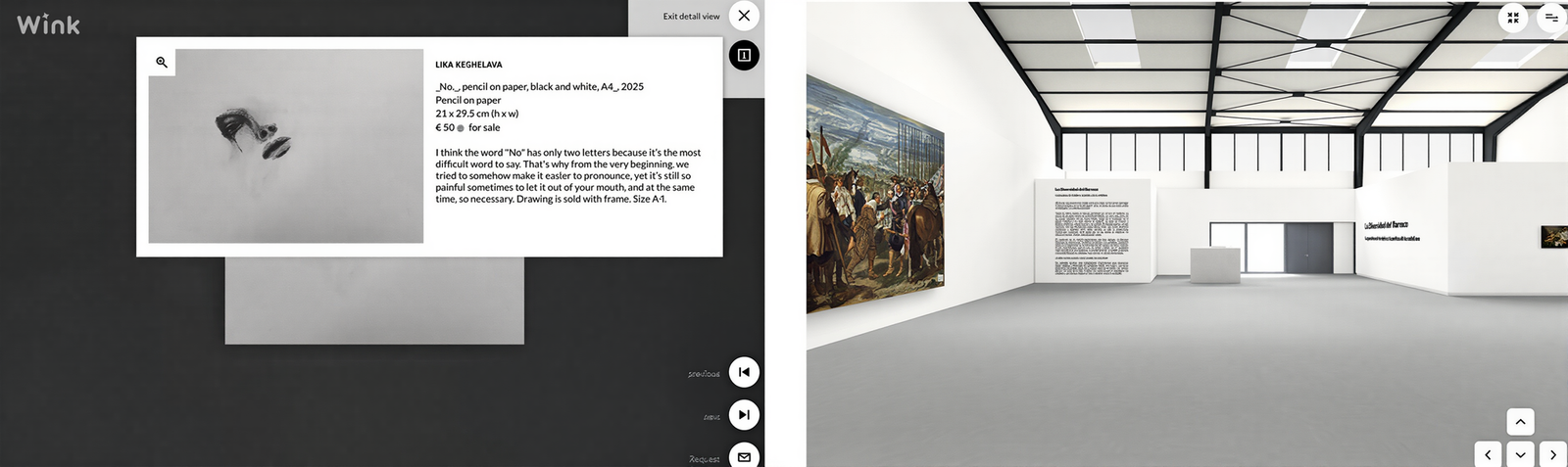
In the tradition of art exhibitions, the exhibition space usually refers to a gallery or museum designed to display artworks within a specific physical space. This traditional model relies heavily on physical objects seen directly by visitors. However, with technological advancements, exhibition spaces have undergone significant changes (15). Along with the development of the internet and multimedia technology, many galleries and museums are now creating digital exhibition experiences, where artworks can be viewed and accessed virtually through digital devices such as computers, tablets, or even virtual reality (VR) and augmented reality (AR) devices (8).
The digital era has exerted a significant influence on various fields, including the visual arts (16). One of the most striking changes is the evolution of art exhibition spaces from conventional formats that rely on physical locations toward models that are more integrated with digital technology. This transformation not only changes how artworks are presented but also how visitors access and engage with that art. This research examines in detail the shift of art exhibition spaces from traditional to digital while exploring various dimensions of change, obstacles, and the emerging potentials.
Social media has revolutionized the art world by providing a democratic platform for artists from all backgrounds ranging from traditional painters in rural areas to digital artists in metropolitan cities to showcase their work freely and directly to a global audience without needing to depend on physical galleries, institutional exhibitions, or often-exclusive elite art networks. Through platforms such as Instagram, TikTok, Twitter, and other online art platforms, artists can upload the artworks they have created, which can then be accessed by millions of people worldwide within seconds (17). This eliminates geographical barriers such as distances between countries or time zones, as well as institutional constraints such as curatorial requirements or exhibition fees that vary significantly across various art galleries today. Consequently, artists and audiences can now easily establish direct interaction within social media platforms (18). This interaction is not limited to passive discussion; artists can share the stories behind their works, receive direct feedback through comments and private messages, and build collaborations with other artists from different cultures.
As explained by Jenkins, H. (2009), digital media including social media enable audiences to move beyond being passive spectators and actively participate in the production of meaning (19). Theoretically, this situation reinforces the concept of “participatory culture” in social media, where users are no longer passive consumers but actively contribute to the formation of cultural meaning.
Several digital platforms, such as Google Arts & Culture and the Museum of Modern Art (MoMA) Online, have led the way in providing access to art collections through virtual platforms. For example, Google Arts & Culture allows users to explore thousands of art collections from leading museums in the world for free. MoMA Online also offers virtual tours that allow visitors to access modern artworks digitally, even during the COVID-19 pandemic when physical exhibitions were not possible (8).
Empirically, the study found that social media platforms such as Instagram, Twitter, TikTok, Google Arts & Culture, and MoMA Online expand the possibilities for interaction between artists and the public through features such as comments, reposts, and direct communication.
Google Arts & Culture is a digital platform created by Google to provide virtual access to various art and cultural collections from museums, galleries, and institutions worldwide. Through this platform, users can explore artworks, historical artifacts, and interactive exhibitions online. People can access the Google Arts & Culture website to search for exhibitions or collections from renowned museums such as the Louvre or the British Museum. This platform provides interactive virtual tours using Google Street View technology, allowing users to "walk through" galleries and view artworks from various perspectives. One of its superior features is the ability to zoom in on art images to see details of texture that might otherwise be invisible; descriptions of the work, the title of the work, and even the media used can be accessed in a thorough and detailed manner.
This serves as evidence that digital media, easily accessible through internet search engines, demonstrates the ease of finding places that have been impacted by digital cultural innovation in fine art exhibitions that emphasize renewal in the digital era. In Indonesia, online exhibitions have been held several times over the past decade, although the atmosphere is still not comparable to face-to-face exhibitions. Some easily accessible alternative websites for online exhibitions generally originate from abroad, such as Kunste im Exil, Light Space Time, and Online Painting Exhibition.
The impact is profound; social media encourages art diversity, promotes cultural inclusivity, and enables marginalized voices, such as artists from indigenous communities or persons with disabilities, to compete on the global stage, although challenges such as biased platform algorithms or the risk of plagiarism remain concerns to be wary of. Thus, social media is not only an exhibition tool but also an interactive ecosystem that enriches fine art dialogue globally. Ultimately, by dismantling traditional institutional barriers, this digital shift fosters a more democratic creative landscape where diverse perspectives can genuinely thrive and gain recognition.
Reception of Direct Feedback and Discussion by Artists
Contemporary artists active in digital spaces, such as social networks, virtual galleries, or interactive websites, now enjoy rapid access to responses from viewers or audiences. This represents a major difference compared to the past, when artists relied solely on reviews from print media or face-to-face exhibition events. Through comments on a visual work post, they can absorb instant and emotional reactions from the audience, ranging from praise for painting skills to sharp criticism regarding chosen motifs (see Figure 2). In art exhibitions involving online audiences, interaction through comments or reposts can enrich the art appreciation experience, introduce new perspectives, and increase public awareness of social or political issues contained within the artwork (20).
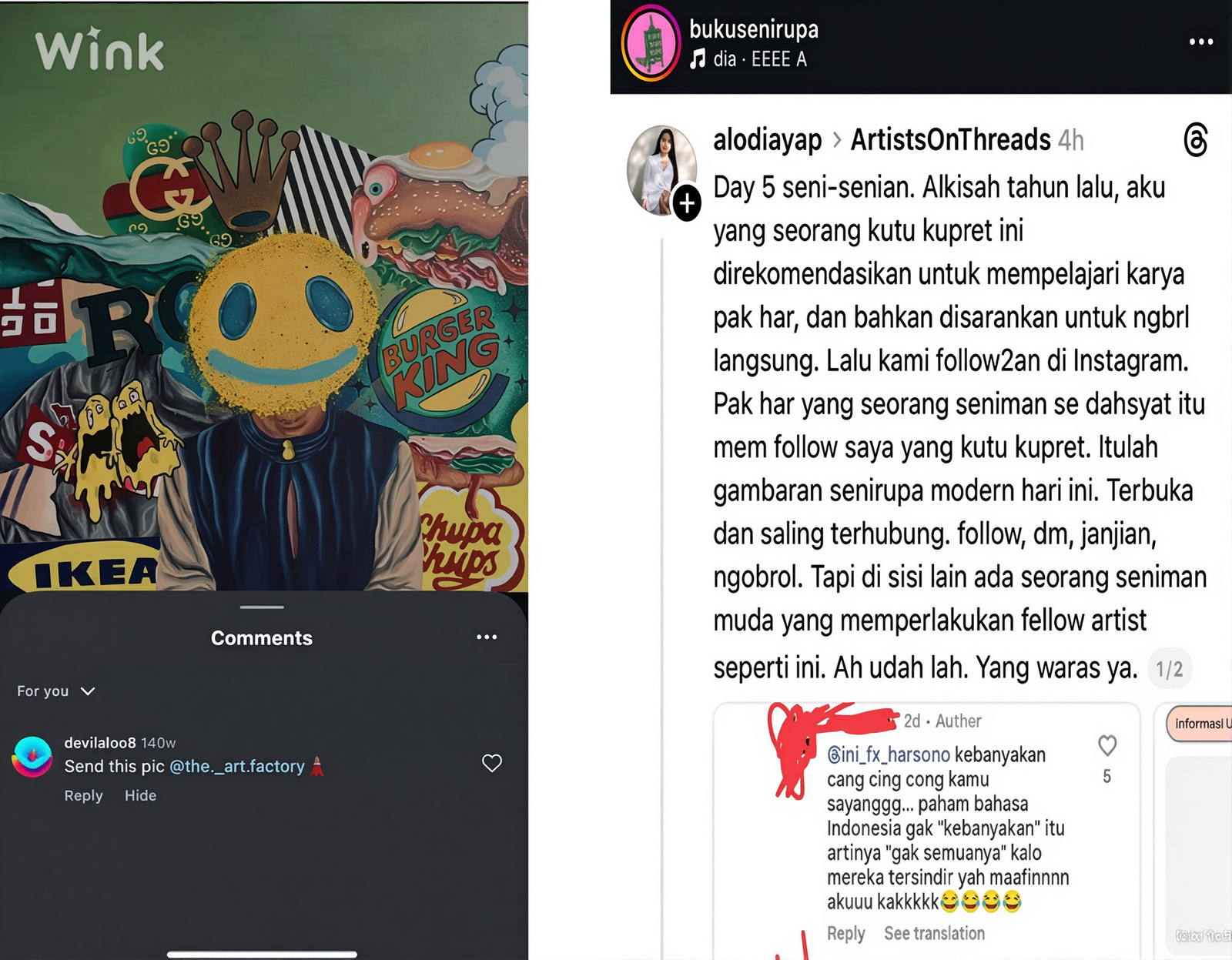
Direct messages facilitate deep personal conversations, where viewers can share personal stories triggered by the work, providing a deeper understanding of how art influences daily routines. Additionally, interactive elements such as polls in the comment column or questionnaires in virtual art exhibition applications allow artists to collect numerical information regarding audience tastes, such as the most preferred colors or the most captivating story aspects within a concept.
The influence of feedback on the artist's creative process
Interactions that occur on social media are faced by artists more broadly and rapidly within current digital technology developments. This align with our findings as seen in Table 1. Social Media, according to Zarella in (Widya N. 2019) (21), is a new media paradigm in the context of the marketing industry. Traditional media such as TV, radio, and newspapers facilitate one-way communication, while social media itself has connected two-way communication by allowing everyone to publish and contribute through online conversations. Direct feedback can significantly influence an artist's creative process, both positively and negatively. On one hand, positive comments can increase motivation, encouraging artists to explore further in their style, such as an artist adding modern and surrealist elements, for example, to a pop style after audience feedback.
| Research Focus | Empirical Findings | Analysis Approach | Research Relevance |
|---|---|---|---|
| Transformation of art exhibition spaces from physical to digital | Platforms such as Instagram, TikTok, Google Arts & Culture, and MoMA Online allow artworks to be accessed beyond geographical and institutional boundaries. | Exhibition spaces no longer depend solely on physical institutions such as galleries or museums. Digital media creates more open and flexible alternative spaces for art distribution. | Demonstrates a shift in the visual arts ecosystem toward technology-based distribution systems. |
| Democratization of art access | Independent artists and marginalized communities gain greater opportunities to publish artworks directly to the public. | Social media reduces the dominance of curators and formal institutions in determining artistic legitimacy. Audiences now play a larger role in shaping popularity. | Shows that digital media expands inclusiveness within contemporary visual art practices. |
| Two-way interaction between artists and audiences | Audiences provide comments, criticism, and emotional responses directly through comment sections and private messages. | The relationship between artists and audiences shifts from one-way communication to dialogic and participatory interaction. | Illustrates changing patterns of art appreciation in digital culture. |
| Collective production of meaning | Audiences connect artworks with personal experiences, social issues, and cultural identities. | Meaning is not formed solely by artists, but also through audience interaction within digital spaces. | Confirms that social media broadens the function of art as a social and cultural dialogue space. |
| Influence of feedback on the creative process | Audience criticism and appreciation influence the development of visual styles and artistic concepts. | The creative process in the digital era becomes more open to external influence compared to individualistic art models. | Indicates that artistic creativity in the digital era is more adaptive and participatory. |
On the other hand, constructive criticism can trigger revisions; for instance, a novel artist changing their visual characters based on suggestions about underdeveloped characters. However, this is also risky, as excessive or negative feedback can lead to creative burnout or overly compromising adjustments, reducing originality. Overall, these interactions make the creative process more collaborative, where artists no longer work in isolation but as part of a dynamic viewer ecosystem, which ultimately can produce works that are more relevant and resonant with society.
However, these interactions also bring their own challenges for artists, especially young artists today, such as the risk of over-reliance on public opinion which can limit artistic freedom or cause emotional pressure from negative criticism. An artist may feel burdened by viewer expectations, which can change the creative process from personal expression into a commodity that must satisfy the market. On the other hand, the benefits are also enormous for artists; features such as real-time comments during live drawing or voice messages from fans allow for spontaneous collaboration in the creative process of creating artwork, where artists can integrate external ideas into their work. Ultimately, this direct feedback received by artists transforms art from a solitary activity into a collective experience, where viewers are no longer passive spectators but active participants who shape creative evolution, ensuring that artwork remains alive and adapts to an ever-changing world.
The study also found ambivalence or mixed feelings and attitudes in the relationship between artists and audiences in virtual spaces. In this context, the roles of curators and critics are partially supplanted by algorithmic mechanisms and mass influence, manifested in likes, shares, and follower counts.
On one hand, social media opens up a vast space for appreciation and accelerates the distribution of works. On the other hand, algorithmic pressure and public expectations have the potential to influence artists’ artistic freedom. Social media platforms operate through algorithmic systems that indirectly shape patterns of visual production and determine which works receive greater public attention.
Conclusion
This study demonstrates that social media has transformed contemporary visual art practices, serving not only as a means of distributing works but also as a digital public space that shapes patterns of interaction, appreciation, and meaning-making between artists and audiences. This transformation reveals that the visual arts ecosystem is now moving toward a more participatory, open, and interactive model, where artists no longer rely entirely on conventional institutions such as galleries or physical exhibition spaces to build the image of their work and their relationship with the public. Thus, social media functions not only as a medium of communication but also as an arena for negotiation between artistic value, existence, and economic logic. The implications of this research highlight the importance of digital literacy and a critical understanding of digital visual culture for artists, curators, and audiences alike, so that the use of social media can be carried out in a more ethical, creative, and sustainable manner.
This study also contributes to enriching the field of contemporary visual arts research, particularly regarding the evolving relationship between art, technology, and public participation in virtual spaces. Nevertheless, this study has limitations because it focuses on analyzing digital interactions on specific platforms and has not yet compared the dynamics across social media platforms more broadly.
Furthermore, this study has not yet examined in depth the influence of algorithms, the digital economy, or audience responses from a quantitative perspective. Therefore, future research could be directed toward comparative studies across social media platforms, analysis of digital audience behavior, and exploration of the influence of artificial intelligence and algorithms on the creative practices of contemporary visual art.
Declarations
Conflict of Interest
The author(s) declare no conflict of interest.
Data Availability
The datasets generated and/or analyzed during the current study are available in the [Repository Name] repository, [DOI or URL].
Ethics Statement
Not applicable.
Funding Information
This work received no external funding.
References
- Rusyada GN, Sutiyono. Art and Social Media. Advances in Social Science, Education and Humanities Research. 2021:29-32. doi: https://doi.org/10.2991/assehr.k.210602.006
- Ismoyo SL. Kajian seni rupa di ruang publik dan pengaruhnya terhadap citra kota yogyakarta. askara. 2025;3(2):113-129. doi: https://doi.org/10.20895/askara.v3i2.1436
- Weng S. Public Responses to AI Usage in Art: A Social Media Analysis. 2026. doi: https://doi.org/10.58445/rars.3654
- Zulkifli Z. Seni Rupa di Era Disrupsi: Dampak Teknologi dalam Medan Sosial Seni Rupa. Gondang. 2021;5(1):134-142. doi: https://doi.org/10.24114/gondang.v5i1.24964
- Permana Y, Surtiari G. Bagaimana dunia seharusnya memahami dana ‘loss and damage’: Pelajaran dari pesisir Jakarta. 2025. doi: https://doi.org/10.64628/aan.5fdnc35ur
- Himawan W, Nugroho BA. Visual Tradisi dalam Karya Seni Lukis Kontemporer Sebagai Wujud Artistik Pengaruh Sosial Budaya. jousa. 2014;1(2):99-109. doi: https://doi.org/10.24821/jousa.v1i2.791
- Chhabra NK, Chaturvedi DD. Use of social media in arts marketing: a literature review. ShodhKosh J. Vis. Per. Arts. 2022;3(1). doi: https://doi.org/10.29121/shodhkosh.v3.i1.2022.1746
- Dimas Setyo. Digitalisasi Ruang Pameran: Potensi Media Sosial Sebagai Platform Pameran Karya Seni Rupa. pchukumsosial. 2025;2(3):337-346. doi: https://doi.org/10.70292/pchukumsosial.v2i3.87
- Yang Y. The Impact of Social Media on the Commercialization and Market Value of Visual Art. Lnep. 2024;40(1):144-150. doi: https://doi.org/10.54254/2753-7048/40/20240735
- Sanjaya R. Tren penelitian artificial intelligence dalam bidang sosial dan humaniora: kajian scientometrika pada database scopus tahun 2015–2025. Humanis. 2025;17(2):193-205. doi: https://doi.org/10.52166/humanis.v17i2.9498
- Fadli MR. Memahami desain metode penelitian kualitatif. hum. 2021;21(1):33-54. doi: https://doi.org/10.21831/hum.v21i1.38075
- Huang X. Research on the Aesthetic Education in the Age of Social Media. Chr. 2024;45(1):21-24. doi: https://doi.org/10.54254/2753-7064/45/20240063
- Putri Gracia Simatupang, I Gede Yudarta, Ni Wayan Ardini. The Impact of Information Overload on Art Appreciation Patterns in the Digital Era. journ.of.aest.creativartmngmt. 2026;5(1):12-18. doi: https://doi.org/10.59997/jacam.v5i1.6213
- Schraffenberger HK, Heide EVD. Audience-artwork interaction. Ijart. 2015;8(2):91. doi: https://doi.org/10.1504/ijart.2015.069550
- Rachmawanti R, Yuningsih CR. Art Exhibition in Digital Art Space as Social Interaction Arena for Artists Towards the Metaverse Era. Sostek. 2022;21(2). doi: https://doi.org/10.5614/sostek.itbj.2022.21.2.3
- Wen M. The Development and Influence of Internet Art in Social Media -- Taking Short Video App as an Example. Bcpep. 2023;8:234-242. doi: https://doi.org/10.54691/bcpep.v8i.4326
- Nurcahyati D, Salman Mohammadi Saragih D. Analysis of instagram usage as a media for publication and promotion of the 2023 artjog festival. arty. 2025;13(1):1-7. doi: https://doi.org/10.15294/arty.v13i1.1835
- Dong L. Communication Strategies for Digital Media Art in the Context of Social Media. Jid. 2025;11(3):24-27. doi: https://doi.org/10.54097/d2z3bq09
- Jenkins H, Purushotma R, Weigel M, Clinton K, Robison AJ. Confronting the Challenges of Participatory Culture: The MIT Press; 2009. doi: https://doi.org/10.7551/mitpress/8435.001.0001
- Kang X, Chen W, Kang J. Art in the Age of Social Media: Interaction Behavior Analysis of Instagram Art Accounts. Informatics. 2019;6(4):52. doi: https://doi.org/10.3390/informatics6040052
- Sofyan H, Toriq I. Peran Media Digital dalam Perkembangan Industri Kreatif. Prosiding Frima. 2018;(1):676-681. doi: https://doi.org/10.55916/frima.v0i1.254