RESEARCH ARTICLE
Reptile Diversity in the Nagari Simancuang Protected Forest, West Sumatra, Indonesia
Tropical Animals|Vol. 2, Issue 1, pp. 8-13 (2026)
CC BY 4.0-2026 Authors
Views
Downloads
Shares

Received
Mar 10, 2026Revised
May 13, 2026Accepted
Jun 26, 2026Published
Jun 28, 2026
Abstract
Tropical reptile diversity is increasingly threatened by habitat degradation and anthropogenic disturbance, while baseline ecological data in many protected forests of West Sumatra remain limited. This study aimed to document reptile diversity and habitat distribution in the Nagari Simancuang Protected Forest, West Sumatra, Indonesia. Reptile surveys were conducted from September to October 2023 using the Visual Encounter Survey (VES) method combined with line transect sampling in terrestrial and aquatic habitats during daytime and nighttime observations. A total of 56 individuals representing 13 species from 7 families were recorded, with Colubridae as the dominant family. The overall Shannon-Wiener Diversity Index (H') indicated moderate diversity (H' = 2.44), while terrestrial habitats showed higher diversity values than aquatic habitats. The Evenness Index (E = 1.0) suggested relatively even distribution among recorded species. Differences in species composition between habitat types were reflected by a low Sorensen Similarity Index (IS = 14%), indicating variation in habitat use and microhabitat characteristics among reptile species. The presence of endemic species such as Trimeresurus parias sumatranus highlights the ecological importance of the Nagari Simancuang Protected Forest for reptile conservation in West Sumatra. These findings provide baseline information that may support future ecological monitoring and conservation management within the protected forest area.
Introduction
Tropical forests serve as critical global reservoirs of biodiversity, supporting a wide range of flora and fauna that maintain essential ecosystem functions and ecological stability (1–3). Among vertebrate groups, reptiles play important ecological roles as both predators and prey within trophic networks, contributing to population regulation and ecosystem balance (4, 5). Indonesia is recognized as one of the world’s centers of herpetofaunal diversity, with approximately 1, 500 reptile species recorded across the archipelago. However, reptile populations are increasingly threatened by anthropogenic pressures, particularly habitat degradation, forest conversion, illegal logging, and exploitation associated with the wildlife trade. Recent global assessments indicate that approximately 21% of reptile species are threatened with extinction, especially in tropical forest ecosystems where habitat disturbance continues to intensify (6, 7).
Despite their ecological importance, reptile conservation efforts are frequently constrained by limited baseline information regarding species composition, distribution, and habitat associations in many tropical forest landscapes. Several studies in Indonesia have reported reptile diversity in areas such as Pulau Tambolongan and different habitat types in Lampung, demonstrating variation in species diversity across environmental conditions. Nevertheless, many protected forests in Sumatra remain poorly documented, including the Nagari Simancuang Protected Forest in South Solok Regency, West Sumatra. This protected area is considered important for wildlife conservation because it still retains relatively intact forest cover and diverse terrestrial and riparian microhabitats. However, information regarding reptile diversity and habitat distribution in this area has not previously been reported. In addition, although protected forest management has been regulated under Law No. 41 of 1999, localized disturbances such as illegal logging may still influence habitat quality and microclimatic conditions that are essential for reptile survival.
Therefore, this study was conducted to document reptile diversity in the Nagari Simancuang Protected Forest and to analyze differences in reptile assemblages between terrestrial and aquatic habitats using the Visual Encounter Survey (VES) and line transect methods (8, 9). The study evaluated species composition, Shannon-Wiener Diversity Index (H'), Evenness Index (E), and Sorensen Similarity Index (IS) to describe reptile community structure within the study area. Compared with previous reptile surveys in Indonesia, this study specifically emphasizes habitat-based comparisons within a protected forest ecosystem in South Solok Regency, thereby providing baseline ecological data to support future monitoring and conservation management of reptile communities in West Sumatra, including endemic taxa such as Trimeresurus parias sumatranus.
Methodology
Study Area and Research Design
This study was conducted in the Nagari Simancuang Protected Forest, West Sumatra, Indonesia. Geographically, the study site is located between 01°20ʹ18ʺ–01°46ʹ09ʺS and 100°28ʹ34ʺ–101°13ʹ10ʺE. The area is managed by UPTD KPHL Hulu Batang Hari Unit VII and is characterized by high-altitude tropical forest ecosystems with primary and secondary forest vegetation and riverine riparian zones. The research employed a descriptive-quantitative observational approach focused on two primary ecological zones: terrestrial habitats (primary and secondary forest floors) and aquatic habitats (riparian zones and stream beds). Data collection was carried out from September to October 2023. Microclimatic parameters, specifically air temperature (23–27 °C) and relative humidity (67–78%), were recorded descriptively using a digital thermo-hygrometer to evaluate the correlation between localized environmental conditions and reptile activity patterns.
Sampling Protocol and Survey Techniques
Reptile specimens were documented using the Visual Encounter Survey (VES) method integrated with line transect sampling. Two distinct 500-meter transects were established: an aquatic path and a terrestrial path, each with a 5-meter sweep width on both sides (totaling a survey area of 5, 000 m² per transect). To account for the distinct activity cycles of diurnal and nocturnal herpetofauna, surveys were performed during two temporal intervals: 08: 00–11: 00 (UTC+7) and 19: 00–22: 00 (UTC+7). Observations were conducted with two repetitions for each transect to ensure the adequacy of the sampling effort. Specimens were captured manually or with standardized herpetological tools to facilitate immediate identification and data collection. Consistent sampling was maintained by using the same research team for all observations to minimize observer bias.
Taxonomic Identification and Statistical Analysis
Captured individuals were documented via high-resolution macro photography for morphological analysis, utilizing diagnostic keys and authoritative herpetofaunal literature specific to Sumatra and Java. Morphometric variables, including body shape, scale counts, coloration patterns, and Snout-Vent Length (SVL), were recorded to ensure precise species-level identification before the specimens were released back into their original microhabitats. Community structure was quantified through the Shannon-Wiener Diversity Index (H'), the Evenness Index (E), and the Sorensen Similarity Index (IS) to compare species composition between habitats. All procedures adhered to ethical standards for wildlife research, ensuring no specimens were euthanized or permanently removed from the protected forest area.
All sampling activities followed ethical procedures for wildlife handling by minimizing physical stress during capture and ensuring that no specimens were permanently collected or euthanized. Research activities were conducted with permission and coordination from local authorities and community-based forest managers in the Nagari Simancuang Protected Forest area.
Results and Discussion
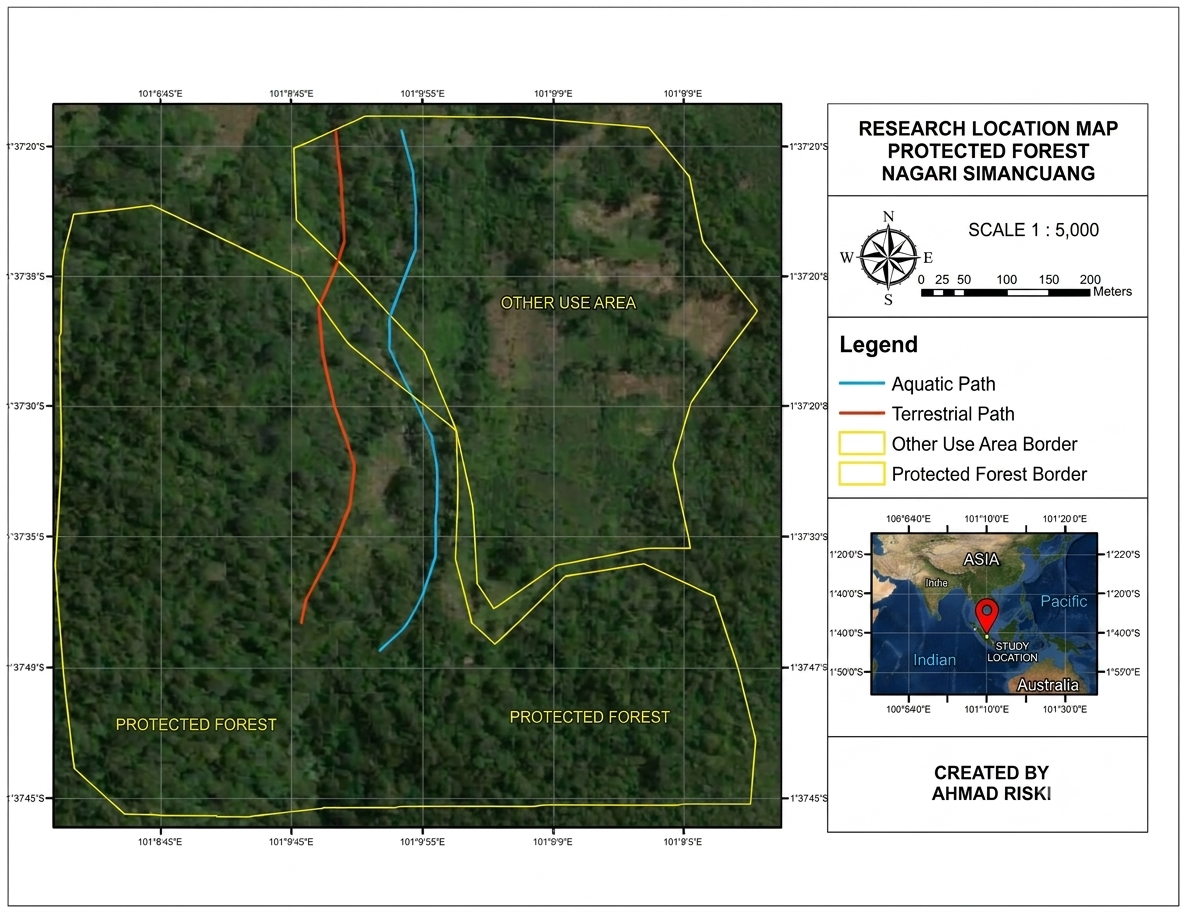
The herpetofaunal survey conducted in the Nagari Simancuang Protected Forest documented 56 reptile individuals representing 13 species from 7 families (see Table 1). The distribution of reptile species across terrestrial and aquatic habitats is presented in Figure 1. The family Colubridae showed the highest species richness, consisting of five species, namely Ahaetulla prasina, Boiga dendrophila, Dendrelaphis kopseni, Ptyas carinata, and Ptyas fusca. This dominance is consistent with previous studies reporting that members of Colubridae possess relatively broad ecological adaptability within tropical forest ecosystems in Sumatra (10, 11). In addition, the presence of Trimeresurus parias sumatranus, as shown in Figure 2, indicates the importance of the Nagari Simancuang Protected Forest as habitat for endemic and forest-associated reptile species.
| Family | Species | Terrestrial Individuals | Aquatic Individuals | Total Individuals |
|---|---|---|---|---|
| Agamidae | Gonocephalus chamaeleontinus | 3 | 0 | 3 |
| Colubridae | Ahaetulla prasina | 8 | 1 | 9 |
| Colubridae | Boiga dendrophila | 2 | 2 | 4 |
| Colubridae | Dendrelaphis kopseni | 5 | 0 | 5 |
| Colubridae | Ptyas carinata | 4 | 1 | 5 |
| Colubridae | Ptyas fusca | 6 | 0 | 6 |
| Elapidae | Naja sumatrana | 2 | 0 | 2 |
| Gekkonidae | Cyrtodactylus marmoratus | 4 | 1 | 5 |
| Gekkonidae | Gekko gecko | 3 | 0 | 3 |
| Scincidae | Eutropis multifasciata | 7 | 0 | 7 |
| Scincidae | Sphenomorphus sp. | 3 | 0 | 3 |
| Varanidae | Varanus salvator | 0 | 3 | 3 |
| Viperidae | Trimeresurus parias sumatranus | 1 | 0 | 1 |
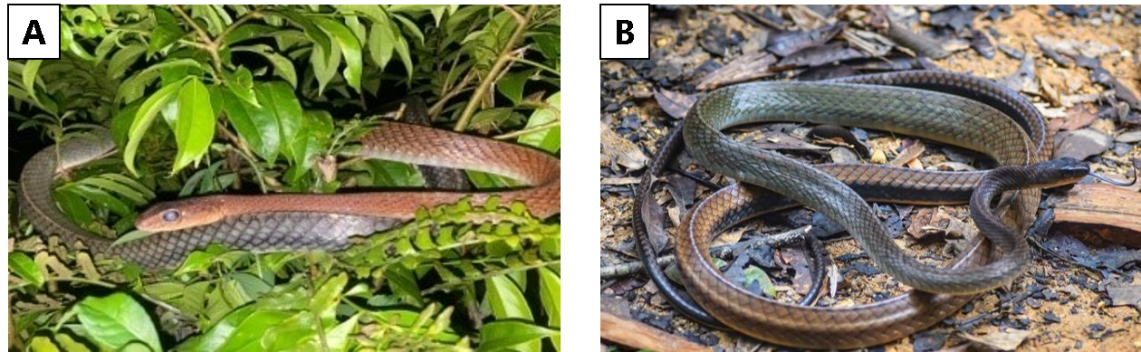
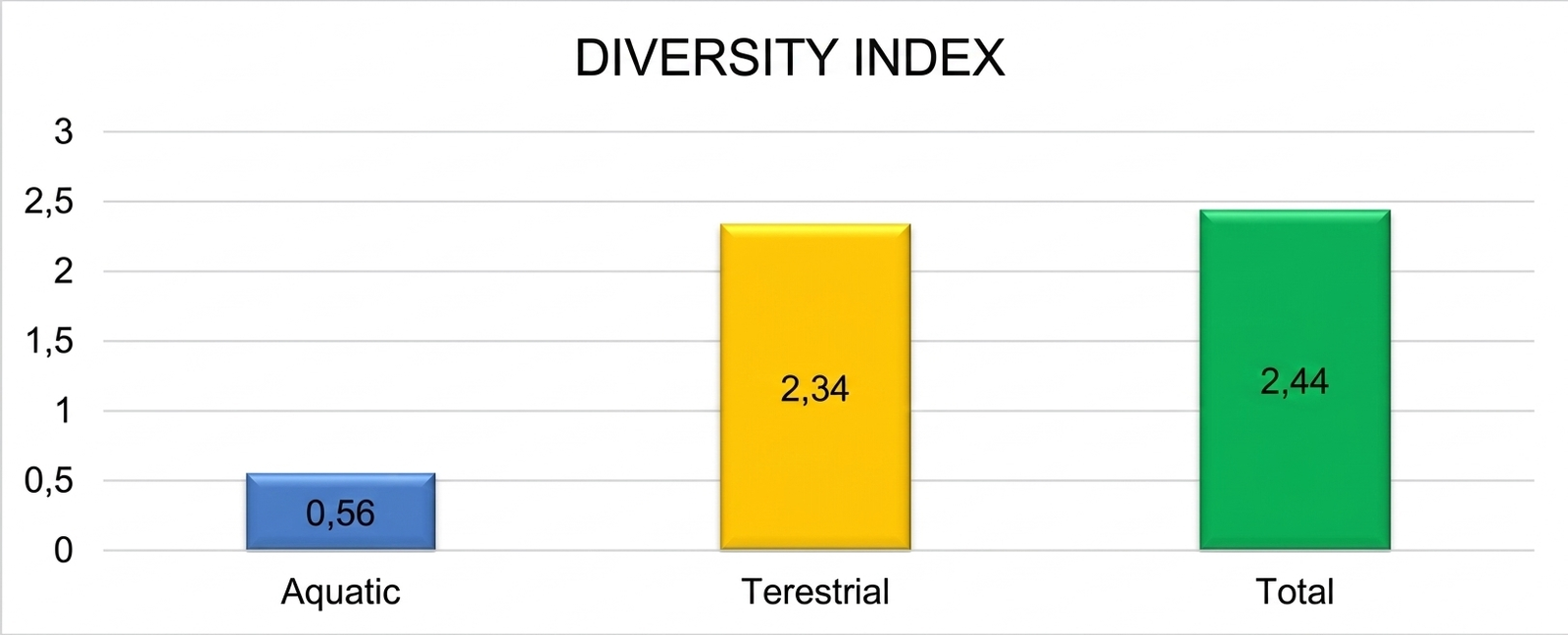
The Shannon-Wiener Diversity Index value obtained in this study was H’ = 2.44 (see Figure 3), indicating a moderate level of reptile diversity within the study area. Habitat-based analysis showed that terrestrial habitats had a moderate diversity index (H’ = 2.34), whereas aquatic habitats exhibited lower diversity (H’ = 0.56). This difference may be related to variation in habitat complexity, vegetation cover, substrate characteristics, and microhabitat availability between terrestrial and aquatic environments. Terrestrial habitats in the study area contained dense canopy cover, leaf litter, shrubs, and fallen logs that potentially provide shelter, thermoregulation sites, and feeding opportunities for reptiles. In contrast, aquatic habitats were generally characterized by muddy substrates and limited structural heterogeneity, which may support fewer reptile species. Similar relationships between habitat heterogeneity and reptile diversity have been reported by Kartika et al. (2021), Iyai et al. (2020), and Wijaya et al. (2023) (12–14).
The Evenness Index value obtained in this study was E = 1.0, indicating that the recorded individuals were relatively evenly distributed among species without clear numerical dominance by a single taxon. Although perfect evenness values are relatively uncommon in natural communities, this result may reflect the relatively balanced encounter frequency among reptile species during the survey period and the moderate number of individuals recorded for each species. Nevertheless, this interpretation should be considered cautiously because the study was based on observational survey data without inferential statistical testing. The Sorensen Similarity Index between terrestrial and aquatic habitats was relatively low (IS = 14%), indicating differences in species composition between the two habitat types. These differences may be associated with variation in vegetation structure, humidity, substrate conditions, prey availability, and microhabitat preferences among reptile species (15, 16).
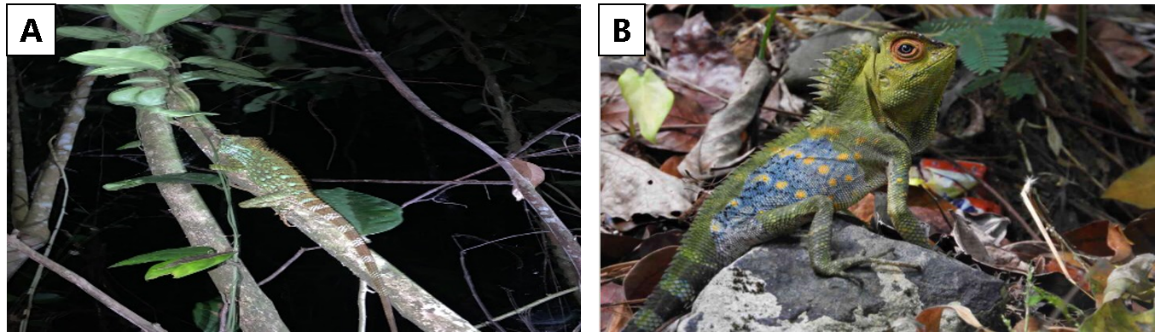
Field observations also indicated the presence of localized habitat disturbance, including evidence of illegal logging activities in several terrestrial areas. Such disturbances may potentially affect canopy cover and microclimatic conditions important for arboreal reptiles such as Gonocephalus chamaeleontinus, as shown in Figure 4. However, the present study did not statistically evaluate the direct relationship between habitat disturbance and reptile abundance or diversity. Therefore, these observations should be interpreted as preliminary ecological indications requiring further investigation through long-term monitoring and more comprehensive habitat analysis.
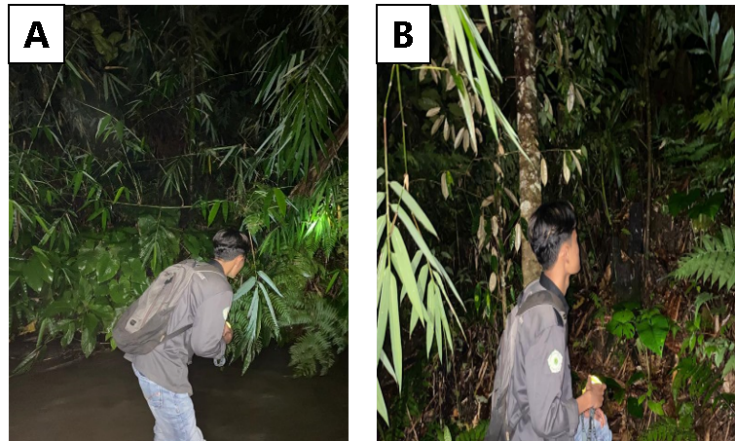
Recorded environmental conditions during field observations showed relatively high humidity and stable temperatures in both habitat types, conditions generally associated with suitable microhabitats for tropical reptiles. Previous studies have suggested that habitat disturbance and forest fragmentation can alter microclimatic stability and potentially influence reptile assemblages in tropical forests (18–21). It is important to note that microclimatic data in this rapid assessment were gathered descriptively to provide a general environmental snapshot rather than through continuous automated data loggers or high-frequency systematic sampling. Consequently, the lack of localized, time-series temperature and relative humidity datasets precludes a robust statistical modeling of microclimatic drivers on diurnal or nocturnal reptile activity cycles. This operational focus constitutes a limitation of the current baseline study. Future long-term conservation monitoring programs in the Nagari Simancuang Protected Forest should incorporate continuous microclimatic logging across vertical forest strata to fully elucidate how fine-scale environmental fluctuations and localized human disturbances interact to alter herpetofaunal microhabitat selection. The Visual Encounter Survey (VES) activities conducted in terrestrial and aquatic habitats are presented in Figure 5. Overall, the findings of this study provide baseline information regarding reptile diversity and habitat distribution in the Nagari Simancuang Protected Forest that may support future ecological monitoring and conservation management efforts in the region.
Conclusion
The Nagari Simancuang Protected Forest supports a moderate level of reptile diversity with relatively even species distribution between recorded taxa. Differences in species composition between terrestrial and aquatic habitats indicate variation in habitat use and microhabitat preferences among reptile species within the study area. In addition, the presence of endemic species such as Trimeresurus parias sumatranus highlights the ecological importance of this protected forest for reptile conservation in West Sumatra. The findings of this study provide baseline information regarding reptile diversity and habitat distribution in the Nagari Simancuang Protected Forest that may support future conservation planning and habitat management. Further long-term monitoring and more comprehensive ecological assessments are recommended to better understand temporal changes in reptile communities and the potential influence of habitat disturbance on herpetofaunal diversity.
Declarations
Conflict of Interest
The author(s) declare no conflict of interest.
Data Availability
Data supporting the findings of this study are available from the corresponding author upon reasonable request.
Ethics Statement
Not applicable.
Funding Information
This work received no external funding.
References
- Tohir RK, Siregar DI. Diversity and distribution of herpetofauna in institut teknologi sumatera campus area. Medkon. 2021;26(1):1-8. doi: https://doi.org/10.29244/medkon.26.1.1-8
- Baswedann BB, Adifitri RD, Fitrih GAY, Rizdallah MA, Djahabiyyah PA, Mefida LI, et al. Herpetofauna Diversity based on Microhabitat Characteristics at Two Altitudinal Levels in Bukit Barisan Selatan National Park. Biospecies. 2024;17(2):52-59. doi: https://doi.org/10.22437/biospecies.v17i2.31543
- Jabbar K, Nurlaela RS. Kajian Keanekaragaman Jenis Ikan di Perairan Laut Pesisir untuk Konservasi dan Pemanfaatan Berkelanjutan. karimahtauhid. 2025;4(2):1626-1633. doi: https://doi.org/10.30997/karimahtauhid.v4i2.17066
- Hanifa BF, Aini Q, Hasyim MA, Septiadi L. Herpetofauna in Ranu Darungan and Blok Ireng-Ireng, Bromo Tengger Semeru National Park: Before-After the COVID-19 and Eruption. J. Sylva Lestari. 2024;12(1):191-202. doi: https://doi.org/10.23960/jsl.v12i1.819
- Muammar Kadafi A, Fatiqin A, Priambodo B, Firmansyah R, Nur Aji FD, Wahyu Widodo T, et al. Herpetofauna Diversity and Conservation Value in The Mountain Ecosystems of Gunung Sigogor and Gunung Picis Nature Reserve, East Java, Indonesia. Jurnal Biotropika. 2024;12(3):128-137. doi: https://doi.org/10.21776/ub.biotropika.2024.012.03.03
- Gunawan DA, Wijayati QFC, Rahmajati RRD, Fitriana I, Fatmawati D, Arif IM. Canting Expedition: Herpetofauna Diversity in the Mendolo Village, Lebakbarang, Pekalongan. Biota : Jurnal Ilmiah Ilmu-Ilmu Hayati. 2024:269-275. doi: https://doi.org/10.24002/biota.v9i3.8131
- Cox N, Young BE, Bowles P, Fernandez M, Marin J, Rapacciuolo G, et al. A global reptile assessment highlights shared conservation needs of tetrapods. Nature. 2022;605(7909):285-290. doi: https://doi.org/10.1038/s41586-022-04664-7
- Putra AA, Yoza D, Setyawatiningsih SC. The Diversity of Reptile Species in Mangrove Ecotourism of Kampung Rawa Mekar Jaya, Siak Regency. Jpbn. 2023;9(2):462-473. doi: https://doi.org/10.36987/jpbn.v9i2.4266
- Siddiq AM, Wimbaningrum R, Sulistiyowati H, Setiawan R, Setiawan A, Wahono ND. Short Communication: A rapid survey of herpetofauna diversity in Bama coastal forest at Baluran National Park, Indonesia. Biodiversitas. 2024;25(5). doi: https://doi.org/10.13057/biodiv/d250550
- Kusrini M. Amfibi dan Reptil Sumatera Selatan Areal Sembilang-Dangku dan Sekitarnya. Jakarta: Pustaka Media Konservasi; 2020.
- Adjie AP, Setyawatiningsih SC. The Diversity and Conservation Status of Snakes in Rawa Mekar Jaya, Riau, Indonesia. Jurnal Biodjati. 2021;6(2):246-254. doi: https://doi.org/10.15575/biodjati.v6i2.9462
- Kartika NA, Dewi BS, Rusita R, Fitriana YR. Keanekaragaman dan kesamarataan reptil pada beberapa tipe habitat di universitas lampung. J. Peo.For.Env. 2021;1(2):21-30. doi: https://doi.org/10.23960/jopfe.v1i2.4882
- Iyai DA, Sada Y, Koibur JF, Bauw A, Worabay M, J. Wajo M, et al. Potensi dan Pemanfaatan Satwa liar di kampung Pasir Putih kabupaten Fakfak Papua Barat. Jbt. 2020;20(2):203-210. doi: https://doi.org/10.29303/jbt.v20i2.1788
- Wijaya I, Dewi BS, Fitriana YR, Darmawan A. Reptile Diversity on Several Habitat Types Utilization Blocks of Integrated Educational Conservation Forest, Wan Abdul Rachman Great Forest Park. J. Peo.For.Env. 2023;2(2):31-40. doi: https://doi.org/10.23960/jopfe.v2i2.5663
- Hasibuan MM, Dwiputro A, Fajri SR, Tohir RK. Keragaman Jenis Herpetofauna di Kawasan Hutan Kota Ranggawulung Kota Subang. Bioscientist j. ilm. bosbiol. 2022;10(2):1150. doi: https://doi.org/10.33394/bioscientist.v10i2.6460
- Yuliany EH. Keanekaragaman Jenis Herpetofauna (Ordo Squamata) di Kawasan Hutan Rawa Gambut Tropis Mangsang-Kepayang, Sumatera Selatan. Biota : Jurnal Ilmiah Ilmu-Ilmu Hayati. 2021:111-119. doi: https://doi.org/10.24002/biota.v6i2.2996
- Eprilurahman R, Hilmy MF, Qurniawan TF. Studi Keanekaragaman Reptil dan Amfibi di Kawasan Ekowisata Linggo Asri, Pekalongan, Provinsi Jawa Tengah. Berkala Penelitian Hayati. 2009;15(1):93-97. doi: https://doi.org/10.23869/bphjbr.15.1.200915
- Karin BR, Krone IW, Frederick J, Hamidy A, Laksono WT, Amini SS, et al. Elevational surveys of Sulawesi herpetofauna 1: Gunung Galang, Gunung Dako Nature Reserve. PeerJ. 2023;11:e15766. doi: https://doi.org/10.7717/peerj.15766
- Megantara EN, Jauhan J, Shanida SS, Husodo T, Fauzi DA, Hendrawan R, et al. Herpetofauna distribution in different land cover types of West Java, Indonesia. Biodiversitas. 2022;23(6). doi: https://doi.org/10.13057/biodiv/d230626
- Maulida R, Chelvin Cahya Kirnanda, Mirza Dikari Kusrini, Ani Mardiastuti. Wildlife in Disturbed Forests: Reptile and Amphibian Diversity in South Papua. Medkon. 2025;30(4):490. doi: https://doi.org/10.29244/medkon.30.4.490
- Souza-Oliveira AF, Zuquim G, Martins LF, Bandeira LN, Diele-Viegas LM, Cavalcante VH, et al. The role of environmental gradients and microclimates in structuring communities and functional groups of lizards in a rainforest-savanna transition area. PeerJ. 2024;12:e16986. doi: https://doi.org/10.7717/peerj.16986