RESEARCH ARTICLE
Formulation of Brown Algae Powdered Beverage from Sargassum crassifolium with Stevia rebaudiana as Natural Sweetener
Aquatic Functional Products|Vol. 2, Issue 1, pp. 1-8 (2026)
CC BY 4.0-2026 Authors
Views
Downloads
Shares

Received
Mar 12, 2026Revised
Apr 22, 2026Accepted
May 11, 2026Published
May 20, 2026
Abstract
Brown algae resources in Indonesia are abundant but remain underutilized for functional food applications, particularly in convenient beverage products. Although Sargassum crassifolium contains minerals and potentially beneficial bioactive compounds, its direct use is limited by bitter taste and marine odor. This study aimed to evaluate the effect of different ratios of S. crassifolium powder and Stevia rebaudiana powder on the physicochemical and sensory characteristics of a powdered beverage. A completely randomized design with four treatments and three replications was applied: K0 (100% algae:0% stevia), K1 (75%:25%), K2 (50%:50%), and K3 (25%:75%). Parameters analyzed included moisture content, ash content, reducing sugar content, and sensory attributes (texture, color, aroma, and taste). The formulation significantly affected all evaluated characteristics (p < 0.05). Moisture content ranged from 2.08% to 2.73%, ash content from 26.21% to 33.65%, and reducing sugar content from 5.92% to 15.82%. Treatment K3 showed the highest overall sensory acceptance, with aroma, texture, color, and taste scores of 3.23, 3.59, 3.43, and 3.53, respectively, while maintaining acceptable moisture content (2.73%). These findings indicate that stevia effectively improves the palatability of seaweed-based beverages and supports the utilization of underused S. crassifolium as a promising raw material for innovative powdered functional drinks.
Keywords:
Introduction
Seaweeds are increasingly recognized as valuable marine bioresources for food, pharmaceutical, cosmetic, and industrial applications. Among marine macroalgae, brown algae (Phaeophyceae) are particularly important because they contain functional polysaccharides such as alginate, fucoidan, and laminarin, as well as essential minerals and bioactive compounds with potential health benefits (1, 2). Indonesia is one of the world’s leading seaweed-producing countries, ranking second after China, with export volumes increasing from 181,524.7 tons in 2021 to 251,071.5 tons in 2023 before slightly declining to 241,070.7 tons in 2024 (3, 4). Despite this strong production capacity, the utilization of many native brown algae species remains limited. In several coastal areas, naturally abundant brown algae are still underused or regarded as shoreline waste, although they possess substantial economic and nutritional potential. One such species is Sargassum crassifolium, which is widely distributed in Indonesian waters, including Punaga Beach, Takalar, South Sulawesi. Previous studies have reported that this species contains alginate and iodine, both of which are important raw materials for food and industrial applications (5–7).
Beyond industrial uses, brown algae have attracted increasing attention as functional food ingredients. Species within the genus Sargassum are known to contain polysaccharides, polyphenols, flavonoids, terpenoids, and carotenoids that contribute to antioxidant, antimicrobial, antiviral, and anti-inflammatory activities (8, 9). In particular, fucoxanthin, a characteristic carotenoid pigment in brown algae, has been associated with anti-obesity effects and metabolic health benefits (10, 11). Brown algae have long been incorporated into traditional diets in countries such as Japan, Korea, China, and Vietnam in the form of vegetables, soups, teas, and beverages. However, despite the abundance of Sargassum resources in Indonesia, the development of innovative food products based on local brown algae remains relatively limited. Most previous studies have focused on extraction of specific compounds, while fewer have explored direct utilization of whole algae biomass in practical food formulations.
One promising approach is the development of powdered beverages, which offer advantages such as extended shelf life, convenient preparation, easier storage, and wider market accessibility. However, the direct incorporation of S. crassifolium into beverage products presents sensory challenges, particularly bitterness, astringency, and marine odor that may reduce consumer acceptance. These undesirable characteristics are related to the presence of saponins, phenolic compounds, minerals, and volatile constituents naturally found in seaweed matrices (12–14). Therefore, formulation strategies are required to improve palatability while maintaining the product’s health-oriented value. The use of Stevia rebaudiana as a natural low-calorie sweetener represents a suitable alternative. Stevia contains steviol glycosides such as stevioside and rebaudioside A, which are substantially sweeter than sucrose while contributing negligible calories (15, 16). These compounds are widely recognized as safe for food use, with an acceptable daily intake of 4 mg/kg body weight/day expressed as steviol equivalents. In addition to sweetness, stevia may help mask bitterness and undesirable marine flavors (17, 18).
To date, limited studies have systematically evaluated the formulation of powdered beverages based on S. crassifolium combined with stevia as a natural sweetener. Therefore, this study aimed to determine the effect of different ratios of S. crassifolium powder and S. rebaudiana powder on the quality characteristics of brown algae powdered beverages. The evaluated parameters included physicochemical properties (moisture content, ash content, and reducing sugar) and sensory attributes (texture, color, aroma, and taste). The findings of this study are expected to provide a scientific basis for the valorization of underutilized Indonesian brown algae into acceptable functional beverage products with higher added value.
Methodology
Study Design
This study employed an experimental approach to evaluate the effect of different formulation ratios of brown algae (S. crassifolium) powder and S. rebaudiana powder on the physicochemical and sensory characteristics of a powdered beverage. A Completely Randomized Design (CRD) was used with four treatments and three independent replications. All formulations were prepared on a mass basis (w/w, g per 100 g total powder mixture), consisting of K0 (100 g S. crassifolium:0 g stevia), K1 (75 g:25 g), K2 (50 g:50 g), and K3 (25 g:75 g). Measured responses included moisture content, ash content, reducing sugar content, and sensory attributes (texture, color, aroma, and taste).
The study was conducted from April to June 2022 at the Laboratory of Agricultural Technology, Faculty of Agriculture, Universitas Bosowa Makassar; the Agricultural Technology Laboratory, Universitas Negeri Makassar; and the Center for Industrial and Agricultural Products (BBIHP), Indonesia. All analyses were performed in triplicate using standardized analytical procedures.
Materials and Equipment
Fresh S. crassifolium biomass was collected from Punaga Beach, Takalar, South Sulawesi, Indonesia. Dried S. rebaudiana leaves were obtained from a commercial supplier in Sidoarjo, Indonesia. Analytical reagents used included glucose anhydrous standard (analytical grade, Merck, Germany), distilled water, Nelson reagent A and B (analytical grade), arsenomolybdate reagent (analytical grade), sodium hydroxide (1 N, Merck, Germany), and lead acetate (analytical grade, Merck, Germany).
Equipment used included an analytical balance (Shimadzu AY220, Japan), laboratory oven (Memmert UN55, Germany), muffle furnace (Nabertherm L3/11, Germany), UV–Visible spectrophotometer (Shimadzu UV-1800, Japan), blender (Philips HR2115, Indonesia), desiccator, porcelain crucibles, reflux condenser, volumetric flasks, pipettes, Erlenmeyer flasks, beakers, test tubes, and stainless-steel sieves (60 mesh).
Preparation of Sargassum crassifolium Powder
Approximately 7000 g fresh S. crassifolium were washed thoroughly with fresh water to remove sand, debris, and epiphytes, then soaked in fresh water for 10 h to reduce marine odor. Samples were dried in a hot-air oven at 70 °C for 10 h, milled using a blender, and sieved through a 60-mesh screen. The final powder was packed in laminated aluminum foil and stored at room temperature in airtight conditions until use.
Dried stevia leaves were cleaned, sun-dried for 48 h, milled, sieved through a 60-mesh screen, and stored in airtight laminated aluminum foil packaging until formulation. The complete process flow for the preparation of S. crassifolium powder as shown in Table 1.
| Step | Processing Stage | Description | Weight |
|---|---|---|---|
| 1 | Raw material | Fresh Sargassum crassifolium collected from Punaga Beach, Takalar | 7000 g |
| 2 | Washing | Seaweed washed with fresh water to remove sand, dirt, and attached impurities | — |
| 3 | Soaking | Seaweed soaked in fresh water for 10 h to reduce fishy odor | — |
| 4 | Drying | Oven drying at 70 °C for 10 h | — |
| 5 | Grinding | Dried seaweed ground using a blender | 1200 g |
| 6 | Sieving | Powder sieved using a 60-mesh sieve | 407 g |
| 7 | Final product | Brown algae powder (Sargassum crassifolium) | 310 g |
Preparation of Stevia rebaudiana Powder
Dried leaves of S. rebaudiana were processed into powder before use in the beverage formulation. The dried leaves were first ground using a blender to produce a fine powder. The ground material was then sieved through a 60-mesh sieve to obtain uniform particle size and remove unwanted impurities. The resulting stevia powder was subsequently stored in sealed aluminum packaging to prevent moisture absorption and maintain product stability. The overall process flow for the preparation of S. rebaudiana powder as shown in Table 2.
| Step | Processing Stage | Description | Weight |
|---|---|---|---|
| 1 | Raw material | Dried Stevia rebaudiana leaves | 4500 g |
| 2 | Washing | Leaves washed with clean water to remove impurities | — |
| 3 | Drying | Sun drying for 48 h | — |
| 4 | Grinding | Leaves ground using a blender | 50 g |
| 5 | Sieving | Powder sieved using a 60-mesh sieve | 48 g |
| 6 | Final product | Stevia rebaudiana powder | 38 g |
Formulation of Brown Algae Powdered Beverage
The powdered beverage formulation was produced by mixing S. crassifolium powder with S. rebaudiana powder according to the experimental treatments. Each treatment consisted of a predetermined ratio of algae powder and stevia powder to evaluate their effects on product quality.
The powders were mixed thoroughly until a homogeneous beverage powder was obtained. The formulated powders were then subjected to physicochemical analysis including moisture content, ash content, and reducing sugar determination, as well as preliminary sensory evaluation of texture. For sensory testing of color, aroma, and taste, the beverage powder was prepared by dissolving the sample in hot water at approximately 70 °C prior to evaluation. The overall process for the preparation of the powdered beverage product as shown in Table 3.
| Step | Processing Stage | Description |
|---|---|---|
| 1 | Raw materials | Brown algae powder (Sargassum crassifolium) and Stevia rebaudiana powder |
| 2 | Formulation | Powder mixed according to treatment ratios (100:0; 75:25; 50:50; 25:75) |
| 3 | Powder beverage | Instant brown algae beverage powder obtained after mixing |
| 4 | Chemical analysis | Moisture content, ash content, sugar content, and texture analysis |
| 5 | Packaging | Powder packed in aluminum foil packaging |
| 6 | Reconstitution | Powder brewed with hot water (70 °C) |
| 7 | Sensory evaluation | Aroma, color, and taste evaluated by panelists |
Physicochemical Analysis
Moisture Content
Moisture content was determined using the AOAC oven-drying method (2005). Approximately 5 g sample were placed in a pre-dried crucible and dried at 105 °C until constant mass. Moisture content was calculated using Eq. 1, where m₁ = initial sample mass (g), and m₂ = dried sample mass (g).
Ash Content
Ash content was determined by dry ashing. Approximately 5 g sample were incinerated in a muffle furnace at 500 °C for 7 h until light gray ash was obtained. Ash content was calculated using Eq. 2, where m₀ = empty crucible mass (g), m₁ = crucible + sample mass before ashing (g), and m₃ = crucible + ash mass after ashing (g).
Reducing Sugar Content
Reducing sugar content was determined using the Nelson–Somogyi method. One milliliter of sample extract (1 mg/mL) was mixed with 1 mL alkaline copper reagent, heated in a boiling water bath for 20 min, cooled, then reacted with arsenomolybdate reagent. Absorbance was measured at 540 nm using a UV–Vis spectrophotometer. Calibration was performed using glucose standard solutions (0, 20, 40, 60, 80, and 100 µg/mL), generating a linear regression equation with R² > 0.99. Reducing sugar content was calculated using Eq. 3, where C = glucose concentration from calibration curve (mg/mL), DF = dilution factor, V = extract volume (mL), and m = sample mass (g).
Because stevia glycosides are non-reducing compounds, any increase in measured reducing sugar values should not be interpreted as direct sugar contribution from stevia. The measured values may reflect naturally occurring soluble carbohydrates from algae or possible analytical interference in the Nelson–Somogyi assay.
Sensory Evaluation
Sensory evaluation was conducted using 25 semi-trained panelists (13 females and 12 males; age 20–25 years) recruited from the Agricultural Technology Program, Universitas Bosowa Makassar. Panelists had prior experience in basic sensory assessment and received orientation sessions regarding attribute definitions and use of the hedonic scale before testing.
Samples were coded using random three-digit numbers and presented in randomized serving order under controlled room conditions (25 ± 2 °C, neutral lighting, individual booths). Drinking water was provided for palate cleansing between samples. A five-point hedonic scale was used: 1 = strongly dislike, 2 = dislike, 3 = moderately like, 4 = like, and 5 = very like. Attributes evaluated included texture, color, aroma, and taste.
Statistical Analysis
Physicochemical data were analyzed using one-way analysis of variance (ANOVA) under a Completely Randomized Design. When significant differences were detected (p < 0.05), means were separated using the Least Significant Difference (LSD) test. Sensory hedonic data, being ordinal in nature, were analyzed using the non-parametric Friedman test followed by Wilcoxon signed-rank pairwise comparison with Bonferroni adjustment at p < 0.05. Statistical analyses were performed using SPSS version 25.0 (IBM Corp., USA).
Results and Discussion
Product Characteristics of Brown Algae Powdered Beverage
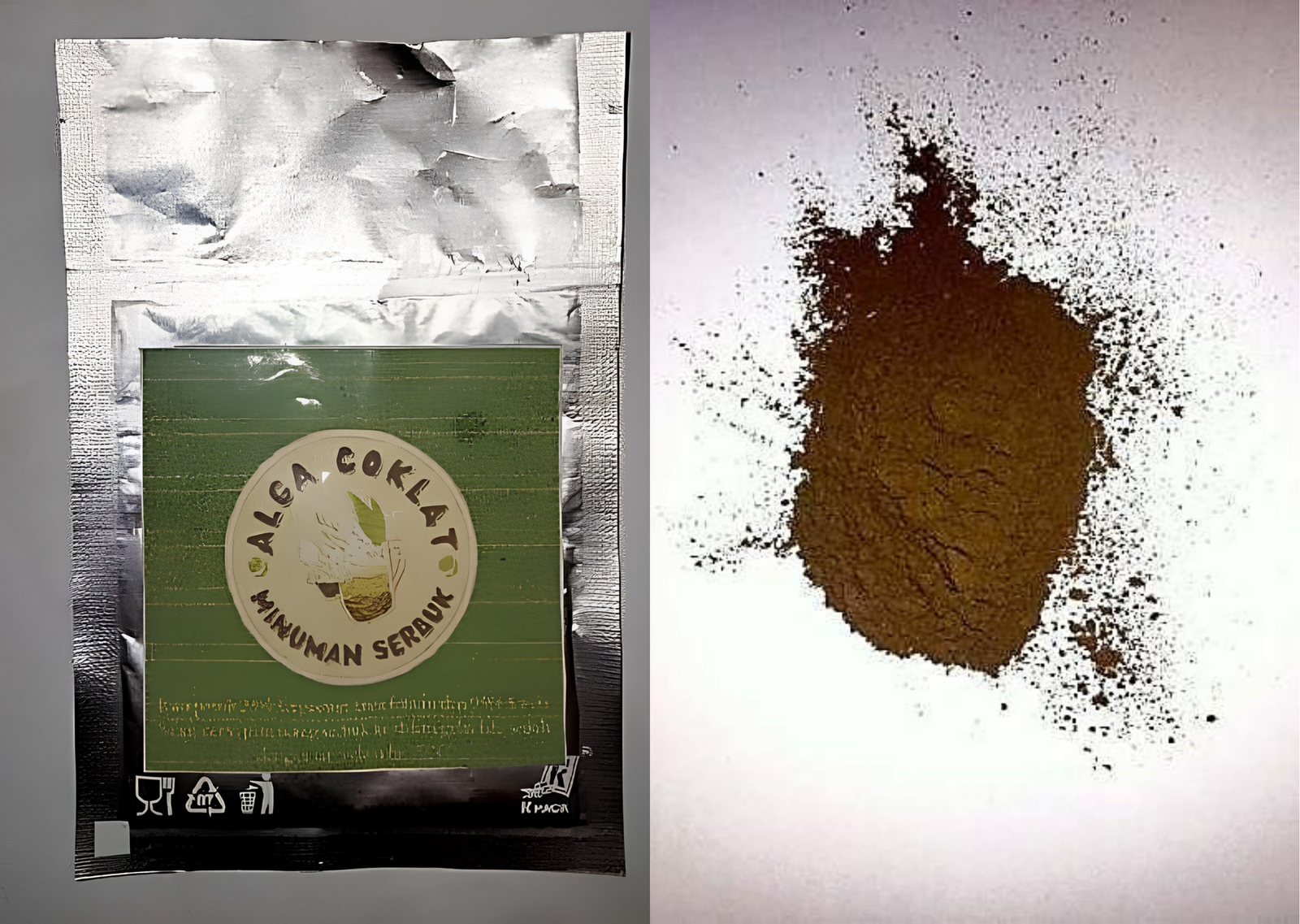
The formulated beverage powder produced from S. crassifolium and S. rebaudiana exhibited a fine brown to greenish-brown powder, reflecting the natural pigments of both raw materials (see Figure 1). The product remained free-flowing after packaging in laminated aluminum foil, indicating acceptable physical stability for dry beverage applications. In addition to tabulated data, graphical visualization such as bar charts for physicochemical parameters and radar charts for sensory attributes is recommended to improve comparative interpretation and facilitate identification of the optimal formulation (19).
Moisture Content
Moisture content ranged from 2.08 ± 0.05% to 2.73 ± 0.07% (Table 4), indicating low water content and good storage potential for all formulations (20). A gradual increase in moisture was observed as the proportion of stevia increased, particularly in K3, suggesting that stevia powder contributed more strongly to water retention than seaweed powder.
This phenomenon can be explained by the hygroscopic behavior of stevia powder, which is associated with the presence of hydrophilic compounds such as glycosides and residual polysaccharides capable of forming hydrogen bonds with water molecules. These functional groups increase water adsorption capacity, particularly under ambient humidity conditions. In contrast, oven-dried seaweed undergoes structural collapse and partial denaturation of polysaccharide matrices (e. g., alginate), reducing the availability of active binding sites for moisture interaction. As a result, the substitution of seaweed with stevia shifts the balance toward a more moisture-retentive system.
Additionally, particle morphology may contribute to this effect. Stevia powder typically has a finer particle size and larger specific surface area, enhancing surface adsorption of water vapor compared with the relatively coarser and fibrous seaweed particles. Similar mechanisms have been reported in plant-based powders where increased surface area and amorphous regions promote water sorption.
ANOVA showed a significant treatment effect (p < 0.05), confirming that formulation ratio influenced product moisture (21). From a practical perspective, all values remained below the Indonesian standard limit of 3% for powdered beverages, indicating that substitution with stevia did not compromise shelf-stability requirements. Therefore, although K3 had the highest moisture value, it still met acceptable quality standards.
| Treatment | Ratio of Brown Algae Powder:Stevia Powder | Moisture Content (%) |
|---|---|---|
| K0 | Sargassum crassifolium 100%:Stevia rebaudiana 0% | 2.08 |
| K1 | Sargassum crassifolium 75%:Stevia rebaudiana 25% | 2.31 |
| K2 | Sargassum crassifolium 50%:Stevia rebaudiana 50% | 2.36 |
| K3 | Sargassum crassifolium 25%:Stevia rebaudiana 75% | 2.73 |
Ash Content
Ash content ranged from 26.21 ± 0.42% to 33.65 ± 0.58% (Table 5), substantially higher than values commonly reported for conventional powdered beverages. This result reflects the mineral-rich nature of marine algae, which naturally accumulate inorganic constituents such as potassium, sodium, calcium, magnesium, and iodine. Therefore, the high ash values should be interpreted primarily as an indicator of mineral density rather than product deterioration (22).
The highest ash content was recorded in K2 (50:50), while a decline occurred in K3 despite a higher stevia proportion. This non-linear trend suggests a complex interaction between mineral sources and matrix composition rather than a simple dilution effect. At the K2 ratio, the system may reach an optimal balance where minerals from seaweed (rich in inorganic salts) and stevia (containing trace minerals and organic-bound elements) contribute synergistically, leading to higher total ash retention after combustion. In contrast, further reduction of seaweed in K3 likely decreases the contribution of structurally bound marine minerals such as alginate-associated cations, which are known to form stable complexes with divalent ions (e. g., Ca²⁺ and Mg²⁺).
Another possible explanation involves thermal decomposition behavior during ash analysis. Organic matrices influence mineral retention depending on their ability to protect or release bound minerals during incineration. The relatively higher organic fraction in stevia-rich formulations may promote volatilization or loss of certain mineral fractions at high temperatures, resulting in lower measured ash content compared with the more mineral-dense and thermally stable seaweed matrix.
ANOVA indicated significant differences among treatments (p < 0.05). These findings suggest that the beverage may serve as a mineral-rich functional product; however, future studies should quantify specific minerals (e. g., iodine, sodium, potassium, calcium) to better evaluate nutritional significance and regulatory suitability.
| Treatment | Ratio of Brown Algae Powder:Stevia Powder | Ash Content (%) |
|---|---|---|
| K0 | Sargassum crassifolium 100%:Stevia rebaudiana 0% | 26.21 |
| K1 | Sargassum crassifolium 75%:Stevia rebaudiana 25% | 27.55 |
| K2 | Sargassum crassifolium 50%:Stevia rebaudiana 50% | 33.65 |
| K3 | Sargassum crassifolium 25%:Stevia rebaudiana 75% | 26.85 |
Reducing Sugar Content
Reducing sugar content ranged from 5.92 ± 0.21% to 15.82 ± 0.36% (Table 6), with the highest value observed in K3. Because steviol glycosides are not classified as reducing sugars, the increase in measured values should not be directly attributed to stevia sweetness compounds.
Mechanistically, the increase in apparent reducing sugars may be linked to the partial hydrolysis of complex polysaccharides present in seaweed, such as laminarin and alginate, during thermal processing. Heat and moisture can promote depolymerization, generating smaller sugar units that react with the Nelson–Somogyi reagent. Furthermore, the presence of stevia may enhance solubility and extraction efficiency of these degradation products, leading to higher measurable reducing sugar levels in K2 and K3.
It is also important to consider methodological limitations. The Nelson–Somogyi method is based on redox reactions and can be influenced by interfering compounds such as phenolics or other reducing substances present in plant matrices. Therefore, the observed increase may reflect not only true sugars but also co-extracted reducing compounds, highlighting the need for more selective analytical techniques such as HPLC.
Despite treatment differences (p < 0.05), all values remained within regulatory limits for powdered beverages.
| Treatment | Ratio of Brown Algae Powder:Stevia Powder | Sugar Content (%) |
|---|---|---|
| K0 | Sargassum crassifolium 100%:Stevia rebaudiana 0% | 6.31 |
| K1 | Sargassum crassifolium 75%:Stevia rebaudiana 25% | 5.92 |
| K2 | Sargassum crassifolium 50%:Stevia rebaudiana 50% | 9.99 |
| K3 | Sargassum crassifolium 25%:Stevia rebaudiana 75% | 15.82 |
Sensory Evaluation
Sensory acceptance differed significantly among formulations (p < 0.05), and overall preference improved as the proportion of stevia increased. A radar chart is recommended to clearly visualize simultaneous changes in texture, color, aroma, and taste across treatments. Based on the combined sensory profile, K3 showed the most favorable overall acceptance.
Texture
Texture scores ranged from 3.36 to 3.59. Although differences were modest, K3 obtained the highest score, suggesting that higher stevia content improved powder smoothness and mouthfeel. This may be related to the finer particle size of stevia powder compared with seaweed powder, reducing the coarse perception caused by fibrous algae particles.
Color
Color scores ranged from 2.59 to 3.43, with stevia-containing treatments rated higher than K0. The addition of stevia appeared to reduce the dark brown appearance of seaweed-only formulations and produced a lighter greenish-brown beverage that was more visually acceptable to panelists. Visual acceptance is particularly important because it strongly influences first impressions before tasting.
Aroma
Aroma scores showed the largest improvement among sensory attributes, increasing from 1.69 in K0 to 3.23 in K3. This indicates that stevia effectively reduced or masked the marine odor characteristic of Sargassum. Since aroma often determines initial rejection or acceptance, this improvement is technologically important for commercialization of seaweed beverages.
Taste
Taste scores increased markedly from 1.75 in K0 to 3.52 in K3, representing the strongest driver of consumer acceptance. The sweetening effect of stevia likely masked bitterness associated with saponins and phenolic constituents in seaweed. This confirms that sweetness balancing is essential when incorporating brown algae into beverage systems.
Considering both physicochemical and sensory responses, K3 (25% S. crassifolium:75% S. rebaudiana) provided the best consumer acceptability, particularly for aroma and taste, while maintaining acceptable moisture levels. However, K2 demonstrated the highest ash content, indicating superior mineral contribution. Therefore, formulation choice depends on product objective: K3 is preferable for sensory-driven commercialization, whereas K2 may be more suitable for positioning as a mineral-enriched functional beverage. Future work should include antioxidant activity, mineral profiling, volatile compound analysis, and larger-scale consumer testing to validate market potential.
Conclusion
This study demonstrated that the ratio of S. crassifolium powder and S. rebaudiana powder significantly affected the physicochemical and sensory properties of the formulated powdered beverage. Increasing the proportion of stevia was associated with higher moisture content and higher measured reducing sugar values, while ash content varied according to the combined mineral contributions of both raw materials.
Among the tested formulations, K3 (25% S. crassifolium:75% S. rebaudiana) showed the most favorable overall sensory acceptance, particularly for aroma and taste, while maintaining moisture content within the acceptable standard for powdered beverages. This formulation contained 2.73% moisture, 26.86% ash, and 15.82% measured reducing sugar.
These findings indicate that stevia can be effectively used as a natural sweetener to improve the palatability of seaweed-based powdered beverages, especially by reducing undesirable marine odor and bitter taste. However, the present study evaluated formulation quality parameters only; therefore, direct functional health claims cannot yet be concluded. Further studies are needed to characterize bioactive compounds, antioxidant capacity, mineral bioavailability, storage stability, and broader consumer acceptance before commercialization.
Declarations
Conflict of Interest
The authors declare no conflict of interest.
Data Availability
All data generated or analyzed during this study are included in this published article.
Ethics Statement
Not applicable.
Funding Information
This work received no external funding.
References
- Tagliapietra BL, Clerici MTPS. Brown algae and their multiple applications as functional ingredient in food production. Food Research International. 2023;167:112655. doi: https://doi.org/10.1016/j.foodres.2023.112655
- Lomartire S, Gonçalves AMM. An Overview of Potential Seaweed-Derived Bioactive Compounds for Pharmaceutical Applications. Marine Drugs. 2022;20(2):141. doi: https://doi.org/10.3390/md20020141
- Indonesia BS. BPS-Statistics Indonesia. 2025. Exports of Seaweed and Other Algae by Major Countries of Destination, 2012-2024.
- Organization UNID. Blue Economy Policy Brief: Indonesia’s Seaweed Industry as Key Sources of Growth. Jakarta / Vienna; 2025.
- Kadi A. Beberapa catatan kehadiran marga Sargassum di perairan Indonesia. Oseana. 2005;30(4):19–29.
- Kasri K. Seaweed-Based Local Economic Development in Takalar District. ponggawa. 2023:55-64. doi: https://doi.org/10.35911/ponggawa.v2i1.25887
- Cokrowati N, Junaidi M, Affandi RI, Sumsanto M, Muahiddah N, Anggraini ID, et al. The Distribution, Habitat Characteristics, and Bioenergy Potential of Sargassum sp. in Indonesia. Ijdne. 2024;19(6):2049-2062. doi: https://doi.org/10.18280/ijdne.190621
- Silva D, Bambaranda B, Mudannayake DC. Bioactive, Microbiological, and Sensory Properties of Sargassum cristaefolium and Sargassum crassifolium Herbal Tea. Adv. Technol. 2022;2(1):38-49. doi: https://doi.org/10.31357/ait.v2i1.5456
- Rohim A, - Y, Estiasih T. Senyawa-senyawa bioaktif pada rumput laut cokelat sargassum sp. : ulasan ilmiah. Jtp. 2019;20(2):115-126. doi: https://doi.org/10.21776/ub.jtp.2019.020.02.5
- Maeda. Anti-obesity and anti-diabetic effects of fucoxanthin on diet-induced obesity conditions in a murine model. Mol Med Rep. 2009;02(06). doi: https://doi.org/10.3892/mmr_00000189
- Mumu M, Das A, Emran TB, Mitra S, Islam F, Roy A, et al. Fucoxanthin: A Promising Phytochemical on Diverse Pharmacological Targets. Front. Pharmacol. 2022;13. doi: https://doi.org/10.3389/fphar.2022.929442
- Damayanti AN, Riyadi PH, Dewi EN. Characteristic and boactive potential of brewed Sargassum sp. with the additional bay leaf (Syzygium polyanthum). IOP Conf. Ser.: Earth Environ. Sci. 2021;890(1):012044. doi: https://doi.org/10.1088/1755-1315/890/1/012044
- Diharmi A, Edison E, Prida EA, Subaryono S, Hidayat T. Chemical composition, bioactive compounds, antioxidant activity, and inhibitor alpha-glucosidase enzyme of Sargassum sp. Food Sci. Technol (Campinas). 2023;43. doi: https://doi.org/10.5327/fst.4623
- Ramadhan W, Yanti MD, Tarman K, Oktaviarty V, Meydia. Synergistic Formulation and Shelf Stability Evaluation of Brown Seaweed (Sargassum sp.) Infused Tisane Enhanced with Butterfly Pea Flower and Sappan Wood. BIO Web Conf. 2024;92:02002. doi: https://doi.org/10.1051/bioconf/20249202002
- Kurek JM, Krejpcio Z. The functional and health-promoting properties of Stevia rebaudiana Bertoni and its glycosides with special focus on the antidiabetic potential – A review. Journal of Functional Foods. 2019;61:103465. doi: https://doi.org/10.1016/j.jff.2019.103465
- Peteliuk V, Rybchuk L, Bayliak M, Storey KB, Lushchak O. Natural sweetener stevia rebaudiana: Functionalities, health benefits and potential risks. Vol. 20, EXCLI Journal. Leibniz Research Centre for Working Environment and Human Factors; 2021. p. 1412–30.
- Orellana-Paucar AM. Steviol Glycosides from Stevia rebaudiana: An Updated Overview of Their Sweetening Activity, Pharmacological Properties, and Safety Aspects. Molecules. 2023;28(3):1258. doi: https://doi.org/10.3390/molecules28031258
- Yang Y, Xu M, Wan Z, Yang X. Novel functional properties and applications of steviol glycosides in foods. Current Opinion in Food Science. 2022;43:91-98. doi: https://doi.org/10.1016/j.cofs.2021.11.004
- Siamando T, Sahetapy JF, Kojong M. The Perception of Manadonese Society to the Fuzz Food. Ijsshr. 2023;06(02). doi: https://doi.org/10.47191/ijsshr/v6-i2-27
- Amalya Nurul Khairi, Furayda N. Karakteristik Fisikokimia Minuman Serbuk Instan Dengan Variasi Bonggol Nanas (Ananas comosus Merr) dan Maltodekstrin. Pftj. 2023;10(1):18-24. doi: https://doi.org/10.23969/pftj.v10i1.6998
- Febrianti FN, Puspitasari D, Alfitri KN. Pendekatan kadar air kritis untuk evaluasi umur simpan cookies kacang merah dan bayam merah sebagai snack pencegah anemia. Jtpg. 2025;24(2):88-96. doi: https://doi.org/10.33508/jtpg.v24i2.7692
- Circuncisão AR, Catarino MD, Cardoso SM, Silva AMS. Minerals from Macroalgae Origin: Health Benefits and Risks for Consumers. Marine Drugs. 2018;16(11):400. doi: https://doi.org/10.3390/md16110400