RESEARCH ARTICLE
Synergistic Enrichment of Catfish (Pangasius sp.) Nuggets with Soybean Flour: Effect on Iron, Zinc Density, and Organoleptic Acceptability
Aquatic Functional Products|Vol. 2, Issue 1, pp. 33-39 (2026)
CC BY 4.0-2026 Authors
Views
Downloads
Shares

Received
Apr 15, 2026Revised
Jun 20, 2026Accepted
Jun 22, 2026Published
Jun 30, 2026
Abstract
To address the high prevalence of stunting among toddlers in the Lima Puluh Kota district, this study aimed to formulate and characterize catfish (Pangasius sp.) nuggets enriched with soybean flour (Glycine max) as a sustainable, nutrient-dense supplementary food. Using a completely randomized design (CRD), four levels of soybean flour incorporation were evaluated: F0 (0%), F1 (15%), F2 (20%), and F3 (25%). Nutritional quality was assessed through proximate analysis and Atomic Absorption Spectrophotometry (AAS) for minerals, while sensory attributes (color, aroma, taste, and texture) were evaluated by 25 semi-trained panelists using a hedonic scale, followed by Kruskal-Wallis and Mann-Whitney tests. Results indicated that formula F3 (25% soybean flour) was the most preferred formulation, achieving the highest median acceptance score of 24 out of 28, with significant differences observed in aroma, taste, and texture (p < 0.05). Chemical analysis of F3 revealed a composition of 11.26% protein, 24.50 mg/100 g iron, and 2.46 mg/100 g zinc, fulfilling the regional regulatory criteria for "high iron" claims. These findings demonstrate that integrating 25% soybean flour into catfish nuggets successfully enhances micronutrient density while maintaining organoleptic acceptability. Consequently, this formulation holds strong potential as an intervention food for stunting prevention; however, future longitudinal clinical trials are warranted to evaluate its actual bioefficacy on the anthropometric indices of stunted children.
Keywords:
Introduction
Stunting is a manifestation of chronic growth failure resulting from an accumulation of prolonged nutritional deficiencies, typically occurring from pregnancy until the age of 24 months (1). This condition is often exacerbated by a lack of adequate catch-up growth during the critical first 1,000 days of life (2–4). Globally, the prevalence of stunting was recorded at approximately 22.2% in 2017, affecting 150.8 million children, with Asia contributing to 55% of this burden (5, 6). In Lima Puluh Kota Regency, where baseline stunting rates have historically exceeded national targets due to localized dietary gaps in micronutrient-dense complementary foods, targeted interventions are critical (7, 8). Given that stunting can be mitigated by increasing the intake of high-quality protein, iron (Fe), and zinc (Zn) (9, 10), the development of nutrient-dense food alternatives remains a high priority for public health improvements in this region.
Traditional approaches to supplementary feeding have explored various protein-rich products, including nuggets made from tuna or chicken (11–13). While these interventions have demonstrated potential in increasing caloric and protein intake, many existing formulations do not specifically optimize the density of essential micronutrients like iron and zinc required for optimal skeletal and cognitive development in stunted toddlers. Furthermore, single-ingredient fish products may occasionally lack the balanced mineral profile or functional structural properties required to maintain optimal texture and sensory appeal for young children (14). Consequently, there is a clear need to develop composite food matrices that balance both micronutrient density and consumer acceptability.
To address these limitations, this study proposes a composite matrix leveraging the synergy between local catfish (Pangasius sp. ) and soybean flour (Glycine max). Catfish is highly aquaculture-resilient and widely accessible in the Lima Puluh Kota region, offering a cost-effective source of high-biological-value animal protein and lipids that promote nutrient absorption (15, 16). Concurrently, soybean flour acts as a potent plant-based fortificant, providing a dense source of non-heme iron and zinc that structurally complements fish-based proteins (17). This specific plant-animal synergy offers an affordable, culturally familiar alternative to expensive marine fish, maximizing local supply chains for sustainable intervention.
Despite the potential of such food-based strategies, empirical data regarding the optimization of composite catfish and soybean matrices remain limited, particularly concerning compliance with specific mineral-density regulatory standards. Therefore, the primary objective of this investigation is to determine the optimal ratio of catfish to soybean flour. By systematically evaluating the organoleptic quality and chemical composition across varying concentrations, this study aims to resolve the trade-off between nutritional fortification and sensory preference, providing a viable formula for stunting prevention.
Methodology
Study Design and Location
This study employed a laboratory-based experimental design utilizing a Completely Randomized Design (CRD) with two independent analytical replications per batch. To ensure analytical precision and minimize experimental error, all down-stream proximate and mineral characterizations were executed in analytical triplicates for each batch, and the resulting mean values were utilized for statistical testing.
The research was conducted between April and December 2021. The formulation and sensory evaluations were carried out at the Food Administration Nutrition Laboratory, Faculty of Public Health, Andalas University. Subsequent chemical and micronutrient analyses were performed at the Non-Ruminant Nutrition Laboratory (Faculty of Animal Husbandry) and the Water Laboratory (Faculty of Engineering), Andalas University.
Preparation of Soybean Flour
Yellow soybeans were manually sorted to remove impurities and defective seeds. The selected soybeans were soaked in water for 3 h to increase moisture content and facilitate heat conductivity, followed by a blanching process for 10 min to inactivate the lipoxygenase enzyme responsible for the beany flavor. After draining, the soybeans were dried in an oven at 60 °C for 24 h. The dried soybeans were then milled and passed through a 100-mesh sieve to obtain fine soybean flour.
Formulation and Preparation of Nuggets
Four nugget formulations were developed by substituting wheat flour with varying concentrations of soybean flour: F0 (0% substitution; control comprising 100 g wheat flour), F1 (15 g soybean flour, 85 g wheat flour), F2 (20 g soybean flour, 80 g wheat flour), and F3 (25 g soybean flour, 75 g wheat flour). The core dough for all formulations contained 300 g of minced fresh catfish meat, 50 ml of ice water to maintain protein stability during blending, 1 egg, 15 g of salt, 5 g of pepper, 10 g of sugar, 30 g of shallots, and 30 g of garlic. The homogenous mixture was placed into aluminum foil-lined molds and steamed for 30 min. Once cooled, the steamed dough was cut into standardized pieces, dipped in egg white, coated with breadcrumbs, and fried until golden brown.
Sensory Evaluation
The organoleptic acceptability of the nuggets was assessed by 25 semi-trained panelists drawn from a institutional sensory pool. These panelists were utilized strictly for preliminary consumer preference evaluation and basic attribute intensity screening rather than formal Quantitative Descriptive Analysis (QDA), serving as an initial screening mechanism for the novel food matrix. This panel size was selected in accordance with established screening protocols for preliminary consumer preference testing of modified food matrices. A 7-point hedonic scale (ranging from 1 = strongly dislike to 7 = strongly like) was used to evaluate consumer preference indices. Additionally, a hedonic quality scale was employed to specify the intensity of specific sensory attributes, including color (dark to bright), aroma (beany to fragrant), taste (bland to savory), and texture (dense to soft).
Nutritional Analysis
Proximate composition was determined using standard laboratory procedures: moisture content via the oven drying method (100-105 °C) until a constant weight was achieved; ash content by incineration in a muffle furnace at 550 °C; crude protein using the Kjeldahl method (N x 6.25); and crude fat using Soxhlet extraction. Carbohydrate content was calculated by difference. The micronutrient density, specifically iron (Fe) and zinc (Zn), was quantified using Atomic Absorption Spectrophotometry (AAS).
Statistical Analysis
Quantitative data were processed using Microsoft Excel 2010 and SPSS 16 software. The sensory preference scores were analyzed using the non-parametric Kruskal-Wallis test at a 5% significance level (α = 0.05), with subsequent post-hoc pair-wise comparisons conducted via the Mann-Whitney U test. Hedonic quality (intensity) scores were tabulated as mean intensity indices and evaluated descriptively to contextualize the flavor and textural profiles of the formulations.
Results and Discussion
Visual and Physical Transformation of the Fortified Product
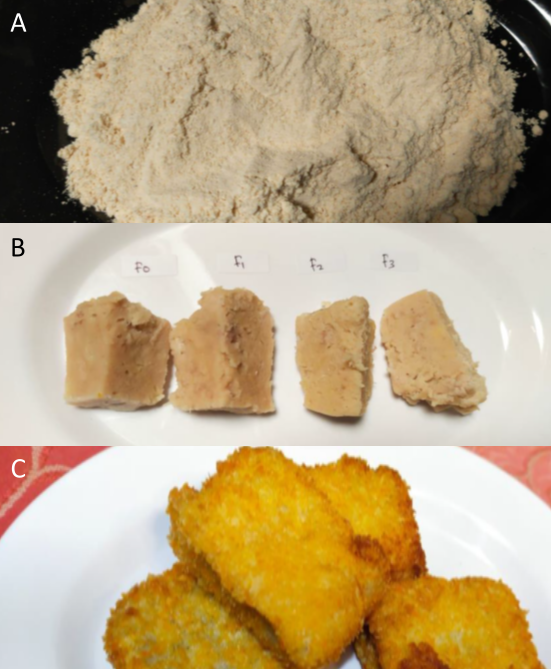
The physical evolution of the nuggets from raw ingredients to the final processed form is depicted in Figure 1, illustrating the successful integration of soybean flour into the fish-based matrix. The fine texture of the soybean flour (Figure 1A) ensured a homogenous distribution within the catfish mince during the kneading process, preventing the formation of large granules that could negatively impact mouthfeel. In the raw state (Figure 1B), the F3 formulation exhibited a stable and cohesive dough, which is critical for maintaining structural integrity during the steaming phase. Upon thermal processing (steaming and frying), the nuggets underwent a Maillard reaction, resulting in a desirable golden-brown exterior (Figure 1C). This visual transformation aligns with the sensory findings, where the combination of catfish protein and soybean carbohydrates contributed to a product that was visually indistinguishable from commercial variants while being significantly more nutrient-dense (18). The final product retained its shape and exhibited a firm yet tender texture, meeting the physical standards required for supplementary feeding products targeted at young children.
Sensory Characteristics
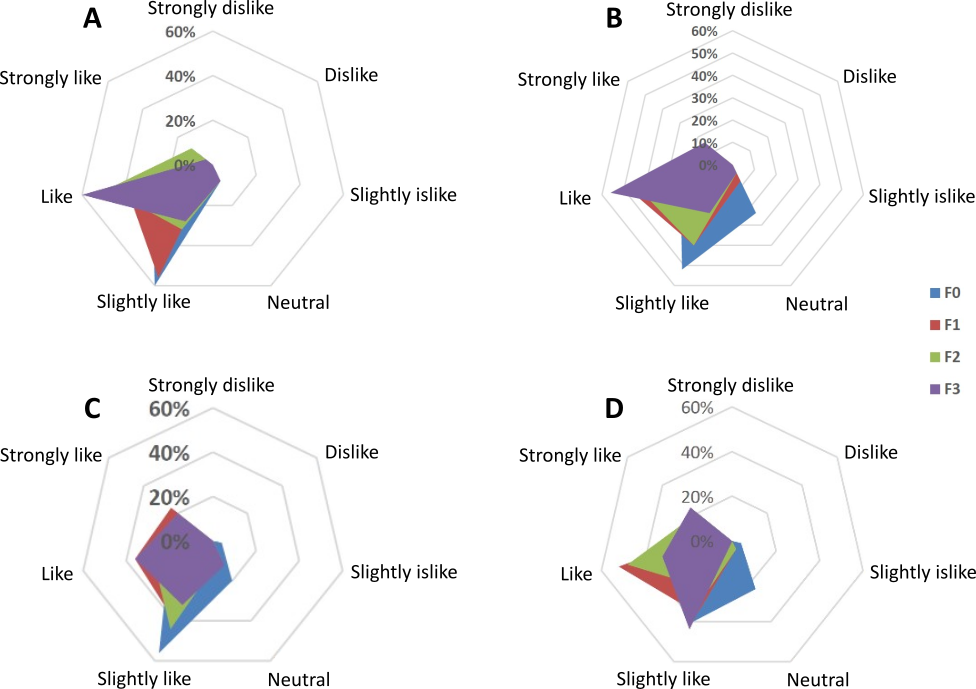
Sensory attributes are critical determinants of food acceptability, particularly for supplementary feeding products targeted at toddlers (19). The incorporation of soybean flour significantly influenced the organoleptic profile of the catfish nuggets (see Figure 2). While the hedonic evaluation for color showed no significant difference across all formulations (p > 0.05), the addition of soybean flour yielded significant improvements in aroma, taste, and texture (p < 0.05). The F3 formulation (25% substitution) received the highest median preference score of 6.00 ("like"). The improved savory taste (umami) is attributed to the naturally high glutamic acid content in soybeans, which acts as a flavor enhancer (20). Furthermore, the soybean flour contributed to a softer texture, likely due to the superior water-holding capacity of legume proteins compared to wheat-based fillers (21). Notably, the "beany" aroma (bau langu), typically caused by the lipoxygenase enzyme, was effectively mitigated through initial blanching and subsequent thermal processing, aligning with established methods for improving the palatability of soy-integrated products (22).
Proximate Composition
The substitution of wheat flour with soybean flour substantially altered the macronutrient composition of the nuggets, reflecting a shift toward a more nutrient-dense profile. The protein content exhibited a progressive increase from 8.74% in F0 to 11.26% in F3, correlating with the inherently high protein concentration of soybean flour (35.9 g/100g) (see Table 1). This elevation is strategically important for stunting interventions, as the high biological value of combined fish and legume proteins provides a more complete amino acid profile necessary for linear growth in children (23). All formulations comfortably exceeded the minimum protein requirement of 5.0% stipulated by the Indonesian National Standard (SNI 7758: 2013), suggesting that even at lower substitution levels, the product remains a viable protein source.
| Nutrients | F0 (Control) | F1 (15%) | F2 (20%) | F3 (25%) |
|---|---|---|---|---|
| Macronutrients | ||||
| Energy (kcal) | 330.66 | 329.98 | 329.28 | 326.10 |
| Protein (%) | 8.74 | 10.15 | 10.37 | 11.26 |
| Fat (%) | 17.14 | 17.38 | 17.48 | 17.50 |
| Carbohydrate (%) | 34.55 | 32.74 | 32.12 | 30.89 |
| Physicochemical Properties | ||||
| Water Content (%) | 41.07 | 40.58 | 40.03 | 39.03 |
| Ash Content (%) | 1.10 | 1.30 | 1.40 | 1.60 |
| Micronutrients (Minerals) | ||||
| Iron / Fe (mg/100g) | 18.15 | 21.03 | 23.36 | 24.50 |
| Zinc / Zn (mg/100g) | 1.20 | 1.39 | 1.63 | 2.46 |
Physicochemical properties also shifted; moisture content decreased sequentially from 41.07% (F0) to 39.03% (F3). This reduction is likely due to the higher water-binding capacity of soybean proteins which traps moisture within the protein matrix during processing (24), yet the final levels remained well below the SNI maximum limit of 60.0%, which is beneficial for inhibiting microbial growth and ensuring shelf-life stability. Ash content increased slightly to 1.6% in F3, indicating a higher concentration of inorganic minerals contributed by the soybean flour. This increase in mineral density is critical, as ash content serves as a proxy for the total mineral availability required to support bone mineralization in malnourished toddlers (25).
However, fat content increased alongside soybean concentration, reaching 17.50% in F3, which slightly exceeds the SNI limit of 15%. While high fat content can impact oxidative stability, it serves as a concentrated energy source that is often encouraged in supplementary feeding for stunted children to overcome energy gaps (26). Finally, carbohydrate content decreased from 34.55% in F0 to 30.89% in F3. This reduction is a favorable outcome in the context of stunting, as it indicates a "nutrient density swap" where low-nutrient-density refined carbohydrates from wheat are replaced by the superior protein and mineral matrix of soybeans (27).
Micronutrient Density (Iron and Zinc)
Addressing the primary physiological deficits associated with stunting, the micronutrient density of the nuggets improved concurrently with soybean flour substitution. The iron (Fe) concentration increased significantly from 18.15 mg/100 g in F0 to 24.50 mg/100 g in F3. The remarkably high baseline iron content observed in the control formulation (F0) is primarily attributable to two factors: first, the use of commercially available wheat flour which is mandatorily fortified with iron (≥50 mg/kg) under Indonesian regulations, and s, potential exogenous iron migration from the cast-iron grinding machinery and municipal water infrastructure utilized during small-scale product manufacturing. This environmental and regulatory baseline explains why the initial formulation matches the mineral density of iron-rich organ meats. Similarly, the zinc (Zn) content elevated from 1.2 mg/100g in the control to 2.46 mg/100g in F3. These findings indicate that the F3 formulation exhibits an elevated micronutrient density under laboratory conditions. According to the Indonesian Food and Drug Authority (BPOM RI) regulations, the high iron and zinc concentrations achieved in F3 satisfy the criteria for "high-iron" and "high-zinc" nutritional claims, providing at least 20% of the Daily Value (DV) per serving (28).
The substantial increase in iron is particularly noteworthy, as iron deficiency is a leading co-morbidity of stunting that impairs cognitive development and immune function in toddlers (29). The synergy between the heme iron from catfish and the non-heme iron from soybean flour, although the latter is generally less bioavailable, creates a composite food matrix that can significantly contribute to the Recommended Dietary Allowances (RDA) for children under five. Furthermore, the simultaneous increase in zinc is critical; zinc acts as a catalytic component for over 300 enzymes, including those responsible for DNA synthesis and cell division (30), which are the fundamental biological processes stunted in growth-restricted children.
The achieved mineral levels in F3 suggest that this product could serve as a sustainable, food-based intervention to combat "hidden hunger" in regions like Lima Puluh Kota. Compared to synthetic fortification, using soybean flour as a natural fortificant provides minerals in a complex food matrix that may include other beneficial phytonutrients, which support overall metabolic health (31). Thus, while the F3 formulation meets regional regulatory standards for nutritional claims, clinical evaluation is required to determine its efficacy in bridging dietary micronutrient gaps under field conditions.
Optimal Formulation Selection and Practical Implications
The selection of the optimal formulation was determined through a rigorous cumulative assessment of sensory preference and nutritional density. The F3 formulation (25% soybean flour substitution) emerged as the superior product, achieving the highest median acceptance score of 24.00 and an aggregate nutritional score of 48.83. This balance is critical, as the success of any food-based intervention—particularly for the vulnerable toddler demographic—is predicated not only on its nutrient concentration but also on its palatability, which ensures long-term compliance and consumption (32). By effectively merging a highly acceptable organoleptic profile with a dense matrix of protein, iron, and zinc, F3 represents a highly viable and sustainable supplementary feeding alternative for the prevention and mitigation of stunting.
The utilization of catfish and soybean flour as core ingredients aligns with the global shift towards "food-based approaches" that leverage locally available biodiversity to combat malnutrition (33). Unlike synthetic supplements, these fortified nuggets provide nutrients in their natural form, which may offer better metabolic integration and higher community acceptance in regions like Lima Puluh Kota. Furthermore, the cost-effectiveness of these local raw materials suggests that the F3 formulation could be easily scaled for regional supplementary feeding programs (PMT), providing a robust tool for local health authorities to address the multi-dimensional challenges of stunting. Consequently, this study confirms that a 25% substitution level optimizes the trade-off between nutritional fortification and sensory appeal, fulfilling the requirements for a functional food capable of supporting the physiological needs of growth-restricted children (34).
Conclusion
This study demonstrates that the integration of soybean flour into catfish nuggets significantly enhances micronutrient density and organoleptic acceptability, with the F3 formulation (25% substitution) emerging as the optimal variant. The F3 product successfully satisfies the regulatory criteria for "high-iron" claims with a concentration of 24.50 mg/100g, while maintaining superior sensory scores for taste, aroma, and texture. The combination of catfish protein and soybean-based minerals provides a nutrient-dense food matrix with high consumer acceptability among the evaluation panel, thereby presenting a candidate formulation for future supplementary feeding assessments. Future research should focus on conducting in vivo efficacy trials or longitudinal clinical interventions to quantify the actual biological impact of these fortified nuggets on improving anthropometric indices and hemoglobin levels in stunted children. Additionally, while the F3 formulation provides a dense energy source, its fat content (17.50%) slightly exceeds the national standard threshold of 15%. Consequently, comprehensive shelf-life analysis and packaging stability studies are essential to evaluate lipid oxidation kinetics and guarantee product stability during community-level distribution.
Declarations
Conflict of Interest
The authors declare no conflict of interest.
Data Availability
Data supporting the findings of this study are available from the corresponding author upon reasonable request.
Ethics Statement
Not applicable.
Funding Information
This work received no external funding.
References
- De Sanctis V, Soliman A, Alaaraj N, Ahmed S, Alyafei F, Hamed N. Early and Long-term Consequences of Nutritional Stunting: From Childhood to Adulthood. Acta Biomed. 2021 Feb 16;92(1):e2021168.
- Vir SC, Suri S. Young Child Undernutrition: Crucial to Prioritize Nutrition Interventions in the First 1000 Days of Life. Indian J Pediatr. 2023;90(S1):85-94. doi: https://doi.org/10.1007/s12098-023-04732-4
- Saavedra JM, Dattilo AM. Nutrition in the first 1000 days of life: Society’s greatest opportunity. Elsevier; 2022. doi: https://doi.org/10.1016/b978-0-12-824389-3.00023-4
- Georgiadis A, Penny ME. Child undernutrition: opportunities beyond the first 1000 days. The Lancet Public Health. 2017;2(9):e399. doi: https://doi.org/10.1016/s2468-2667(17)30154-8
- Sartorius B, Sartorius K, Green R, Lutge E, Scheelbeek P, Tanser F, et al. Spatial-temporal trends and risk factors for undernutrition and obesity among children (<5 years) in South Africa, 2008–2017: findings from a nationally representative longitudinal panel survey. BMJ Open. 2020;10(4):e034476. doi: https://doi.org/10.1136/bmjopen-2019-034476
- Muliani M, Tondong HI, Lewa AF, Mutmainnah M, Maineny A, Asrawaty A. Determinants of stunting in children aged 24-59 months: a case- control study. IJPHS. 2023;12(3):1287. doi: https://doi.org/10.11591/ijphs.v12i3.22313
- Alifa RP, Christin M. Analisis Strategi Komunikasi Pemerintah dalam Upaya Percepatan Zero Stunting Kabupaten Lima Puluh Kota (Studi Kasus Program Kampanye Sosial Gerakan Seribu untuk Stunting). JIIP. 2023;6(7):5493-5505. doi: https://doi.org/10.54371/jiip.v6i7.1755
- Suryani L. Hubungan pemberian asi ekslusif dengan kejadian stunting pada balita di wilayah kerja puskesmas limapuluh kota pekanbaru. JMU. 2021;3(2):126-131. doi: https://doi.org/10.32807/jmu.v3i2.120
- Mulyani AT, Khairinisa MA, Khatib A, Chaerunisaa AY. Understanding Stunting: Impact, Causes, and Strategy to Accelerate Stunting Reduction—A Narrative Review. Nutrients. 2025 Apr 29;17(9):1493.
- Dewey KG. Reducing stunting by improving maternal, infant and young child nutrition in regions such as South Asia: evidence, challenges and opportunities. Maternal & Child Nutrition. 2016;12(S1):27-38. doi: https://doi.org/10.1111/mcn.12282
- Huda N, Jaenab, Pratiwi A, Ovriyadin, Juwani, Aulia N. Pendampingan Dan Pelatihan Inovasi Produk Pangan Sehat Berbahan Dasar Ikan Tuna Dan Cumi Sebagai Upaya Pencegahan Stunting Pada Anak Di Kelurahan Kolo Kota Bima. JPMBA. 2023;1(5):248-253. doi: https://doi.org/10.59837/jpmba.v1i5.112
- Herawati DMD, Megawati G, Wijayakesuma A. Food Sources of Protein to Overcome Malnutrition and Infectious Diseases: Indonesian Aspects. Cham: Springer Nature Switzerland; 2025. doi: https://doi.org/10.1007/978-3-031-32047-7_37-1
- Sundari S, Susiati AM, Sholihah N. Produksi Nugget dan Sosis Ayam Kampung yang Dicuring Nanokapsul Jus Kunyit Sebagai Pangan Fungsional Pencegah Rawan Stunting. Swagati. 2024;2(3):61-66. doi: https://doi.org/10.24076/swagati.2024v2i3.1694
- Tampubolon CL, Kusumastuti A, Paramita O. Formulation, Quality Characteristics, and Research Trends of Fish Balls: A Bibliometric Study. Teknobuga. 2025;13(1):72-82. doi: https://doi.org/10.15294/teknobuga.v13i1.32687
- Shadieva LA, Romanova EM, Lyubomirova VN, Romanov VV, Shlenkina TM. Effect of feed composition on the nutritional value of meat of African catfish. BIO Web Conf. 2020;27:00134. doi: https://doi.org/10.1051/bioconf/20202700134
- Langi S, Maulu S, Hasimuna OJ, Kaleinasho Kapula V, Tjipute M. Nutritional requirements and effect of culture conditions on the performance of the African catfish (Clarias gariepinus ): a review. Cogent Food & Agriculture. 2024;10(1). doi: https://doi.org/10.1080/23311932.2024.2302642
- Goswami TK, De B. Micronutrient Fortification in Foods and Soy Milk, a Plant-based Milk Substitute as a Candidate Vehicle. Cnf. 2022;18(8):739-745. doi: https://doi.org/10.2174/1573401318666220204091748
- Hill JI, Nelson RG, Woods KL, Weese JO, Whitis GN. Consumer preferences for attributes of catfish nuggets: price, breading color, cooking method, and country of origin. Aquaculture Economics & Management. 2013;17(2):123-147. doi: https://doi.org/10.1080/13657305.2013.772263
- Boateng L, Nortey E, Ohemeng AN, Asante M, Steiner-Asiedu M. Sensory attributes and acceptability of complementary foods fortified with Moringa oleifera leaf powder. NFS. 2019;49(3):393-406. doi: https://doi.org/10.1108/nfs-07-2018-0192
- Ramesh MM, Venkatappa AH, Bhat R. Natural sources, mechanisms, and sensory evaluation of umami and kokumi flavour compounds in food. Eur Food Res Technol. 2025;251(7):1467-1488. doi: https://doi.org/10.1007/s00217-025-04729-7
- Cheng Z, Zhang C, Li S, Xu Y, Wan Y, Yu H, et al. Water‐Holding Capacity Regulation of Dietary Fibers in Soybean Residue: From Modification Strategies, to Function Improvement and Food Texture Optimization. Food Frontiers. 2025;7(2). doi: https://doi.org/10.1002/fft2.70170
- Esmi F, Izadpanah M, Soleimaninejad M, Noori AA, Soltan J. Off-Flavour Challenges in Plant Proteins: Mechanisms, Advanced Oxidation Technologies, and Opportunities for Flavour Improvement—A Critical Review. Food Bioprocess Technol. 2025;18(12):9973-10003. doi: https://doi.org/10.1007/s11947-025-03997-1
- Escobedo-Monge MF, Parodi-Román J, Escobedo-Monge MA, Marugán-Miguelsanz JM. The Biological Value of Proteins for Pediatric Growth and Development: A Narrative Review. Nutrients. 2025;17(13):2221. doi: https://doi.org/10.3390/nu17132221
- Peters JP, Vergeldt FJ, Boom RM, van der Goot AJ. Water-binding capacity of protein-rich particles and their pellets. Food Hydrocolloids. 2017;65:144-156. doi: https://doi.org/10.1016/j.foodhyd.2016.11.015
- Elegbede I, Lawal-Are A, Favour O, Jolaosho T, Goussanou A. Chemical compositions of bivalves shells: Anadara senilis, Crassostrea gasar, and Mytilus edulis and their potential for a sustainable circular economy. SN Appl. Sci. 2022;5(1). doi: https://doi.org/10.1007/s42452-022-05267-7
- Krähenbühl J, Schutz Y, Jéquier E. High fat versus high carbohydrate nutritional supplementation: a one year trial in stunted rural Gambian children. Eur J Clin Nutr. 1998;52(3):213-222. doi: https://doi.org/10.1038/sj.ejcn.1600542
- Akande OA, Nakimbugwe D, Mukisa IM. Optimization of extrusion conditions for the production of instant grain amaranth‐based porridge flour. Food Science & Nutrition. 2017;5(6):1205-1214. doi: https://doi.org/10.1002/fsn3.513
- Putri SRM, Sri Ratna Suminar. Kewenangan BPOM dalam Mengawasi Peredaran Produk Skincare yang Membahayakan Kesehatan Ditinjau dari Undang-Undang Nomor 17 Tahun 2023 tentang Kesehatan juncto Peraturan BPOM Nomor 12 Tahun 2023 tentang Pengawasan Pembuatan dan Peredaran Kosmetik. Bcsls. 2026;6(1). doi: https://doi.org/10.29313/bcsls.v6i1.23207
- Tran TD, Biggs BA, Holton S, Nguyen HTM, Hanieh S, Fisher J. Co-morbid anaemia and stunting among children of pre-school age in low- and middle-income countries: a syndemic. Public Health Nutr. 2018;22(1):35-43. doi: https://doi.org/10.1017/s136898001800232x
- Riordan JF. Biochemistry of Zinc. Medical Clinics of North America. 1976;60(4):661-674. doi: https://doi.org/10.1016/s0025-7125(16)31851-x
- E. O, G. K, Buys E, F. B. Potential Use of Soybean Flour (Glycine max) in Food Fortification. InTech; 2013. doi: https://doi.org/10.5772/52599
- Durnan S, Evans J, Simpson K, Saduera S. Tolerance, compliance and palatability of a paediatric oral nutritional supplement containing food blends. Clinical Nutrition ESPEN. 2025;69:1184. doi: https://doi.org/10.1016/j.clnesp.2025.07.1103
- Nabuuma D, Ekesa B, Faber M, Mbhenyane X. Community perspectives on food security and dietary diversity among rural smallholder farmers: A qualitative study in central Uganda. Journal of Agriculture and Food Research. 2021;5:100183. doi: https://doi.org/10.1016/j.jafr.2021.100183
- Kementerian Kesehatan RI. Permenkes No. 51 Tahun 2016. Permenkes No 51 Tahun 2016. 2016;(1600).