RESEARCH ARTICLE
Iron Fortification of Traditional Fish Cakes Using Mysis relicta: Nutritional and Sensory Evaluation for Adolescent Anemia Mitigation
Aquatic Functional Products|Vol. 2, Issue 1, pp. 9-14 (2026)
CC BY 4.0-2026 Authors
Views
Downloads
Shares

Received
Apr 15, 2026Revised
May 25, 2026Accepted
Jun 11, 2026Published
Jun 28, 2026
Abstract
Iron deficiency anemia remains a critical global health challenge, disproportionately affecting up to 32% of adolescent girls in developing regions due to inadequate micronutrient intake. Traditional processed fish products, such as otak-otak, offer a familiar vehicle for nutrient fortification, yet their potential to deliver therapeutic levels of heme iron remains largely underutilized. This study demonstrates a novel fortification strategy by substituting Pangasius sp. fish meat with dried rebon shrimp (Mysis relicta) to optimize iron density and sensory appeal. Using a completely randomized design across three substitution levels (10 g, 15 g, and 20 g), we systematically evaluated organoleptic profiles and nutritional compositions. We find that the 15% substitution formula (T2) achieves a superior balance between nutritional efficacy and consumer acceptance, and is projected to contain a significant iron content of 3.8 mg per 100 g serving—representing approximately 25% of the daily iron requirement for adolescent girls—while maintaining a desirable savory flavor and "rather chewy" texture. These results indicate that M. relicta serves as a natural fortificant that increases the iron content and functional value of indigenous food products. Our findings provide a scalable, food-based intervention to mitigate iron deficiency, suggesting that bio-fortified traditional snacks can contribute to public health nutrition strategies for vulnerable populations.
Introduction
Iron deficiency anemia (IDA) represents a pervasive global health crisis, persistently affecting the physiological and cognitive development of millions of individuals in developing nations (1). This condition, characterized by a deficit in functional hemoglobin, is particularly acute among adolescent girls, who face heightened iron requirements due to rapid pubertal growth and menstrual blood loss (2, 3). In the Indonesian context, data from the 2018 Basic Health Research (Riskesdas) highlights a staggering prevalence rate of 32.0% within the 15–24 age cohort (4). Such statistics underscore an urgent need for sustainable, food-based interventions that can effectively deliver bioavailable iron to high-risk populations without the compliance challenges often associated with pharmaceutical supplementation.
Current scientific literature emphasizes that food fortification and the diversification of local diets are the most culturally appropriate and cost-effective strategies for long-term anemia mitigation (5–8). Traditional fish-based products, such as otak-otak, have long served as a dietary staple in Southeast Asian cuisine, offering a familiar vehicle for nutrient delivery (9, 10). Research has historically focused on the use of marine fish like Spanish mackerel (Scomberomorus commerson) for these products; however, the rising costs and seasonal availability of such species have led to an increased interest in freshwater alternatives (11). Pangasius sp. (patin), in particular, has emerged as a viable substitute due to its high protein content, widespread aquaculture, and economic accessibility for the broader population (12–14).
Despite the successful adoption of Pangasius sp. in various processed foods, it remains an insufficient source of iron to meet the therapeutic needs of anemic individuals when consumed in standard portions (15). While various studies have explored general fortification techniques, there is a notable scarcity of research investigating the integration of highly concentrated, natural heme-iron sources into traditional fish-based snacks. Dried rebon shrimp (Mysis relicta), an underutilized local commodity, possesses an exceptionally high mineral density (approximately 6 mg of iron per 100 g) that could potentially bridge this nutritional gap (16–18). However, the precise substitution levels required to achieve significant iron enrichment without compromising the delicate organoleptic profile of the fish cake—specifically its texture and flavor—remain largely unexplored.
Building upon this critical research gap, the present study demonstrates a novel formulation of otak-otak by substituting Pangasius sp. meat with varying concentrations of dried M. relicta. This research aims to systematically evaluate the impact of 10%, 15%, and 20% substitution levels on the product’s nutritional density and sensory acceptance among the target demographic. The substitution levels of 10%, 15%, and 20% were selected based on preliminary kitchen trials, which indicated that concentrations above 20% severely impaired the cohesive matrix and standard elasticity of fish cakes. By leveraging a completely randomized design, we demonstrate that this synergy not only elevates the iron content to a level capable of fulfilling significant daily requirements for adolescent girls but also maintains the traditional culinary standards of the product. Consequently, this study provides a scalable, indigenous framework for developing functional foods that address micronutrient deficiencies through the optimization of locally available marine and freshwater resources.
Methodology
Research Design
This study employed an experimental laboratory-based approach using a Completely Randomized Design (CRD). The primary intervention involved the substitution of Pangasius sp. (patin fish) meat with dried rebon shrimp (M. relicta) at three distinct concentration levels: T1 (80 g fish: 20 g shrimp), T2 (85 g fish: 15 g shrimp), and T3 (90 g fish: 10 g shrimp). Each treatment was conducted in three independent production batches to ensure statistical reliability and reproducibility of the results.
Materials and Formulation
The main raw materials consisted of fresh Pangasius sp. and dried rebon shrimp, sourced and prepared to meet specific nutritional targets for iron (Fe) fortification. Supporting ingredients included tapioca flour as a binding agent, coconut milk for lipid content, and a standardized spice blend (shallots, garlic, sugar, salt, and pepper) to maintain flavor consistency. The formulation was specifically calculated to meet approximately 3 mg of iron per serving, which corresponds to 20% of the Recommended Dietary Allowance (RDA) for Indonesian adolescent girls (15 mg/day) as can be seen in Table 1.
| Ingredients | Formula | ||
|---|---|---|---|
| T1 | T2 | T3 | |
| Patin Fish (g) | 80 | 85 | 90 |
| Dried Rebon Shrimp (g) | 20 | 15 | 10 |
| Tapioca Flour (g) | 50 | 50 | 50 |
| Coconut Milk (ml) | 18 | 18 | 18 |
| Shallots (g) | 3.6 | 3.6 | 3.6 |
| Garlic (g) | 3.6 | 3.6 | 3.6 |
| Salt (g) | 1.8 | 1.8 | 1.8 |
| Sugar (g) | 4.5 | 4.5 | 4.5 |
| Pepper (g) | 1 | 1 | 1 |
Production Procedure
The processing of otak-otak followed a systematic sequence: preparation of raw materials, thorough mixing of fish and shrimp mince with spices and flour, manual shaping, and wrapping in banana leaves. The samples were then subjected to steam-cooking followed by a brief grilling process to develop the characteristic aroma and texture of traditional otak-otak.
Organoleptic Evaluation and Sensory Analysis
Sensory attributes, including color, aroma, taste, and texture, were evaluated using a standardized organoleptic scoring test. The sensory evaluation was conducted with a panel of 25 semi-trained individuals. The inclusion criteria required panelists to be healthy undergraduate Food Technology students aged 18–25 years, non-smokers, and free from food allergies, particularly regarding seafood. Prior to the sensory session, all panelists were fully briefed on the nature of the study and signed a written informed consent form. Since this study utilized only standard, non-toxic, and edible food ingredients, formal institutional ethical clearance was not required for this sensory panel evaluation. Furthermore, a hedonic test (preference test) was implemented to determine the overall consumer acceptance of the fortified product, utilizing a 5-point scale from "Strongly Dislike" to "Strongly Like".
The sensory evaluation was conducted in a standardized sensory laboratory equipped with individual testing booths under controlled white lighting (6500K) and room temperature (24–25 °C) to eliminate environmental bias. Panelists underwent a 1-hour familiarization training session regarding the score sheets and attribute descriptors prior to testing.
Data Analysis and Nutritional Calculation
Data collected from the sensory evaluations were analyzed descriptively based on percentage distributions to identify the most preferred formulation. For the selected optimal product, a comprehensive nutritional profile—comprising macronutrients (energy, protein, fat, carbohydrates) and micronutrients (iron)—was calculated based on the Indonesian Food Composition Table (TKPI). This quantitative approach allowed for a comparative assessment of the product’s potential as a functional food intervention for anemia prevention. Data were analyzed using the Kruskal-Wallis test followed by post-hoc Mann-Whitney tests to determine significant differences (p < 0.05) between formulations.
Results and Discussion
Sensory Evaluation and Organoleptic Characteristics
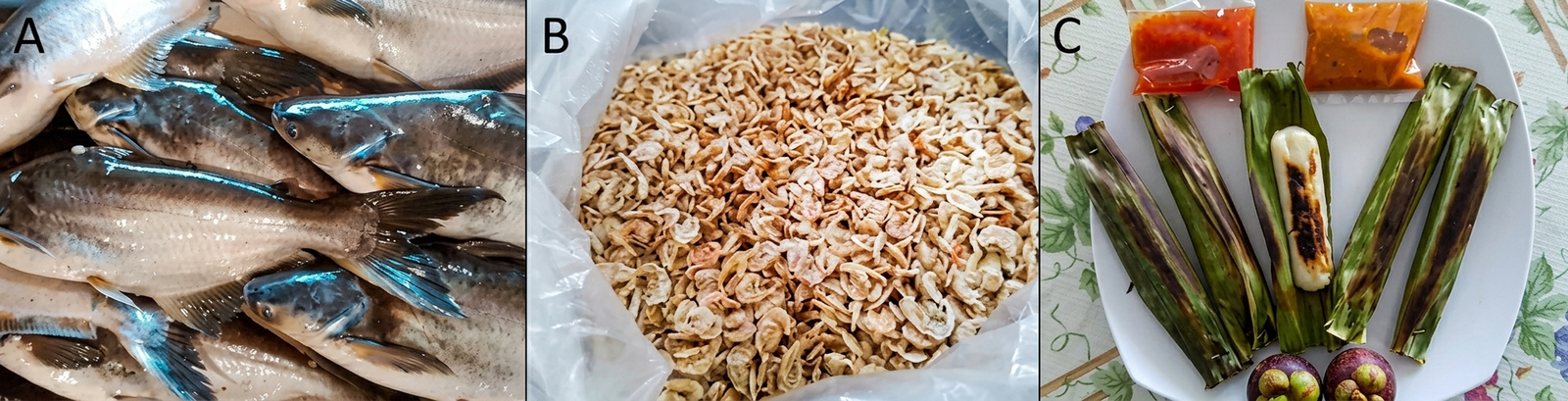
The sensory acceptability of fortified food products is a critical determinant of their long-term market viability and ultimate success as sustainable nutritional interventions. The comprehensive organoleptic evaluation methodically assessed the perceptible impact of varying M. relicta (dried rebon shrimp) substitution levels—T1 (20 g), T2 (15 g), and T3 (10 g)—on the key quality attributes of color, aroma, taste, texture, and overall acceptability of the Pangasius sp. fish cakes (otak-otak) (see Figure 1).
Color Profile and Enzymatic Browning
Visual appearance significantly influences initial consumer perception and purchasing decisions. The evaluation revealed that 100% of the panelists categorized the T1 formulation as "dark beige," while T2 and T3 were predominantly rated as "beige" (66.7%), with the Kruskal-Wallis test showing a significant difference in color preferences among the formulations (p < 0.05). The darkening effect directly corresponding to higher shrimp concentration is attributed to two primary phenomena that occur simultaneously during manufacturing. First, shrimp shells contain astaxanthin, a carotenoid derivative that releases a reddish-orange pigment when separated from protein bonds during processing (19, 20). Second, the presence of Polyphenol Oxidase (PPO) enzymes in shrimp catalyzes oxidation, leading to enzymatic browning and product decolorization (21, 22). While sodium chloride generally inhibits PPO activity (23), the pre-treatment washing and roasting of the dried shrimp in this study reduced its intrinsic sodium content (24), thereby allowing PPO-induced browning to occur more prominently in the shrimp-dense T1 formulation.
Aroma and Odor Masking
Aroma evaluation indicated that T1 yielded a "slightly fishy" odor (66.7%), whereas T2 and T3 successfully achieved a "non-fishy" profile (66.7% and 100%, respectively). Statistical analysis confirmed that the aroma scores of T2 and T3 were significantly preferred over T1 (p < 0.05). The fishy odor in marine and freshwater products is primarily driven by trimethylamine (TMA), formed through the enzymatic reduction of trimethylamine-oxide (TMAO) by bacterial action (25–27). Although acidic pre-treatments using acetic acid and lime juice were applied to convert TMA into odorless trimethylammonium (28), the intrinsic and potent aroma of the dried rebon shrimp overpowered these masking agents at the 20% substitution level (T1).
Taste Characteristics
Despite the variations in shrimp substitution, the taste profiles across all three formulations were uniformly rated as "slightly savory" by the majority of panelists, showing no statistically significant differences between the groups (p > 0.05). This uniformity indicates that the intrinsic umami compounds—specifically glutamates—naturally present in both Pangasius sp. meat and M. relicta complement each other without causing sensory imbalance. Furthermore, the standardized incorporation of spices across all formulations successfully homogenized the flavor profile, serving their fundamental role as appetite stimulants and flavor enhancers.
Textural Dynamics and Starch Gelatinization
Texture analysis revealed a significant mechanical difference supported by statistical analysis (p < 0.05): T1 was predominantly rated as "not chewy" (66.7%), while T2 and T3 achieved the desired "slightly chewy" texture (100% and 66.7%, respectively). This textural variation highlights a competitive hydration phenomenon within the food matrix. The chewiness of traditional fish cakes relies heavily on the amylose and amylopectin fractions of tapioca flour, which govern gel strength and elasticity, respectively (29, 30). However, shrimp protein exhibits a profoundly high water-binding capacity through hydrophilic hydrogen bonding (31). Consequently, the elevated shrimp concentration in T1 absorbed the available moisture, restricting the hydration and subsequent swelling of tapioca starch granules. This inhibition of complete starch gelatinization directly resulted in a loss of elasticity and a non-chewy texture (32).
Overall Acceptability and Optimal Formulation Selection
Based on the integrated sensory profiles, formulations T2 and T3 emerged as the most preferred, both receiving a "Like" rating from 66.7% of the panel, which was statistically higher than T1 (p < 0.05). T1 was the least preferred ("Slightly Like") due to its darker color, perceptible fishy aroma, and compromised texture. Between the two preferred variants, T2 (15 g M. relicta, 85 g Pangasius sp. ) was selected as the optimal formulation. This decision was driven by its theoretically calculated nutritional yield; T2 provides a higher estimated iron concentration than T3 while maintaining an equivalent level of consumer acceptance.
Nutritional Profile and Implications for Anemia Prevention
The primary objective of this formulation was to establish an iron-enriched dietary vehicle tailored for adolescent girls. Based on calculations derived from the Indonesian Food Composition Table (TKPI), the selected T2 formulation is theoretically estimated to contain 396.9 kcal of energy, 24.7 g of protein, 12.6 g of fat, 46.5 g of carbohydrates, and 5.4 mg of iron per standard batch. The comprehensive nutritional profiles for all formulations are detailed in Table 2.
| Nutritional Value | Formula | ||
|---|---|---|---|
| T1 | T2 | T3 | |
| Energy (kcal) | 405.2 | 396.9 | 388.5 |
| Protein (g) | 26.8 | 24.7 | 22.5 |
| Fat (g) | 12.4 | 12.6 | 12.7 |
| Carbohydrates (g) | 46.6 | 46.5 | 46.4 |
| Iron (mg) | 6.4 | 5.4 | 4.4 |
Translated to a realistic consumption volume, a 100 g serving of T2 (approximately 5 pieces) delivers 3.8 mg of estimated iron and 17.6 g of protein. According to the 2019 Recommended Dietary Allowances (RDA), adolescent girls require 15 mg of iron daily. Therefore, a single serving of the T2 fish cake successfully fulfills approximately 25% of the daily iron requirement and 27% of the daily protein requirement. This positions the product as a potential functional snack (contributing the recommended 20-25% nutrient density for between-meal interventions) to combat iron deficiency anemia.
Comparative Analysis and Economic Feasibility
When compared to traditional commercial otak-otak formulations that strictly utilize Spanish mackerel (Scomberomorus commerson), the Pangasius-Mysis synergy in T2 exhibits a vastly superior nutritional density. The fortified T2 variant provides 5.4 mg of iron per batch, compared to a mere 2.3 mg found in standard mackerel fish cakes, alongside higher overall macronutrient yields. Furthermore, the economic analysis confirms the viability of this substitution strategy. Utilizing highly available freshwater aquaculture (Pangasius sp. ) and underutilized local shrimp bycatch (M. relicta) drastically reduces production costs. The estimated production cost of Rp 6, 500 per serving allows for a highly competitive market price compared to premium marine fish alternatives, ensuring that this bio-fortified intervention remains economically accessible to vulnerable, lower-income demographics.
Study Limitation
It must be explicitly noted that the nutritional and mineral values reported in this study are derived from theoretical calculations using the Indonesian Food Composition Table (TKPI) rather than empirical chemical assays. Consequently, these values do not account for potential nutrient retention or loss during thermal processing (steaming and grilling), fat rendering, or regional raw material variations. While these theoretical estimates provide a valuable preliminary framework for product development, they represent a significant limitation in confirming the final absolute nutrient yield.
Conclusion
In conclusion, utilizing underutilized local resources like dried rebon shrimp offers a cost-effective and culturally appropriate solution for micronutrient fortification. These preliminary results suggest that iron-enriched traditional snacks could serve as a potential dietary option for nutritional improvement. Future research should focus on the long-term shelf-life stability, the in vivo bioavailability, and empirical laboratory validation to verify the actual post-processing micronutrient and macronutrient content of the fortified product and to further validate their therapeutic efficacy.
Declarations
Conflict of Interest
The authors declare no conflict of interest.
Data Availability
All relevant summary data are included within the article. The raw datasets used and analyzed during the present study are available from the corresponding author upon reasonable request.
Ethics Statement
Not applicable.
Funding Information
This work received no external funding.
References
- Manish A. Iron deficiency anemia: A global public health concern. IJCBR. 2025;11(4):229-236. doi: https://doi.org/10.18231/j.ijcbr.2024.034
- Cooke AG, McCavit TL, Buchanan GR, Powers JM. Iron Deficiency Anemia in Adolescents Who Present with Heavy Menstrual Bleeding. Journal of Pediatric and Adolescent Gynecology. 2017;30(2):247-250. doi: https://doi.org/10.1016/j.jpag.2016.10.010
- Munro MG, Mast AE, Powers JM, Kouides PA, O’Brien SH, Richards T, et al. The relationship between heavy menstrual bleeding, iron deficiency, and iron deficiency anemia. American Journal of Obstetrics and Gynecology. 2023;229(1):1-9. doi: https://doi.org/10.1016/j.ajog.2023.01.017
- Ministry of Health Republic of Indonesia. Ministry of Health Republic of Indonesia. 2022 [cited 2026 Apr 14]. Nutrition Action: Healthy Movement for Teens. Available from: https://kemkes.go.id/eng/nutrition-action-healthy-movement-for-teens
- Huma N, Salim-Ur-Rehman, Anjum FM, Murtaza MA, Sheikh MA. Food Fortification Strategy—Preventing Iron Deficiency Anemia: A Review. Critical Reviews in Food Science and Nutrition. 2007;47(3):259-265. doi: https://doi.org/10.1080/10408390600698262
- Fatemi SF, Irankhah K, Kruger J, Bruins MJ, Sobhani SR. Implementing micronutrient fortification programs as a potential practical contribution to achieving sustainable diets. Nutrition Bulletin. 2023;48(3):411-424. doi: https://doi.org/10.1111/nbu.12630
- Kumar SB, Arnipalli SR, Mehta P, Carrau S, Ziouzenkova O. Iron Deficiency Anemia: Efficacy and Limitations of Nutritional and Comprehensive Mitigation Strategies. Nutrients. 2022;14(14):2976. doi: https://doi.org/10.3390/nu14142976
- Ashraf SA. Food fortification as a sustainable global strategy to mitigate micronutrient deficiencies and improve public health. Discov Food. 2025;5(1). doi: https://doi.org/10.1007/s44187-025-00512-5
- Zain FQ, Zainal Abidin DH, Aifat NR, Mohd-Ridwan AR, Md-Zain BM. Molecular Fish Species Identification of Commercial Traditional Seafood Products in the Malaysian Market. Mab. 2025;54(3):89-98. doi: https://doi.org/10.55230/mabjournal.v54i3.3307
- Binti Atun M, Binti Julmohammad N, Huda N, Bin Roslan J, Mohd Shariff AH, Nisa FC, et al. Exploring the nutritional value, health benefits and concerns associates in selected fermented fish product in Southeast Asia: A review. Canrea. 2024;7(2):94-112. doi: https://doi.org/10.20956/canrea.v7i2.1270
- Chen L, Jin L. Global Genetic Flow and Population Structure of Scomberomorus spp.: Insights from Multi-Genomic Data Analysis. IJMS. 2025. doi: https://doi.org/10.5376/ijms.2025.15.0017
- Hoque MS, Haque MM, Nielsen M, Badiuzzaman, Rahman MT, Hossain MI, et al. Prospects and challenges of yellow flesh pangasius in international markets: secondary and primary evidence from Bangladesh. Heliyon. 2021;7(9):e08060. doi: https://doi.org/10.1016/j.heliyon.2021.e08060
- Nguyen TAT, Jolly CM. Macro-Economic and Product Challenges Facing Vietnamese the Pangasius Industry. Reviews in Fisheries Science & Aquaculture. 2017;26(2):183-194. doi: https://doi.org/10.1080/23308249.2017.1379948
- Tien Thong N, Nielsen M, Roth E, Nguyen GV, Stubbe Solgaard H. The estimate of world demand for Pangasius catfish (Pangasiusianodon hypopthalmus). Aquaculture Economics & Management. 2016;21(3):400-417. doi: https://doi.org/10.1080/13657305.2016.1261961
- Sulistyaningrum H, Swastawati F, Mexitalia M, Noer ER. Catfish Oil (Pangasius hypophthalmus) effect to ferritin and sTfR in iron deficiency anemia. Jurnal Gizi Indonesia (The Indonesian Journal of Nutrition). 2021 Dec 22;10(1):28–35.
- Abdullah VI, Isir M, Pongoh A, Egam A, Mallongi A. Supplementary Feeding Development of Koya Powder Based on Rebon Shrimp (Mysis Relicta) towards Changes in Blood Biochemistry of Pregnant Women as Risk Factor of Linier Growth Disturbance (Stunting). Mlu. 2020;20(4). doi: https://doi.org/10.37506/mlu.v20i4.2165
- Sari SR, Meilusi M, Guttifera G, Setyowati N, Arafah E. Physical Profile of Shrimp Paste (Mysis relicta) Powder with Varying Drying Times. ijcsrr. 2024;07(12). doi: https://doi.org/10.47191/ijcsrr/v7-i12-06
- Syarif W, Holinesti R, Faridah A, Fridayati L. Analisis kualitas sala udang rebon. j. teknol. pertan. n.a. 2017;21(1):45. doi: https://doi.org/10.25077/jtpa.21.1.45-51.2017
- Šimat V, Rathod N, Čagalj M, Hamed I, Generalić Mekinić I. Astaxanthin from Crustaceans and Their Byproducts: A Bioactive Metabolite Candidate for Therapeutic Application. Marine Drugs. 2022;20(3):206. doi: https://doi.org/10.3390/md20030206
- Simpson B. Pigments from by-products of seafood processing. Elsevier; 2007. doi: https://doi.org/10.1533/9781845692087.2.413
- Xu D, Yang X, Wang Y, Sun L. Cascading Mechanism Triggering the Activation of Polyphenol Oxidase Zymogen in Shrimp Litopenaeus vannamei After Postmortem and the Correlation with Melanosis Development. Food Bioprocess Technol. 2020;13(7):1131-1145. doi: https://doi.org/10.1007/s11947-020-02435-8
- Nirmal NP, Benjakul S, Ahmad M, Arfat YA, Panichayupakaranant P. Undesirable Enzymatic Browning in Crustaceans: Causative Effects and Its Inhibition by Phenolic Compounds. Critical Reviews in Food Science and Nutrition. 2015;55(14):1992-2003. doi: https://doi.org/10.1080/10408398.2012.755148
- Pizzocaro F, Torreggiani D, Gilardi G. Inhibition of Apple Polyphenoloxidase (PPO) by Ascorbic Acid, Citric Acid and Sodium Chloride. J Food Processing Preservation. 1993;17(1):21-30. doi: https://doi.org/10.1111/j.1745-4549.1993.tb00223.x
- Maria Ilani Ninul, Arlin Besari Djauhari. Identifikasi Kandungan Formalin dan Total Garam pada Ikan Teri Asin di Sentra Pasar Ikan Bulak Kecamatan Bulak Surabaya. Mikroba. 2025;2(1):179-183. doi: https://doi.org/10.62951/mikroba.v2i1.286
- Kawai T, Sakaguchi M. Fish flavor. Critical Reviews in Food Science and Nutrition. 1996;36(3):257-298. doi: https://doi.org/10.1080/10408399609527725
- Wu T, Wang M, Wang P, Tian H, Zhan P. Advances in the Formation and Control Methods of Undesirable Flavors in Fish. Foods. 2022;11(16):2504. doi: https://doi.org/10.3390/foods11162504
- Liu L, Zhao Y, Zeng M, Xu X. Research progress of fishy odor in aquatic products: From substance identification, formation mechanism, to elimination pathway. Food Research International. 2024;178:113914. doi: https://doi.org/10.1016/j.foodres.2023.113914
- Noviana A, Palupi E, Giriwono P, Rimbawan R. Decreasing fishy odour from catfish (Clarias sp.) flour as a food ingredient by using various soaking solutions. Food Res. 2024;8(1):349-358. doi: https://doi.org/10.26656/fr.2017.8(1).123
- Mathew J, Blossom L, Gopal TS, Thomas A. Nutritional and Quality Properties of Pasta and Noodles Incorporated with Fish/ and Fishery-Derived Ingredients Using Extrusion Technology-A Review. Journal of Aquatic Food Product Technology. 2022;31(9):1002-1023. doi: https://doi.org/10.1080/10498850.2022.2120376
- Lyu Q, Wang X, Dang Y, Zhu L, Chen L, Wang X, et al. Evaluation Method of Texture of Glutinous Rice Cakes (Niangao) and Its Key Impact Indicators. Foods. 2024;13(4):621. doi: https://doi.org/10.3390/foods13040621
- Zhou S, Yu X, Wang M, Liu X, Zhou D. Synergistic curdlan gum/xanthan gum system improves shrimp myofibrillar protein gel properties via enhanced network structure, texture and water holding capacity. Food Research International. 2026;229:118520. doi: https://doi.org/10.1016/j.foodres.2026.118520
- Zobel HF. Gelatinization of starch and mechanical properties of starch pastes. Elsevier; 1984. doi: https://doi.org/10.1016/b978-0-12-746270-7.50015-x