RESEARCH ARTICLE
GC-MS Profiling and Literature-Based Mechanistic Prediction of Lemon Essential Oil and Mango Leaf Extract as Potential Supportive Candidates for Nicotine Addiction Management
Academic Editor: Garnadi Jafar
Sciences of Pharmacy|Vol. 5, Issue 2, pp. 244-249 (2026)
CC BY 4.0-2026 Authors
Views
Downloads
Shares

Received
Apr 17, 2026Revised
May 24, 2026Accepted
Jun 29, 2026Published
Jun 30, 2026
Abstract
Nicotine addiction remains a major global health problem that necessitates the development of safe and effective supportive therapies. This study aimed to characterize the metabolite profiles of lemon essential oil (Citrus limon (L.) Burm. f. ) and 96% ethanol extract of mango leaves (Mangifera indica L.) using Gas Chromatography–Mass Spectrometry (GC-MS) and to explore their potential mechanisms in nicotine addiction management through a literature-based mechanism mapping approach. Compounds were identified based on retention time, mass spectrum matching, and relative peak area percentages. GC-MS analysis showed that lemon essential oil was predominantly composed of D-limonene (58.72%), followed by β-pinene (13.82%) and γ-terpinene (11.43%). Meanwhile, the 96% ethanol extract of mango leaves was dominated by methyl gallate (27.61%), along with several phenolic compounds and triterpenoids, including vitamin E and lupeol. The identified metabolites suggest distinct but potentially complementary biological activities. Lemon essential oil may exert supportive effects through neuromodulatory pathways, whereas mango leaf extract may contribute through antioxidant and anti-inflammatory mechanisms. These findings indicate that both natural products possess potential complementary roles as supportive agents in nicotine addiction management. However, further biological and clinical studies are required to validate their efficacy and safety.
Introduction
Cigarette smoking remains a primary global cause of morbidity, with tobacco products from Nicotiana tabacum L. containing over 7,000 substances, including nicotine—the principal driver of addiction (1). Chronic nicotine exposure facilitates dependence through the activation of nicotinic acetylcholine receptors (nAChRs), leading to neuroadaptation, oxidative stress, and neuroinflammation (8). Despite the availability of pharmacological treatments for smoking cessation, their long-term efficacy is often hampered by adverse side effects, prompting interest in safer, non-pharmacological, plant-based alternatives (9).
In Indonesia, smoking prevalence remains a significant public health challenge, with adult smokers increasing to 69.1 million by 2021 (4, 5). Given these statistics, there is a pressing need for accessible strategies to mitigate dependence. Aromatic and medicinal plants have historically offered bioactive compounds capable of modulating the nervous system through relaxation and neuroprotective pathways. Lemon essential oil (Citrus limon), for instance, contains volatile monoterpenes like limonene and β-pinene known for their anxiolytic and antioxidant effects (10). Concurrently, mango leaves (Mangifera indica) serve as a rich source of phenolics and xanthone derivatives, such as mangiferin, which exhibit neuroprotective properties that may attenuate nicotine-induced cellular damage (11).
Analytical techniques like Gas Chromatography–Mass Spectrometry (GC-MS) have become essential for characterizing these secondary metabolites, providing the necessary data to evaluate their biological potential (12). While the phytochemical profiles of lemon and mango extracts have been studied, the potential synergy of their bioactive compounds in addressing the multifaceted nature of nicotine addiction—specifically the convergence of neurobehavioral and oxidative stress pathways—warrants further exploration. By integrating chemical profiling with a mechanistic analysis of these natural materials, this study seeks to provide insights into their potential as supportive agents in addiction management, particularly through their antioxidant and neuromodulatory properties.
Research Methodology
Tools and Materials
The instruments used are analytical balance, 60 mesh sieve, blender, 1000 mL beaker glass, 1000 mL measuring cup, macerator glass jar, horn spoon, wooden stirrer, dropper, filter paper, flannel cloth, vacuum filtration, rotary evaporator, steam cup, water bath, GC-MS (Thermo Scientific), flask measure (13). The materials used are lemon essential oil, 96% ethanol, dried mango leaf simplicia.
Preparation and Maceration of 96% Ethanol Extract of Mango Leaves
Dried mango leaf simplicia was cleaned and ground into powder using a blender, followed by sieving through a 60-mesh screen. The extraction was performed using the maceration method: 500 g of the powdered material were soaked in 5 L of 96% ethanol for 5 days. The mixture was then filtered to obtain a pure filtrate. Subsequently, the filtrate was concentrated using a rotary evaporator at 50 °C and 120 rpm. To achieve a thick consistency, the resulting concentrate was transferred to an evaporating dish and further evaporated over a water bath at 50 °C for 3 days to yield the final 96% ethanol extract (14).
Analysis GC-MS spectra
The 96% ethanol extract of mango leaves and lemon essential oil were analyzed using Gas Chromatography–Mass Spectrometry (GC-MS) with minor modifications. Prior to analysis, samples were prepared by dissolving each in 1.5 mL of methanol (MeOH) within a microtube, followed by vortexing until homogeneous. The samples were then centrifuged at 9,500 rpm for 3 min. The resulting supernatant was analyzed using a Thermo Scientific™ TRACE 1310 GC coupled with a Thermo Scientific™ ISQ LT Single Quadrupole Mass Spectrometer.
Samples were injected into an HP-5MS UI column (30 m × 0.25 mm × 0.25 µm) with the injector temperature set at 230 °C. The analytical conditions included a split flow of 50 mL/min, a split ratio of 50, and ultra-high purity (UHP) helium as the carrier gas. The detector employed was an electron multiplier (15). Limonene, a natural fragrance compound commonly found in various foods and plants, was among the targets identified in the analysis (16).
Compound Prediction
The results obtained from GC-MS analysis were processed to generate two-dimensional (2D) chemical structures using ChemDraw Ultra 12.0 software. A total of 21 compounds were selected for further analysis based on their potential biological activities, assessed through energy optimization to ensure structural stability, which subsequently facilitated logarithmic calculations of their predicted activity. To interpret these findings, this study employed a literature-based mechanism mapping approach, integrating the experimental GC-MS profiling data with previously reported biological activities of the identified compounds. This methodological framework is commonly utilized to generate mechanistic hypotheses in early-stage natural product research, particularly in instances where direct experimental validation remains forthcoming.
Results and Discussion
Preparation and Maceration of 96% Ethanol Extract of Mango Leaves
The maceration of mango leaves (M. indica L.) was performed using 96% ethanol to identify bioactive constituents. Maceration was selected as a simple, cost-effective extraction technique that avoids heat-induced degradation of thermolabile compounds by maintaining a constant room temperature. The process involved 500 g of powdered simplicia soaked in 5 L of 96% ethanol for 5 days, yielding a thick extract with an extraction efficiency of 8.5%. This yield was calculated as the ratio between the mass of the final extract and the initial mass of the plant material. Conversely, lemon essential oil was analyzed directly without prior extraction. The yield obtained reflects the effectiveness of 96% ethanol in extracting semi-polar and polar phytochemicals from mango leaves. The choice of solvent is critical, as the extraction yield and phytochemical profile are governed by the solubility of compounds relative to solvent polarity; generally, solvent polarity follows the order of water > ethanol, which dictates the recovery of specific secondary metabolite classes (14).
Following extraction, the samples were subjected to Gas Chromatography–Mass Spectrometry (GC-MS), a robust technique for characterizing plant-derived metabolites, including essential oils, fatty acids, and lipids. GC-MS analysis yields chromatograms where compounds are separated by retention time (RT), and identification is achieved by comparing mass spectra against reference databases. While the relative peak area (%) indicates the abundance of each compound—with the highest area representing the predominant component—it is important to note that the overall biological activity is not solely dependent on these major constituents, as pharmacological effects often emerge from the synergistic interactions of multiple compounds (15). Finally, the relevance of these analytical findings is supported by existing literature, such as reports on the anxiolytic-like activity of (R)-(+)-limonene, a common monoterpene found in botanical sources, which underscores the biological potential of the volatile compounds identified in this study (16).
| No | Sample | RT | Quality | Compound | Content (%) |
|---|---|---|---|---|---|
| 1 | Lemon Essential Oil | 3.786 | 94 | α-Pinene | 4.05 |
| 5.191 | 95 | β-Pinene | 13.82 | ||
| 5.436 | 95 | Bicyclo(3,1,0)hexane, 4-methylene-1-(1-methylethyl)- | 2.13 | ||
| 6.397 | 91 | β-Myrcene | 1.86 | ||
| 7.517 | 96 | D-Limonene | 58.72 | ||
| 8.921 | 97 | γ-Terpinene | 11.43 | ||
| 9.796 | 95 | p-Cymene | 4.11 |
| No | RT | Quality | Compound | Content (%) |
|---|---|---|---|---|
| 1 | 7.776 | 96 | 4H-Pyran-4-one, 2,3-dihydro-3,5-dihydroxy-6-methyl- | 1.5 |
| 2 | 19.229 | 95 | 1,2,3-Benzenetriol | 7.66 |
| 3 | 19.395 | 95 | 1,2,3-Benzenetriol | 5.39 |
| 4 | 19.422 | 95 | 1,2,3-Benzenetriol | 1.74 |
| 5 | 19.477 | 95 | 1,2,3-Benzenetriol | 1.33 |
| 6 | 19.546 | 95 | 1,2,3-Benzenetriol | 3.07 |
| 7 | 19.608 | 95 | 1,2,3-Benzenetriol | 10.03 |
| 8 | 31.661 | 99 | n-Hexadecanoic acid | 3.85 |
GC-MS analysis of the 96% ethanol extract of mango leaves (M. indica L.) revealed a metabolite profile dominated by phenolic and triterpenoid compounds. The primary constituent identified was methyl 3, 4, 5-trihydroxybenzoate (27.61%), alongside n-hexadecanoic acid, 9, 12, 15-octadecatrienoic acid, vitamin E, and the triterpenoids lupeol and lup-20 (29)-en-3-one. These findings are consistent with existing literature identifying mango leaves as a rich source of polyphenols and triterpenoids with potent antioxidant properties (17). The phenolic compounds and triterpenoids identified may attenuate oxidative stress and inflammation via reactive oxygen species (ROS) scavenging, thereby reducing nicotine-induced neuronal damage; specifically, lupeol is known to exert significant protective effects on nervous tissue. Consequently, mango leaf extract is believed to contribute to the mitigation of biological damage resulting from chronic nicotine exposure (18).
Meanwhile, the GC-MS analysis of lemon essential oil (C. limon) showed a composition dominated by monoterpene hydrocarbons. The major component was D-limonene (58.72%), followed by β-pinene (13.82%), γ-terpinene (11.43%), α-pinene (4.05%), and p-cymene (4.11%). The high spectral matching scores (91–97) obtained during identification indicate a high degree of confidence in these results (19). In this study, a matching score above 90 was utilized as the threshold for reliable compound identification. This composition aligns with previous reports characterizing D-limonene as the primary component of lemon essential oil (typically 55–70%). Monoterpenes such as limonene and pinene are recognized for their mild neuromodulatory and anxiolytic effects, potentially influencing the limbic system via olfactory pathways to reduce anxiety and cravings during nicotine withdrawal (10).
A comparative analysis of the two samples reveals complementary mechanisms of action. Lemon essential oil, being rich in volatile nonpolar compounds, is predicted to act rapidly through neurosensory and psychological pathways to alleviate cravings and withdrawal symptoms. In contrast, the 96% ethanol extract of mango leaves, with its high concentration of phenolic compounds and triterpenoids, is predicted to act systemically through antioxidant and anti-inflammatory pathways. This approach aligns with multimodal nicotine addiction therapy, which simultaneously targets psychological symptom control and biological recovery. Collectively, these findings suggest that the complementary mechanisms of lemon essential oil and mango leaf extract offer a potential synergistic strategy for nicotine addiction management (9).
Compound Prediction
GC-MS analysis confirmed that lemon essential oil is predominantly composed of D-limonene (58.72%), followed by β-pinene (13.82%), γ-terpinene (11.43%), p-cymene (4.11%), and α-pinene (4.05%). These findings align with literature characterizing Citrus essential oils, which typically contain D-limonene as the primary constituent (55–70%) alongside other monoterpenes like pinene and terpinene (5–15%). Consequently, the chemical profile observed in this study is consistent with natural lemon oil, suggesting relevant neuromodulatory and antioxidant activities for supportive nicotine addiction management (10).
Similarly, the 96% ethanol extract of mango leaves (M. indica L.) showed a profile characterized by methyl 3, 4, 5-trihydroxybenzoate (27.61%), 1, 2, 3-benzenetriol (29.22%), octadecatrienoic acid (6.98%), and n-hexadecanoic acid (3.85%). These results are consistent with reports indicating that polar extracts of M. indica L. typically contain a significant proportion of phenolic compounds (20–40%) and fatty acids, both of which function as effective antioxidants and neuroprotective agents. The prevalence of these phenolic compounds underscores the extract's potential to attenuate the oxidative stress and neuroinflammation induced by chronic nicotine exposure (11). Furthermore, the synergistic activity of these diverse phytochemical constituents highlights their therapeutic promise in mitigating neurological deficits and promoting cellular resilience against persistent tobacco-derived toxicity.
Proposed Mechanism of Action Based on Literature
The pathophysiology of nicotine addiction is primarily driven by the activation of nicotinic acetylcholine receptors (nAChRs), specifically the α4β2 subtype. This activation triggers an increased release of dopamine within the mesolimbic pathway, thereby reinforcing addictive behavior (8, 20). During nicotine withdrawal, the subsequent decline in dopamine levels is typically associated with heightened anxiety and elevated oxidative stress, both of which are critical factors that facilitate cravings and relapse (2, 6).
As illustrated in Figure 1, the bioactive compounds identified in lemon essential oil and mango leaf extract are suggested to modulate the pathways of nicotine addiction through complementary mechanisms. Lemon essential oil, rich in monoterpenes such as D-limonene and β-pinene, likely exerts its effects primarily through the olfactory pathway and the limbic system. Previous studies have demonstrated that D-limonene possesses anxiolytic properties, potentially mediated via the modulation of the GABAergic system (1). This mechanism may effectively mitigate the anxiety symptoms associated with nicotine withdrawal, thereby reducing cravings and improving withdrawal tolerance (15).
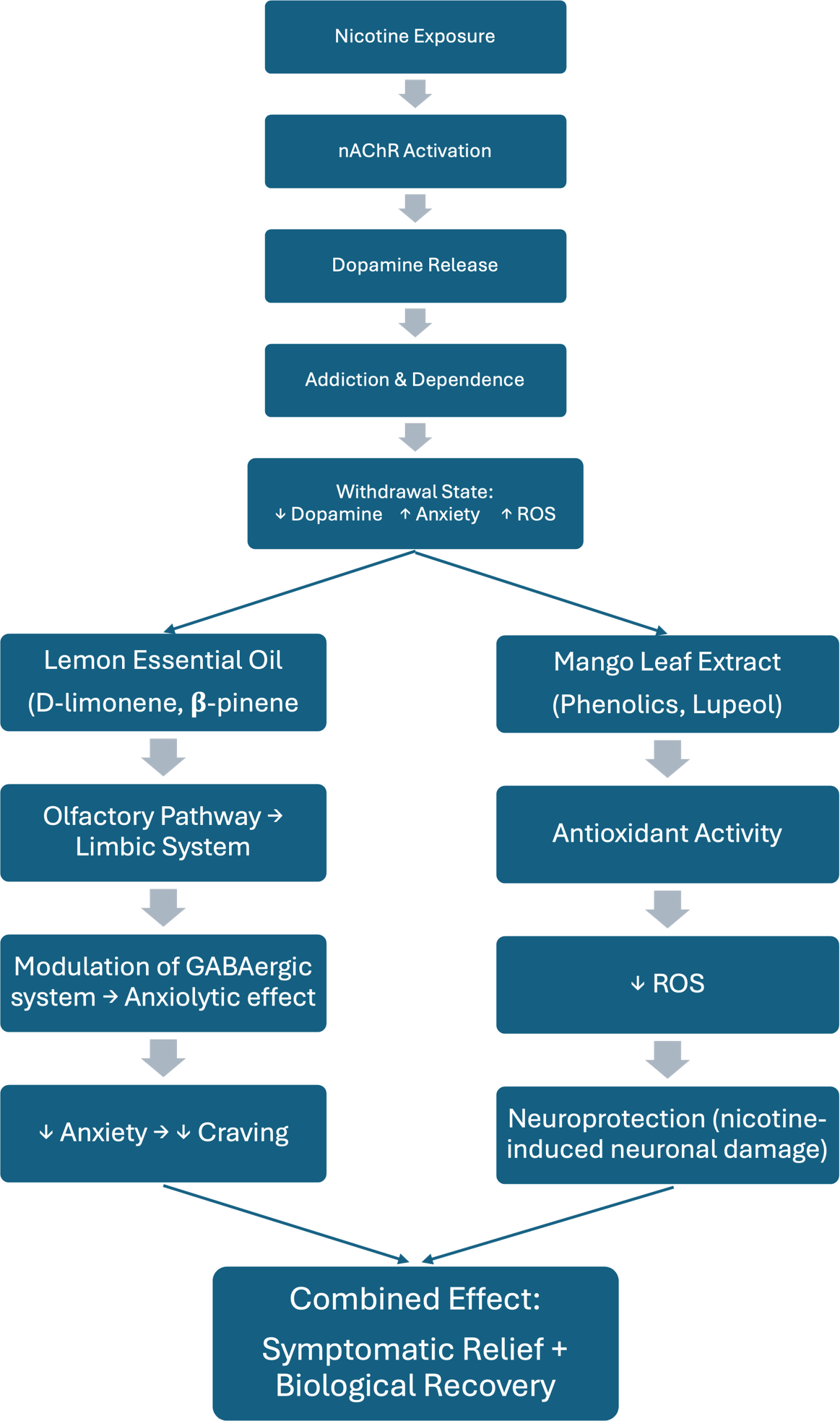
In contrast, mango leaf extract contains phenolic compounds and triterpenoids, such as lupeol, which are well-documented for their potent antioxidant and anti-inflammatory activities. These compounds may attenuate oxidative stress by scavenging reactive oxygen species (ROS), thereby protecting neuronal cells from nicotine-induced damage (17). This neuroprotective effect is expected to contribute to the restoration of neuronal functions disrupted by chronic nicotine exposure.
The integration of these properties suggests a dual-action approach: lemon essential oil may provide rapid symptomatic relief through its anxiolytic effects, while mango leaf extract may support long-term biological recovery by reducing oxidative stress and fostering neuroprotection. This complementary interaction underscores the potential of combining these natural products as supportive candidates in nicotine addiction management.
It is important to emphasize that this study provides a conceptual framework linking chemical composition to potential biological mechanisms, serving as a basis for future experimental investigations. The proposed mechanisms are derived from the integration of literature and chemical profiling data; therefore, the biological effects described herein should be interpreted as hypothesis-generating rather than confirmatory. Further research—including in vitro, in vivo, and molecular docking analyses—is essential to validate these mechanisms and evaluate their pharmacological relevance.
Conclusion
Literature-based mechanism mapping linked identified metabolites with reported activities associated with neurotransmitter regulation, oxidative stress reduction, and neuroprotection. GC-MS analysis showed that lemon essential oil (C. limon) is dominated by D- limonene (58.72%), β- pinene (13.82%), and γ- terpinene (11.43%), which have the potential to reduce the desire to smoke through neurosensory mechanisms. while the 96% ethanol extract of mango leaves (M. indica L.) is rich in phenolic compounds and triterpenoids such as benzoic acid, 3,4,5-trihydroxy-,methyl ester (27.61%), lupeol, and vitamin E, which function as antioxidants and anti-inflammatory. This is in accordance with the literature, where the differences in metabolite profiles indicate complementary mechanisms of action between the two natural ingredients as the identified metabolites suggest potential supportive roles of lemon essential oil and mango leaf extract in nicotine addiction management through neuromodulator, antioxidant, and neuroprotective pathways. However, these findings should be regarded as preliminary and hypothesis-generating because no direct biological validation was performed. Further in vitro, in vivo, and clinical studies are required to confirm their therapeutic relevance.
Declarations
Conflict of Interest
The authors declare no conflict of interest.
Data Availability
All data generated or analyzed during this study are included in this published article.
Ethics Statement
Not applicable.
Funding Information
This work was funded by LPPM Universitas Islam Sultan Agung.
References
- Komiya M, Takeuchi T, Harada E. Lemon oil vapor causes an anti-stress effect via modulating the 5-HT and DA activities in mice. Behavioural Brain Research. 2006;172(2):240-249. doi: https://doi.org/10.1016/j.bbr.2006.05.006
- Koob GF, Volkow ND. Neurobiology of addiction: a neurocircuitry analysis. The Lancet Psychiatry. 2016;3(8):760-773. doi: https://doi.org/10.1016/s2215-0366(16)00104-8
- Kristianto Taufick AL, Nugroho AD, Wulandari AA, Budiman DT, Wibisono AB, Leda FJ. Dinamika Adiksi Perokok Dalam Usahanya Untuk Berhenti Merokok. S-Jpu. 2023;6(1):1-28. doi: https://doi.org/10.24815/s-jpu.v6i1.26269
- GATS. GATS|GLOBAL ADULT TOBACCO SURVEY Fact Sheet Indonesia 2021 GATS Objectives. 2021;
- Ahmad ZF, Prasetya E, Nurdin SSI, Boekoesoe L, Katili RA. Peningkatan Perilaku Hidup Bersih dan Sehat Pada Remaja sebagai Upaya Pencegahan Perilaku Merokok. Mohuyula. 2023;2(2):50. doi: https://doi.org/10.31314/mohuyula.2.2.50-57.2023
- Mishra A, Chaturvedi P, Datta S, Sinukumar S, Joshi P, Garg A. Harmful effects of nicotine. Indian J Med Paediatr Oncol. 2015;36(01):24-31. doi: https://doi.org/10.4103/0971-5851.151771
- Nurmesa A, Nurhabibah N, Najihudin A. Formulasi dan evaluai stabilitas fisik patch transdermal alkaloid nikotin daun tembakau (Nicotiana tobacum Linn) dengan variasi polimer dan asam oleat. JPFH. 2019;2(1):1-8. doi: https://doi.org/10.36656/jpfh.v2i1.124
- Dani JA, De Biasi M. Cellular mechanisms of nicotine addiction. Pharmacol Biochem Behav. 2001;70(4):439–46.
- Mira Yustika, Agung Ikhssani. Case Report: Nicotine Addiction-Adolescence obsession. Jtkb. 2021;2(2):100-107. doi: https://doi.org/10.30602/jtkb.v2i2.40
- Filianty F, Ramadhaningsih N, Mahani M. Karakterisasi Kimia Tepung Kulit Albedo dan Flavedo Buah Jeruk Limon (Citrus limon). Tekno. J. Ind. Tek. Pert. 2025;19(2):103-108. doi: https://doi.org/10.24198/jt.vol19n2.4
- Putri SS, Suryati C, Nandini N. Jurnal Sains dan Kesehatan. J Sains dan Kesehat. 2020;3(1):242–7.
- Salsabila FZ, Mahdan RK, Prihandini G, Sudarman R, Yulistiani F. Pengaruh Suhu Proses Sokletasi dan Volume Pelarut n-heksana terhadap Yield Minyak Atsiri Jeruk Lemon. FLD. 2022;15(2):97-105. doi: https://doi.org/10.35313/fluida.v15i2.4409
- Afifah N, Budi Riyanta A, Amananti W. Pengaruh waktu maserasi terhadap hasil skrining fitokimia pada ekstrak daun mangga harum manis (Mangifera indica L.). Jurnal Crystal. 2023;5(1):54-61. doi: https://doi.org/10.36526/jc.v5i1.2634
- Setyawardhani DA, Saputri CM, Ni'mah N. Pembuatan dan Uji Organoleptik Hand Sanitizer dari Daun Mangga (Mangifera indica) dengan Metode Maserasi. equilibrium. 2021;4(1):1. doi: https://doi.org/10.20961/equilibrium.v4i1.42852
- Lima NG, De Sousa DP, Pimenta FCF, Alves MF, De Souza FS, Macedo RO, et al. Anxiolytic-like activity and GC–MS analysis of (R)-(+)-limonene fragrance, a natural compound found in foods and plants. Pharmacology Biochemistry and Behavior. 2013;103(3):450-454. doi: https://doi.org/10.1016/j.pbb.2012.09.005
- Marampung W, Simbala HEI, Rumondor EM. Analisis GC-MS (Gas Chromatography-Mass Spectrometry) dari Ekstrak Etanol Daun Gedi Hijau (Abelmoschus manihot L.). jlf. 2024;3(1):07-13. doi: https://doi.org/10.57207/67h89318
- Pardo-Andreu GL, Barrios MF, Curti C, Hernández I, Merino N, Lemus Y, et al. Protective effects of Mangifera indica L extract (Vimang), and its major component mangiferin, on iron-induced oxidative damage to rat serum and liver. Pharmacological Research. 2008;57(1):79-86. doi: https://doi.org/10.1016/j.phrs.2007.12.004
- Baruah H, Das BK, Chakraborty T, Goswami AK, Goswami D, Pathak K, et al. Valorization of mango peel and seed for sustainable applications in healthcare and cosmeceuticals: a review. Biotechnol Sustain Mater. 2026;3(1). doi: https://doi.org/10.1186/s44316-026-00054-5
- Assyera RA, Nurjanah S, Widyasanti A, Ainina N. Profil mutu minyak atsiri kulit lemon (Citrus limon (L.) Burm.f. var. Eureka) berdasarkan perbedaan warna kematangan dan kadar air. JTP. 2023;24(3):201-218. doi: https://doi.org/10.21776/ub.jtp.2023.024.03.5
- Schneider BN, White B. Nicotine addiction. 5-Minute Clin Consult Stand 2016 Twenty Fourth Ed. 2015;2295–303.