RESEARCH ARTICLE
Promoting Interfaith Tolerance Through Community-Based Initiatives: A Case Study of FKUB Salatiga
Unity Lens|Vol. 1, Issue 1, pp. 20-25 (2025)
CC BY 4.0-2025 Authors
Views
Downloads
Shares

Received
Sep 17, 2025Revised
Dec 12, 2025Accepted
Dec 17, 2025Published
Dec 28, 2025
Abstract
Religious diversity in Indonesia presents both social opportunities and challenges for sustaining interfaith harmony. Salatiga, a pluralistic city often referred to as “Mini Indonesia,” provides a significant context for examining community-based mechanisms of religious tolerance. This study aims to analyze how the Forum for Religious Harmony (Forum Kerukunan Umat Beragama/FKUB) of Salatiga promotes interfaith tolerance and to identify factors that support and constrain these efforts. Using a qualitative descriptive approach, this study draws on in-depth interviews with FKUB leaders, document analysis, and indirect observation of FKUB programs. The findings show that FKUB Salatiga employs an integrated strategy combining educational outreach, symbolic interfaith engagement, humanitarian services, and institutional coordination. These strategies are effective because they embed tolerance within everyday social interactions, mobilize religious leaders as moral authorities, and rely on direct, face-to-face communication to maintain contextual sensitivity. Government facilitation strengthens program sustainability, while challenges remain related to unequal regulation of worship facilities and resource limitations. This study contributes to the literature on interfaith communication and community-based peacebuilding by demonstrating how a locally embedded interfaith institution can function as a preventive governance mechanism for social conflict. The findings offer practical implications for policymakers and practitioners seeking to strengthen religious harmony in plural societies and suggest directions for future research on comparative interfaith governance and digital engagement strategies.
Introduction
Indonesia, as one of the most religiously diverse nations in the world, faces persistent challenges in maintaining harmonious interfaith relations (1). Despite constitutional guarantees of religious freedom and the foundational role of Pancasila as a unifying ideology, incidents of interreligious tension continue to occur in various regions (2). The coexistence of six officially recognized religions alongside numerous local belief systems within a single national framework creates a complex social landscape that can intensify the potential for misunderstanding and conflict (3). Even in cities often portrayed as symbols of tolerance, such as Salatiga, interreligious disputes related to the establishment of places of worship such as the Salib Putih land issue and the GKJ Menara Kasih church controversy illustrate the fragile and dynamic nature of interfaith harmony (4).
These recurring tensions indicate that religious harmony cannot be sustained solely through normative legal frameworks but requires continuous and effective communication and community-based engagement (5). Government regulations, including the Joint Decree of the Minister of Religious Affairs and the Minister of Home Affairs No. 9 and No. 8 of 2006, mandate local governments to promote interreligious harmony. This arrangement reflects the role of religion in the public sphere, where religious actors contribute to civic life while respecting pluralism and democratic values (6). However, empirical evidence suggests that implementation often encounters practical constraints, such as limited institutional capacity, uneven public participation, and fragmented outreach strategies (7). Within this context, the Forum Kerukunan Umat Beragama (FKUB) plays a central role as a formal interfaith institution tasked with mediating conflicts and fostering dialogue. While FKUB initiatives such as interfaith dialogues, seminars, and collaborative religious events have been widely implemented, existing studies tend to describe these activities normatively, with limited systematic evaluation of their communication strategies, effectiveness, and sustainability (8, 9).
Previous research has largely emphasized the importance of interfaith dialogue as a tool for conflict prevention, yet relatively little attention has been paid to how communication strategies are operationalized at the local institutional level and how social promotion activities function as instruments of tolerance-building in pluralistic urban settings. This gap is particularly evident in the context of FKUB, where program effectiveness is often assumed rather than empirically assessed, and where theoretical perspectives on interfaith communication and community-based peacebuilding remain underutilized in analysis (10).
Therefore, this study aims to address this gap by examining the communication strategies employed by FKUB Kota Salatiga in conducting social promotion activities to foster interfaith tolerance. Using a descriptive qualitative approach, this research analyzes FKUB initiatives such as interfaith dialogues, seminars, and visits to places of worship to identify their communicative patterns, outcomes, and the factors that support or hinder their implementation. By focusing on Salatiga as a representative pluralistic city, this study contributes a context-specific yet theoretically informed case that enriches scholarly discussions on interfaith communication, social promotion, and institutional peacebuilding. The findings are expected to provide insights for policymakers and practitioners while offering a potential reference model for strengthening interfaith harmony in other multicultural regions of Indonesia.
Methodology
Study Design and Rationale
This study employed a qualitative descriptive research design to explore the communication strategies and implementation practices of social promotion activities conducted by the Forum Kerukunan Umat Beragama (FKUB) in Salatiga, Central Java, Indonesia. This approach was selected because the primary objective of the study was to systematically describe and document FKUB’s communication practices as they are implemented in real social settings, rather than to develop new theory (as in grounded theory) or to conduct prolonged cultural immersion (as in ethnography). The qualitative descriptive design allows for a clear and practice-oriented understanding of institutional communication processes, making it suitable for capturing FKUB’s tolerance-promotion initiatives without manipulating variables.
Study Setting and Participants
This study was conducted between March and May 2025 in Salatiga, a mid-sized city located in Central Java, Indonesia. Salatiga is nationally recognized for its religious pluralism and social tolerance, with a population of approximately 198, 971 people (BPS, 2023), consisting of followers of Islam, Protestantism, Catholicism, Hinduism, Buddhism, Confucianism, and local belief systems. The city has consistently ranked among the top three most tolerant cities in Indonesia according to the Setara Institute’s Tolerance Index, earning it the designation “miniature Indonesia. ”
The research focused on the Forum Kerukunan Umat Beragama (FKUB) of Salatiga, a government-facilitated interfaith forum established in 2007 under the Joint Regulation of the Minister of Religious Affairs and the Minister of Home Affairs (Regulation No. 9 and No. 8 of 2006). As of the 2022–2027 period, FKUB Salatiga comprises 17 religious leaders representing six officially recognized religions and actively conducts dialogue, education, and public communication programs to promote religious harmony.
Participants were selected using purposive sampling based on their direct involvement in FKUB’s social promotion activities. A total of eight key informants participated in this study, including FKUB executives, religious leaders, program coordinators, and stakeholders engaged in interfaith outreach. Inclusion criteria required participants to have held an official role within FKUB for at least one year and to have participated in a minimum of two major FKUB social promotion activities. This ensured that the data reflected informed perspectives grounded in practical experience.
Data Collection Techniques
Data were collected through three qualitative techniques: in-depth interviews, participant observation, and document analysis. Semi-structured interviews were conducted to explore participants’ experiences, communication strategies, challenges, and perceptions related to FKUB’s tolerance-promotion initiatives. An interview guide consisting of open-ended questions was used to ensure consistency while allowing flexibility for probing emerging themes. Each interview lasted approximately 45–90 min and was audio-recorded with participants’ consent.
Participant observation was conducted during FKUB activities such as interfaith seminars, collaborative social services, and visits to places of worship. Observations focused on communication delivery, audience interaction, message framing, and contextual dynamics. Detailed field notes were recorded, particularly noting non-verbal communication and group interactions. Document analysis complemented the primary data and included internal reports, communication materials, official correspondence, activity flyers, visual documentation, and relevant policy guidelines issued by FKUB. This triangulation strengthened the credibility of the findings and enriched the interpretation of the empirical data.
Procedures
Participants were contacted through formal correspondence facilitated by FKUB. Interviews were conducted in private settings to ensure confidentiality and encourage open responses. All interviews were transcribed verbatim. Observations were carried out during five major FKUB activities: 1) interfaith seminars in high schools, 2) tolerance-themed public parades, 3) social service events, 4) joint religious prayer gatherings, and 5) dialogue forums among religious leaders. A standardized observation sheet was used to document communication clarity, audience engagement, and use of media.
Data Analysis
Data analysis followed Miles and Huberman’s (1994) interactive model, consisting of data reduction, data display, and conclusion drawing. An inductive thematic analysis was applied. First, interview transcripts and field notes were read repeatedly to achieve data familiarization. Second, initial codes were generated to capture recurring meanings related to communication strategies, implementation challenges, and perceived outcomes. Third, related codes were grouped into broader themes representing FKUB’s social promotion practices.
NVivo software (version 12) was used to support systematic coding and theme organization. Credibility was enhanced through data triangulation and member checking, whereby participants reviewed summaries of the findings to confirm accuracy. The researchers positioned themselves as external academic observers with no formal affiliation to FKUB, allowing analytical distance while maintaining sensitivity to the research context. Reflexive notes were maintained throughout the research process to enhance transparency.
Results
Social Promotion Activities on Interfaith Tolerance by FKUB Salatiga
This study draws on in-depth interviews, document analysis, and indirect observation of FKUB Salatiga’s official programs. Interviews involved five key figures within FKUB: the Chairperson (Drs. KH. Noor Rofik), Head of Public Relations (Romo Wiku Satria, Dh. T), Reverend Haiyono, Head of Interfaith Relations (Drs. H. Zaenuri), and Head of Aspirations (MC. Sumitro). Additional data were obtained from FKUB Salatiga’s official website and internal archival documents. Data were analyzed using thematic coding to align empirical findings with the research questions.
The findings show that FKUB Salatiga implements systematic and recurring social promotion activities to foster interfaith tolerance. These activities target multiple social segments, including youth, women’s organizations (PKK), neighborhood associations (RT/RW), and religious congregations through seminars, public campaigns, and direct community engagement, as shown in Figure 1.
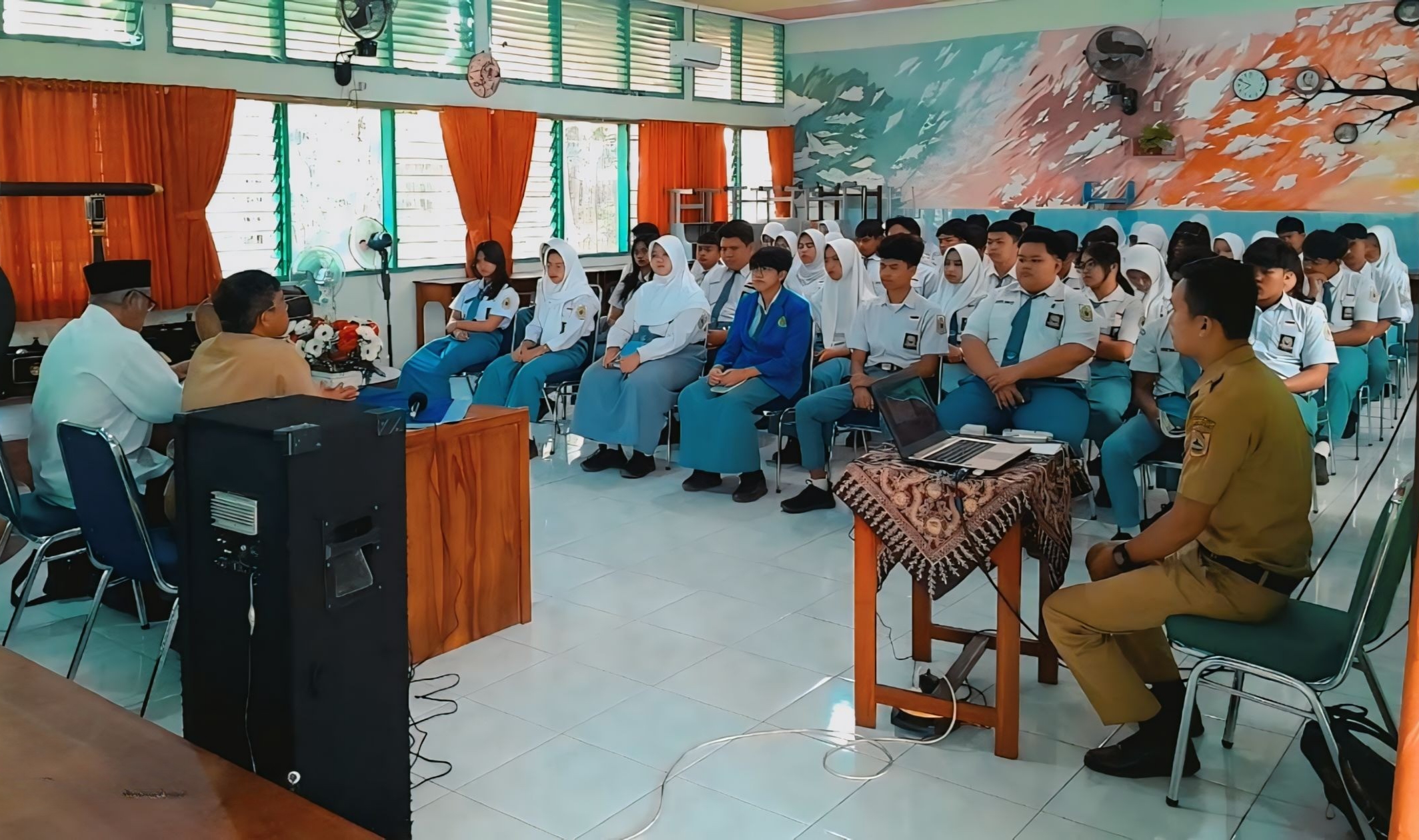
One of FKUB’s primary focuses is youth education through school-based seminars. During outreach activities at SMA Negeri 3 Salatiga, students were introduced to values of tolerance and peaceful coexistence within a pluralistic society. This initiative reflects FKUB’s emphasis on early interfaith awareness.
According to the FKUB Chairperson, these activities are conducted consistently each academic year. “Every new academic year, we carry out socialization programs for senior high school and vocational students across Salatiga,” stated Drs. KH. Noor Rofik. In addition to educational programs, FKUB also conducts symbolic and humanitarian activities as part of its outreach strategy.
The sustainability of FKUB’s interfaith promotion is supported by the active involvement of religious leaders, who function as moral authorities within their respective communities. MC. Sumitro emphasized that maintaining interreligious harmony is the forum’s central responsibility. “The primary duty of FKUB is to maintain interreligious harmony, because if it is not actively preserved, conflict may arise,” he explained.
Operationally, FKUB conducts a minimum of four social promotion activities annually, rotating across Salatiga’s four subdistricts. These activities are funded through annual government grants of approximately IDR 300 million. Reverend Haiyono noted that outreach activities are planned based on both program schedules and conflict vulnerability assessments. “We look at areas with potential conflict, and in those places we may conduct outreach more than once,” he stated.
This operational pattern was also confirmed by Drs. H. Zaenuri, who explained that FKUB ensures regular activities across different social segments and subdistricts each year, as shown in Figure 2.
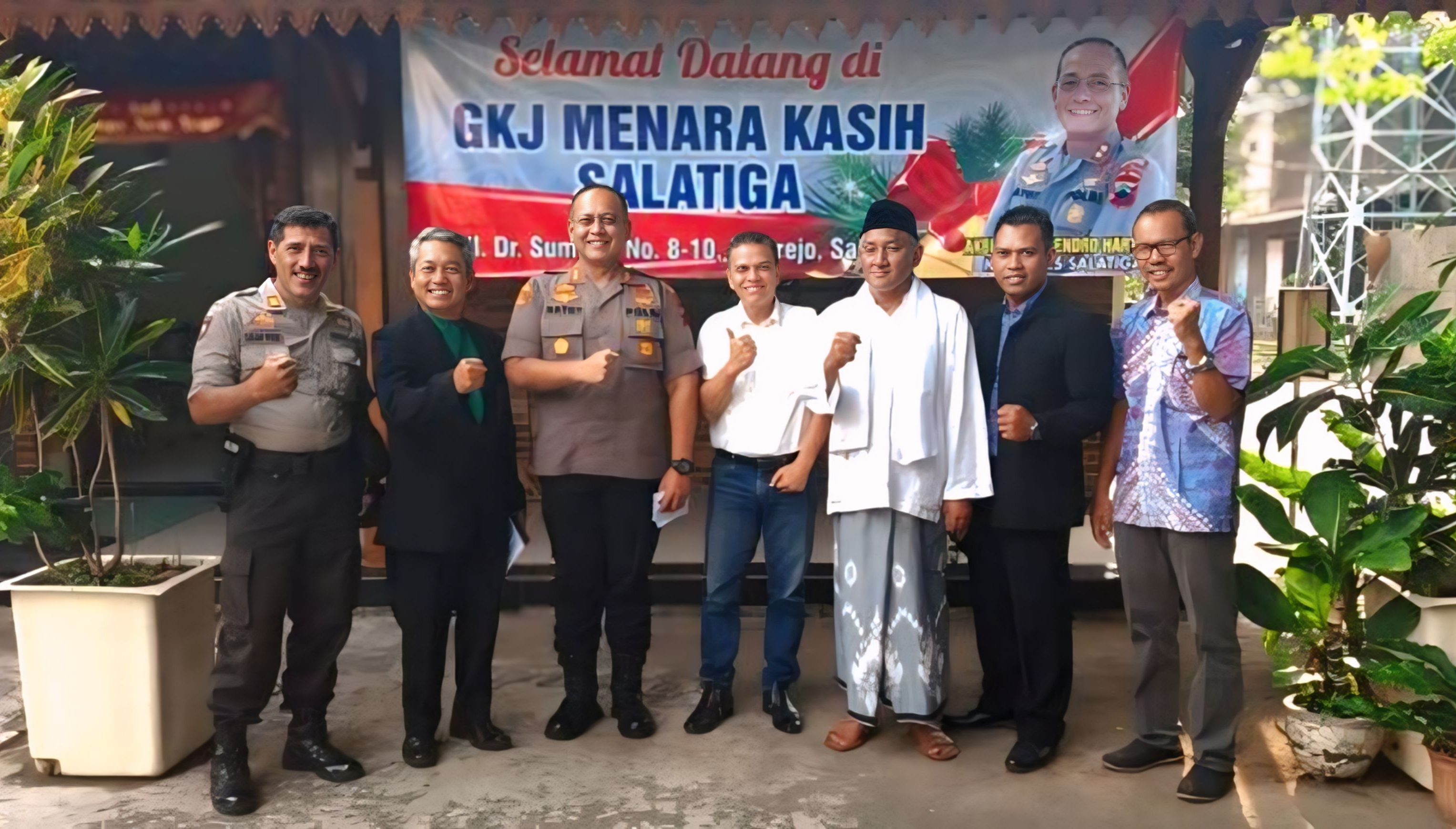
The visit to GKJ Menara Kasih represents FKUB Salatiga’s symbolic outreach effort to Christian communities and highlights its commitment to inclusive, interreligious engagement.
Beyond formal education and neighborhood outreach, FKUB facilitates visits to places of worship as part of its interfaith promotion strategy. These visits aim to strengthen communication and mutual understanding among religious communities.
FKUB also collaborates with local institutions, including the Salatiga Police Department, to organize multi-faith prayer events promoting peace and public safety. These activities involve religious leaders and community representatives from different faith backgrounds.
Internally, FKUB applies a shared-responsibility model in which all members participate in outreach activities. As Drs. H. Zaenuri stated, “Everyone, from the chairperson to each division, carries the same mission of harmony, and responsibilities are shared among members. ”
The core messages conveyed during FKUB’s outreach emphasize tolerance as both a religious and civic responsibility. Religious diversity is framed as part of divine design, while moderation is promoted through the principles of tasamuh (tolerance), tawasuth (moderation), and tawazun (balance).
In delivering these messages, FKUB prioritizes face-to-face communication to ensure contextual sensitivity. Romo Wiku Satria noted, “We usually communicate directly through face-to-face meetings and adjust our approach to the situation and audience. ”
In addition, FKUB conducts humanitarian initiatives, including free cataract surgeries in collaboration with the John Fawcett Foundation. These activities address shared social needs and are integrated into FKUB’s broader interfaith engagement efforts, as explained by Drs. KH. Noor Rofik.
Supporting and Inhibiting Factors in FKUB Salatiga's Interfaith Social Promotion
FKUB’s interfaith promotion activities are supported by collaboration among religious leaders, the local government, and community members. Government support includes financial assistance and logistical facilities, such as vehicles for outreach activities. Romo Wiku Satria emphasized that community awareness and government backing play an important role in sustaining tolerance initiatives. At the same time, FKUB members reported challenges related to differing community responses toward the establishment of places of worship. These issues were identified as potential obstacles to maintaining interreligious harmony in certain contexts. Despite these challenges, FKUB leaders reported that Salatiga has consistently ranked among the top three most tolerant cities in Indonesia for seven consecutive years, which they associate with sustained interfaith engagement and institutional cooperation, as stated by Drs. KH. Noor Rofik.
Taken together, these findings demonstrate that FKUB Salatiga’s interfaith promotion operates through an integrated model combining symbolic actions, institutional coordination, grassroots engagement, and humanitarian services. By mobilizing religious leaders as moral authorities, rotating responsibilities across faith groups, and prioritizing direct communication, FKUB has transformed religious tolerance from a normative ideal into a sustained community practice. This synthesis provides the empirical foundation for the following discussion on community-based peacebuilding and interfaith governance.
Discussion
This study demonstrates that FKUB Salatiga plays a pivotal role in sustaining interreligious harmony within a pluralistic urban context. Salatiga’s reputation as “Mini Indonesia” reflects not only demographic diversity but also the effectiveness of institutionalized interfaith engagement. Its consistent ranking among Indonesia’s top three most tolerant cities underscores the impact of FKUB’s community-based strategies (11).
FKUB’s approach aligns with theories of community-based peacebuilding, which emphasize grassroots participation, moral leadership, and sustained dialogue as key mechanisms for conflict prevention (12). By targeting local social structures RT/RW, PKK, schools, and religious institutions FKUB embeds tolerance within everyday social interactions rather than treating it as an abstract ideal (13).
Symbolic initiatives, such as tolerance walks and interfaith worship visits, function as ritualized communication practices that reinforce collective identity across religious boundaries (13, 14). Meanwhile, humanitarian programs, including free medical services, exemplify what peacebuilding scholars describe as “service-based diplomacy,” where shared social welfare initiatives strengthen intergroup trust (12).
Institutionally, FKUB is supported by the Salatiga city government under the joint regulation of the Minister of Religious Affairs and Minister of Home Affairs (Nos. 9 and 8 of 2006), which authorizes FKUB’s function as a religious harmony facilitator (12). The city government provides annual funding and logistical support, including transportation for outreach, while religious leaders from six recognized faiths, Islam, Catholicism, Protestantism, Hinduism, Buddhism, and Confucianism, actively contribute as FKUB members (15). All members are involved equally in delivering the message of tolerance without relying on external facilitators, ensuring message consistency and internal capacity-building (16).
Interviews with FKUB leadership underscore that these activities are conducted directly by rotating internal personnel. Members of different religious backgrounds share responsibilities and often fill in for one another to deliver presentations or respond to community requests (17). This rotational model reflects an inclusive governance structure that strengthens trust, legitimacy, and cross-faith cooperation at the grassroots level (18).
Despite its success, FKUB faces persistent challenges. These include occasional community frictions, unequal treatment in worship site construction, and societal resistance in certain quarters. Illegal construction of religious facilities and public opposition to officially sanctioned churches are cited as common obstacles (19). Moreover, financial constraints stemming from budget rationalization policies threaten the sustainability of FKUB programs. Maintaining tolerance is consistently more difficult than achieving the recognition itself, as noted by FKUB leaders (20).
To address these issues and scale its impact, FKUB is encouraged to enhance its digital presence. Utilizing social media platforms (WhatsApp, Instagram, Facebook, X/Twitter) and its official website would allow broader dissemination of its messages and foster intercity learning (19). Engaging younger FKUB members to develop short educational videos, podcasts, and infographics would help promote tolerance in formats that resonate with wider audiences (21). Furthermore, collaboration with local universities such as the State Islamic University (UIN) Salatiga and Satya Wacana Christian University (UKSW) could institutionalize FKUB’s efforts through the creation of a certification program for “tolerance mediators. ” This would extend the scope of FKUB’s influence beyond the city level into national academic discourse.
Ultimately, FKUB Salatiga serves as a living model of religious harmony in a diverse society. Its ongoing work not only contributes to peace in Salatiga but offers a practical and transferable framework for other regions seeking to strengthen social cohesion amid religious diversity (13).
Conclusion
This study demonstrates that FKUB Salatiga functions as a community-based governance mechanism that institutionalizes interreligious tolerance through grassroots engagement, moral leadership, and collaboration with local government. By integrating educational outreach, symbolic interfaith interactions, and humanitarian initiatives, FKUB translates religious tolerance from a normative principle into a sustained social practice.
The findings contribute to the literature on interfaith communication and community-based peacebuilding by illustrating how locally embedded religious institutions can operate as preventive mechanisms for social conflict. FKUB’s rotational leadership model and emphasis on direct, face-to-face communication strengthen intergroup trust and reinforce the continuity of tolerance initiatives. From a policy perspective, the results highlight the importance of institutional coordination, equitable regulation of worship facilities, and the strategic use of digital communication to sustain interreligious harmony in plural societies.
This study is limited by its qualitative case-study design and focus on a single city, which restricts generalizability and cross-regional comparison. In addition, the absence of longitudinal data limits assessment of the long-term impact of FKUB’s programs. Future research should employ comparative multi-site approaches, integrate digital ethnography, and examine youth-centered communication strategies to better understand how interfaith tolerance initiatives can be scaled across diverse sociocultural contexts in Indonesia.
Declarations
Conflict of Interest
The author declares no conflicting interest.
Data Availability
The unpublished data is available upon request to the corresponding author.
Ethics Statement
Ethical approval was not required for this study.
Funding Information
The author declares that no financial support was received for the research, authorship, and/or publication of this article.
References
- Ma’ruf MA, Amar A. Promoting interfaith dialogue and mitigating religious conflicts in Indonesia. J Law Soc Transform. 2024;2(1):1–7.
- Mas’ud A. Pancasila and religious harmony. In: European Alliance for Innovation; 2021.
- Regus M. Interreligious conflicts in post-authoritarian Indonesia: assumptions, causes, and implications. Jurnal Politik. 2020;5(2):1-22.
- Sofyan MA, Badi’ati AQ. Reexamining Salatiga as a tolerant city in Java: an exposure of lesser-known facts. Walisongo J Sos Relig Res. 2022;30(2):241–62.
- Zain A, Maturidi M. Building bridges, not walls: navigating inter-religious conflict over worship spaces in Aceh Singkil, Indonesia. Religious J Stud Agama Agama Lintas Budaya. 2024;7(3):209–22.
- Habermas J. Religion in the public sphere. Eur J Philos. 2006;14(1):1–25.
- Muchtar AT, Purbolaksono A, Intania CC, Primaresti F. Evaluation of the requirements for the establishment of houses of worship under the joint regulation of the Minister of Religious Affairs and the Minister of Home Affairs Nos. 9 and 8 of 2006 concerning freedom of religion and belief in Indonesia. 2024.
- Zahra F, Sazali H. Strengthening the communication system of the Interfaith Harmony Forum (FKUB) in Serdang Bedagai. J Dakwah Komun. 2024;9(2):1–8.
- Kusmayani AEP. Youth interfaith dialogue in everyday citizenship in Indonesia: bridging religious diversity and citizenship challenges. Focus. 2023;4(2):159–68.
- Pratama TA, Harahap N. Peran komunikasi interkultural dalam penguatan moderasi beragama pada masyarakat Kota Medan (analisis FKUB di Medan). J Indones Manaj Inform Komun. 2024;5(2):2081–95.
- Wiratama D. Perancangan identitas visual Kota Salatiga sebagai kota multikultur dan toleran. Ars J Seni Rupa Desain. 2018;21(3):188–204.
- Hidayanti U, Ali M. Communication of the Religious Harmony Forum (FKUB) in developing religious moderation in Salatiga City. Islamic Commun J. 2023;8(2):267–84.
- Nugroho MA. Religious tolerance model in Salatiga: analysis of the implementation of religious moderation concept in a multicultural city. Int J Adv Sci Educ Relig. 2024;7(4):27–43.
- Nuryani T, Taufiq A. Peran Forum Kerukunan Umat Beragama dalam memelihara toleransi beragama Kota Salatiga tahun 2018. J Polit Gov Stud. 2019;8(3):381–90.
- FKUB Salatiga. Government support is considered essential in realizing a city of tolerance. Salatiga: FKUB Salatiga; 2021.
- Syam N, Basyid A. Pattern of problem solving in Religious Harmony Forum. J Islam Stud Humanit. 2024;9(1):1–19.
- Rofiq A. Komunikasi Forum Kerukunan Umat Beragama (FKUB) sebagai perwujudan moderasi beragama di Kabupaten Banyuwangi. Al-Tsiqoh J Ekon Dakwah Islam. 2023;8(2):50–78.
- Ahmad J, Wafi MH, Mushkalamzai Z, Hadi AA. Multiculturalism and identity politics: reading on the Religious Harmony Forum. IBDA J Islam Cult Stud. 2023;21(2):259-278.
- Hudin H, Amin A, Fahmi MR, Sulaiman R. Moderasi beragama dalam Forum Kerukunan Umat Beragama (FKUB) di Kalimantan Barat. Sujud J Agama Sos Budaya. 2025;1(3):342–52.
- Huda MT. Strategi, peluang dan tantangan membangun kerukunan pemuda di era milenial. Satya Widya J Stud Agama. 2020;3(2):98–114.
- Khairiah N, Sazali H. Media information on religious harmony: digital communication of FKUB Medan City in the development agenda based on SDGs 16. JIPI J Ilmu Perpustakaan Inf. 2025;10(1):315–26.