RESEARCH ARTICLE
The Implementation of Digital Technology to Enhance the Quality of Islamic Religious Education (PAI) Learning at SMP Negeri 2 Palu
Education and Learning|Vol. 2, Issue 1, pp. 29-34 (2026)
CC BY 4.0-2026 Authors
Views
Downloads
Shares

Received
Feb 10, 2026Revised
May 13, 2026Accepted
Jun 2, 2026Published
Jun 12, 2026
Abstract
The rapid shift toward digitally mediated learning environments poses significant challenges for Islamic Religious Education (PAI), particularly in maintaining learning quality while adapting to technological demands. This study examines the use of technology in PAI learning and identifies supporting and inhibiting factors in its implementation at SMP Negeri 2 Palu. A qualitative descriptive case study design was employed over a period of two months (July-August 2026). Data were collected through semi-structured interviews, non-participant classroom observations, and document analysis involving several participants, consisting of one school principal, one PAI teacher, and three Grade IX students selected through purposive sampling. Data were analyzed using an inductive thematic approach with triangulation to ensure credibility. The findings show that technology is integrated into PAI learning through a blended learning model combining asynchronous communication via WhatsApp and synchronous platforms such as YouTube, Google Meet, and Zoom. The results indicate perceived improvements in student engagement, participation, and classroom responsiveness, as identified from participant perspectives and classroom observation themes rather than measurable academic outcomes. These changes are reflected in more active student interaction and attentiveness during learning activities. Nevertheless, several challenges persist, including limited teacher digital competence, unstable internet connectivity, and infrastructure constraints. Mitigation efforts include continuous teacher training and gradual improvement of school facilities. In conclusion, technology integration contributes positively to PAI learning quality in this context, although its sustainability depends on teacher professional development, leadership support, adequate infrastructure, and ongoing instructional evaluation to ensure long-term effectiveness.
Keywords:
Introduction
Education forms a foundational mechanism for human development, structured to foster cognitive, moral, and spiritual growth (1, 2). In this framework, Islamic Religious Education (Pendidikan Agama Islam/PAI) plays a strategic role in shaping learners who are not only intellectually competent but also spiritually grounded and socially responsible. However, the rapid evolution of digital technologies and the transition to digitally mediated learning environments challenge traditional pedagogical approaches that have historically dominated PAI instruction. The technological expectations of the digital generation require PAI educators to adopt adaptive and innovative instructional strategies that remain aligned with both educational goals and Islamic values (3–5).
The urgency of integrating digital technology into PAI learning is underscored by research showing that digital tools and media can significantly enhance student engagement, motivation, and access to diverse learning resources when implemented with pedagogical intentionality (6, 7). Previous studies indicate that the use of digital media such as interactive presentations, online learning platforms, and audiovisual content can increase student participation and improve classroom interaction compared to conventional lecture-based methods. In addition, digital learning environments provide students with broader access to Islamic learning materials, allowing them to revisit lessons independently and engage more actively during the learning process (6, 8, 9). Within this study, the quality of learning is operationally understood as the extent to which digital technology supports student engagement, learning effectiveness, accessibility of learning resources, interaction between teachers and students, and the internalization of Islamic values during the learning process. Analytically, the effectiveness of digital learning in this context is reflected in more interactive classroom communication, increased student responsiveness during instruction, and the flexibility of accessing learning materials both inside and outside the classroom.
Theoretically, this study draws upon the perspective of digital pedagogy and blended learning, which emphasize the integration of technology, pedagogy, and meaningful learner interaction in educational practice. Digital pedagogy highlights the importance of utilizing technology not merely as a technical tool, but as a medium that supports active, collaborative, and value-oriented learning experiences. Meanwhile, blended learning theory provides a framework for combining face-to-face instruction with digital learning environments to improve flexibility, participation, and learning outcomes. These perspectives are relevant for understanding how digital technology can be effectively implemented in PAI learning while maintaining its religious and ethical dimensions.
Given these challenges, there remains a significant gap in empirical research that investigates how digital technologies are practically utilized in specific PAI classroom settings, particularly in secondary schools such as SMP Negeri 2 Palu. Most existing studies are conceptual or literature-based, with limited focus on implementation practices and contextualized barriers or supports at the school level. In addition, previous qualitative studies on digital learning in religious education have rarely examined simultaneously the pedagogical application of digital technology, its contribution to learning quality, and the contextual supporting and inhibiting factors within a specific school environment. This aspect constitutes the novelty of the present study.
Accordingly, this study aims to examine: 1) how digital technology is utilized in improving the quality of PAI learning at SMP Negeri 2 Palu; 2) what factors support the implementation of digital technology in PAI learning; and 3) what barriers inhibit its effective utilization. Employing a qualitative descriptive approach through observation, interviews, and documentation, this research aims to provide empirically grounded insights into digital technology utilization that can inform educators and policymakers on optimizing PAI learning for relevance, effectiveness, and value alignment in the digital era.
Methodology
Study Design and Rationale
This study employed a qualitative descriptive research design with a case study approach to explore the utilization of digital technology in improving the quality of Islamic Religious Education (Pendidikan Agama Islam/PAI) learning. A qualitative approach was selected to capture in-depth pedagogical practices, teacher experiences, and contextual factors within their natural educational setting. The case study approach allowed for a focused and contextualized examination of technology integration in a real classroom environment, providing rich descriptive insights relevant to educational practice (10).
The case study design was considered appropriate as it allows a focused and detailed examination of digital technology integration in a specific school context, thereby producing rich and contextualized insights into instructional practices. This study is also framed within a digital pedagogy perspective, which views learning as the result of interactions between pedagogical strategies, digital tools, and classroom conditions. From this perspective, the use of technology in education is not merely technical, but closely related to how learning is designed, delivered, and experienced by teachers and students.
Participants, Population, and Sampling
The study was conducted at SMP Negeri 2 Palu, a public junior secondary school in Central Sulawesi, Indonesia, which has implemented digital learning supported by internet access, multimedia projectors, and computer-based facilities. Participants were selected using purposive sampling based on their direct involvement in digital-based PAI learning activities and their relevance to the research focus.
A total of participants were involved in this study, consisting of one school principal, one Grade IX Islamic Religious Education (PAI) teacher, and three Grade IX students who had experienced learning activities involving digital technology. The students were selected because they actively participated in classroom learning supported by digital media and were able to provide relevant learning experiences from the learner’s perspective.
Data collection continued until data saturation was reached, which was indicated by the repetition of similar information and the absence of new emerging insights from additional interviews and observations.
Data Collection Techniques and Instruments
Data were collected through three main techniques, namely semi-structured interviews, non-participant classroom observation, and documentation. The use of multiple techniques was intended to ensure methodological triangulation and enhance the credibility of the findings.
Semi-structured interviews were conducted with the school principal, the PAI teacher, and three Grade IX students to explore their experiences and perspectives regarding the use of digital technology in PAI learning. The interviews followed a flexible but structured protocol that included open-ended questions covering the types of digital technology used in classroom instruction, the strategies employed by teachers in integrating digital media, students’ learning experiences, perceived impacts on learning quality, as well as supporting factors and challenges encountered during implementation. Each interview lasted approximately 30 to 60 minutes, was audio-recorded with participant consent, and subsequently transcribed verbatim for analysis.
In addition to interviews, non-participant classroom observations were conducted to examine the actual implementation of digital technology in PAI learning activities. The observations were carried out across four instructional sessions over a period of approximately two months. This extended observation period allowed the researchers to capture consistent instructional patterns, variations in teaching strategies, and student engagement in different learning situations. During observations, attention was given to teacher instructional practices, the use of digital learning media, student participation, and interaction patterns within the classroom. Field notes were systematically recorded using an observation guide prepared by the researchers to ensure consistency in data collection.
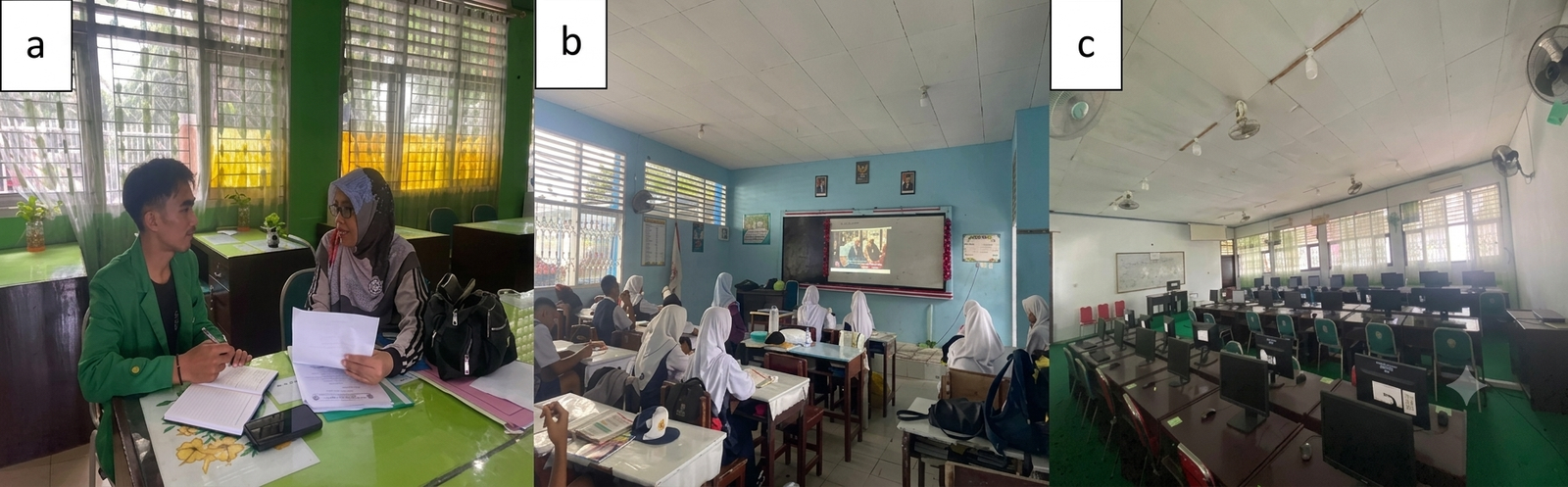
Documentation was also used as a complementary data source, including lesson plans, instructional materials, school records, and photographs of learning activities and digital learning infrastructure. Photographic documentation was used solely to support contextual understanding of the research setting and was not treated as primary analytical data, but rather as supplementary evidence to strengthen the transparency of field conditions.
Research Procedures
The research was conducted through several systematic stages. Initial preliminary observations were carried out to understand classroom conditions and assess the availability of digital learning facilities at the research site. After obtaining formal permission from the school, the researchers proceeded with data collection through interviews, classroom observations, and documentation.
The entire data collection process was conducted over approximately two months, from July to August 2026. All interviews were recorded and transcribed verbatim, while observations were conducted in multiple sessions to ensure consistency and depth of findings. Relevant documents were collected, organized, and analyzed alongside field data to support triangulation and contextual interpretation of the research findings.
Data Analysis
Data were analyzed using thematic analysis, which was conducted through an iterative process involving data familiarization, coding, theme development, and interpretation. Initially, all data obtained from interviews, observations, and documentation were repeatedly read to gain a comprehensive understanding of the content. Following this, open coding was conducted to identify meaningful segments of data related to the use of digital technology in PAI learning, perceived learning quality, supporting factors, and implementation challenges.
The coded data were then grouped into categories and gradually developed into broader themes through constant comparison across all data sources. This iterative process ensured that the emerging themes accurately reflected the patterns present in the data rather than isolated or individual responses.
To enhance analytical rigor and trustworthiness, several validation strategies were applied (11). Methodological triangulation was used by comparing findings from interviews, observations, and documentation. Member checking was also conducted by confirming selected interpretations with participants to ensure accuracy. In addition, researcher triangulation was employed through collaborative discussions among researchers to review coding consistency and refine theme development. An audit trail was maintained throughout the research process to document coding decisions and analytical procedures.
Ethical Considerations
Ethical principles were strictly observed throughout the study. Informed consent was obtained from all participants prior to data collection, participation was voluntary, and confidentiality was ensured through anonymization. Photographic documentation was conducted with permission and used solely to support methodological transparency in accordance with ethical standards for educational research.
Results and Discussion
Implementation of Digital Technology in Improving the Quality of PAI Learning
The findings of this study indicate that digital technology has been systematically implemented in Islamic Religious Education (PAI) learning at SMP Negeri 2 Palu since 2020. Initially introduced as an emergency response to the COVID-19 pandemic, digital technology has continued to be used as a strategic instructional approach to enhance learning quality. Rather than adopting a separate curriculum, digital technology is integrated into the existing national curriculum in alignment with instructional time allocation.
The implementation is carried out through a blended learning approach that combines asynchronous and synchronous learning modes (see Figure 1). Asynchronous learning is mainly conducted through WhatsApp, where teachers distribute summarized learning materials prior to classroom instruction. As explained by the PAI teacher, “the distribution of learning materials the night before class helps students become more prepared and focused during the learning process” (PAI teacher).
From classroom observations, students who had accessed materials beforehand appeared more responsive during initial questioning sessions, although not all students consistently reviewed the materials prior to class. This pattern indicates that the effectiveness of asynchronous preparation varies among students and is strongly influenced by individual learning discipline rather than solely by access to digital materials.
Synchronous learning is implemented through platforms such as YouTube, Google Meet, and Zoom, which are used to support audiovisual explanation and interactive discussion. The teacher emphasized that “the use of digital technology makes PAI learning more effective, efficient, and enjoyable” (PAI teacher). Students corroborated this perception, stating that “PAI learning is no longer boring, and the learning materials are easier to understand” (Student A) and “I feel more comfortable, focused, and motivated when digital technology is used in PAI learning” (Student B).
Based on classroom observation, these perceived improvements were more visible in student engagement behaviors (such as attention, participation in questioning, and responsiveness) rather than directly measurable learning outcomes or academic performance indicators. For this reason, the reported improvement in learning quality is interpreted primarily as perceived and behavioral enhancement within classroom interaction rather than verified cognitive achievement outcomes.
These findings align with previous studies suggesting that digital learning can enhance engagement and motivation when properly integrated into instruction (12, 13). In the present context, such outcomes appear to be highly dependent on teacher facilitation strategies and students’ readiness to engage with digital learning resources (14).
Supporting Factors in Digital Technology Integration
Several supporting factors contribute to the effective implementation of digital technology in PAI learning. Teacher collaboration emerged as a key internal factor. Teachers regularly engage in discussions and knowledge sharing related to digital instructional practices. As stated by the PAI teacher, “we continuously discuss and share experiences regarding the use of digital technology, which allows ongoing improvement in our teaching practices” (PAI teacher).
School leadership also plays a vital role in supporting digital transformation. The principal stated that “teacher collaboration and support from all parties are essential to ensure that digital technology implementation runs according to its objectives”. Leadership support is reflected in the provision of digital infrastructure such as internet access, projectors, and digital devices.
Field observations indicate that although infrastructure is available, its utilization is not always consistent with pedagogical optimization, as some learning sessions still rely on conventional instructional patterns despite the presence of digital tools.
These findings align with studies emphasizing that leadership commitment and teacher digital competence are critical determinants of successful technology integration in schools (15). Furthermore, student enthusiasm and readiness strengthen implementation, as learner engagement plays a central role in the effectiveness of digital instruction (16).
Inhibiting Factors and Mitigation Strategies
Several Challenges were identified in the implementation of digital technology. Limited teacher digital competence remains a significant constraint. The PAI teacher acknowledged that “some teachers are still not fully proficient in using digital technology” (PAI teacher). This limitation was also evident in classroom observations where digital tools were sometimes used primarily for content delivery rather than interactive learning activities.
Infrastructure-related challenges were also found, particularly unstable internet connectivity and occasional power disruptions. Students reported that “learning activities are sometimes disrupted due to unstable internet connections or sudden power outages” (Student C). During such disruptions, instruction often shifted back to traditional teaching methods, reducing the intensity of digital-based learning interaction (17).
These conditions indicate that the implementation of digital learning is still highly dependent on external technical stability as well as teacher adaptability in managing instructional transitions.
To address these challenges, the school has implemented continuous professional development and gradual infrastructure improvement. The principal explained that teachers are encouraged to improve their digital competence while the school continues to enhance facilities (School Principal). These mitigation efforts are still in progress and have not yet fully resolved inconsistencies in classroom-level implementation (18, 19).
Integrated Interpretation
The findings demonstrate that digital technology has contributed to changes in PAI learning practices at SMP Negeri 2 Palu, particularly in student engagement, participation, and classroom interaction patterns. At the same time, these improvements should be understood as short-term instructional effects rather than confirmed long-term academic outcomes.
A clear distinction emerges between perceived learning quality and observable learning behavior. While participants consistently reported increased motivation and understanding, classroom observations suggest that these changes are more strongly reflected in engagement behaviors than in measurable academic achievement indicators.
In relation to the research gap, this study contributes empirical evidence showing that digital technology integration in PAI learning is shaped not only by adoption but also by the interaction between pedagogical practices, teacher readiness, infrastructure conditions, and student engagement. This finding extends previous research by demonstrating that the benefits of digital learning are context-dependent and unevenly manifested in real classroom implementation.
In the post-pandemic context, the continued use of digital technology at SMP Negeri 2 Palu reflects an ongoing transformation of learning practices rather than a temporary emergency response. This transformation remains in a transitional stage, where digital integration is still evolving toward a more stable and pedagogically consistent model. Continuous evaluation, professional development, and infrastructural strengthening are therefore required to support sustainable and effective digital learning integration in PAI education (13, 20).
Conclusion
This study concludes that the integration of digital technology contributes to improving the quality of Islamic Religious Education (PAI) learning at SMP Negeri 2 Palu, particularly in enhancing student engagement, participation, and perceived learning experiences. The effectiveness of this integration is shaped by teacher digital competence, leadership support, infrastructure readiness, and a collaborative school environment. These findings emphasize the importance of strengthening digital pedagogy through continuous teacher professional development and sustained institutional support to ensure meaningful and effective technology integration in classroom practice.
The study is limited by its single-site case study design and relatively small number of participants, which restricts the generalizability of the findings beyond the research context. Future research is recommended to expand the scope to multiple schools and employ mixed-method approaches to examine both implementation processes and measurable learning outcomes of digital technology integration in Islamic education.
Declarations
Conflict of Interest
The authors declare no conflicting interest.
Data Availability
All data generated or analyzed during this study are included in this published article [and its supplementary information files]. Additional datasets are available in [repository name] at [DOI or link].
Ethics Statement
Ethical approval was not required for this study.
Funding Information
The author(s) declare that no financial support was received for the research, authorship, and/or publication of this article.
References
- Ramadhan Lubis, Aulia Rahmadani, Amelia Rika Fadillah, Fadillah Fadillah, Winda Amelia Putri, Laila Khairani Nasution, et al. Implikasi Perkembangan Kognitif Afektif Psikomotorik Moral dan Spiritual Peserta Didik dalam Pembelajaran pada Sekolah Dasar Kelas 6. Alfihris. 2025;3(1):148-159. doi: https://doi.org/10.59246/alfihris.v3i1.1187
- Lyna Luthfiyyah Azzahra, Roro Ayu Angeli. <b>Implikasi Perkembangan Afektif, Kognitif, dan Psikomotorik serta Moral dan Spiritual Peserta Didik dalam Pembelajaran pada Sekolah Dasar</b>. Mesada. 2025;1(2):202-210. doi: https://doi.org/10.61253/vpzm4g97
- Syauqi Musfirah. Revitalisasi PAI melalui Inovasi Teknologi: Menghadapi Era Digitalisasi. Tarbawi. 2024;9(1):39-54. doi: https://doi.org/10.22515/attarbawi.v9i1.8461
- Muksin M, Afandi A. Digital Ethics in Islamic Religious Education: Systematic Literature Review. Maharot. 2025;9(2):133. doi: https://doi.org/10.28944/maharot.v9i2.2225
- Suaidi S, Faridi F, Sunarto S. Technology-Based Digitalization of Islamic Religious Education. halaqa. 2025;9(2). doi: https://doi.org/10.21070/halaqa.v9i2.1734
- Aripin AM, Noviani D. Integrasi Teknologi dalam Pembelajaran Pendidikan Agama Islam: Peluang dan Tantangan. Ejpm. 2025;5(1). doi: https://doi.org/10.47467/elmujtama.v5i1.5625
- Wahyudi M, Al-Fayed MR, Ariyani N, Yanti S, Sholikhatun T, Salsabila A, et al. Evaluasi pembelajaran berbasis teknologi dalam pendidikan agama islam di era digital. Azkiya. 2023;6(1):51-62. doi: https://doi.org/10.53640/azkiya.v6i1.1747
- Nurhalimah S, Nugraha MS. Literasi Digital dalam Pendidikan Agama Islam: Tantangan dan Peluang Penggunaan Teknologi dalam Pembelajaran. jipendika. 2025;1(1):46-49. doi: https://doi.org/10.66959/khvz9716
- Teo T, Unwin S, Scherer R, Gardiner V. Initial teacher training for twenty-first century skills in the Fourth Industrial Revolution (IR 4.0): A scoping review. Computers & Education. 2021;170:104223. doi: https://doi.org/10.1016/j.compedu.2021.104223
- Creswell JW, Poth CN. Qualitative inquiry and research design: Choosing among five approaches. 4th ed. Thousand Oaks, CA: Sage.; 2018.
- Nowell LS, Norris JM, White DE, Moules NJ. Thematic Analysis. Int J Qual Methods. 2017 Dec 1;16(1). doi:10.1177/1609406917733847
- Ajani OA. Teachers’ Competencies in Digital Integration of Learning Contents in Dynamic Classroom Practices: A Review of Teacher Professional Development Needs. Acta Educationis Generalis. 2024;14(3):18-40. doi: https://doi.org/10.2478/atd-2024-0016
- Arifudin O. Why Digital Learning is the Key to the Future of Education. Int. J. Educ. Digit. Learn. IJEDL. 2025;3(4):201-210. doi: https://doi.org/10.47353/ijedl.v3i4.261
- Hanif A, Syarifudin E, Muhtarom A. Integration of religious moderation in islamic education: challenges and opportunities in the digital era. e. i. j. pend. islm. 2025;14(01):49-66. doi: https://doi.org/10.30868/ei.v14i01.7767
- Dexter S, Richardson JW. What does technology integration research tell us about the leadership of technology?. Journal of Research on Technology in Education. 2019;52(1):17-36. doi: https://doi.org/10.1080/15391523.2019.1668316
- Fitriani NP, Nugroho AEJK, Samsiyah IF, Auliya Rizqi Fitriyani, Sugiyanto, Kusbiarsi A. The impact of digital learning technology on the quality of education in indonesia: a systematic literature review. Sjiips. 2025;14(4):3142-3154. doi: https://doi.org/10.36526/sosioedukasi.v14i4.6386
- Akmad A, Abatayo AV. Caught in the Slow Lane: Effects of Unstable Internet Connectivity on Accessing Academic Resources and Collaborative Learning. Jip. 2024;2(9). doi: https://doi.org/10.69569/jip.2024.0370
- Sun CT, Chou KT, Yu HC. Relationship between digital game experience and problem-solving performance according to a PISA framework. Computers & Education. 2022;186:104534. doi: https://doi.org/10.1016/j.compedu.2022.104534
- Zou Y, Kuek F, Feng W, Cheng X. Digital learning in the 21st century: trends, challenges, and innovations in technology integration. Front. Educ. 2025;10. doi: https://doi.org/10.3389/feduc.2025.1562391
- Rasheed RA, Kamsin A, Abdullah NA. Challenges in the online component of blended learning: A systematic review. Computers & Education. 2020;144:103701. doi: https://doi.org/10.1016/j.compedu.2019.103701